

How structural design software improves offshore workflows
2026-05-30
Offshore workflows are under constant pressure. A delayed calculation, an unclear revision or a fabrication issue can affect vessel mobilisation, marine warranty surveyor review, class approval and offshore execution. In that environment, structural design software is not just a modelling tool. Used correctly, it becomes a controlled engineering environment for safer decisions, faster iterations and more buildable offshore structures.
For technical directors, engineering managers, naval architects and project teams, the value is not simply that software makes calculations faster. The real value is that it connects structural behaviour, vessel limitations, fabrication constraints, lifting methodology, documentation and approval requirements in one workflow.
Why offshore workflows need more than drawing production
Offshore structural design is rarely a linear process. A seafastening grillage, lift frame, boat landing, temporary access platform or vessel retrofit structure may start as a concept, but it quickly becomes a multi-discipline interface. The structural team needs load cases. The marine team needs vessel motions, stability data and deck capacity. The operations team needs a method that can be executed safely offshore. Fabricators need details that can be welded, inspected and delivered on time. MWS and class reviewers need traceable calculations and clear reports.
This is why offshore engineering workflows fail when design is treated as disconnected drafting. A model may look complete, but if the boundary conditions are unclear, weld access is poor or underdeck reinforcement has not been checked, the project risk simply moves downstream.
Structural design software improves this process by helping engineering teams test options earlier, control assumptions more clearly and connect calculations to deliverables. It does not remove the need for engineering judgement. It gives experienced engineers a stronger basis for making decisions under time pressure.
What structural design software improves in practice
The strongest benefit of structural design software is controlled iteration. Offshore projects often change as vessel availability, lift points, transport route, metocean criteria, equipment weight or client requirements develop. Without a structured digital workflow, every change can create uncertainty across drawings, calculations and approval documents.
With well-managed models and analysis files, teams can update a concept, rerun relevant load cases, compare structural utilisation and identify whether the change affects fabrication, installation or approval. This is particularly valuable for temporary structures, where the design may only be used for one campaign but must still perform safely under dynamic offshore conditions.
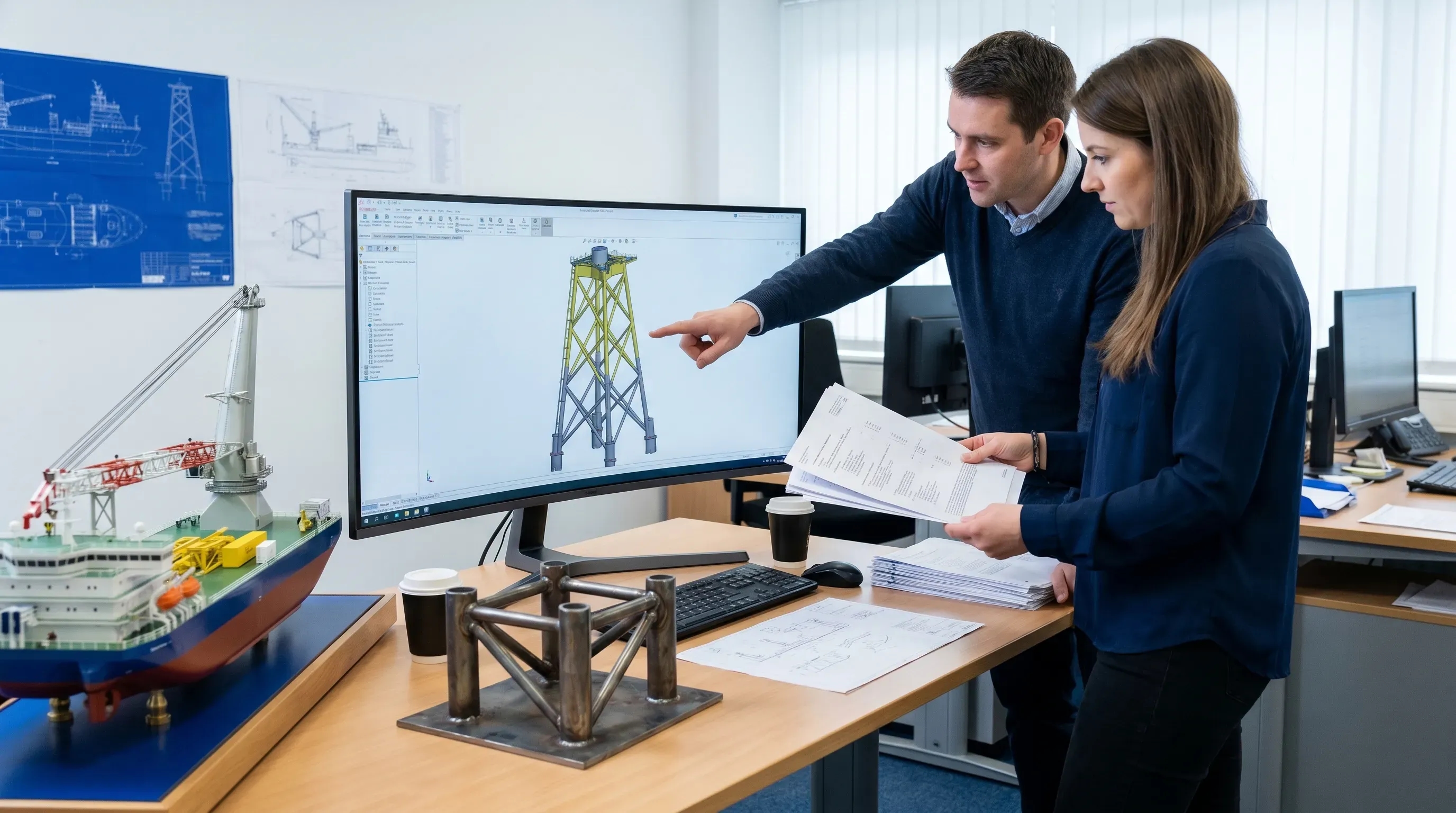
A well-built model also improves technical communication. Instead of relying on disconnected spreadsheets, drawings and emails, teams can review a shared representation of the structure, its load paths and its interfaces. This makes it easier to discuss design options with operations teams, vessel owners, fabricators and approval bodies.
Faster concept screening without losing engineering control
Early concept choices have a disproportionate effect on offshore project cost and risk. The first arrangement of a grillage, padeye, skid system, sea fastening or temporary support frame can determine steel weight, welding complexity, deck reinforcement needs and installation sequence.
Structural design software allows engineers to screen multiple concepts before the project commits to a fabrication route. For example, a team can compare different support spacings, beam depths, bracing arrangements or lift point locations and quickly understand their effect on utilisation, deflection and load distribution.
The important point is that software should support decisions, not dictate them. Offshore engineers still need to define realistic design cases, partial factors, allowable stresses, dynamic amplification, vessel accelerations, fatigue considerations where relevant and fabrication constraints. A fast model with poor assumptions creates false confidence. A controlled model with the right engineering basis helps eliminate weak options before they become expensive changes.
Better load path visibility for dynamic offshore operations
Offshore structures rarely experience simple static loading. During transport, lifting, mooring or installation, the structure may be affected by vessel motions, acceleration, impact allowances, sling angles, skew loading, support settlement, wave-induced behaviour and operational tolerances.
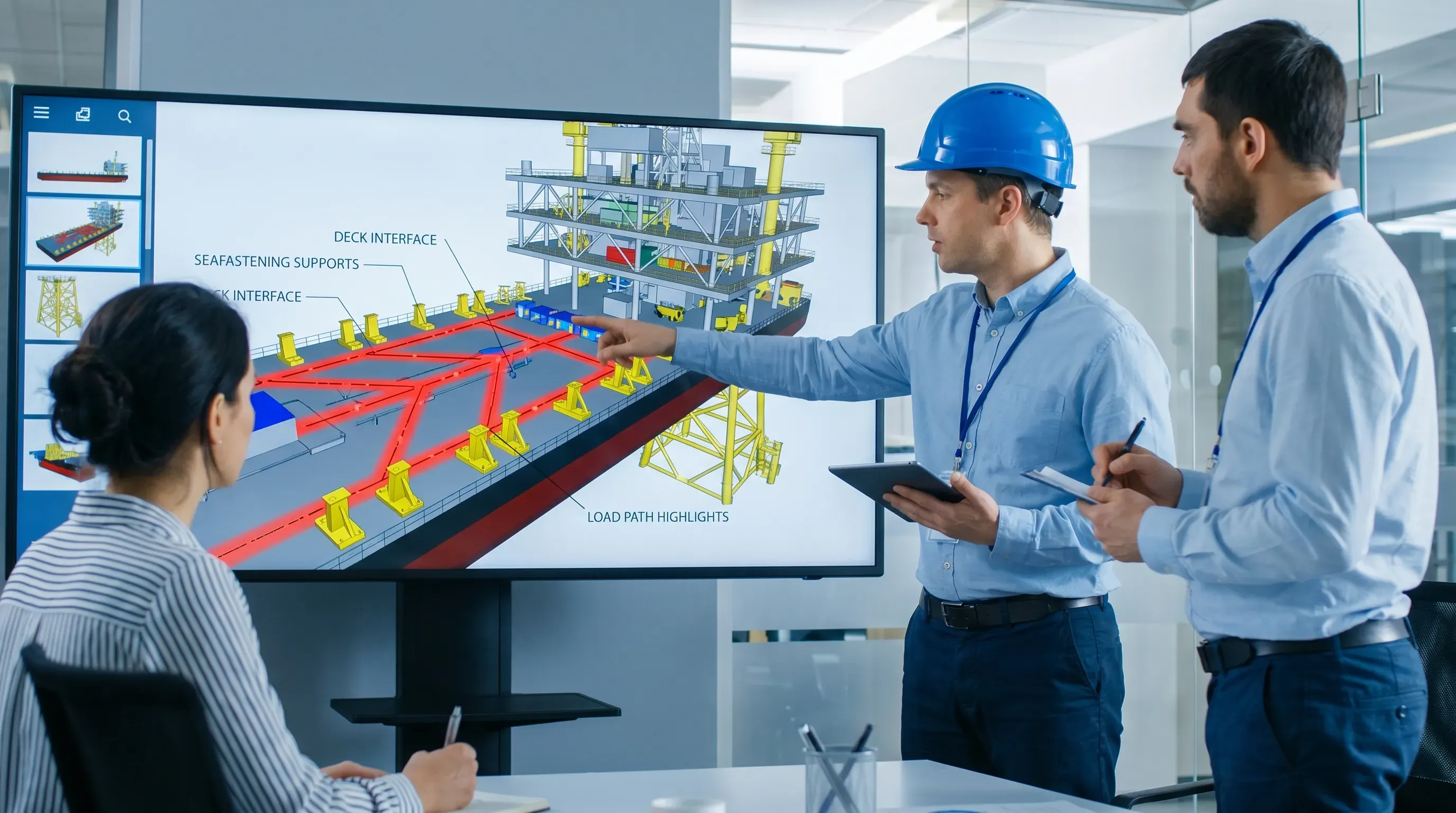
Structural design software helps engineers visualise and verify load paths through complex systems. In a heavy lift, for instance, the load path may run from the lifted module through padeyes or trunnions, into spreader beams, slings, crane hook arrangements and temporary supports. In a transport case, loads may transfer from the cargo into seafastening, grillages, deck plating, longitudinal stiffeners, transverse frames and underdeck structure.
Finite element modelling is particularly useful for identifying local stress concentrations, load redistribution and interface behaviour. However, FEM should not be treated as a replacement for hand checks or first-principles reasoning. Experienced engineers use global models, local models and independent calculations together. The software helps reveal behaviour, while engineering judgement determines whether that behaviour is realistic, acceptable and practical to build.
Stronger coordination between structural, marine and fabrication teams
One of the main workflow gains comes from coordination. Offshore projects sit between disciplines. Structural design needs marine operation inputs. Naval architecture needs weight, centre of gravity and vessel impact information. Fabrication teams need clear details, weld sizes, material grades, tolerances and assembly logic. Project directors need confidence that the design will not delay mobilisation.
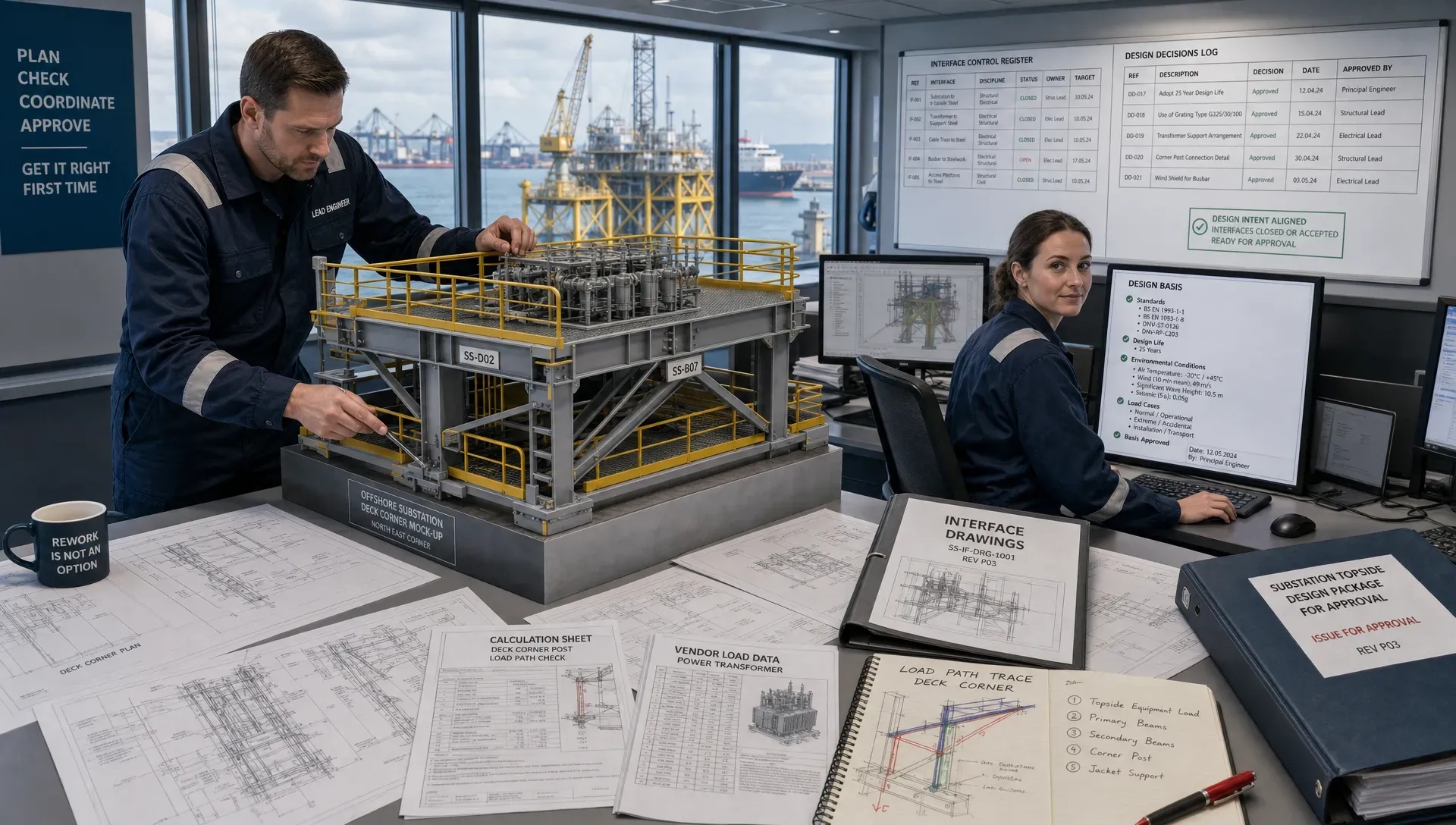
Structural design software improves this coordination when the model becomes a controlled source of technical information. A 3D model can support clash checks, deck interface reviews, access studies and fabrication discussions. Analysis outputs can inform drawing revisions. Detailing teams can align fabrication packages with the verified engineering intent.
Digital infrastructure also matters. Distributed engineering teams, shipyards, vessel owners and approval stakeholders need secure file exchange, version control and reliable access to project data. This is why many organisations treat engineering software, cloud environments and cybersecurity as part of the same delivery system, sometimes with support from specialists in managed IT, cloud and cybersecurity services where regional or operational needs require it.
Approval-ready documentation and traceability
Marine warranty surveyors and class societies do not approve software models. They review engineering logic, assumptions, load cases, code basis, calculation quality and the link between analysis and drawings. Structural design software improves approval workflows when it helps engineers produce clear, traceable documentation.
For offshore and maritime scopes, approval packages may need to show:
- The design basis, including codes, criteria, vessel data and environmental assumptions.
- Load cases for transport, lifting, installation, mooring, operation or temporary support.
- Structural utilisation, deflection, buckling, local stress and connection checks.
- Interface checks for vessel deck capacity, underdeck structure, supports and tie-down points.
- Drawings, material specifications, weld details and revision history aligned with calculations.
The software can automate parts of this process, but the report still needs to tell a coherent engineering story. Reviewers need to understand why the model is valid, how loads were applied, which assumptions are conservative and how the final design connects to fabrication and offshore execution.
This is where disciplined workflows reduce review cycles. When drawings, FEM outputs, calculation notes and design revisions are aligned, MWS and class comments can be addressed more efficiently. When they are not aligned, even a structurally sound design may lose time in clarification rounds.
Offshore workflows that benefit most
Seafastening and transport engineering
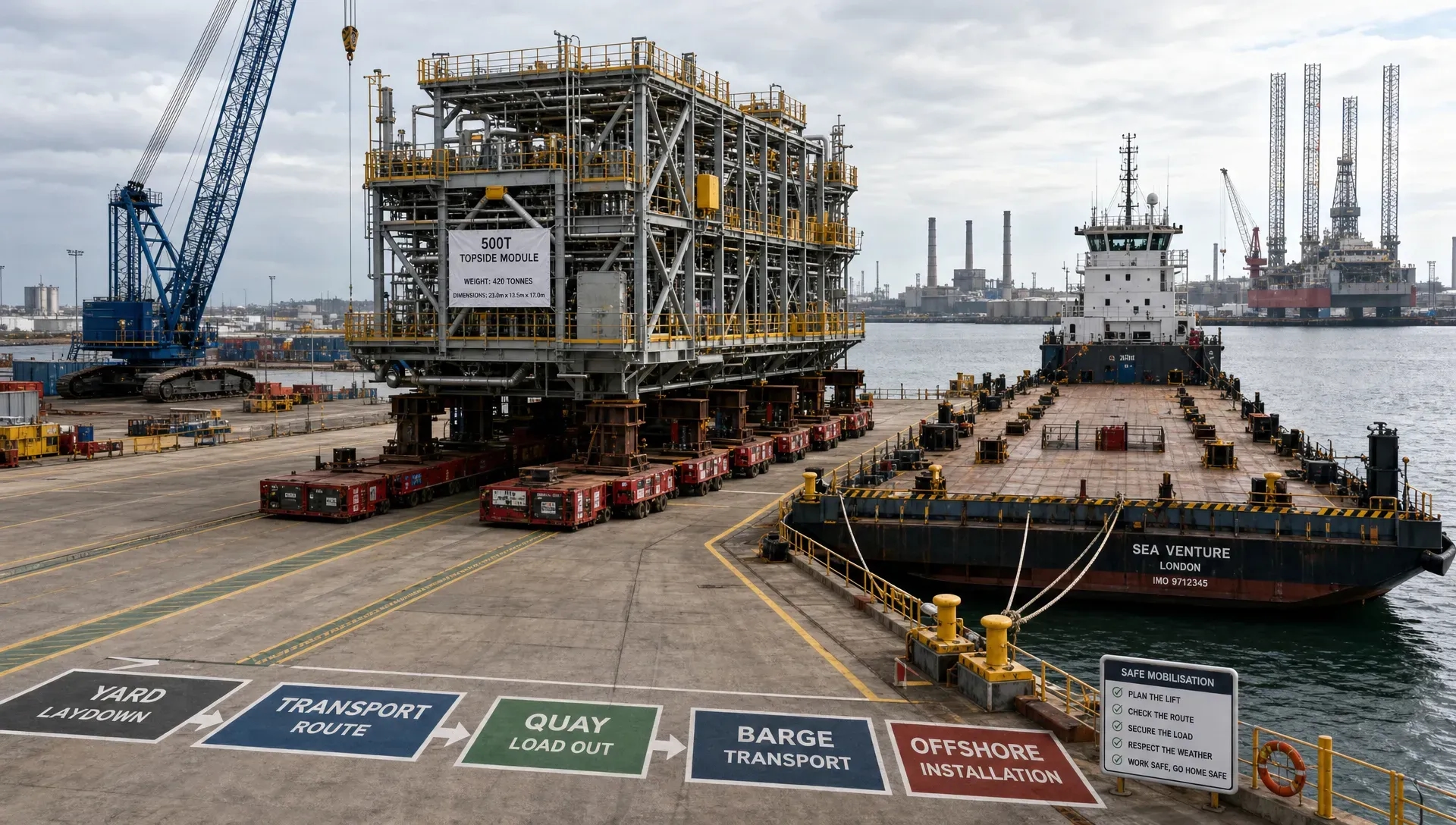
Seafastening design is highly sensitive to vessel motions, cargo geometry, support stiffness, deck capacity and operational limits. Structural design software helps teams evaluate grillage layouts, stopper arrangements, weld loads and load transfer into the vessel structure. It also supports faster checks when the cargo weight, centre of gravity or sailing condition changes.
The practical benefit is not only safety. A well-optimised seafastening design can reduce unnecessary steel, avoid difficult weld details, limit hot work offshore and make installation and removal more efficient.
Heavy lift and installation engineering
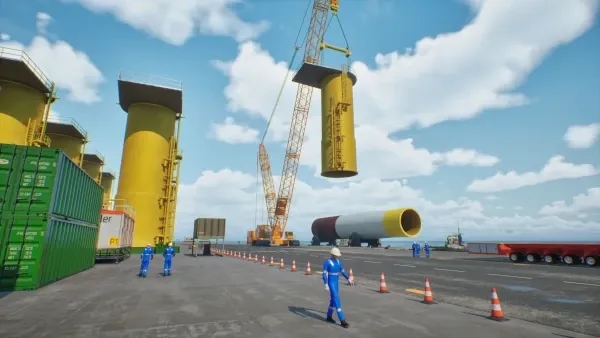
Heavy lift operations require confidence in both the lifted object and the temporary lifting arrangement. Structural design software supports padeye checks, trunnion verification, spreader beam design, rigging geometry, skew load effects and local reinforcement studies.
For complex lifts, visualisation also improves communication. Operations teams, crane specialists, QHSE stakeholders and client representatives can better understand the lifting method when the structure, rigging and critical clearances are presented clearly.
Vessel retrofit, piping and ship design
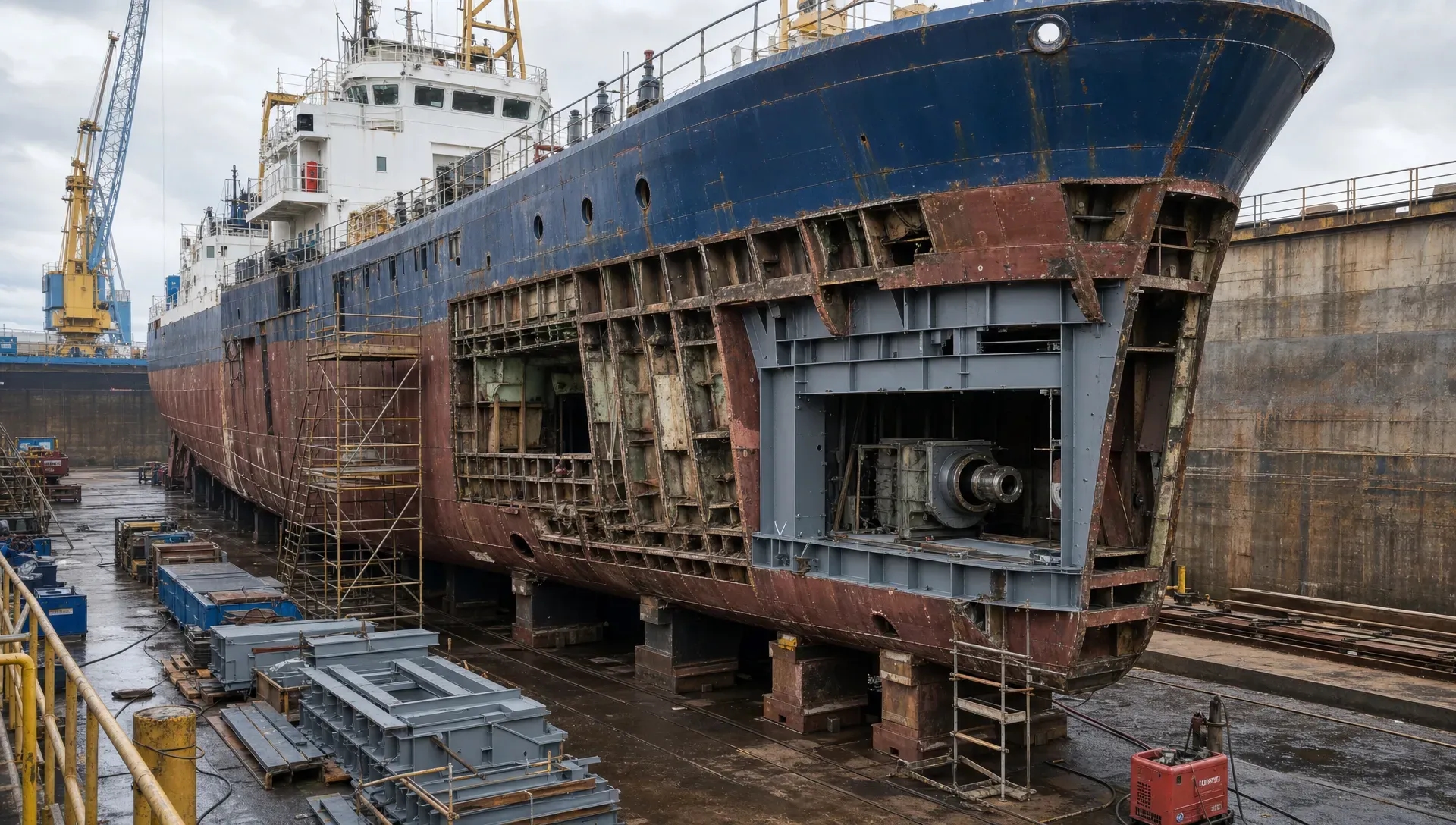
Retrofit projects often involve limited as-built data, existing vessel constraints and class requirements. Structural design software helps engineers assess new foundations, piping supports, deck openings, equipment skids, access platforms and local strengthening while managing interfaces with existing structure.
In ship design and marine engineering, the same principle applies. The value lies in connecting structural analysis with vessel functionality, maintainability, weight control, stability impact and class approval.
Decommissioning and temporary works
Decommissioning projects frequently involve ageing structures, uncertain load paths and time-sensitive offshore campaigns. Temporary supports, lifting points, cutting frames and transport arrangements must be engineered for conditions that may not match the original design intent.
Software helps assess these temporary conditions, but the engineering team must still account for inspection data, corrosion, uncertain stiffness, marine growth, access restrictions and operational sequencing.
Buildability, steel reduction and fabrication time
A common misconception is that structural design software automatically produces efficient designs. In reality, software can produce designs that are numerically efficient but difficult to fabricate. Thin plates, dense stiffener layouts, complex welds, awkward access and unusual material choices may look acceptable in analysis but create cost and schedule issues in the workshop.
The best offshore workflows connect analysis to buildability from the start. Engineers should use software to test how a design behaves, then refine it with fabrication logic in mind. This may mean using standard sections, simplifying connections, improving weld access, reducing fit-up complexity or designing modules that match yard lifting and transport capacity.
This is especially important in offshore wind, shipbuilding, heavy civil marine works, dredging equipment, traditional energy and green technology retrofits. Across all these sectors, practical design choices can reduce steel use, fabrication hours, inspection burden and offshore installation risk.
The risks of relying on software alone
Structural design software improves offshore workflows only when it is used within a disciplined engineering process. The main risks are not usually caused by the tool itself. They come from poor inputs, weak checking routines or a lack of offshore execution experience.
Common failure points include unrealistic boundary conditions, incorrect vessel accelerations, missing load combinations, poor mesh quality, over-reliance on default settings, weak connection checks, unclear revision control and insufficient coordination with fabrication or operations teams.
These issues can create designs that appear complete but are not ready for approval or execution. A strong workflow therefore includes independent checking, design reviews, clear calculation notes, model validation, interface meetings and constructability input before drawings are issued for fabrication.
How to choose a software-enabled engineering partner
For project directors and engineering managers, the question is not which company owns the most software licences. The more important question is whether the engineering partner can turn software outputs into safe, buildable and approval-ready offshore deliverables.
A capable partner should understand marine environments, vessel behaviour, lifting operations, mooring systems, fabrication realities and class requirements. They should be able to explain the design basis clearly, challenge weak assumptions, produce practical drawings and respond to reviewer comments without losing control of the workflow.
Fusie Engineers supports offshore, maritime and energy projects across structural design, heavy lift engineering, ship design, vessel retrofit, piping design, marine engineering and steel detailing. Depending on the scope, deliverables can include FEM calculations, motion analyses, lifting arrangements, mooring reports, stability checks, drawings and approval documentation.
The value is the combination of software capability and engineering judgement. A calculation model is useful, but the real project benefit comes when that model leads to a design that can be fabricated, approved, transported, lifted, installed and maintained with confidence.
Frequently asked questions
Does structural design software replace hand calculations? No. It should complement hand calculations and engineering judgement. Hand checks are still essential for validating assumptions, reviewing load paths, checking connections and identifying whether software results are realistic.
Which offshore workflows benefit most from structural design software? Seafastening, grillage design, heavy lift engineering, vessel retrofit, piping support design, temporary works, offshore installation structures and decommissioning scopes all benefit from controlled modelling, faster iteration and clearer documentation.
How does structural design software help with MWS or class approval? It helps by improving traceability. Engineers can organise load cases, show structural utilisation, link calculations to drawings and maintain revision control. Approval still depends on a clear design basis, complete documentation and sound engineering logic.
Can structural design software reduce steel use? Yes, when used by experienced engineers. It can identify overstressed and underused areas, allowing the team to optimise member sizes, support layouts and reinforcement. However, optimisation must always consider fabrication, inspection, installation and approval requirements.
What information is needed before starting an offshore structural model? Useful inputs include drawings, vessel data, equipment weights, centres of gravity, lift points, operational criteria, environmental assumptions, class requirements, fabrication constraints and project schedule. If some data is missing, early concept checks can still help define what must be confirmed.
Need structural design support for an offshore workflow?
If your project involves offshore transport, lifting, seafastening, vessel retrofit, ship design, marine engineering or approval-critical temporary works, structural design software can shorten the route from concept to execution. The key is using it within a practical engineering workflow that considers safety, fabrication, documentation and offshore reality from the start.
Fusie Engineers supports clients with software-enabled engineering judgement, practical design development and approval-ready deliverables for complex offshore, maritime and energy projects.