

How retrofit engineering solutions extend vessel life
2026-07-26
A vessel can remain structurally sound long after its original commercial role has changed. Equally, a ship may still be profitable in principle but become constrained by ageing piping, outdated machinery, class requirements, insufficient deck capacity or new emissions expectations. This is where retrofit engineering becomes a life-extension tool, not just a repair activity.
Well-planned retrofit engineering solutions help owners and operators keep capable assets working safely for longer. They do this by verifying the vessel’s current condition, identifying usable structural and operational margins, upgrading systems around real onboard constraints and preparing documentation that can pass yard, class and marine warranty scrutiny.
The key point is that vessel life extension is not achieved by adding more steel or replacing equipment in isolation. It is achieved by making the vessel fit for its next operating profile while keeping safety, stability, fatigue life, fabrication access, inspection and approval under control.
Vessel life extension starts with knowing what still has margin
Every retrofit starts with a question that sounds simple but is rarely straightforward: what can the existing vessel safely support?
Original drawings may not reflect the as-built condition. Previous modifications may not be fully documented. Corrosion, local wastage, fatigue cracks, repaired damage and changes in loading history can all affect the real capacity of the structure. For older vessels, even small differences between drawings and reality can influence routing, steel renewal, equipment foundations and class acceptance.
A robust retrofit engineering process therefore begins with data verification. This may include vessel surveys, thickness measurements, inspection of underdeck structure, review of class history, scan data, stability information, equipment documentation and yard constraints. The objective is not only to confirm what exists, but to understand how future loads will move through the vessel.
When this baseline is weak, retrofit projects tend to suffer later. A pipe spool clashes with a frame. A new foundation lands on structure that cannot carry the load. A crane upgrade changes stability more than expected. A class reviewer asks for supporting calculations that were not prepared. These issues do not just create design rework. They can disrupt drydock plans, mobilisation windows and charter commitments.
How retrofit engineering solutions extend structural life
Structural life extension is often associated with steel renewal, but effective retrofit design goes further. The aim is to restore or improve load paths, reduce stress concentrations and ensure new loads are distributed into the vessel without creating weak points elsewhere.
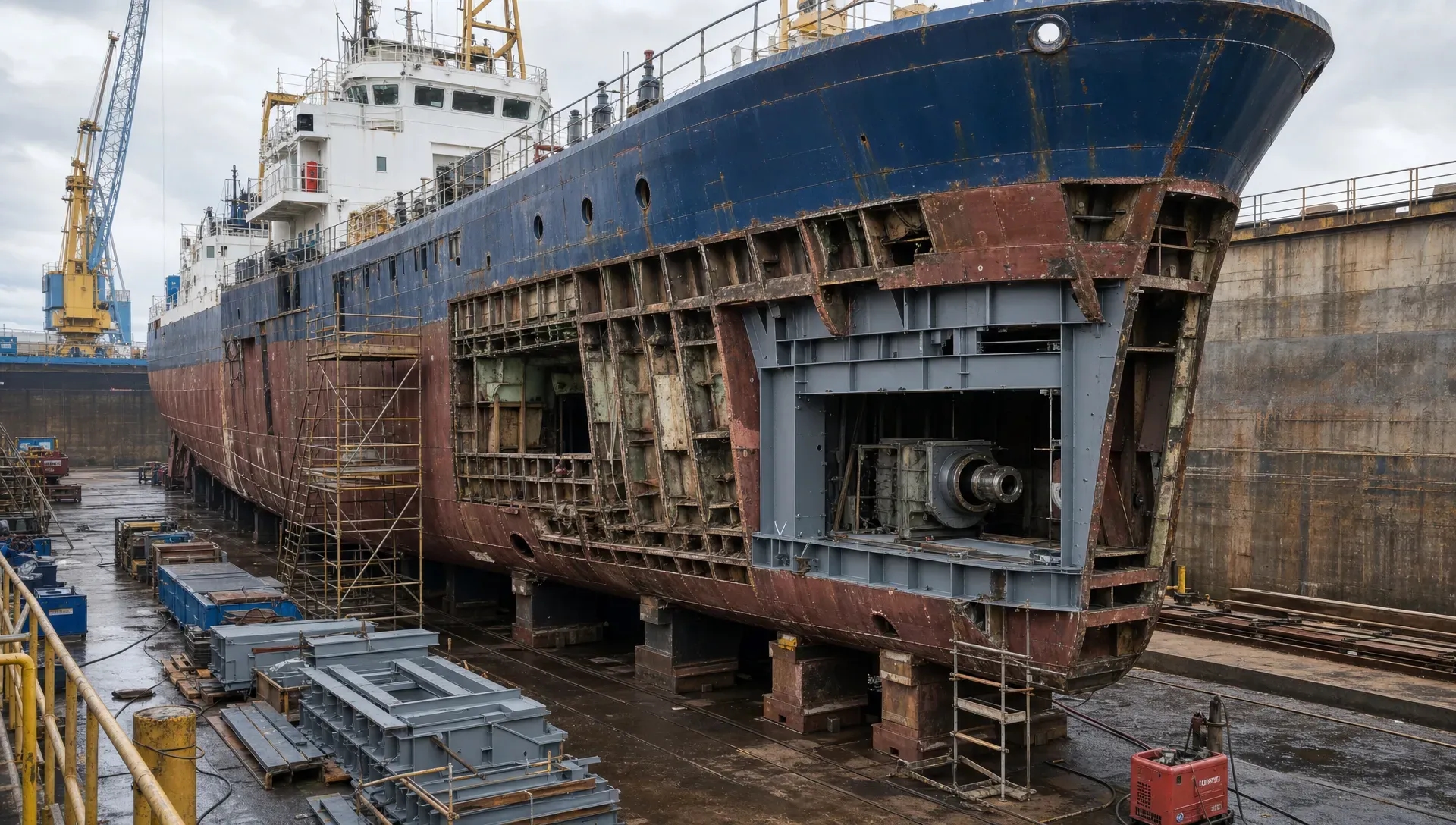
For example, adding a new deck crane, winch, cable-handling system, walk-to-work equipment or offshore installation tool may require more than a local foundation. The engineering team must consider underdeck reinforcement, grillage behaviour, fatigue-sensitive details, welding access, lifting and operational load cases, and the interaction with existing longitudinal and transverse structure.
Finite element analysis can be useful where local load paths are complex, especially around heavy equipment foundations, moonpools, sea fastenings, mission equipment, support stools or large deck openings. However, calculation output alone does not extend vessel life. The real value comes from translating analysis into details that can be fabricated, inspected and maintained.
That means avoiding unnecessary complexity where possible. A technically strong reinforcement concept should also consider plate availability, weld sequence, distortion control, access for coating, NDT requirements and the yard’s ability to execute the work within the planned window. Over-engineered details can increase weight and welding time without improving the vessel’s practical life.
Upgrading vessel functionality without losing operability
Many life-extension projects are driven by a new commercial role. A platform supply vessel may be adapted for offshore wind support. A workboat may need new deck equipment, energy storage or improved accommodation. A dredging, decommissioning or heavy-lift asset may need upgraded handling systems. A merchant vessel may require emissions-related modifications to remain viable under changing regulations.
The International Maritime Organization has introduced energy efficiency requirements such as EEXI and CII, which have made operational efficiency and emissions performance more visible in vessel planning. The IMO’s explanation of EEXI and CII shows why many owners now assess technical upgrades alongside operational measures.
But functionality cannot be viewed separately from vessel behaviour. Added equipment may increase vertical centre of gravity, change windage, affect motions, reduce deck working area or demand more electrical and cooling capacity. A retrofit that looks acceptable on a deck layout can become problematic once stability, operability, structural strength and marine operations are checked together.
This is why life-extension engineering should connect naval architecture, marine engineering, structural design and operational planning early. For a deeper look at that integration, Fusie Engineers has also explained how marine engineering supports safe retrofit and offshore work across vessel behaviour, lifting, mooring, fabrication and approval requirements.
Systems, piping and machinery: extending service life below deck
A vessel’s remaining life is not determined only by hull steel. Ageing systems can limit reliability, maintainability and compliance long before the main structure reaches the end of its useful life.
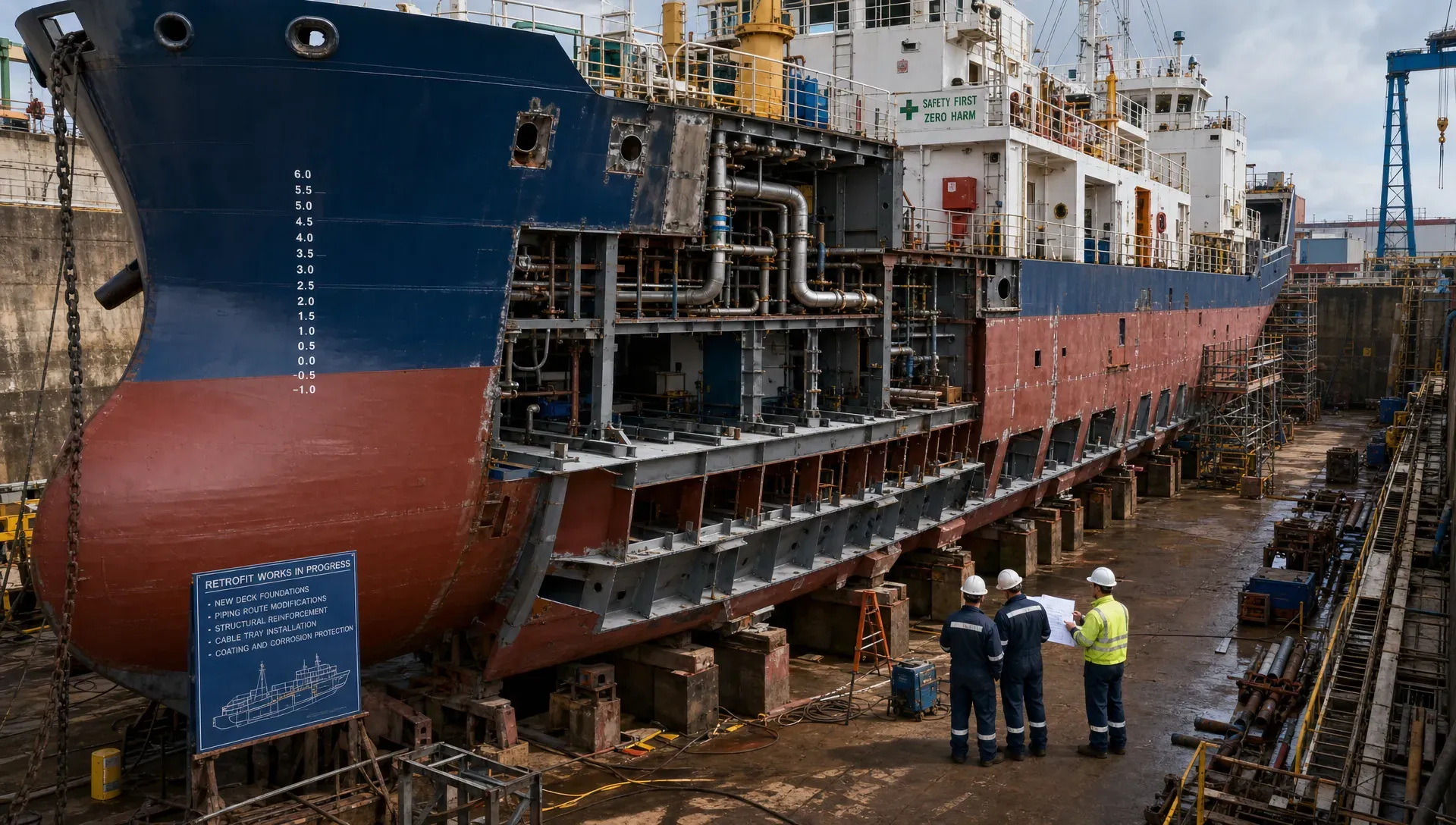
Piping retrofits are a common example. Fuel, ballast, bilge, cooling water, hydraulic, firewater and service air systems may need renewal, rerouting or capacity changes. The challenge is that onboard space is already congested, especially in machinery rooms, pump rooms, voids and service corridors. Interfaces with existing valves, penetrations, supports, cable trays, access routes and class requirements must be controlled carefully.
Good piping retrofit engineering reduces clashes and yard rework by setting routing principles early, confirming tie-in points and leaving space for installation and maintenance. It also considers isolation, drainage, venting, support spacing, vibration, thermal movement and inspection access. These decisions can determine whether the yard can install a system efficiently or ends up cutting and adjusting during execution.
For piping-heavy modification scopes, the article on piping layout decisions that reduce clashes and rework onboard covers the practical importance of as-built verification, access and interface control.
Class approval and documentation protect the extended life
A retrofit only extends vessel life if the modified asset can be approved, insured, operated and maintained. That makes documentation a core engineering deliverable, not an administrative afterthought.
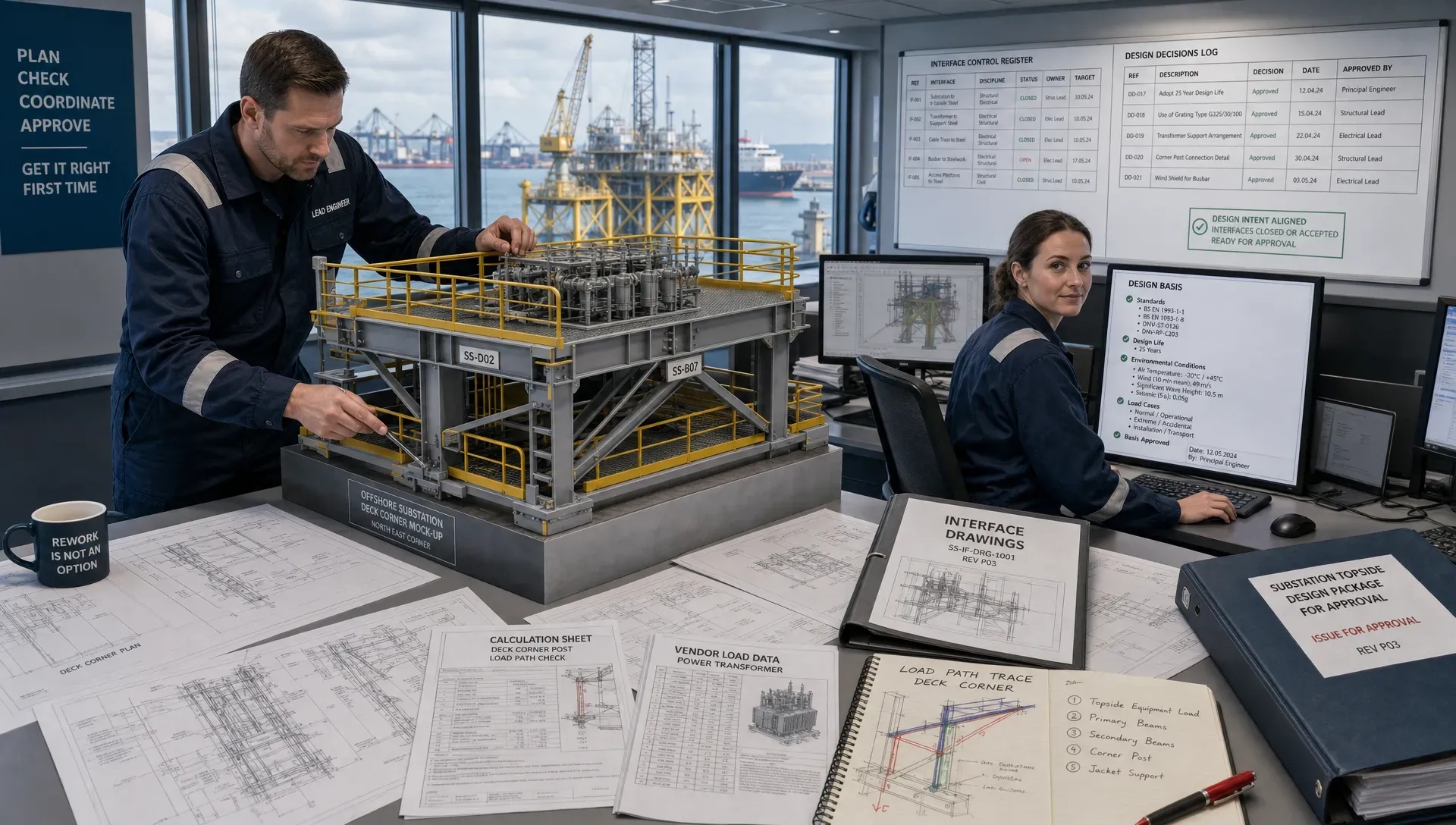
Class societies and marine warranty surveyors need a clear technical basis for the modification. Depending on the scope, this may include design basis documents, structural calculations, FEM reports, stability checks, system schematics, lifting arrangements, mooring analyses, welding details, material specifications, inspection plans, test procedures and as-built documentation.
The approval route should be considered before the design is frozen. Class requirements can influence material selection, redundancy, fire safety, lifesaving arrangements, structural details, equipment certification and testing. MWS requirements can influence sea fastening, lifting, transport, towage, mooring and offshore installation documentation.
Late approval engagement is one of the most common causes of retrofit delay. If class or MWS comments arrive after fabrication has started, the project may face redesign, additional welds, extra inspection, material changes or schedule disruption. Fusie Engineers has discussed this risk in more detail in its article on how vessel retrofit engineering avoids class and yard delays.
Where retrofit engineering solutions create the biggest life-extension value
Not every vessel needs the same type of retrofit. The right scope depends on the future operating profile, the vessel’s condition, commercial objectives and approval constraints. However, several retrofit categories commonly create strong life-extension value.
- Structural upgrades and steel renewal: Reinforcements, deck foundations, local repairs, fatigue improvements and underdeck strengthening can help vessels take on new equipment or continue operating safely.
- Piping and system modifications: Renewed or rerouted systems can improve reliability, maintainability and compliance while reducing the risk of operational downtime.
- Propulsion, power and emissions upgrades: Energy efficiency measures, auxiliary system changes, shore power integration or hybridisation-related modifications can help older vessels remain commercially viable.
- Mission equipment integration: Cranes, winches, cable equipment, offshore wind tools, dredging equipment, decommissioning tools or handling systems can open new work scopes when integrated safely.
- Accommodation and safety improvements: Layout changes, access improvements, lifesaving arrangements and safety system upgrades can support new manning levels or operating areas.
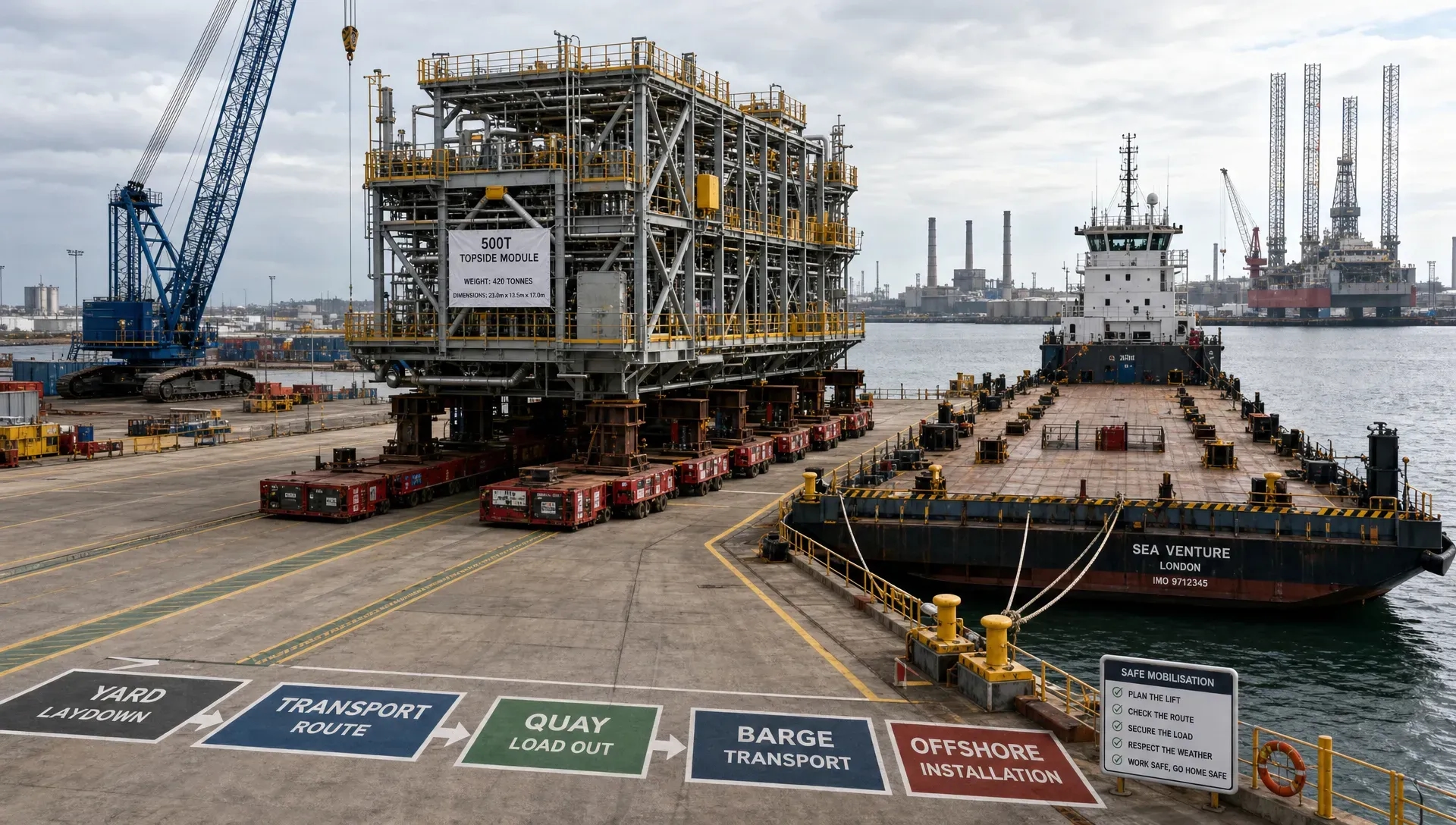
- Heavy lift and offshore support modifications: Sea fastening, grillages, transport structures, lifting arrangements and mooring interfaces can adapt vessels for project-specific offshore work.
The economic case: life extension is about controlled downtime
The business case for a retrofit is usually built around avoiding or delaying replacement capital expenditure. But the practical value is often won or lost in downtime control.
A vessel in drydock is not earning. A missed mobilisation date can affect a wider offshore campaign. Yard delays can create knock-on effects for charterers, subcontractors, equipment suppliers and installation schedules. For offshore and maritime projects, the cost of poor engineering decisions can be much larger than the cost of the engineering itself.
Effective retrofit engineering reduces downtime by moving uncertainty out of the yard phase and into the design phase, where changes are easier and cheaper to manage. This means confirming interfaces before fabrication, preparing approval-ready documentation, designing details that suit the yard’s capabilities and planning installation sequences around access, lifting, hot work and testing.
It also means challenging unnecessary steel and complexity. Adding weight can reduce payload, affect stability and increase fabrication time. Smart reinforcement design, standardised details, clear weld access and modular installation strategies can reduce yard hours while maintaining safety and approval confidence.
Importantly, good engineering can also show when a retrofit is not justified. If the vessel condition, stability margin, system constraints or approval requirements make the modification uneconomic, that conclusion is valuable. Life-extension decisions should be based on technical evidence, not optimism.
A practical retrofit workflow for vessel life extension
Define the future operating profile
The first step is to define what the vessel must do after the retrofit. This includes operating area, environmental conditions, payloads, deck equipment, manning, endurance, lifting duties, mooring requirements, emissions objectives, class notation and project-specific operations.
A vague scope leads to repeated design changes. A clear operating profile allows the engineering team to assess whether the vessel has the right margins and what modifications are required to close the gap.
Verify the as-built condition
Survey information should be gathered early enough to influence concept design. This may include structural inspections, thickness measurements, equipment checks, piping verification, point cloud scans and review of previous modifications.
The aim is to avoid designing around idealised drawings. Retrofit success depends on understanding the real vessel, including obstructions, restricted access, legacy details and undocumented changes.
Develop concepts with class and yard constraints in view
Concept design should compare technical feasibility, approval risk, fabrication effort, weight impact and operational value. A concept that looks efficient on paper may not be the best choice if it requires complex welds in inaccessible areas or creates difficult inspection requirements.
Early class engagement can reduce uncertainty. Early yard input can improve buildability. Early operational input can prevent designs that are safe in calculation but awkward to use offshore.
Detail for fabrication, installation and inspection
Detailed engineering should turn the selected concept into practical deliverables. This may include calculations, drawings, steel details, piping isometrics, equipment foundations, lifting plans, mooring documentation, stability updates, material specifications and inspection requirements.
The details should be clear enough for fabrication teams, class reviewers and project engineers to work from the same technical basis. Ambiguity at this stage often becomes rework later.
Support yard execution and close-out documentation
Even well-engineered retrofits need support during execution. Yard questions, site deviations, inspection findings and class comments must be resolved quickly and traceably. Close-out documentation should reflect the final installed condition so that future maintenance, inspection and modification work starts from reliable information.
This final step is important for long-term vessel life. A retrofit that is properly documented today reduces uncertainty for the next owner, superintendent, class surveyor or engineering team.
Avoiding common retrofit mistakes that shorten vessel life
A poor retrofit can reduce confidence in the asset it was meant to extend. The most damaging mistakes usually come from treating the project as a simple installation task rather than an integrated engineering scope.
One common issue is reinforcing locally without checking how loads transfer into adjacent structure. Another is accepting old drawings without sufficient verification. Weight growth is also a frequent problem, especially when conservative additions are made without reviewing global effects on stability, payload and operability.
Maintenance access is often underestimated. A new system may fit physically but block inspection routes, valve access, escape paths or future removal of equipment. In harsh marine environments, that can shorten practical service life because crews cannot maintain the asset efficiently.
Approval timing is another risk. Class and MWS requirements should not be left until the end of the design phase. The later approval comments arrive, the more likely they are to affect fabrication, installation or mobilisation.
The best retrofit outcomes come from balanced engineering judgement. The design must be safe, but also buildable. It must satisfy rules, but also support real operations. It must extend technical life, but also make commercial sense.
How Fusie Engineers supports vessel life extension
Fusie Engineers supports retrofit and life-extension work across maritime, offshore and energy projects, combining structural engineering, marine engineering, heavy lift expertise, ship design, vessel retrofit support, piping design and steel detailing.
For vessel owners, shipyards, EPC contractors, marine contractors and offshore operators, this combined capability is useful because retrofit problems rarely sit inside one discipline. A deck upgrade may need structural checks, stability assessment, lifting input, equipment integration, class documentation and fabrication drawings. A piping renewal may affect access, safety systems, machinery interfaces and yard sequencing. A mission conversion may require naval architecture, marine operations planning and approval support.
Depending on the scope, engineering deliverables can include FEM calculations, motion analyses, lifting arrangements, mooring reports, stability checks, structural drawings, piping documentation, shop drawings and approval packages for review by class societies or marine warranty surveyors.
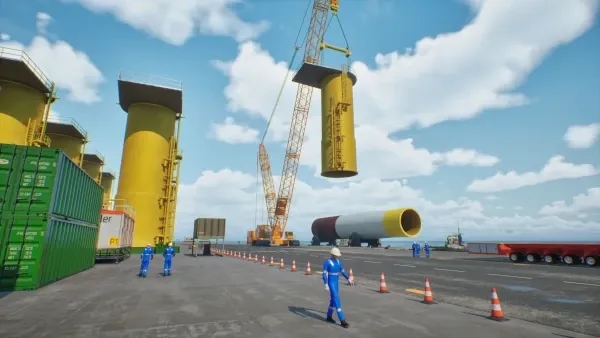
Fusie Engineers also provides technical animation and visualisation support where complex marine operations, lifting sequences or retrofit methods need to be explained clearly to stakeholders, tender evaluators, QHSE teams or offshore crews. For high-risk operations, clear communication can be as important as calculation quality.
Frequently asked questions
What are retrofit engineering solutions for vessels? Retrofit engineering solutions are the structural, mechanical, piping, naval architecture and documentation activities required to modify an existing vessel safely. They turn a modification objective into a buildable and approval-ready design.
How do retrofits extend vessel life? Retrofits extend vessel life by renewing ageing systems, strengthening or repairing structure, improving functionality, supporting compliance and adapting the vessel for new operating roles. The value depends on verifying the as-built condition and controlling class, yard and operational interfaces.
When should class be involved in a vessel retrofit? Class should be considered early, ideally during concept development. Early engagement helps identify rule requirements, documentation needs and approval risks before fabrication or yard work begins.
What vessel data is needed before starting retrofit engineering? Useful inputs include general arrangement drawings, structural drawings, stability data, class records, system schematics, equipment information, survey findings, thickness measurements, previous modification records and details of the intended future operating profile.
Is retrofitting always better than building a new vessel? Not always. A retrofit can be cost-effective when the vessel has sufficient structural, stability and system margins for its future role. If condition, compliance or operational constraints are too severe, replacement or a different asset may be the better decision.
Plan vessel life extension with engineering certainty
Extending vessel life is a technical and commercial decision that depends on evidence. The right retrofit can keep an asset working safely, reduce replacement pressure and open new operating opportunities. The wrong retrofit can create rework, approval delays, weight growth and offshore risk.
If you are assessing a vessel modification, mission conversion, piping renewal, structural upgrade or offshore support retrofit, Fusie Engineers can help develop practical engineering that is safe, buildable, approval-ready and aligned with project execution constraints.