

How to choose engineering design services for offshore projects
2026-05-13
Offshore projects put engineering design under pressure from the first concept sketch. A structure may be technically sound on paper, but if it is difficult to fabricate, slow to approve, too heavy for the vessel, or unclear for the offshore crew, it can create cost and schedule risk at the worst possible moment.
That is why choosing engineering design services for offshore projects is not simply a procurement exercise. It is a technical risk decision. The right partner must understand marine environments, structural behaviour, vessel limitations, lifting operations, class requirements, fabrication constraints and the commercial impact of mobilisation delays.
For CTOs, engineering managers, project directors, naval architects, offshore contractors, EPC teams and shipyards, the best engineering partner is rarely the one that only produces drawings fastest. It is the one that helps turn a demanding offshore scope into a safe, buildable, approval-ready and executable solution.
Start with the real offshore scope, not just the discipline name
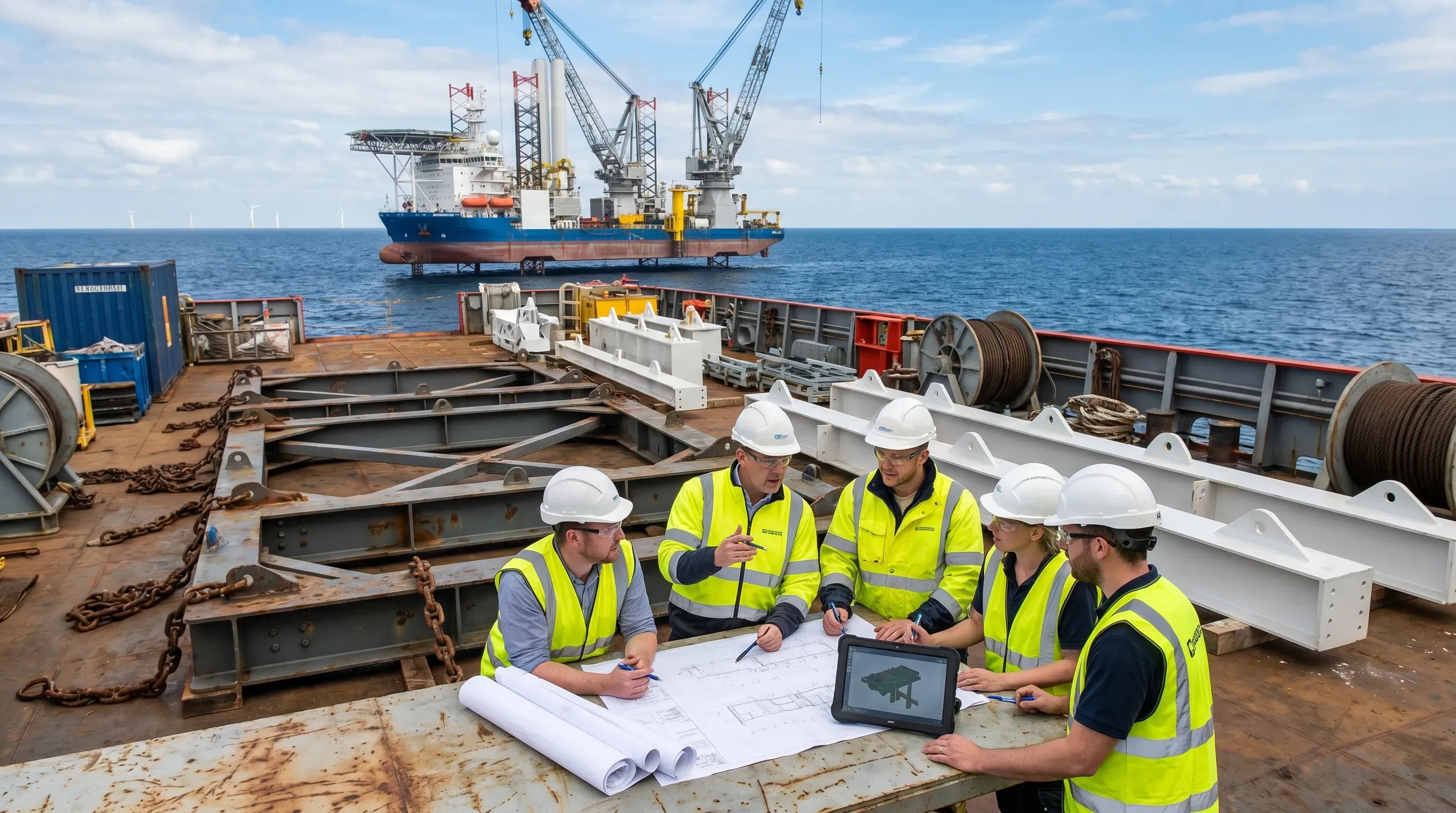
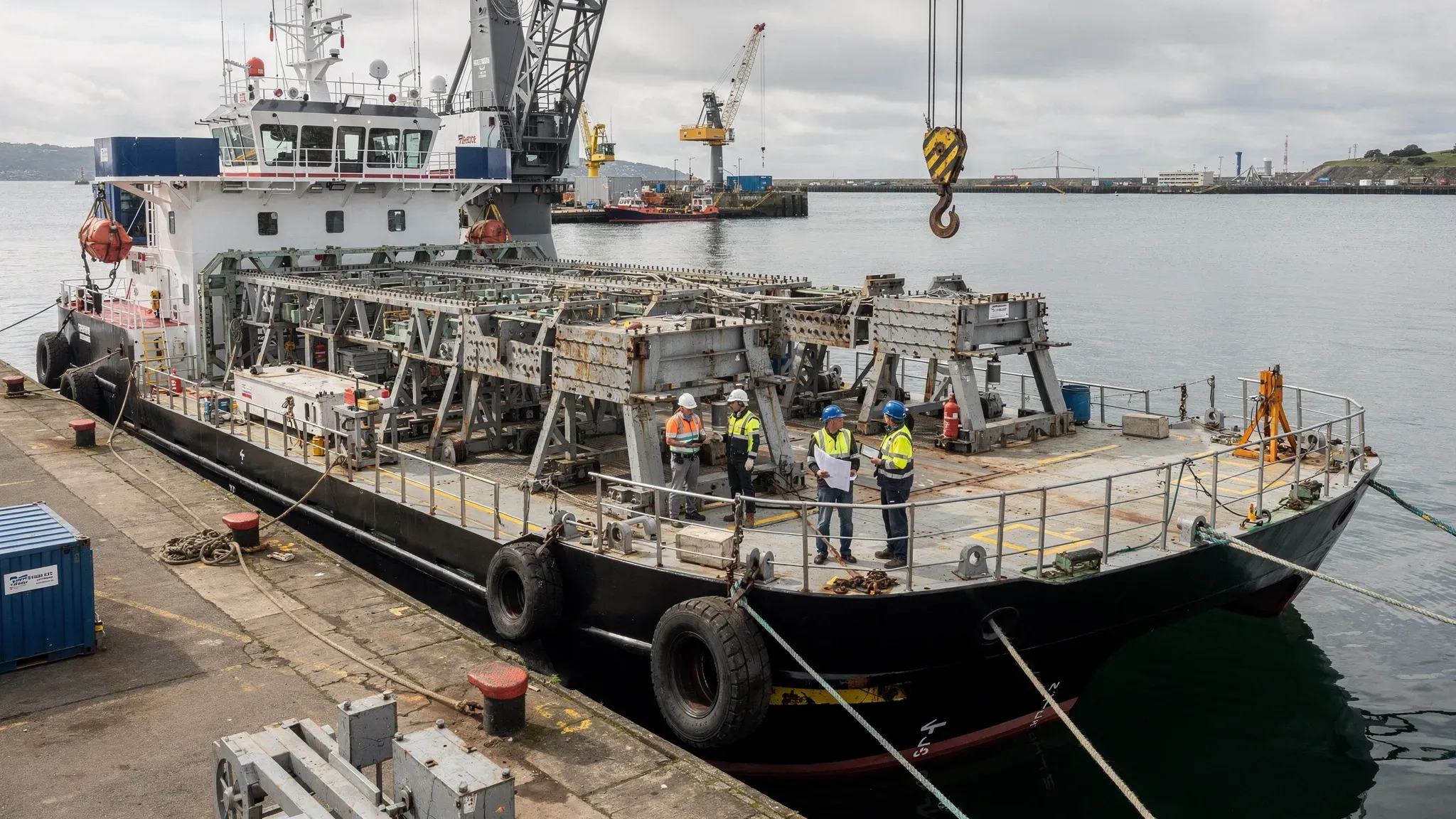
Before comparing providers, define what the project actually needs. Offshore design often sits across several disciplines at once. A seafastening scope may involve structural analysis, vessel deck capacity checks, grillage design, weld detailing, transport accelerations, class review, fabrication drawings and offshore installation input. A vessel retrofit may combine naval architecture, piping, structural modifications, underdeck reinforcement, stability checks and class documentation.
If the scope is described too narrowly, you may select a provider that can complete one part of the work but misses critical interfaces. A drafting-focused supplier may produce clean drawings without questioning load paths, fabrication access or approval assumptions. A general structural consultant may not fully account for vessel motions, marine warranty requirements or offshore execution constraints.
A strong offshore engineering partner will ask for context before confirming an approach. Useful early inputs include:
- Vessel particulars, deck strength information, structural drawings and known limitations.
- Cargo geometry, weight, centre of gravity, lifting points and transport configuration.
- Planned operation, including load-out, sea transport, lifting, mooring, installation or removal.
- Applicable approval route, such as MWS review, class society approval or client technical assurance.
- Fabrication preferences, yard capabilities, coating requirements and material availability.
- Project schedule, mobilisation date, procurement lead times and critical approval milestones.
This early questioning is not a delay. It is how the engineering team prevents rework later, when design changes are more expensive and vessel windows are harder to protect.
Evaluate offshore and marine experience in similar risk environments
Not every engineering design provider is suited to offshore work. Marine projects introduce dynamic loads, uncertain environmental conditions, tight operational windows and multiple approval stakeholders. The design must perform during real transport and installation conditions, not only under ideal static assumptions.
Relevant experience may include offshore wind foundation transport, vessel retrofits, ship repair, heavy lift operations, decommissioning, dredging equipment, oil and gas structures, renewable energy assets, floating units, mooring systems or temporary installation structures. The exact asset type matters, but so does the risk environment. A team that has worked with vessel constraints, seafastening, lifting frames, grillages, padeyes, underdeck structures and marine operations will usually identify issues earlier.
Ask prospective partners to explain the types of offshore constraints they normally design around. Their answers should cover more than software outputs. Look for evidence that they understand load transfer, fatigue-sensitive details, weld access, plate availability, transport accelerations, lifting dynamics, deck capacity, stability, mooring loads and operational clearances.
A good sign is when the provider can explain trade-offs. For example, reducing steel weight may improve vessel capacity and fabrication time, but it must not compromise local buckling, fatigue performance, padeye load paths or approval confidence. Offshore engineering is full of these trade-offs, and they need disciplined judgement.
Prioritise buildability from the first design review
A design can pass calculation checks and still be a poor project solution. Offshore structures, grillages, sea fastenings and retrofit components must be fabricated under real yard conditions, often with compressed schedules and limited access. Complex welds, unusual material grades, excessive plate thicknesses or hard-to-inspect details can increase cost and delay mobilisation.
Buildability should therefore be a selection criterion, not an afterthought. The engineering partner should design with the fabricator, installer and offshore crew in mind. This includes practical weld layouts, sensible tolerances, lifting and handling arrangements, access for NDT and coating, clear part identification, and details that can be installed safely within the available work area.
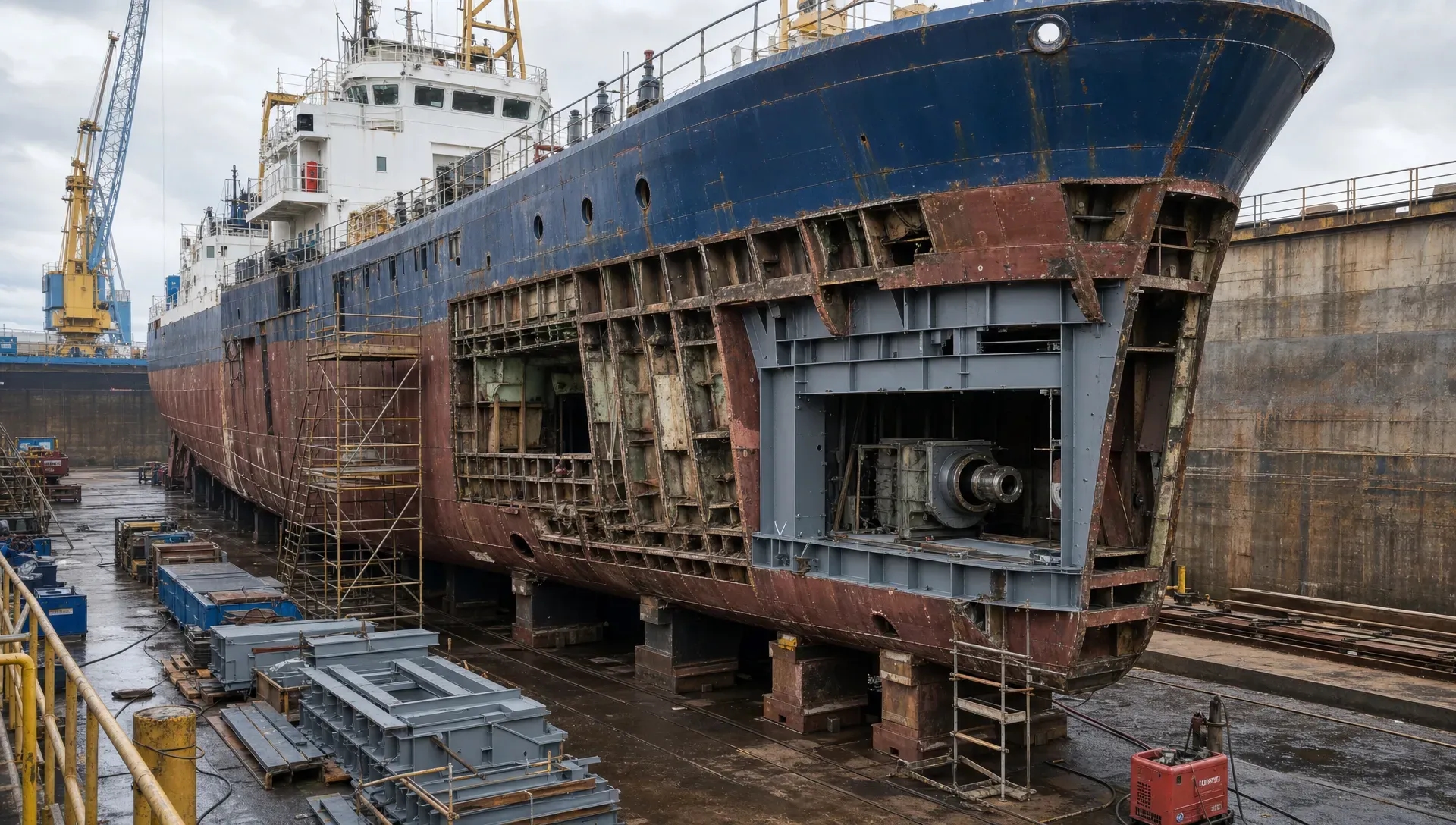
For vessel retrofit and piping projects, buildability also means understanding legacy data. Existing vessel drawings may be incomplete, outdated or inconsistent with the actual onboard condition. The design team may need to work around class constraints, available space, maintenance access, hot work restrictions and interfaces with existing systems.
When interviewing providers, ask how they challenge over-engineered solutions. More steel is not always safer. It can increase lifting weights, create underdeck reinforcement issues, slow fabrication and complicate installation. Smart design reduces unnecessary steel while maintaining a robust safety case and clear approval path.
Check approval readiness, not only engineering output
Offshore projects often depend on approval from marine warranty surveyors, class societies, client assurance teams or regulatory stakeholders. Delays in documentation can affect fabrication release, load-out, vessel mobilisation or offshore execution.
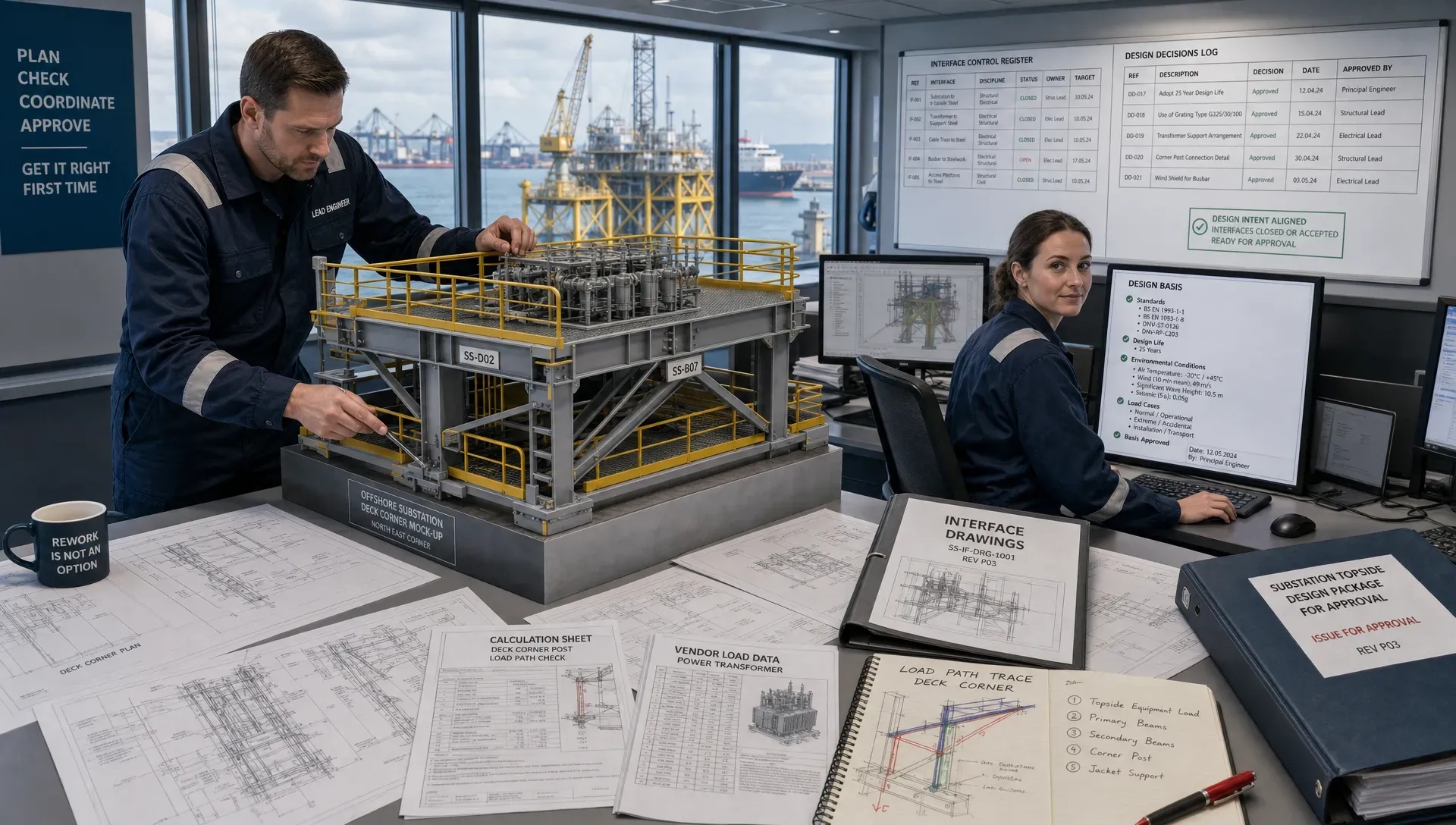
Approval readiness starts with a clear design basis. The engineering team should define assumptions, codes, load cases, partial factors, environmental conditions, allowable stresses, operational limits and interface responsibilities. If these points are unclear, reviewers may raise comments that require redesign or additional evidence.
Depending on the project, the approval framework may involve class rules and guidance from organisations such as DNV, Lloyd’s Register or ABS. The engineering provider does not need to make the approval process sound simple. It is not. What matters is whether they understand how to prepare traceable, reviewable and complete technical documentation.
Approval-ready deliverables may include design basis documents, structural calculation reports, FEM analysis, motion analysis inputs, lifting checks, mooring reports, stability checks, weld calculations, fatigue assessments, fabrication drawings, inspection notes and responses to reviewer comments. The goal is not to flood reviewers with information. The goal is to provide the right evidence in a format that can be checked efficiently.
Look for integrated structural, naval architecture and marine operations thinking
Offshore design decisions rarely stay within one discipline. A grillage detail may affect vessel deck load distribution. A lifting arrangement may change the centre of gravity requirements. A retrofit structure may influence stability, piping routes, access or class notations. A mooring layout may affect installation sequence, tug requirements and allowable weather windows.
This is why engineering design services for offshore projects should be assessed on integration. The partner should be able to coordinate structural engineering, naval architecture, heavy lift engineering, marine engineering and fabrication detailing where required.
Integrated thinking is especially important for transport and installation projects. If the structural design is developed without considering vessel motions, sea states and operational procedures, the team may discover late that a connection, grillage, padeye or seafastening arrangement is not practical. If naval architecture is separated from structural detailing, deck capacity or stability constraints may force redesign after drawings have already been issued.
An integrated partner helps reduce these interface risks. They can test assumptions early, align drawings with calculations and make sure the proposed design can move from concept to fabrication to offshore execution with fewer surprises.
Assess heavy lift and transport methodology carefully
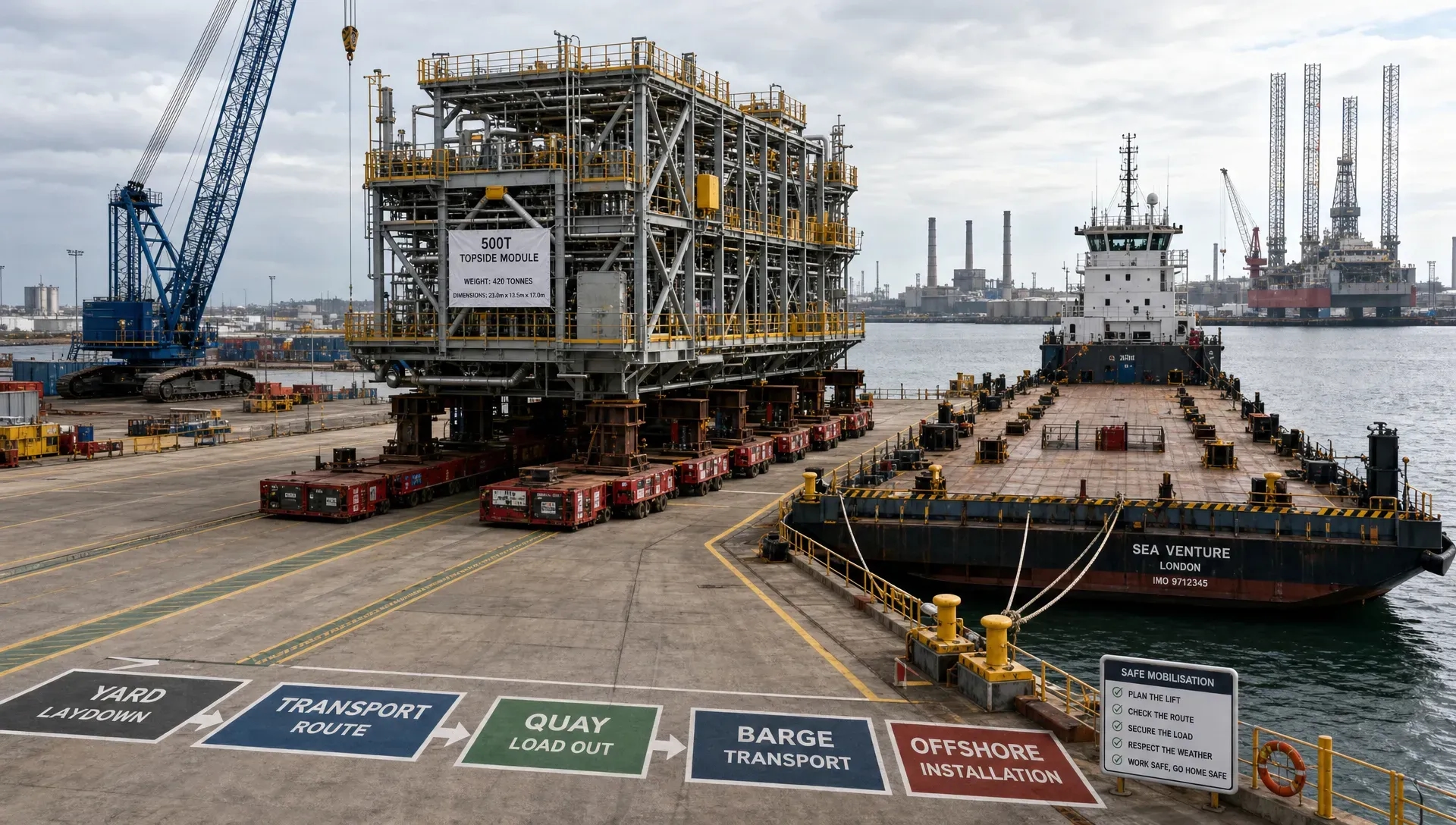
Heavy lift and transport scopes are often among the highest-risk parts of an offshore project. The lift itself may take minutes, but the engineering behind it must account for load paths, geometry, rigging, crane capacity, dynamic factors, local structure, sea transport, weather limits and emergency scenarios.
For lifting design, the engineering partner should understand padeye design, trunnions, lifting frames, spreader beams, sling angles, skew loads, dynamic amplification, centre of gravity uncertainty and local reinforcement. For transport design, they should consider accelerations, sea states, support reactions, friction, weld capacities, fatigue-sensitive details, vessel strength and seafastening release requirements.
The best providers do not treat lifting and transport as separate drawing packages unless the operation truly allows it. A support frame may be excellent for fabrication but unsuitable for transport loads. A sea fastening may be structurally strong but difficult to cut safely offshore. A lifting tool may satisfy static capacity but create access or rigging problems on deck.
Ask how the provider validates the complete operation. Their answer should include engineering checks, design reviews, documentation control and interface management with the marine contractor, vessel owner, fabricator and approval party.
Demand clear deliverables and disciplined documentation
Good offshore engineering is not only about the final design. It is also about the traceability of decisions. When a reviewer, project manager, yard supervisor or offshore superintendent asks why a detail was designed in a certain way, the engineering package should provide a clear answer.
Disciplined documentation reduces ambiguity. It also protects the project during handovers between engineering, fabrication, transport and installation teams. This is particularly important when work is split across time zones, disciplines or subcontractors.
For a complex offshore scope, define expected deliverables before work starts. Typical deliverables can include:
- Design basis, assumptions register, load case matrix and interface list.
- Structural calculation reports, FEM models, local checks and connection calculations.
- Lifting arrangements, rigging checks, padeye calculations and transport support reactions.
- Mooring reports, stability checks, motion analysis inputs or vessel-related engineering notes.
- General arrangement drawings, fabrication drawings, steel detailing and material take-offs.
- Approval packages, comment response logs and revised issue records.
The exact list depends on the scope, but the principle is constant. The engineering should be easy to review, easy to approve and easy to build from.
Consider speed, capacity and communication without sacrificing control
Many offshore projects need engineering support because internal teams are already committed. Additional capacity can be valuable, but speed must not come at the expense of checking, document control or technical ownership.
When selecting a provider, ask how they organise the work. Who leads the technical scope? Who checks calculations and drawings? How are design decisions recorded? How are comments from class, MWS, the client or the fabricator managed? How will the team communicate across time zones and project interfaces?
Fast engineering is useful only when it remains controlled. A capable partner can increase capacity, but they should also define review gates, responsibilities and information needs. This is especially important when mobilisation dates are fixed and late changes could affect vessel availability or offshore weather windows.
Communication style matters. Offshore projects need direct, practical communication between engineers, naval architects, operations teams, project directors and fabricators. A partner that explains issues clearly, flags assumptions early and provides realistic options can save significant time compared with a provider that only reports problems after the design is already blocked.
Understand low price versus low total project cost
Budget pressure is real, especially in competitive tenders and fast-moving offshore projects. However, the lowest engineering fee does not always lead to the lowest project cost.
A cheaper design package may increase fabrication hours, use more steel, require complex welding, trigger additional class comments or miss operational constraints that cause late changes. In offshore work, even small design delays can create large downstream costs if they affect mobilisation, vessel standby, fabrication release or approval deadlines.
A better evaluation method is to consider total project impact. Does the provider reduce unnecessary steel? Do they simplify fabrication? Can they help avoid rework? Do their deliverables support timely approval? Do they understand vessel limitations and offshore execution risks? Can they help the project team make decisions earlier?
The right engineering partner should be able to defend design choices in terms of safety, buildability, approval readiness and cost control. That is where engineering value becomes visible.
Questions to ask before appointing an offshore engineering partner
A structured technical discussion will reveal more than a generic capability presentation. Before appointing a provider, ask questions such as:
- Which offshore, maritime or energy scopes have you supported that involve similar risks to this project?
- How do you define load cases for transport, lifting, installation, retrofit or mooring conditions?
- How do you account for vessel limitations, deck capacity, underdeck structure and stability constraints?
- What is your approach to MWS, class society or client technical review?
- How do you design for fabrication, inspection, coating, installation and maintenance access?
- Who will be technically responsible for calculations, drawings, checking and approval responses?
- How will assumptions, interface points and design changes be documented?
- Can you support both concept decisions and detailed engineering without losing continuity?
The answers should be specific. If every answer sounds like a generic promise of quality, ask for the method behind the claim.
Warning signs to take seriously
Some warning signs appear early in the selection process. They do not always mean a provider is unsuitable, but they should trigger further questions.
Be cautious if a provider gives a firm price without asking for vessel data, load assumptions, approval requirements or fabrication constraints. Be cautious if they treat class or MWS review as a final paperwork step rather than a design consideration. Be cautious if they cannot explain how drawings and calculations will remain aligned through revisions.
Other warning signs include excessive reliance on standard templates, limited understanding of marine operations, reluctance to discuss checking procedures, unclear technical ownership and little interest in fabrication or installation practicalities.
Offshore projects reward early honesty. A strong engineering partner will identify missing information, explain uncertainty and propose a practical path forward. A weak partner may appear faster at the start, but create more risk later.
Where Fusie Engineers fits
Fusie Engineers supports offshore, maritime, renewable energy and traditional energy projects with engineering design services that combine structural engineering, heavy lift knowledge, naval architecture, marine engineering and practical detailing. The team works on offshore structural design, ship design, vessel retrofits, piping design, marine engineering, steel detailing, software and UI development, and technical animation and VFX where visual explanation is useful.
For offshore projects, this breadth matters because the technical interfaces are often where risk appears. A seafastening design is not only a structural calculation. It also interacts with vessel behaviour, deck capacity, fabrication sequence, approval documentation and offshore removal. A retrofit is not only a piping or steel change. It must respect existing vessel arrangements, class constraints, maintainability and operational downtime.
Fusie Engineers designs with fabrication, installation, maintenance and approval in mind. Deliverables can include FEM calculations, lifting arrangements, motion analysis inputs, mooring reports, stability checks, drawings and approval documentation. The team also supports review processes involving MWS and class societies such as DNV, Lloyd’s Register and ABS.
This makes Fusie Engineers a practical fit for contractors, shipyards, vessel owners, offshore wind developers, EPC teams and project managers that need more than extra drafting capacity. The value is in engineering judgement, buildable design, clear documentation and support from concept through execution.
Make the selection decision around execution risk
The best way to choose engineering design services for offshore projects is to evaluate how each provider reduces execution risk. Technical competence is essential, but it is only the starting point. The partner must also understand fabrication, approval, vessel constraints, marine operations, documentation, communication and schedule pressure.
A good offshore engineering partner helps the project team answer difficult questions early. Can this be fabricated in time? Will the vessel accept the loads? Can the lift be performed within the available crane and rigging limits? Will the documentation satisfy reviewers? Can the offshore crew install or remove the structure safely? Is there a smarter way to reduce steel, time or complexity without compromising safety?
If a provider can answer those questions with clarity, evidence and practical design options, they are more likely to protect the project when deadlines, interfaces and offshore conditions become demanding.
Frequently asked questions
What should be included in engineering design services for offshore projects? The scope depends on the project, but it may include concept design, structural calculations, FEM analysis, lifting design, transport engineering, seafastening, grillages, mooring checks, stability checks, vessel retrofit engineering, piping design, fabrication drawings, steel detailing and approval documentation.
How early should an engineering partner be involved? Ideally, involve the engineering partner before the main transport, lifting, retrofit or installation method is fixed. Early input helps identify vessel limitations, fabrication risks, approval requirements and possible design simplifications before they become expensive changes.
Why is approval readiness so important offshore? Offshore projects often need review from MWS, class societies, client assurance teams or other stakeholders. Incomplete assumptions, unclear load cases or poorly structured reports can create review delays that affect fabrication release, load-out or mobilisation.
Can an external engineering partner work alongside an internal engineering team? Yes. Many project teams use external specialists to add capacity or cover specific areas such as heavy lift engineering, offshore structural design, naval architecture, vessel retrofit or approval documentation. Clear interfaces and technical ownership are essential.
What project information is needed to start? Useful starting information includes vessel data, existing drawings, cargo weight and geometry, centre of gravity, planned operation, environmental limits, approval requirements, fabrication constraints, project schedule and any known client or class requirements.
Can better engineering reduce total project cost? Yes, when it reduces unnecessary steel, simplifies fabrication, avoids rework, shortens approval cycles and supports safer offshore execution. The lowest engineering fee is not always the lowest total project cost.
Need practical engineering support for an offshore project?
If you are planning a transport, heavy lift, seafastening, offshore installation, vessel retrofit, ship design, decommissioning or renewable energy scope, Fusie Engineers can support the project with practical, approval-ready engineering design services.
Work with a team that understands offshore structures, marine operations, vessel constraints, fabrication realities and the pressure of project execution. Visit Fusie Engineers to discuss your upcoming offshore engineering scope.