



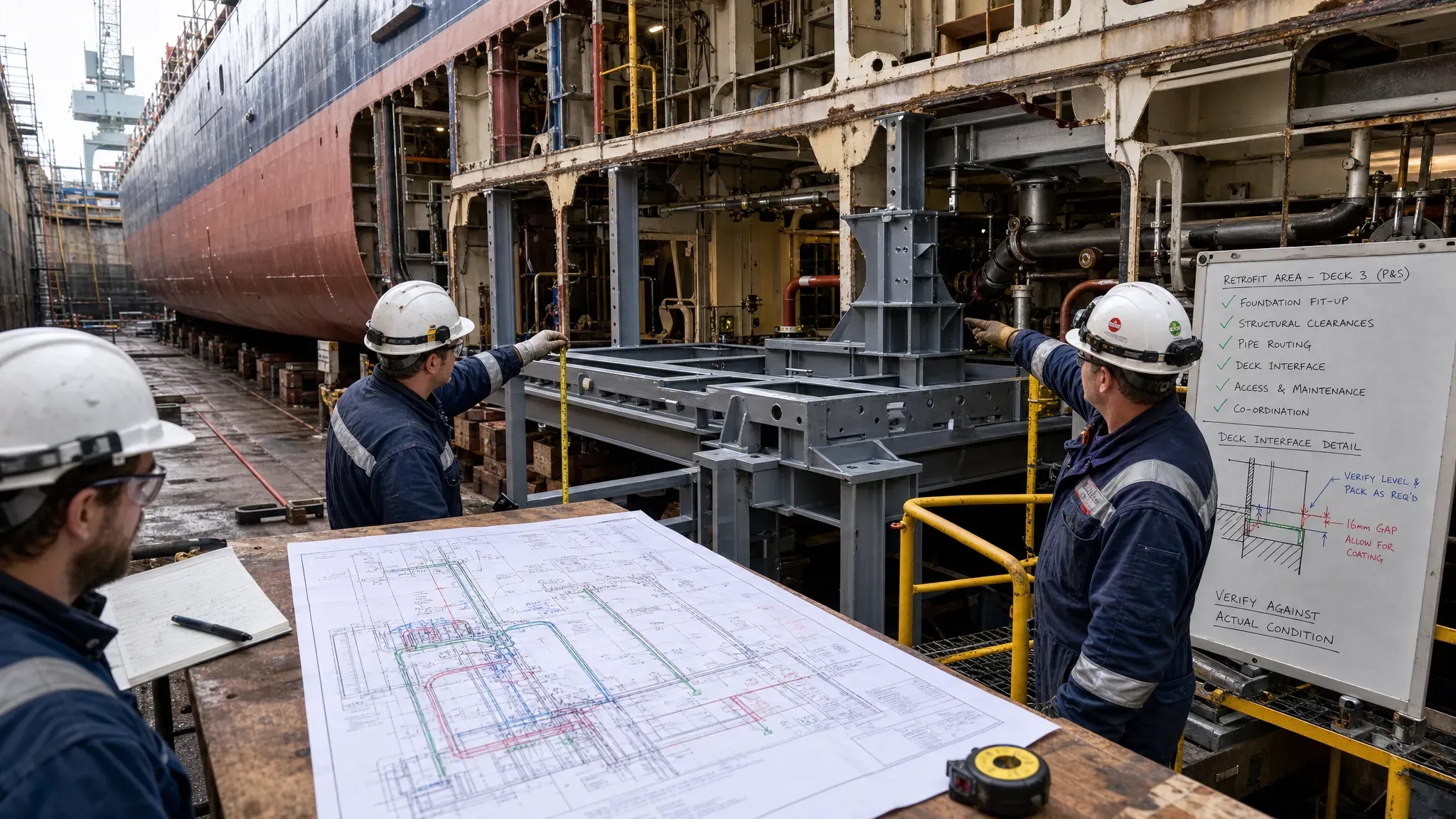
Maritime engineering checks that prevent vessel project rework
2026-06-09
Vessel project rework is rarely caused by one isolated mistake. More often, it comes from small unchecked assumptions that travel from concept into detailed design, then into fabrication, class review or offshore execution. A deck load that was based on an outdated drawing. A lift point that clears in CAD but cannot be welded properly. A retrofit route that looks efficient until it clashes with access, insulation, maintenance space or class requirements.
For engineering managers, naval architects, marine contractors and shipyards, the cost of that rework is not limited to drawing hours. It can affect procurement, yard slots, mobilisation dates, marine warranty surveyor review, class approval and offshore weather windows. Good maritime engineering reduces that risk by making the right checks early, while design changes are still manageable.
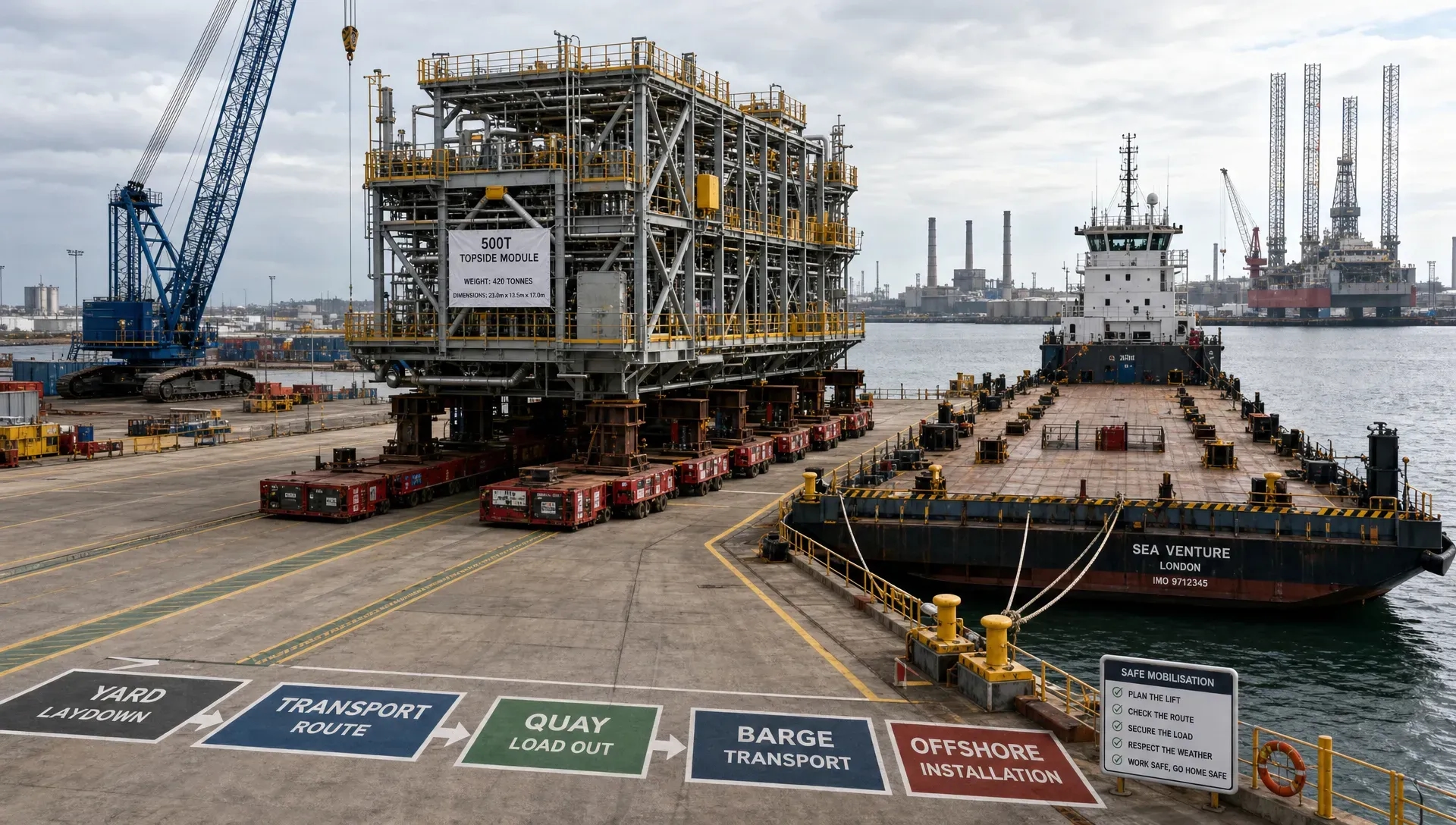
The following checks help prevent vessel project rework across ship design, vessel retrofit, heavy lift, seafastening, offshore installation, piping, structural modification and marine operations scopes.
Why vessel rework happens before the yard sees the steel
In many vessel projects, rework starts with incomplete definition rather than poor execution. A design may be technically sound for the information available at the time, but if the input data is wrong, outdated or incomplete, the engineering package will carry hidden risk.
Typical causes include legacy vessel drawings that no longer match the as-built condition, unclear load cases, late equipment changes, class comments raised after fabrication has started, underestimated deck reinforcement, insufficient weld access, or missing interfaces between structural, piping, electrical and operational teams.
The challenge is that vessel work sits between multiple disciplines. Naval architecture, structural engineering, marine systems, fabrication, lifting, stability, class rules and offshore procedures all influence each other. A foundation design is not only a steel problem. It affects deck strength, underdeck structure, vessel stability, equipment maintenance, fire zones, routing, lifting access and approval documentation.
That is why rework prevention must be built into the engineering process. It is not a final drawing review. It is a series of technical checks that test whether the design is safe, buildable, approvable and practical for the vessel’s intended operation.
Start with a controlled design basis
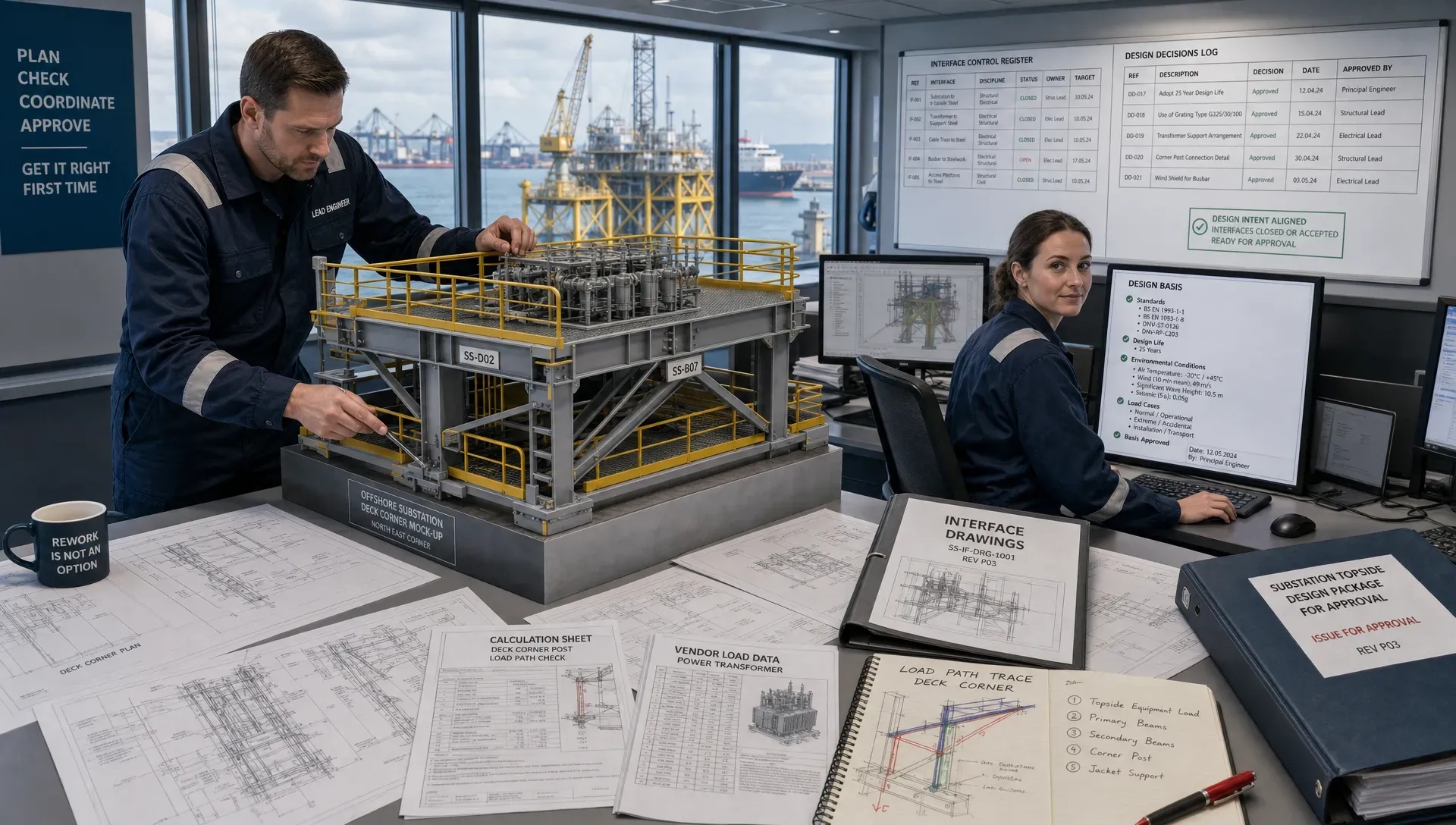
The design basis is the first line of defence against rework. It defines the rules of the project before calculations and drawings multiply. If the design basis is vague, every later decision becomes open to interpretation.
For vessel projects, the design basis should clarify the vessel condition, operating modes, design codes, class requirements, environmental criteria, load cases, safety factors, fatigue considerations, corrosion allowances, design life and approval route. For temporary offshore works, it should also define transport conditions, lifting cases, seafastening loads, motion criteria, weather limitations and marine warranty surveyor requirements.
A controlled design basis prevents engineers, fabricators and reviewers from working from different assumptions. It also gives project directors and lead engineers a clear reference when scope changes arise. If a client adds equipment, changes the centre of gravity or adjusts the installation method, the team can quickly identify which calculations, drawings and approvals are affected.
The key is not to make the design basis unnecessarily heavy. It should be practical, traceable and updated under revision control. A short but disciplined document is far more useful than a long report that nobody uses.
Verify vessel data against the real condition
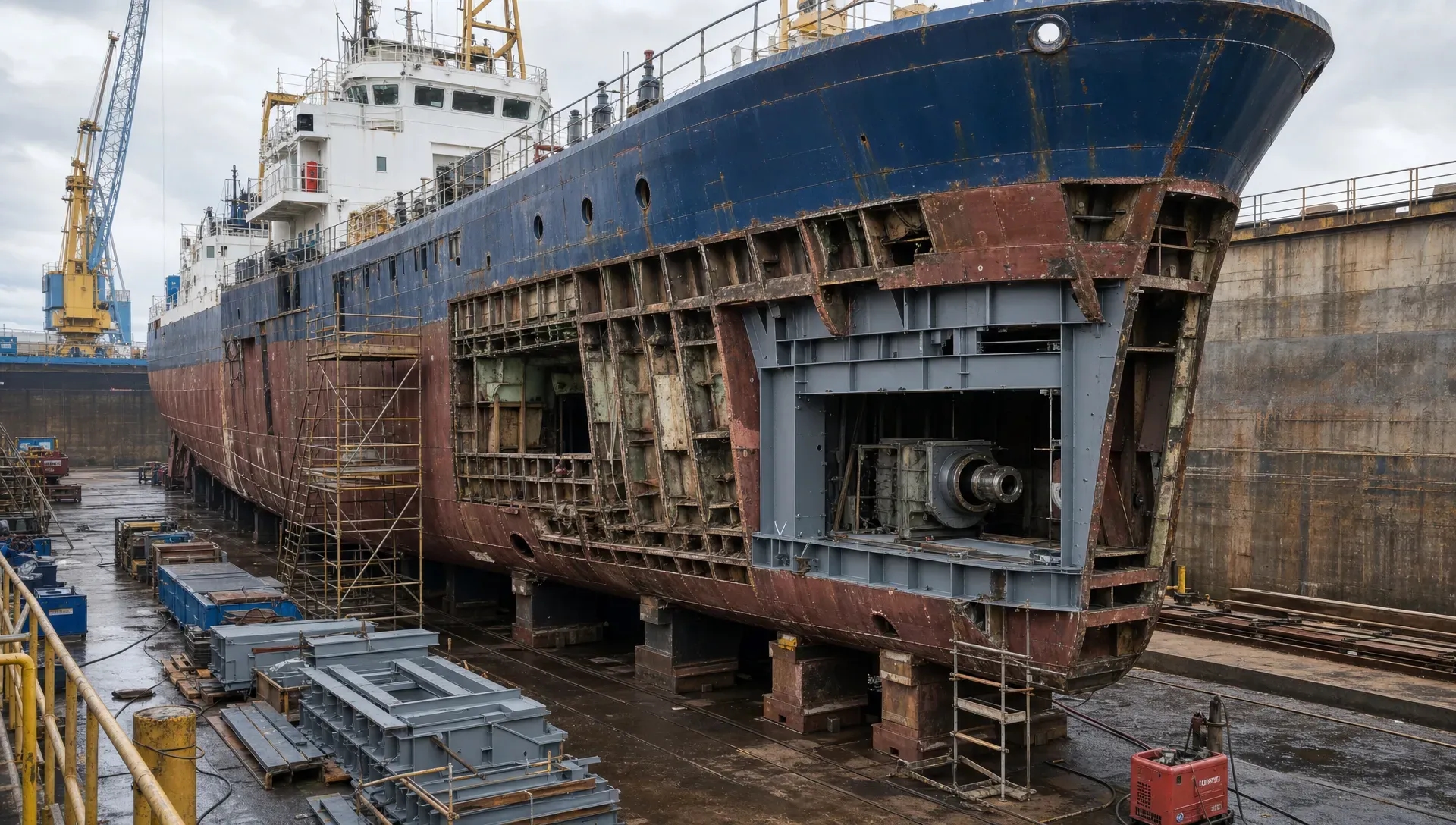
Vessel rework often begins when engineering teams trust old information too much. Drawings may be incomplete, converted from older formats, missing previous modifications or not aligned with the current vessel condition. In retrofit and modification projects, this risk is especially high.
Before committing to detailed design, teams should verify critical vessel data. This may include deck plate thickness, underdeck stiffener arrangement, frame spacing, bulkhead positions, tank boundaries, existing penetrations, crane pedestal data, foundation details, piping routes, electrical cable trays and access restrictions.
Where possible, a survey, laser scan, onboard inspection or targeted thickness measurement should be used to confirm the areas that carry load or define major interfaces. The objective is not to survey everything. It is to verify the information that could trigger costly redesign if discovered late.
For example, a retrofit skid may look simple until the team discovers that the proposed support points sit above a tank boundary or a weakened deck area. A small verification check early can avoid redesigning the skid, rerouting piping, changing installation tooling and resubmitting documents for review.
Check class and MWS expectations before detailed design
Class and marine warranty surveyor comments are a common source of late rework. The issue is not usually that the reviewer is unpredictable. It is that the project team has not aligned early enough on the review scope, required documentation and acceptance criteria.
Before detailed engineering advances, the team should confirm which rules and standards apply, what the approval route looks like, which calculations are expected, and which drawings need to be submitted. For class-related vessel modifications, this may involve DNV, Lloyd’s Register, ABS or another relevant society. For transport, lifting and installation work, the marine warranty surveyor may require a clear trail from design basis to load calculation, structural verification, rigging arrangement, stability check and method statement.
Approval readiness should be treated as an engineering requirement, not an administrative step. Calculations must be traceable. Load paths must be clear. Drawings must match calculation assumptions. Material specifications, weld details, NDT requirements and inspection points should be consistent with the approval strategy.
This is where early technical dialogue pays off. A reviewer who understands the design intent early is less likely to raise fundamental questions when fabrication is already planned.
Trace every load path into the vessel structure
A common vessel project mistake is checking the new structure but not fully tracing how its loads enter the vessel. This can happen with deck equipment, grillages, seafastening structures, offshore tools, boat landings, crane upgrades, skid systems, winches, mooring equipment and temporary installation frames.
A proper structural check should follow the load from the applied action through the new structure, connection details, deck plating, supporting stiffeners, girders, bulkheads and global hull structure where relevant. Local strength and global effects should both be considered when the project demands it.
The load path also needs to reflect real operations. A structure may pass under static vertical load but fail to account for dynamic amplification, vessel motions, heel, trim, tug interaction, wave-induced accelerations, offlead angles, accidental load cases or temporary installation conditions.
For heavy lift and transport scopes, centre of gravity uncertainty deserves particular attention. Small changes in centre of gravity can affect sling loads, padeye forces, grillage reactions, seafastening demand and vessel stability. If this uncertainty is not controlled early, rework can spread across rigging design, structural checks and marine procedures.
Test buildability before issuing fabrication drawings
A design can be strong enough and still be a poor design. If it is difficult to fabricate, hard to weld, awkward to inspect or impossible to install within the vessel constraints, it will create delays and cost.
Buildability checks should be performed before fabrication drawings are released. This means reviewing weld access, plate sizes, profile availability, lifting points, fit-up sequence, tolerances, coating access, hot work restrictions, confined spaces, temporary supports and installation route.
Marine fabrication often happens under pressure. Yard slots are limited, mobilisation dates are fixed and vessel downtime is expensive. Over-complicated details, avoidable full-penetration welds, excessive steel weight or poorly placed stiffeners can turn a technically acceptable design into a schedule problem.
Good maritime engineering asks practical questions early. Can the structure be lifted safely into position? Can the welder reach the joint? Can the coating be applied and inspected? Can bolts be tightened with available access? Can the item be removed later for maintenance? Can the shipyard fabricate it using standard processes and available materials?
These checks reduce rework because they align engineering intent with fabrication reality.
Run stability, motion and operability checks together
Vessel modifications and temporary offshore structures can change the vessel’s stability and operating limits. Adding equipment, removing weight, installing a tower, carrying offshore components or changing crane operations can affect lightship data, vertical centre of gravity, trim, heel, deck immersion, allowable sea states and operational envelopes.
Stability checks should not be isolated from structural and operational decisions. If the structure becomes heavier during design, the stability case may change. If the operation requires a different heading or sea state, motions and accelerations may affect structural demand. If ballast planning changes, deck reactions and lifting geometry may need review.
This is especially important for heavy lift, offshore wind transport, dredging equipment, decommissioning, vessel conversions and green technology retrofits. The vessel is not a static platform. It moves, bends, trims, heels and responds to weather. Engineering checks must reflect that reality.
Operability is also a commercial issue. A solution that is safe only under extremely narrow limits may be difficult to execute offshore. Early motion, stability and mooring checks can help the team design structures and procedures that are both safe and practical.
Review piping and retrofit interfaces in three dimensions
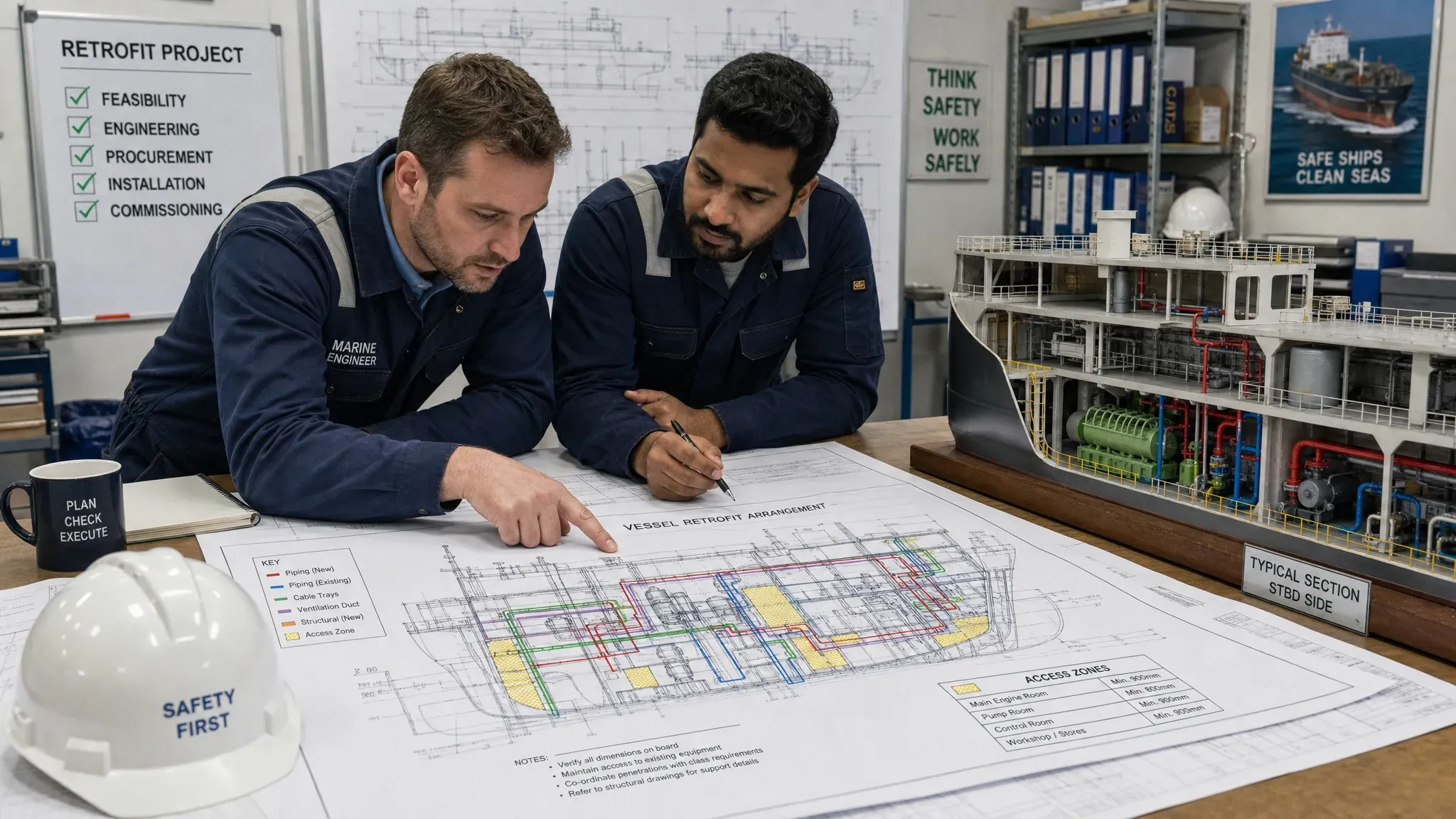
Retrofit projects often create rework because the interfaces are more complex than they first appear. A new skid, scrubber, carbon capture unit, fuel system, ballast treatment package, hydraulic power unit or deck tool may require piping, supports, cable routing, access platforms, drainage, ventilation, fire protection and maintenance space.
A 3D model or coordinated layout review can identify clashes before installation. However, the model is only useful if it includes the right information. Existing structures, equipment envelopes, insulation, valves, flanges, removable spools, access hatches, lifting routes and maintenance clearances should be considered where relevant.
Piping checks should include support spacing, thermal expansion, vibration, drainage, venting, pressure rating, material compatibility, class requirements and interface loads into the supporting structure. A pipe support is not just a small bracket. On a vibrating vessel, it can become a fatigue issue, a maintenance issue or a class comment.
For vessel owners and shipyards, coordinated retrofit engineering reduces the risk of cutting steel twice, rerouting pipework late or discovering that a maintainable system on paper is not maintainable onboard.
Control drawing, model and calculation consistency
Rework can occur even when the engineering itself is correct if the deliverables do not remain consistent. A calculation may assume one plate thickness while the drawing shows another. A 3D model may contain a revised bracket that is missing from the fabrication drawing. A class submission may reference an outdated load case.
Document control is not a clerical task in vessel projects. It is a technical risk control. Every issued package should make it clear which revision is valid, what has changed, who reviewed it and which calculations support it.
A practical review package should usually make these items traceable:
- Design basis and applicable rules
- Load cases and load combinations
- Structural calculations or FEM reports
- Stability, motion, mooring or lifting checks where applicable
- General arrangement and detailed fabrication drawings
- Material, weld, inspection and coating requirements
- Interface drawings for piping, equipment and vessel structure
- Change log, assumptions register and approval comments
This traceability is particularly valuable when multiple parties are involved, such as vessel owners, EPC contractors, shipyards, fabrication suppliers, offshore contractors, class societies and MWS reviewers.
Bring operations and fabrication into the review loop
The best rework prevention often comes from involving the people who will build, install and operate the design. A vessel master, offshore superintendent, fabrication manager, crane specialist or pipefitter may identify practical risks that are not obvious from calculations alone.
Operational review should test the method, not just the object. How will the item be transported to the vessel? Which crane will lift it? Where will temporary supports go? What happens if weather delays the operation? Can emergency access be maintained? Is there enough deck space for rigging, tools and personnel? Are there SIMOPS constraints?
Fabrication review should test how the design will be produced. This includes welding sequence, distortion control, plate nesting, standard profile use, handling weight, trial fit requirements and inspection access.
Project readiness also depends on clear communication during workshops, tenders, site briefings and stakeholder reviews. Even non-engineering logistics, such as arranging a temporary project room or client presentation space with reliable event furniture rental and setup support, can help teams keep technical discussions focused and well organised when schedules are tight.
The principle is the same: remove avoidable friction before it affects execution.
Use technical visualisation for complex marine operations
Some rework is caused by misunderstanding rather than calculation error. Complex lifts, transport sequences, mooring arrangements, skid movements, vessel approach methods or decommissioning steps can be difficult to explain through drawings alone.
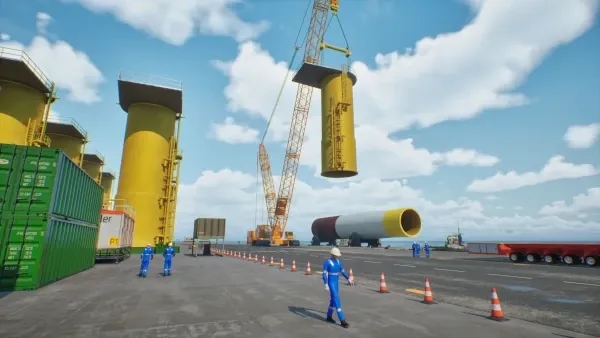
Technical animations, visualisations and sequence models can help align project teams before work begins. They are useful for tenders, method reviews, QHSE briefings, toolbox talks, client presentations and offshore readiness meetings.
The value is not cosmetic. A clear visual sequence can reveal missing access, unsafe personnel positions, unrealistic crane movements, poor rigging clearances, deck congestion or sequence conflicts. When combined with engineering calculations and method statements, visualisation helps technical and non-technical stakeholders understand the operation in the same way.
For high-risk vessel scopes, that shared understanding can prevent offshore delays and last-minute redesign.
A practical checklist before issue for approval or fabrication
Before a vessel project package is issued for approval or fabrication, lead engineers should confirm that the critical checks have been completed. The exact list depends on the project, but the following questions are a strong starting point.
- Is the design basis approved, current and aligned with the intended operation?
- Have critical vessel data, dimensions and interfaces been verified against the as-built condition?
- Are class and MWS requirements understood before finalising the design?
- Are load paths traced into the vessel structure, not only through the new component?
- Have stability, motion, mooring or lifting effects been checked where relevant?
- Has the design been reviewed for weld access, fabrication sequence and installation practicality?
- Are piping, systems, access and maintenance interfaces coordinated?
- Do drawings, models, calculations and reports match the same revision and assumptions?
- Are approval comments, assumptions and changes tracked in a visible way?
- Have fabrication and operations teams reviewed the design before execution?
This type of checklist does not replace engineering judgement. It supports it. The goal is to catch the assumptions that create expensive rework later.
How Fusie Engineers supports rework prevention in vessel projects
Fusie Engineers supports maritime, offshore, renewable energy and heavy lift projects with engineering that is designed for execution. That means looking beyond calculations alone and considering how the design will be fabricated, approved, installed, operated and maintained.
For vessel projects, this can include ship design support, vessel retrofit engineering, piping design, offshore structural design, seafastening, grillages, lifting arrangements, marine engineering, steel detailing, motion and stability-related checks, mooring documentation, FEM verification, shop drawings and approval-ready reporting.
The value lies in combining disciplines early. Structural engineers, heavy lift engineers, mechanical designers and naval architects need to work from the same assumptions. When that happens, the project team can reduce steel weight, simplify fabrication, avoid class review surprises and protect mobilisation schedules.
In practical terms, rework prevention is about disciplined engineering decisions. Use enough steel, but not unnecessary steel. Make welds strong, but also accessible. Design for class review, but also for the yard. Check the lift, but also the vessel response. Produce drawings, but make sure they can be built.
That is the difference between a design that looks complete and a design that is ready for a vessel project.
Frequently asked questions
What is the most common cause of rework in vessel projects? The most common cause is incomplete or unverified input data. Legacy drawings, unclear load cases, missing class requirements and unknown vessel interfaces can all lead to redesign once fabrication or approval review has started.
Why are maritime engineering checks important for retrofits? Retrofits involve existing vessel structure, legacy systems, limited space and class constraints. Maritime engineering checks help confirm that new equipment, piping, supports and access routes fit the real vessel condition and can be approved, fabricated and maintained.
When should class or MWS requirements be checked? They should be checked before detailed design is locked. Early alignment on rules, load cases, documentation and acceptance criteria reduces late comments and avoids rework after drawings have been issued.
How can buildability checks reduce project cost? Buildability checks identify difficult welds, poor access, excessive steel, awkward installation sequences and fabrication constraints before the yard starts work. This reduces cutting, refitting, waiting time and schedule disruption.
Do small vessel modifications need the same level of review as major projects? Not always, but they still need proportionate engineering checks. Even a small foundation, pipe support or deck penetration can create class, fatigue, access or structural issues if the load path and vessel interface are not properly assessed.
Need vessel engineering support that reduces rework?
If your project involves ship design, vessel retrofit, heavy lift, seafastening, piping, marine operations or offshore structural design, early engineering checks can protect schedule, approval and fabrication quality.
Fusie Engineers supports vessel and offshore projects with practical, approval-ready engineering from concept through detailed design and execution preparation. Contact the team to discuss how the right maritime engineering checks can reduce rework before it reaches the yard or offshore campaign.