




Vessel retrofit planning that avoids class and yard rework
2026-05-15
Vessel retrofit projects rarely fail because a bracket cannot be designed or a pipe spool cannot be routed. They fail when decisions made early in the project do not reflect the real vessel, the class approval route, the yard sequence or the operational constraints after modification.
For shipowners, EPC contractors, shipyards and marine contractors, rework during a retrofit is expensive because it arrives at the worst possible moment. The vessel may already be alongside, steel may be ordered, subcontractors may be mobilised and the docking window may be fixed. A late class comment, clash with an existing structure or impractical weld detail can quickly become a schedule and cost issue.
Good vessel retrofit planning reduces that risk. It connects naval architecture, structural design, piping, class requirements, yard buildability and operational readiness before detailed production starts.
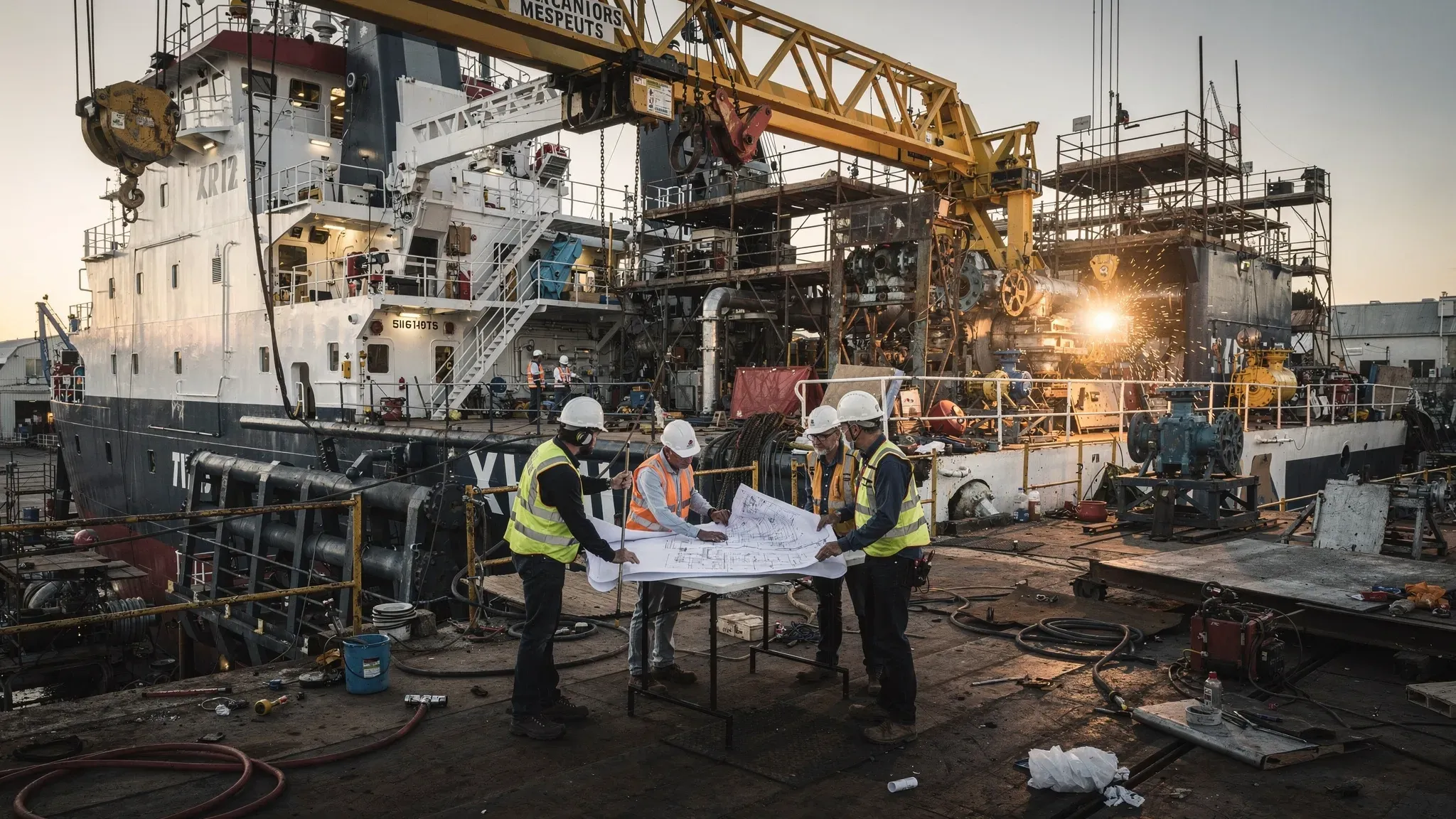
Why vessel retrofit rework happens
Retrofit work is different from newbuild engineering. In a newbuild, the design controls the vessel from the beginning. In a retrofit, the design must negotiate with an existing asset, often with incomplete drawings, past modifications, corrosion, undocumented repairs and limited access.
The most common causes of class and yard rework are predictable:
- Existing drawings do not match the vessel as found during survey.
- Load paths are assumed without checking underdeck structure, local stiffening or fatigue-sensitive details.
- Class implications are reviewed after the concept has already been priced or fabricated.
- Yard access, lifting points, weld positions, coating repair and hot work restrictions are not considered early enough.
- Piping, electrical, HVAC, outfitting and structural interfaces are managed separately instead of as one retrofit system.
- Production drawings are issued without enough installation logic, tolerances or temporary works detail.
A technically correct design can still create rework if it is not buildable, approvable and executable within the yard programme. Retrofit planning should therefore start with a practical question: what must be proven before the yard begins cutting, welding or removing existing systems?
Start with a retrofit basis, not only a drawing request
A vessel retrofit should begin with a clear retrofit basis. This is more than a scope description. It is the technical foundation that explains why the modification is needed, what performance it must achieve and which constraints govern the design.
For example, a deck equipment retrofit may affect deck strength, global stability, power demand, cable routing, fire safety, escape routes, lifting arrangements and operational procedures. A piping retrofit may trigger class review for pressure systems, material selection, penetrations, hazardous areas, testing and commissioning. A vessel conversion for offshore wind, dredging, decommissioning or energy work may also require changes to mission equipment, seafastening, mooring systems, accommodation, access, lifesaving equipment or structural notation.
The retrofit basis should define the vessel, class society, flag requirements, operating area, design loads, operational modes, interfaces, exclusions, approval deliverables and yard assumptions. It should also identify which items are fixed and which items can still be optimised.
This matters because retrofit decisions are interconnected. If the deck arrangement changes, stability may change. If the foundation load increases, underdeck reinforcement may be needed. If reinforcement is needed, access and welding sequence may affect yard duration. If yard duration increases, the commercial case can change.
A strong retrofit basis helps project teams avoid designing the same modification twice.
Validate the vessel before freezing the design
Many retrofit projects begin with legacy drawings, previous class documents and a general arrangement. These are useful, but they are not always reliable enough for final engineering. The vessel may have been repaired, modified or strengthened several times. Equipment may have been moved. Piping routes may have changed. Corrosion margins and plate thickness may not match assumptions.
Before design freeze, the engineering team should confirm the real condition of the vessel. Depending on the scope, this may include onboard survey, 3D scanning, local measurements, material verification, thickness measurements, structural inspection and review of previous modification records.
For structural retrofits, the critical issue is often not the visible foundation. It is the hidden load path. New winches, cranes, mission equipment, cable carousels, tanks, skids or temporary offshore structures can introduce loads into decks, bulkheads, longitudinals, frames and pillars that were not originally designed for that duty. The design must check local strength, global effects where relevant, fatigue exposure, allowable deck loading and the practical feasibility of reinforcement.
For piping retrofits, the same principle applies. A route that looks possible on a model may conflict with existing valves, cable trays, penetrations, insulation, maintenance access or structural members. Tie-in locations, pressure testing, flushing, supports, expansion, vibration and class material requirements need to be resolved before the yard package is released.
The goal is not to survey everything. The goal is to survey the items that can create late change.
Align the class strategy early
Class approval is not a final administrative step. It is a design constraint. Planning should identify which modifications require approval, which documents are needed and which rules or guidance apply.
Class requirements vary by vessel type, notation, flag, modification scope and operating profile. For many projects, the approval route will involve a classification society such as DNV, Lloyd’s Register or ABS. Offshore mobilisation or transport and installation scopes may also involve Marine Warranty Surveyor review, especially where seafastening, grillages, lifting operations, voyage conditions or temporary equipment are involved.
Early class alignment should answer several practical questions. Is the retrofit a minor modification, a major alteration or part of a change in vessel function? Does it affect class notation, stability, structural strength, fire safety, machinery, electrical systems, hazardous area classification or statutory compliance? Are calculations, FEM analysis, drawings, test procedures or commissioning records required? Is preliminary review useful before detailed engineering progresses?
Late class comments are often caused by missing assumptions rather than poor engineering. If a calculation package does not explain design loads, boundary conditions, corrosion assumptions, fatigue relevance or load combinations, reviewers have to ask questions. Those questions can delay approval and force revisions to drawings already issued to the yard.
Approval-ready documentation should be traceable. The design basis, calculations, drawings and reports must tell the same story. Loads used in FEM models should match loads shown on drawings. Welding details should match strength assumptions. Material grades should match procurement. Stability data should match the installed configuration.
Design for the yard as well as for class
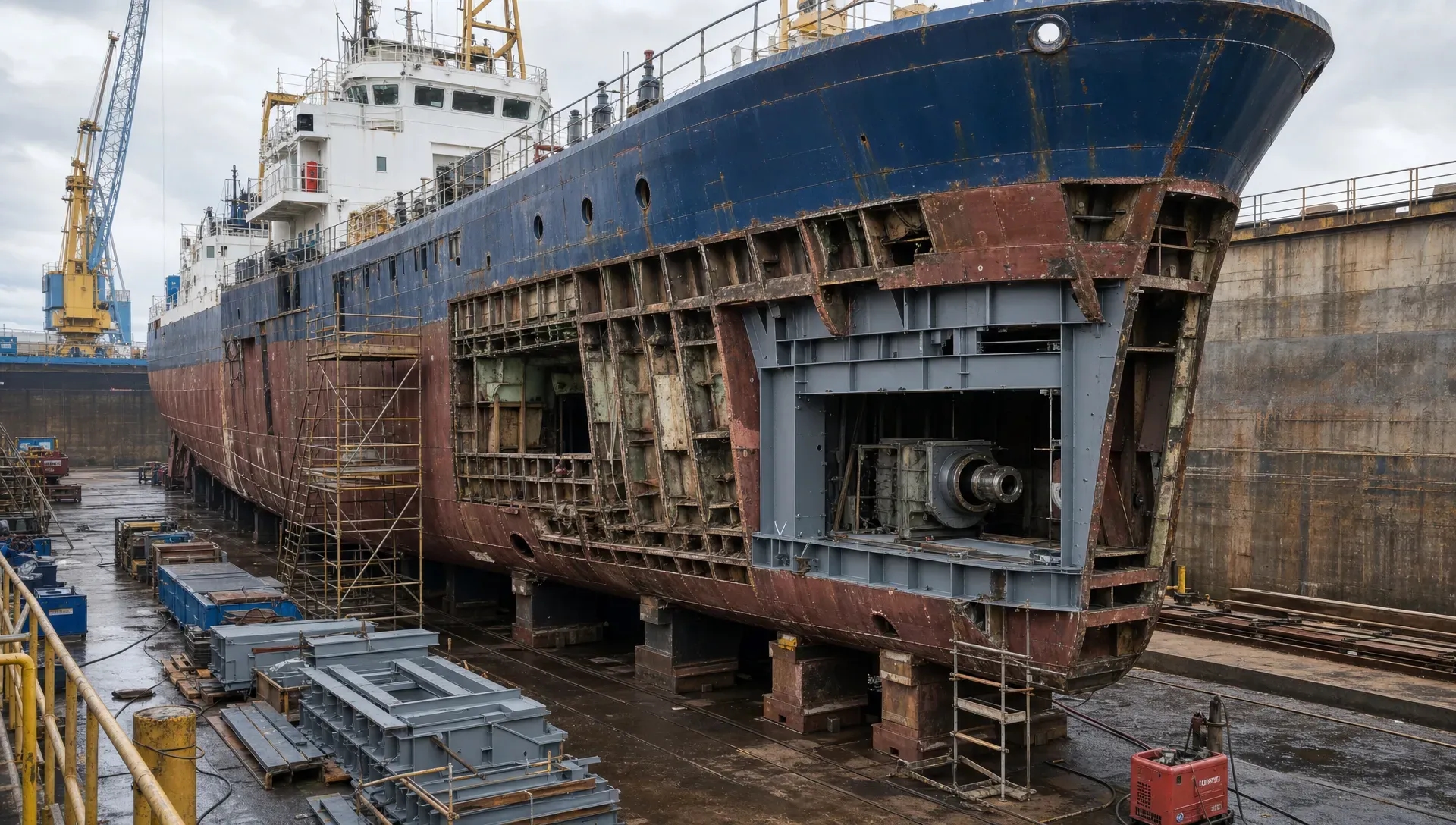
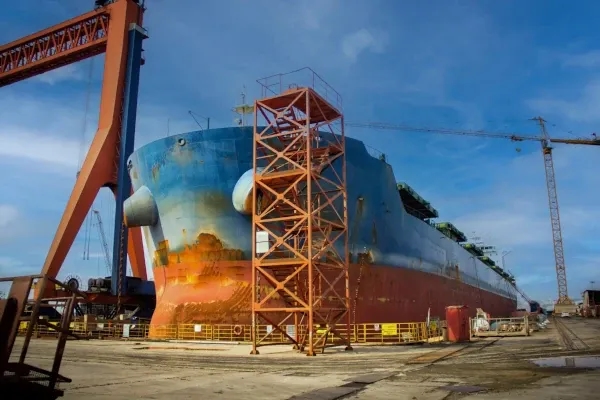
Class approval confirms compliance, but it does not automatically make a retrofit easy to build. Yard rework is often caused by details that look acceptable on paper but are difficult to fabricate, fit, weld, inspect or coat on board.
Buildability should be reviewed during concept and detail design. This includes module size, lifting weight, transport route through the yard, onboard access, temporary supports, weld access, distortion control, coating repair, inspection access and the sequence of removal and installation.
A good retrofit design reduces unnecessary complexity. That can mean using simpler stiffener layouts, avoiding hard-to-access welds, designing reinforcement that can be installed in realistic sections, minimising exotic materials, reducing hot work near sensitive systems or designing pipe spools around actual installation openings.
For shipyards, clarity matters. Production drawings should not leave critical decisions to the fitter on the day of installation. They should show interfaces, dimensions, tolerances, weld details, materials, surface treatment, testing requirements and hold points. Where relevant, they should also include temporary works, lifting arrangements, fit-up sequence and notes for surveyor attendance.
This is where practical engineering judgement adds value. The lightest solution is not always the best solution if it increases fabrication time or inspection difficulty. The strongest solution is not always the best solution if it overloads surrounding structure or creates unnecessary steel weight. The right solution is safe, class-compliant, buildable and suitable for the vessel’s operating life.
Control interfaces between disciplines
A vessel retrofit is an interface management exercise. Structural engineering, naval architecture, piping, mechanical systems, electrical systems, operations, procurement, yard planning and class approval all affect each other.
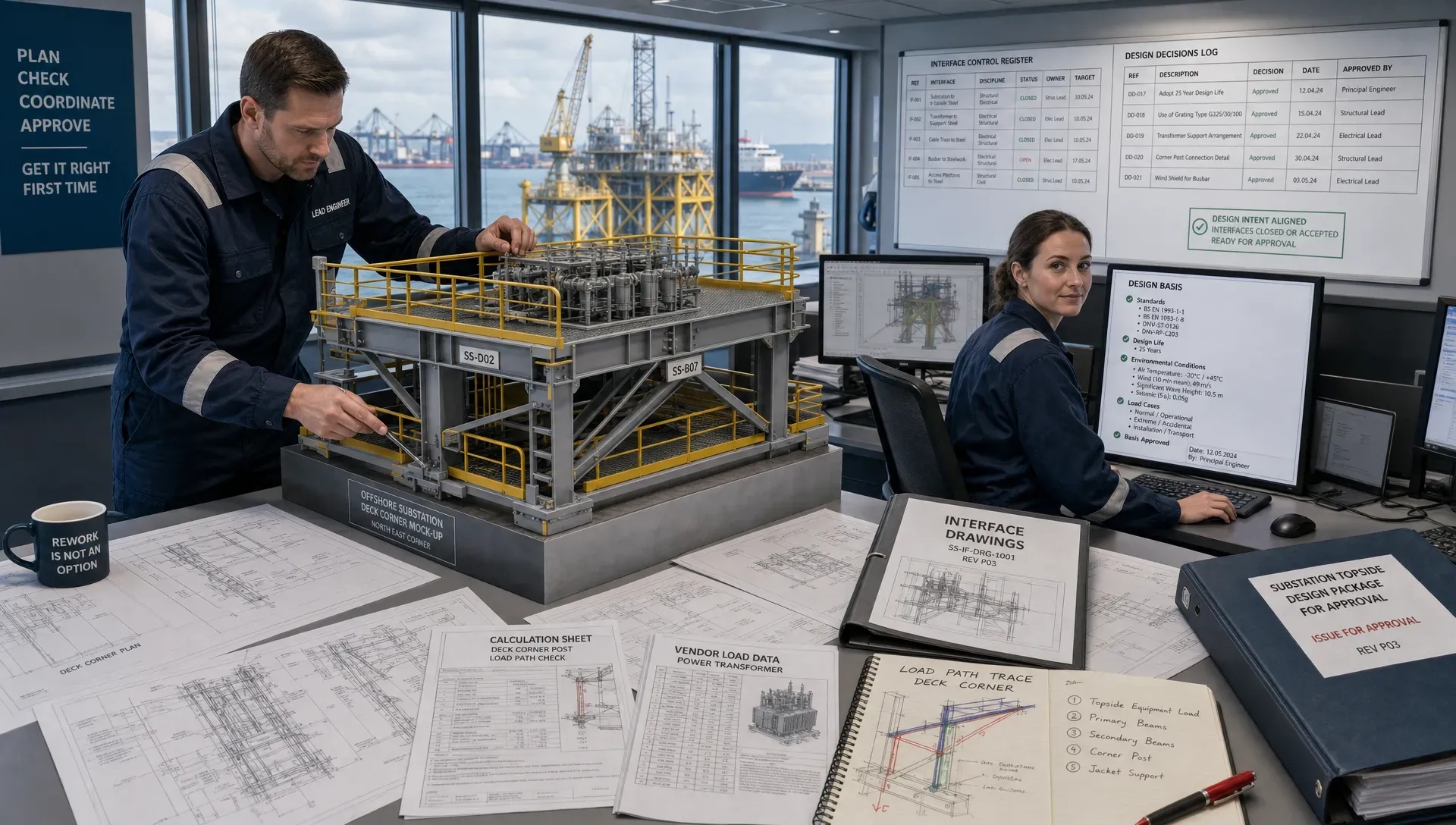
Interface control should be deliberate. The project team should maintain a clear register of assumptions, responsibilities and open points. If a new equipment supplier changes the footprint, weight or centre of gravity, the structural design and stability assessment may need review. If a pipe route changes, penetrations, supports and fire boundaries may be affected. If a yard proposes a different installation sequence, temporary strength or access requirements may change.
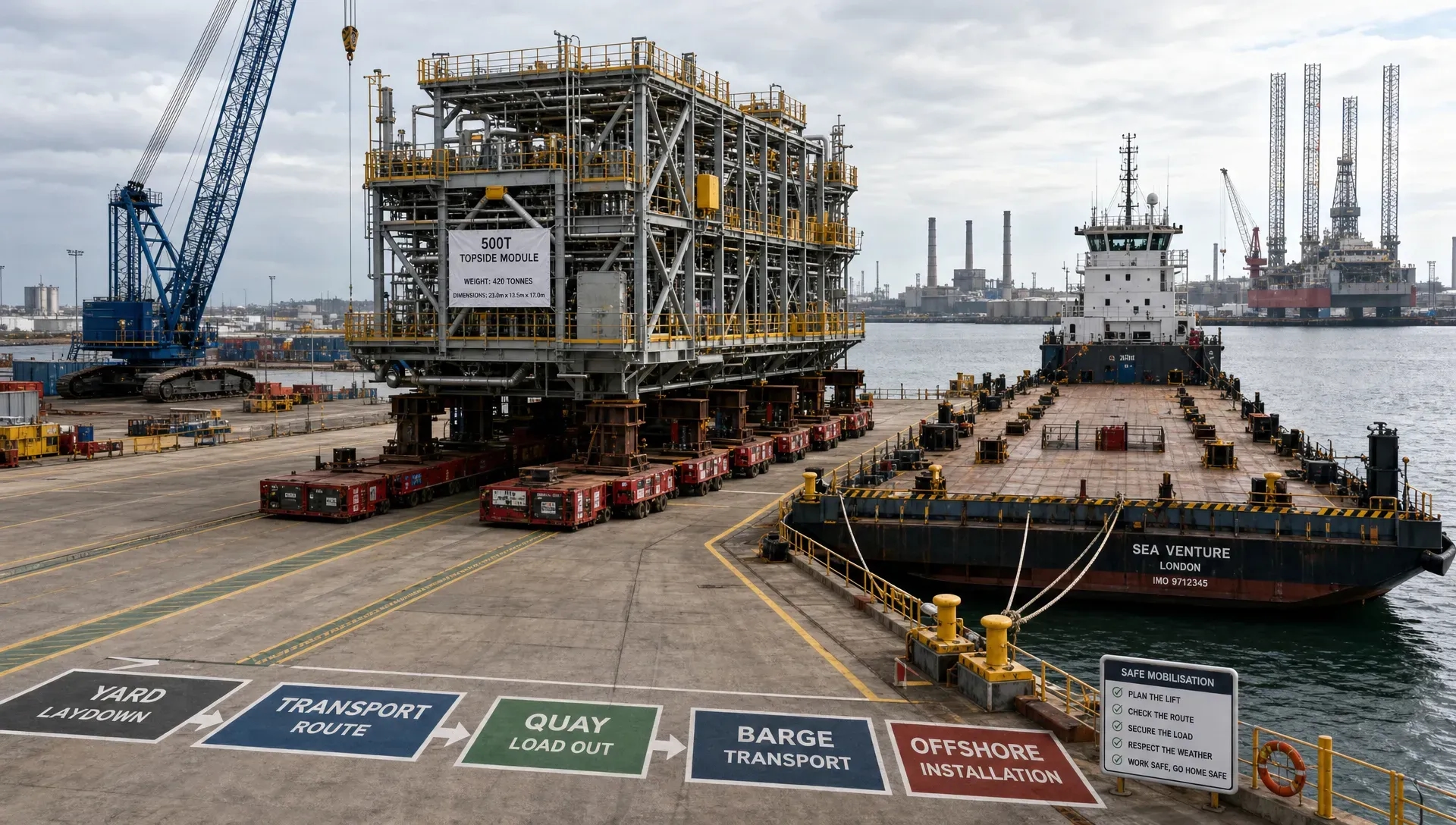
This is especially important when the retrofit supports offshore operations. Seafastening, grillages, temporary mission equipment, mooring arrangements, lifting aids and offshore installation structures must work with vessel motions, deck capacity, operational weather limits and mobilisation constraints. A design that ignores marine operations can create risk offshore, even if it looks acceptable during yard installation.
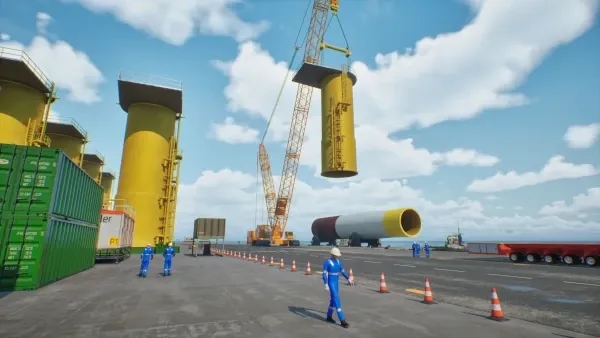
Visual communication can help. For complex marine operations, technical animations and clear 3D visualisations can support tenders, HSE briefings, installation planning and stakeholder review. They do not replace engineering calculations, but they make complex sequences easier to understand and challenge before execution.
Build a documentation package that prevents questions
Incomplete documentation is one of the fastest ways to generate class comments and yard delays. A retrofit package should be prepared around the needs of reviewers, fabricators and site teams.
A typical approval and execution package may include:
- Retrofit design basis with governing rules, loads, assumptions and interfaces.
- Structural calculations, FEM reports or local strength checks where required.
- Stability assessment or weight and centre of gravity update if the modification affects vessel condition.
- Class drawings, production drawings, steel detailing and material specifications.
- Piping isometrics, supports, tie-in details, pressure test requirements and commissioning notes.
- Lifting, handling or temporary works calculations for installation in the yard.
- Inspection, testing and survey hold points for class, yard and client review.
- Redline and as-built process to capture changes during execution.
The important point is consistency. If the design basis states one design load and the drawing notes another, class will ask questions. If the FEM model assumes continuous welding but the drawing shows intermittent welds, fabrication will stop. If a pipe support detail is missing, the yard may improvise, which can create later vibration, fatigue or inspection issues.
Clear documentation protects the schedule. It gives class reviewers confidence, helps the yard fabricate correctly and gives project directors traceability when decisions are challenged.
Plan for yard realities before mobilisation
Even with good engineering, retrofit execution can uncover surprises. The difference between a controlled project and a disrupted project is how well those surprises are anticipated.
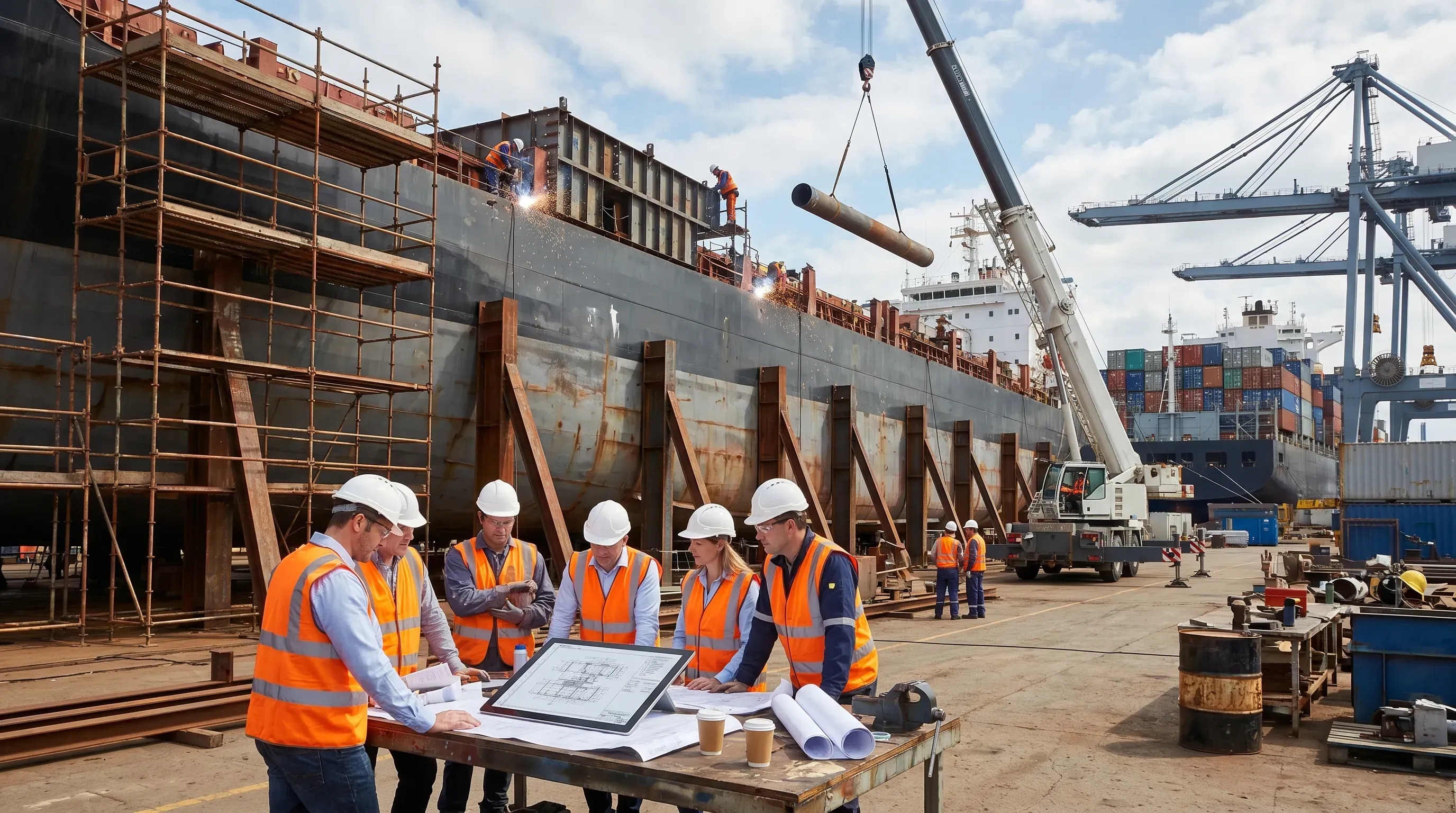
Before mobilisation, the team should agree how technical queries, class comments, non-conformities and site changes will be handled. Response times matter because a vessel in the yard is a running cost. Engineering support should be available to review as-found deviations, approve minor modifications, update drawings and confirm whether changes affect class approval.
Yard planning should also include surveyor attendance, material availability, prefabrication status, access preparation, isolation requirements, lifting equipment, scaffolding, coating repair and commissioning sequence. If the retrofit affects vessel readiness for charter, offshore mobilisation or project start-up, these items are not secondary details. They are schedule-critical.
For offshore contractors and renewable energy developers, this is especially important when vessel retrofit work is linked to a project mobilisation date. A delay in grillage installation, piping completion or class approval can affect heavy lift operations, transport schedules, weather windows and offshore installation readiness.
How Fusie Engineers supports vessel retrofit planning
Fusie Engineers supports vessel retrofit, ship design, marine engineering, structural design, piping design, steel detailing and heavy lift engineering for maritime, offshore wind, traditional energy, decommissioning, dredging and renewable energy projects.
The value is not only producing drawings. Retrofit work requires engineering judgement across vessel behaviour, marine environments, class requirements, yard constraints and offshore execution. Fusie Engineers can support clients from concept and calculations through detailed engineering, approval documentation, shop drawings and operational readiness.
Typical support can include structural assessments, FEM calculations, foundation and reinforcement design, vessel retrofit and piping design, lifting arrangements, mooring-related engineering, seafastening and grillage design, steel detailing, class documentation and technical visualisations for complex operations.
For clients with internal engineering teams, Fusie Engineers can also provide focused specialist support where capacity or discipline expertise is limited. That may mean checking a critical load path, developing a class-ready calculation package, preparing yard fabrication drawings or coordinating retrofit interfaces between naval architecture, structural engineering and marine operations.
The objective is practical: reduce rework, reduce approval risk and help the vessel leave the yard ready for safe operation.
Frequently asked questions
What is the biggest cause of vessel retrofit rework? The biggest cause is usually incomplete early information. If existing vessel data, class requirements, yard constraints and discipline interfaces are not confirmed before design freeze, changes tend to appear during approval or fabrication.
When should class be involved in a vessel retrofit? Class should be considered during concept development, not only after detailed drawings are complete. Early alignment helps confirm required calculations, drawings, tests and approvals before procurement or fabrication begins.
Does every vessel retrofit require FEM analysis? No. FEM analysis depends on the modification, loads, structure and class expectations. Local calculations may be enough for some scopes, while heavy equipment foundations, complex reinforcements, fatigue-sensitive areas or offshore installation structures may require FEM.
How can a shipyard reduce retrofit delays? A shipyard can reduce delays by using accurate as-found data, reviewing buildability before production, agreeing class hold points, clarifying installation sequence and maintaining a fast technical query process with the engineering team.
Why is piping retrofit planning difficult on existing vessels? Piping retrofits must work around existing systems, access restrictions, penetrations, supports, material requirements, testing and commissioning. Legacy data is often incomplete, so survey and interface control are essential.
Need retrofit engineering support that survives class and yard review?
If your vessel retrofit involves structural modification, piping changes, mission equipment, offshore mobilisation, seafastening, grillages or class approval, early engineering decisions will shape the cost and schedule of the whole project.
Fusie Engineers helps vessel owners, shipyards, EPC contractors, marine contractors and offshore project teams develop practical, buildable and approval-ready retrofit solutions. Get support from engineers who understand vessel constraints, class documentation, fabrication realities and offshore execution pressure.