


How a mechanical design engineer supports retrofit success
2026-06-01
Retrofit projects rarely fail because one calculation was difficult. They usually fail when interfaces are discovered too late, survey data is incomplete, access is underestimated, or a technically correct design proves too slow to fabricate and install. In vessel, offshore and energy-sector retrofits, this is where a mechanical design engineer becomes central to project success.
A retrofit is not a clean-sheet design. The new system must fit into an asset that already has structure, piping, cable routes, access restrictions, class history, operational habits and schedule pressure. The role of the mechanical design engineer is to turn those constraints into a safe, buildable and approval-ready solution without losing control of cost, weight or programme.
Whether the scope is an onboard carbon capture system, a piping modification, a vessel upgrade, a skid package, a winch foundation, a dredging equipment modification or a heavy-lift interface, mechanical design connects the technical idea to the real asset.
Why retrofit success depends on early mechanical design
Retrofitting is increasingly important across maritime, offshore wind, decommissioning, dredging, green technology and traditional energy. Vessel owners and project developers are extending asset life, improving operational capability and responding to decarbonisation requirements. The IMO’s 2023 greenhouse gas strategy, for example, has reinforced the need for practical modifications that can reduce emissions while keeping fleets operational.
The challenge is that retrofit scopes compete with existing vessel realities. A new system may look straightforward on a supplier data sheet, but once it is placed on board it affects deck loading, stability, maintenance routes, pipe routing, ventilation, lifting access, fire zones, hull penetrations and class approval.
A mechanical design engineer supports retrofit success by asking practical questions early:
- Can the equipment physically fit in the selected location?
- Can it be lifted, moved and installed during the available yard window?
- Are the load paths suitable for the existing structure?
- Can pipe spools, valves, supports and access platforms be fabricated without excessive complexity?
- Can the system be inspected, isolated and maintained after commissioning?
- Will class, the Marine Warranty Surveyor or the client’s technical authority receive the documentation they need?
These questions may seem basic, but in retrofit engineering they determine whether the project remains controlled or becomes a sequence of site workarounds.
The mechanical design engineer as the interface controller
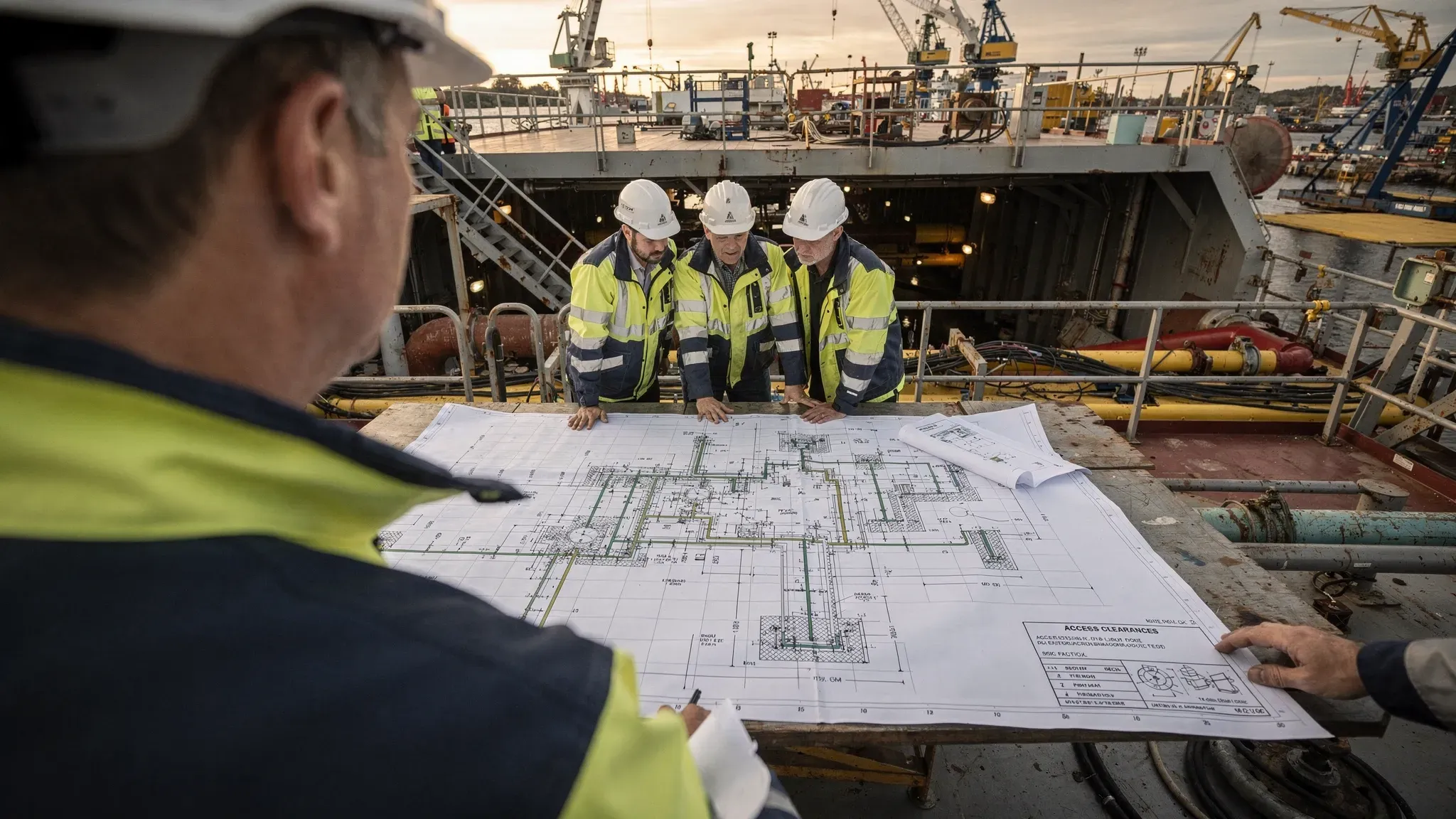
In a retrofit, the mechanical design engineer often sits at the centre of several disciplines. Equipment suppliers provide loads, envelopes and connection points. Structural engineers verify foundations and reinforcements. Naval architects check stability, trim and vessel behaviour. Piping designers route systems through tight spaces. Operations teams need a design that can actually be installed and maintained.
Without strong interface control, small assumptions become expensive changes. A pump skid may clash with an existing pipe bridge. A support bracket may land above a weak underdeck area. A spool piece may be impossible to install because there is no removal path. A valve may be technically accessible in the model but unreachable by a technician wearing PPE in the engine room.
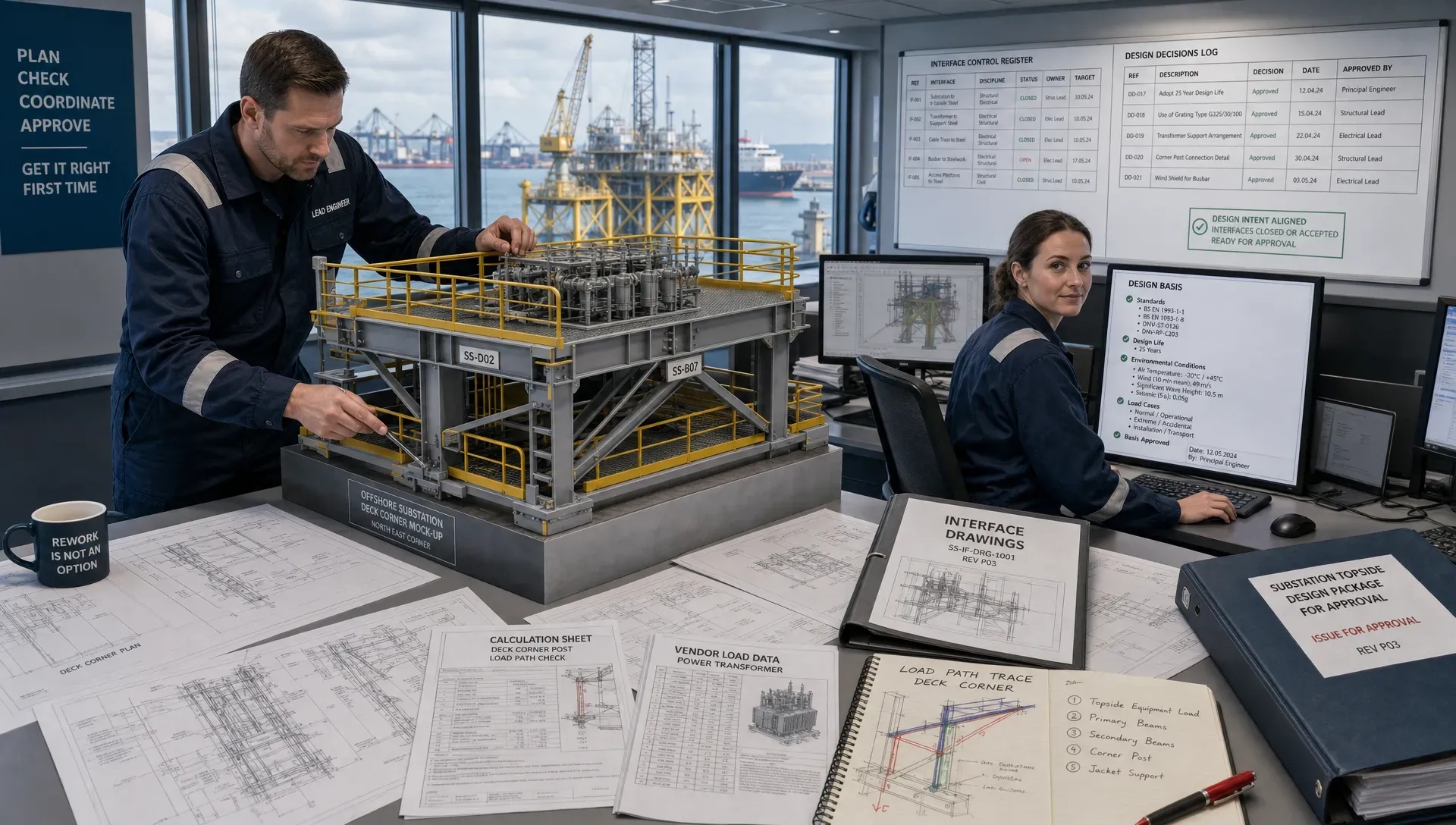
The mechanical design engineer helps avoid these issues by translating requirements between disciplines. The task is not only to produce geometry, but to protect the design intent through every interface. This includes equipment layout, bolted and welded connections, lifting points, pipe support philosophy, service clearances, drainage, maintenance access and installation sequence.
This interface role is especially important when retrofits involve third-party technology packages. Many decarbonisation, treatment, power or process systems are developed as modules. The module may be well engineered, but the vessel integration still requires project-specific mechanical and structural judgement.
Starting with the right design basis
A successful retrofit starts before modelling begins. The mechanical design engineer needs a clear design basis that defines the asset, the scope and the acceptance criteria. For vessels and offshore structures, this often means combining existing drawings, vendor data, survey results, class requirements, operational limits and client specifications.
Legacy information is rarely perfect. Drawings may not match the as-built condition. Previous repairs may have changed plate thicknesses, stiffener arrangements or pipe runs. Equipment may have been modified without full drawing updates. For this reason, the first engineering task is often to identify uncertainty and decide how it will be managed.
Good retrofit design basis information typically includes existing arrangement drawings, structural drawings, system diagrams, weight limits, equipment data sheets, environmental conditions, load cases, materials, fabrication constraints, class rules and yard execution assumptions. When available, survey reports, photographs and point clouds help close the gap between documentation and reality.
This diagnosis-first mindset is not unique to marine engineering. At a much smaller asset scale, practical resources such as diagnosis-led repair guidance show the same principle: understand the fault, access constraints and replacement requirements before selecting the fix. In vessel and offshore retrofits, the stakes are higher, but the engineering discipline is similar. A solution should be based on the real condition of the asset, not assumptions.
Designing for buildability, not only compliance
A retrofit design can meet the calculation requirements and still cause problems in fabrication. This is one of the main reasons mechanical design must be closely connected to yard reality.
Buildability means the design can be fabricated, transported, lifted, installed, inspected and maintained within the project constraints. In practical terms, it affects weld access, tolerances, plate sizes, bolting philosophy, modularisation, coating access, pipe spool lengths, temporary supports and whether the yard can use standard materials and processes.
A mechanical design engineer adds value by simplifying where possible. That may mean changing a welded assembly to a bolted connection for easier installation, splitting a skid into modules to suit lifting limits, aligning support points with existing structure, reducing complex cut-outs, or choosing pipe routing that reduces hot work in congested spaces.
The best retrofit designs are not always the ones with the least material. They are the ones that balance weight, fabrication time, inspection requirements and operational reliability. Reducing steel is valuable, but not if it introduces fatigue risk, complex welding or difficult approval discussions. Likewise, adding reinforcement may be necessary, but over-reinforcing can increase weight, coating time, installation effort and stability impact.
This is where engineering judgement matters. Design decisions should be traceable, but they should also make sense to the people who will build and operate the asset.
Managing loads, motions and vessel constraints
Mechanical retrofit scopes often introduce new loads into existing structures. Equipment foundations, pipe racks, lifting appliances, carbon capture skids, winches, reel systems, sea fastening arrangements and temporary installation tools all need load paths that the vessel or structure can safely resist.
The mechanical design engineer works with structural engineers and naval architects to define these loads correctly. Static equipment weight is only one part of the picture. Offshore and maritime assets also experience vessel motions, accelerations, vibration, sloshing, fatigue, thermal expansion, operational loads and accidental load cases.
For example, a skid installed on deck may require checks for global vessel accelerations, local deck capacity, underdeck stiffening, bolted connection loads, lifting during installation and sea transport. A piping retrofit may require flexibility checks, support loads, penetration details, valve loads and maintainability reviews. A heavy-lift or decommissioning modification may require temporary support design, grillage interfaces, lifting analyses and approval documentation.
This is why retrofit engineering should not be treated as isolated drafting work. The geometry matters, but the physical behaviour of the vessel, structure and mechanical system matters more.
Supporting class and approval readiness
Approval delays can damage a retrofit schedule, especially when a vessel has a fixed yard slot or an offshore mobilisation date. A mechanical design engineer supports approval readiness by ensuring the design package is complete, consistent and reviewable.
For maritime and offshore projects, approval stakeholders may include the vessel owner, EPC contractor, shipyard, Marine Warranty Surveyor, flag state, DNV, Lloyd’s Register, ABS or other class societies. Each party may focus on different risks, but they all need clear evidence that the design is safe and suitable.
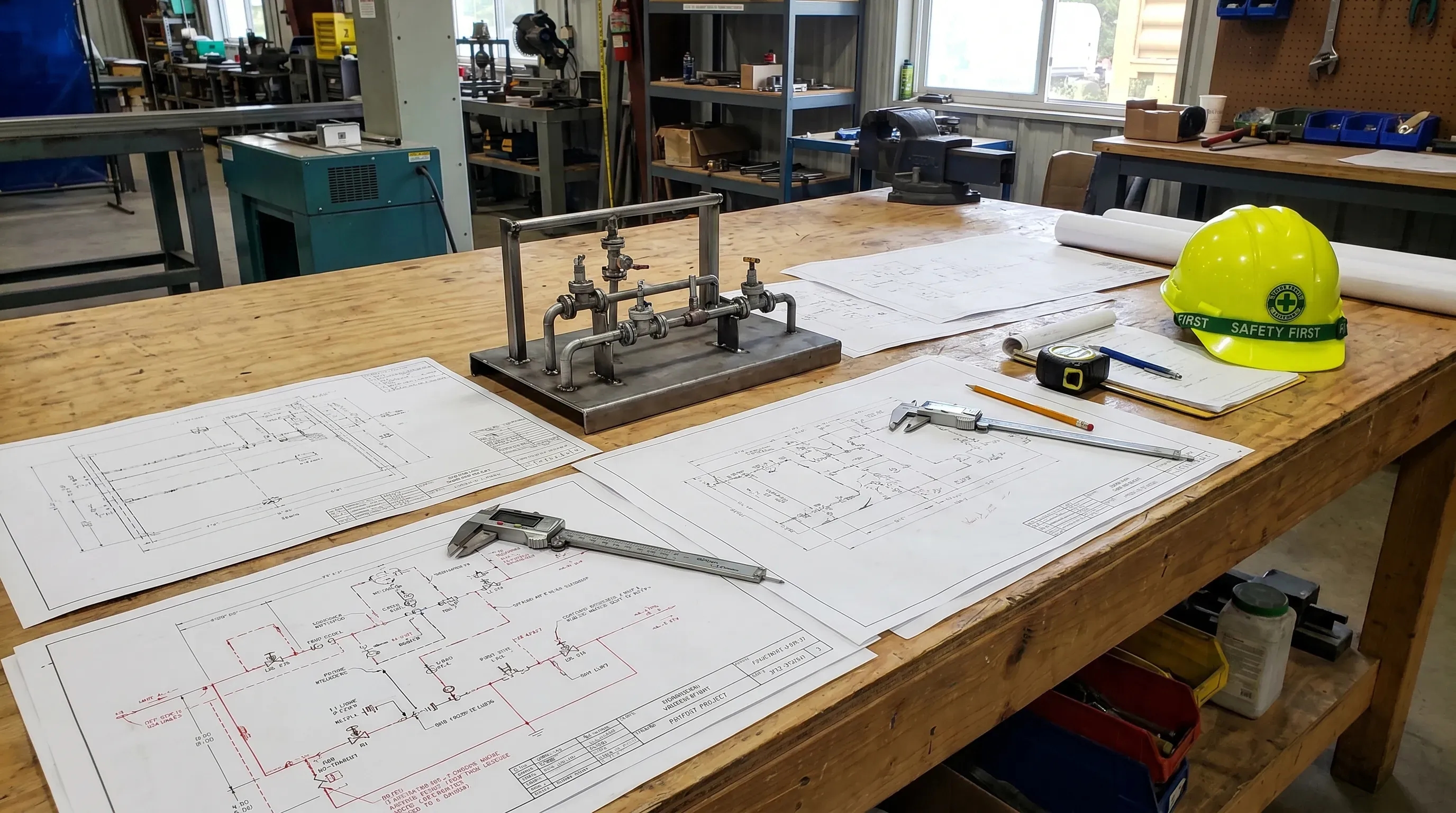
Depending on the scope, a retrofit engineering package may include arrangement drawings, mechanical layouts, equipment foundation drawings, piping layouts, support details, material specifications, welding information, load summaries, FEM calculations, lifting arrangements, stability input, installation methodology and inspection requirements.
The mechanical design engineer helps keep these deliverables aligned. A common approval problem is not that one document is missing, but that documents contradict each other. A load in a calculation may not match the drawing. A pipe support may be shown in the model but missing from the fabrication package. A vendor drawing may be updated without the foundation design being revised. Strong document control and interface awareness reduce these risks.
Retrofit examples where mechanical design makes the difference
Mechanical design engineering adds value across a wide range of retrofit projects. In vessel retrofit and piping work, it helps integrate new systems into congested machinery spaces while respecting access, isolation, drainage and class requirements. In emissions-reduction projects, it supports the placement of skids, piping, structural supports and service access around existing vessel arrangements.
Fusie Engineers has worked on retrofit engineering packages related to onboard carbon capture and supporting steel structures, including the collaboration described in the Value Maritime retrofit project update. Projects of this type show why integration is as important as the technology itself. A capture system, treatment package or process skid must be supported by foundations, piping, access and documentation that suit the host asset.
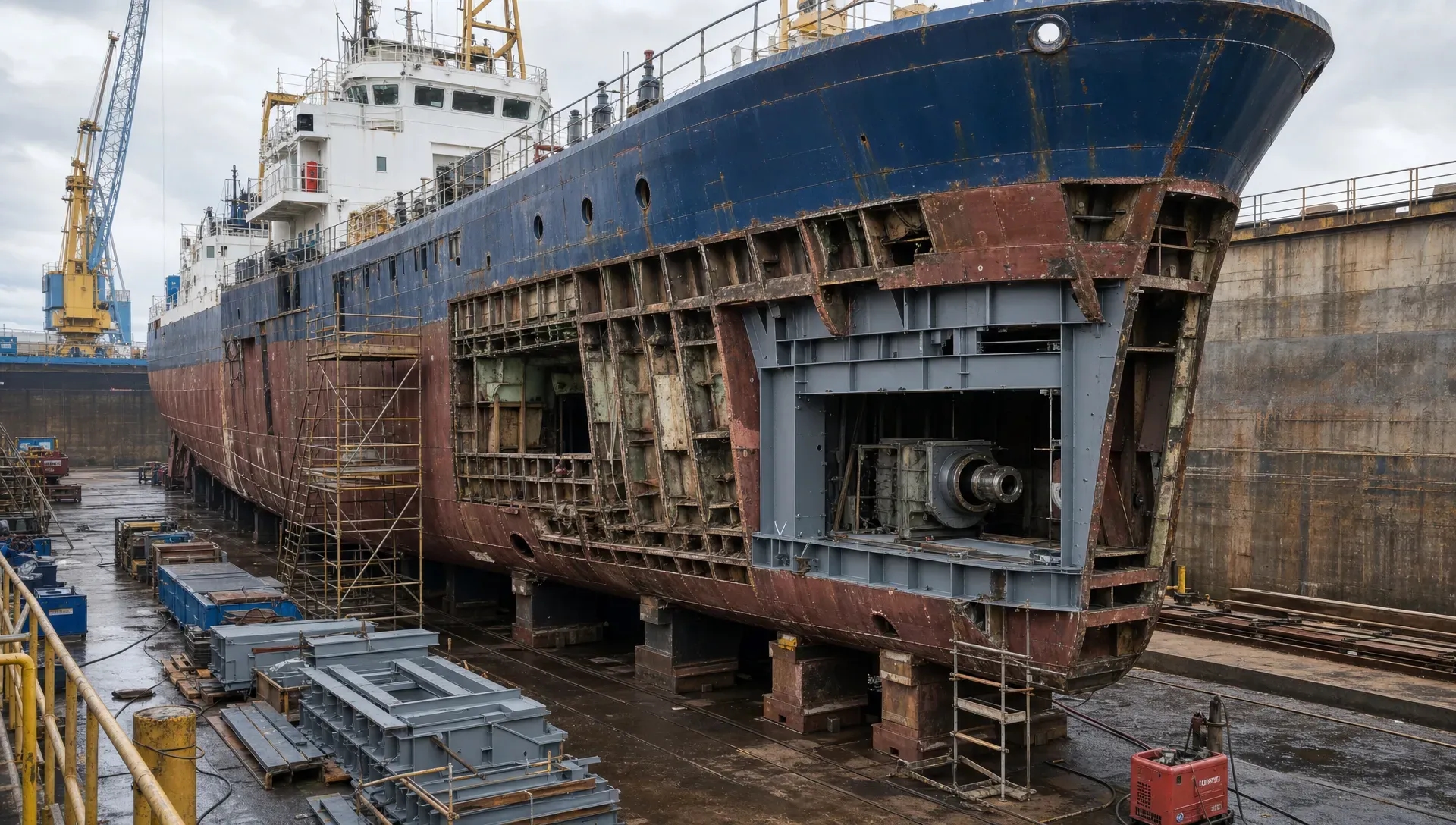
In ship repair and conversion, mechanical design engineers help resolve the practical issues that emerge when old and new systems meet. Existing piping may not follow current drawings. Penetrations may need reinforcement. New equipment may affect escape routes or maintenance zones. Weight growth may influence stability margins. Early mechanical review helps identify these constraints before they become yard changes.
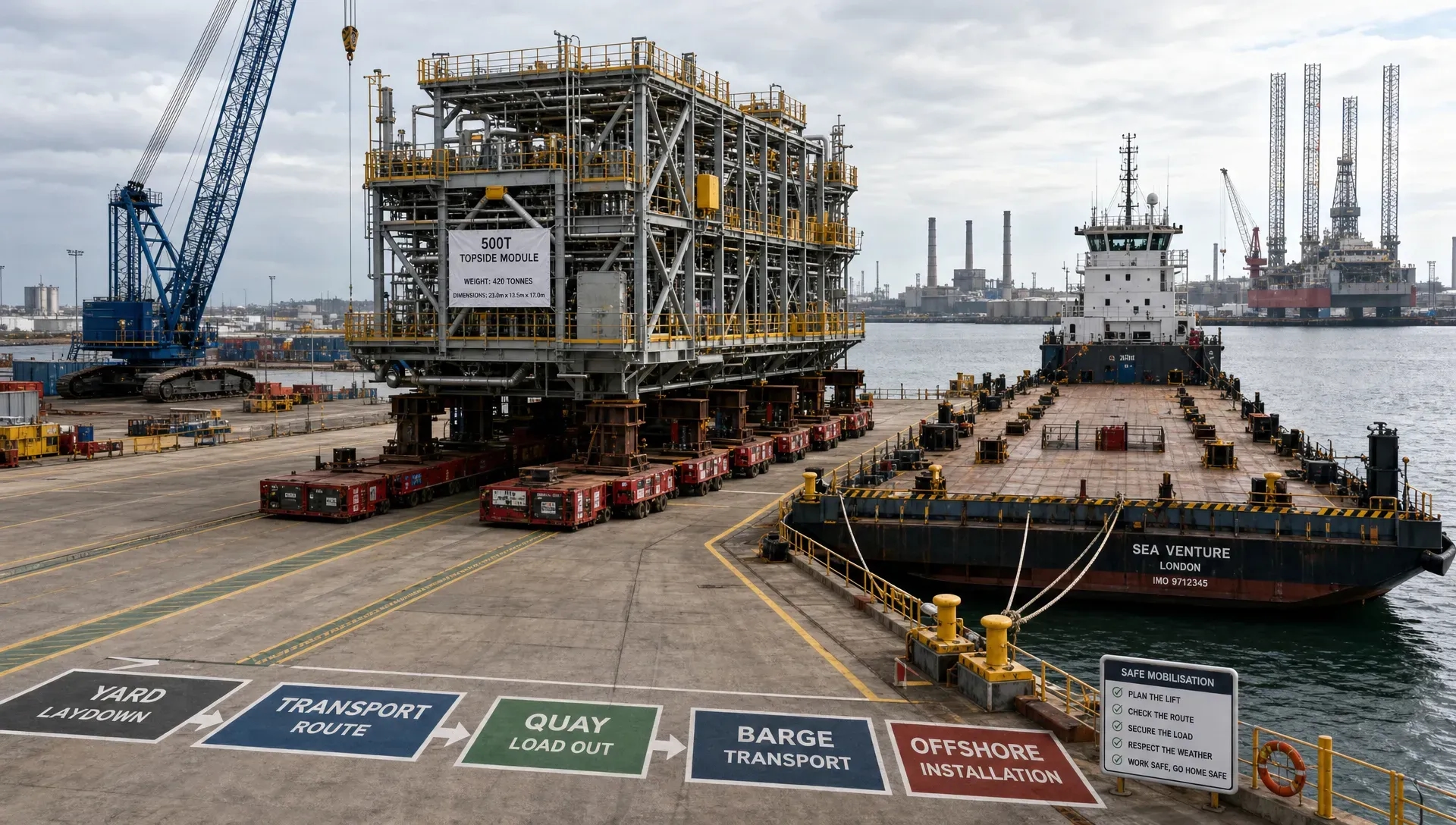
In heavy lift, offshore installation and decommissioning projects, mechanical design supports temporary structures, custom tools, grillages, seafastening, lift points and handling arrangements. These items may be temporary, but they are safety-critical. They need the same attention to load paths, fabrication details and approval documentation as permanent structures.
The link between mechanical design and steel detailing
Retrofit success depends heavily on the handover from engineering to fabrication. If the mechanical concept is not translated into clear fabrication information, site teams lose time resolving clashes, missing dimensions or unclear weld details.
Steel detailing is therefore closely connected to mechanical retrofit design. It turns the approved engineering intent into fabrication-ready drawings, part information and assembly logic. For marine work, this must account for curved surfaces, limited access, coating requirements, transport, lifting and the reality of installation on existing assets.
Fusie Engineers explains this relationship further in its article on why steel detailing matters in marine fabrication. For retrofit projects, the key point is simple: a design is not complete when the calculation passes. It is complete when the yard can build it, the reviewer can approve it and the operator can use it safely.
How mechanical design helps control cost and schedule
Cost control in retrofit engineering is not only about reducing engineering hours. The largest savings often come from avoiding rework, reducing installation time and preventing approval delays.
A mechanical design engineer can reduce project risk by identifying high-cost decisions early. For example, moving equipment a short distance in the layout may avoid major underdeck reinforcement. Adjusting support spacing may reduce pipe stress and simplify fabrication. Splitting an assembly may allow installation using available vessel or yard lifting equipment. Standardising brackets and details may reduce procurement and welding time.
Good mechanical design also improves planning. Clear installation logic helps project managers understand what must happen before the vessel enters the yard, what can be prefabricated, what needs class review, and where long-lead information is still missing. This supports better decisions on procurement, fabrication sequencing and mobilisation.
The result is not just a neater design package. It is a retrofit scope with fewer surprises during execution.
What to involve a mechanical design engineer in before the yard window
The best time to involve a mechanical design engineer is before the project becomes locked into a layout, supplier package or installation method. Early review can prevent decisions that are expensive to reverse.
Before the yard window, mechanical design input should support equipment location studies, access reviews, lifting and handling concepts, foundation feasibility, piping route checks, structural interface identification, weight control and approval planning. These activities give the project team a realistic view of what is possible, what needs survey confirmation and what may require class discussion.
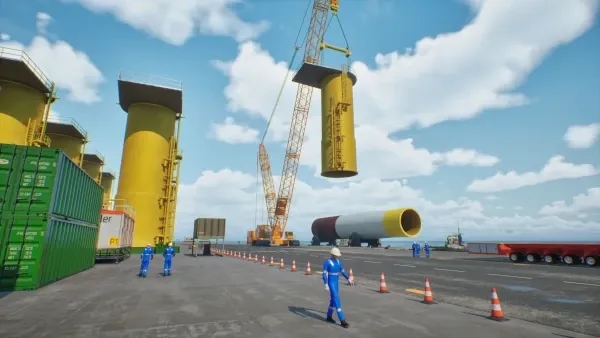
This early phase is also where technical animations and visualisations can help. For complex marine operations, retrofit installation steps or heavy-lift sequences, visual communication can reduce misunderstanding between engineering, operations, QHSE teams, client stakeholders and offshore crews. The purpose is not presentation for its own sake. It is to make the method clear enough that risks can be reviewed before execution.
How Fusie Engineers supports retrofit success
Fusie Engineers supports retrofit projects with a multidisciplinary team that includes mechanical designers, structural engineers, heavy-lift engineers and naval architects. This combination is important because retrofit work rarely fits neatly into one discipline.
For vessel owners, shipyards, EPC contractors, offshore contractors and renewable energy developers, Fusie Engineers can support scopes such as vessel retrofits, piping design, skid systems, offshore structural design, marine engineering, heavy-lift interfaces, steel detailing and approval documentation. Deliverables can include calculations, drawings, FEM checks, lifting arrangements, stability-related input, mooring or motion considerations where relevant, and fabrication-ready packages.
The value lies in combining engineering judgement with practical execution awareness. Retrofit design must satisfy the technical rules, but it must also respect vessel limitations, fabrication capacity, installation sequence, class expectations and the cost of delay. Fusie Engineers focuses on solutions that are safe, buildable, maintainable and clear enough for review.
For teams facing tight deadlines, uncertain legacy data or limited internal capacity, this can provide the engineering depth needed to keep the retrofit moving without treating the work as simple drafting support.
Frequently asked questions
What does a mechanical design engineer do in a retrofit project? A mechanical design engineer develops and validates the practical integration of new or modified systems into an existing asset. This includes layout, equipment foundations, access, piping interfaces, support concepts, installation considerations and coordination with structural, naval architecture, class and fabrication teams.
When should a mechanical design engineer be involved in a vessel retrofit? The ideal time is during feasibility or concept development, before equipment locations, yard methods and supplier interfaces are fixed. Early input helps identify access issues, structural constraints, class requirements and fabrication risks before they become costly changes.
How does mechanical design support class approval? Mechanical design supports approval by producing consistent, traceable documentation. This may include drawings, load assumptions, calculations, foundation details, piping support information, material specifications and installation notes that allow class societies, MWS teams and client reviewers to assess the design efficiently.
Can better mechanical design reduce retrofit cost? Yes, when it reduces rework, steel weight, welding complexity, installation time and approval delays. Cost reduction should not compromise safety, but practical design choices can often simplify fabrication and improve schedule certainty.
What information is needed to start retrofit engineering? Useful starting information includes existing vessel drawings, survey data, equipment specifications, operational requirements, weight limits, class requirements, photographs, interface details, preferred yard methods and the required delivery schedule. If some information is missing, the engineering team should identify assumptions and survey needs early.
How is retrofit design different from newbuild design? Newbuild design starts with more freedom and clearer control over the full asset. Retrofit design must work around existing structure, systems, access routes, class history and operational constraints. That makes interface control and practical installation planning especially important.
Planning a vessel, offshore or energy-sector retrofit requires more than a working layout. It needs engineering that connects concept, calculations, fabrication, approval and execution. If your project involves vessel modifications, piping, skid integration, heavy-lift interfaces or marine structural support, contact Fusie Engineers to discuss how a practical retrofit design approach can reduce risk and support on-time delivery.