


How marine engineering cuts risk in offshore projects
2026-05-16
Offshore projects are rarely limited by a single calculation. Risk builds through interfaces: vessel capacity, structural response, lifting geometry, seafastening, mooring behaviour, weather windows, fabrication tolerances, class review and offshore execution. A design can be structurally correct on paper and still create delay, rework or unsafe conditions if it does not reflect how the operation will actually be performed.
That is where marine engineering creates value. It connects naval architecture, structural engineering, marine operations and approval documentation into one practical design process. For offshore contractors, EPC teams, shipyards, vessel owners and renewable energy developers, this integration can be the difference between a smooth campaign and a costly mobilisation problem.
Offshore risk is an interface problem
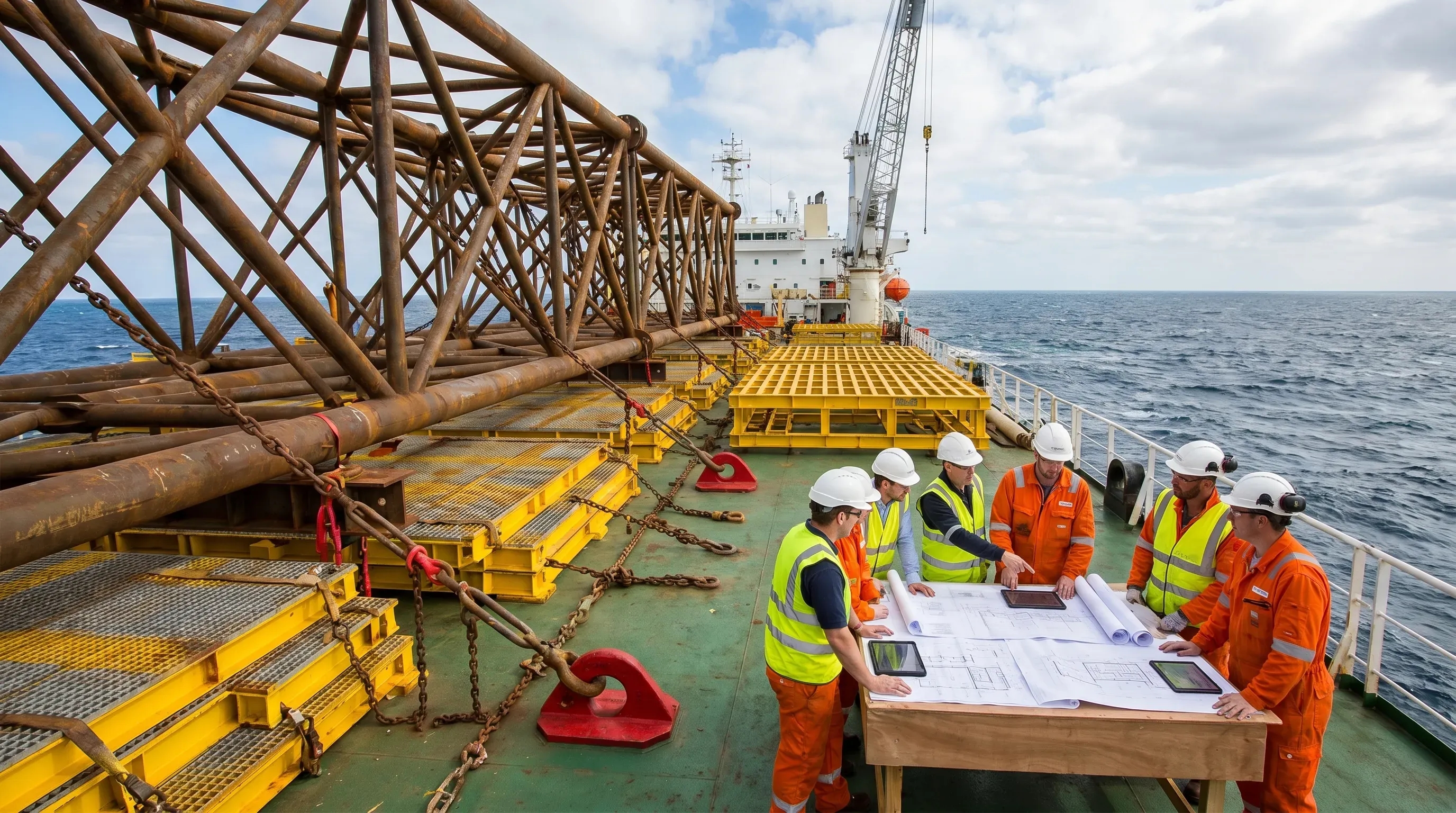
Most offshore scopes involve many competent parties, each responsible for a different part of the work. The vessel team knows operational limits. The structural team verifies strength. The fabrication yard focuses on weld access and production sequence. The MWS or class society reviews safety and compliance. The offshore crew needs a method that is clear, repeatable and realistic under time pressure.
Risk increases when these disciplines work in isolation. A grillage may pass a local strength check but clash with underdeck stiffeners. A lift point may have adequate capacity but create an impractical rigging angle. A retrofit may fit the available deck space but overload a legacy support structure. A mooring layout may be technically feasible but unsuitable for the site conditions or vessel spread.
Marine engineering reduces these gaps by looking at the full system. It asks not only whether something can be designed, but whether it can be fabricated, approved, transported, lifted, installed, operated and maintained with acceptable risk.
The International Maritime Organization places safety at the centre of maritime activity, while class societies such as DNV, Lloyd’s Register and ABS define detailed technical expectations for vessels and offshore structures. In practice, offshore project teams must translate these expectations into traceable calculations, drawings, procedures and design decisions that survive real operational constraints.
What marine engineering covers in offshore projects
Marine engineering is often associated with vessels, propulsion or ship systems, but in offshore projects the discipline is broader. It covers the engineering judgement needed to make structures, vessels and marine operations work together safely.
Typical offshore marine engineering scopes can include vessel suitability studies, transport engineering, seafastening design, lifting analysis, grillage design, mooring calculations, stability checks, retrofit engineering, piping design, structural FEM analysis, deck load assessments and class or MWS documentation.
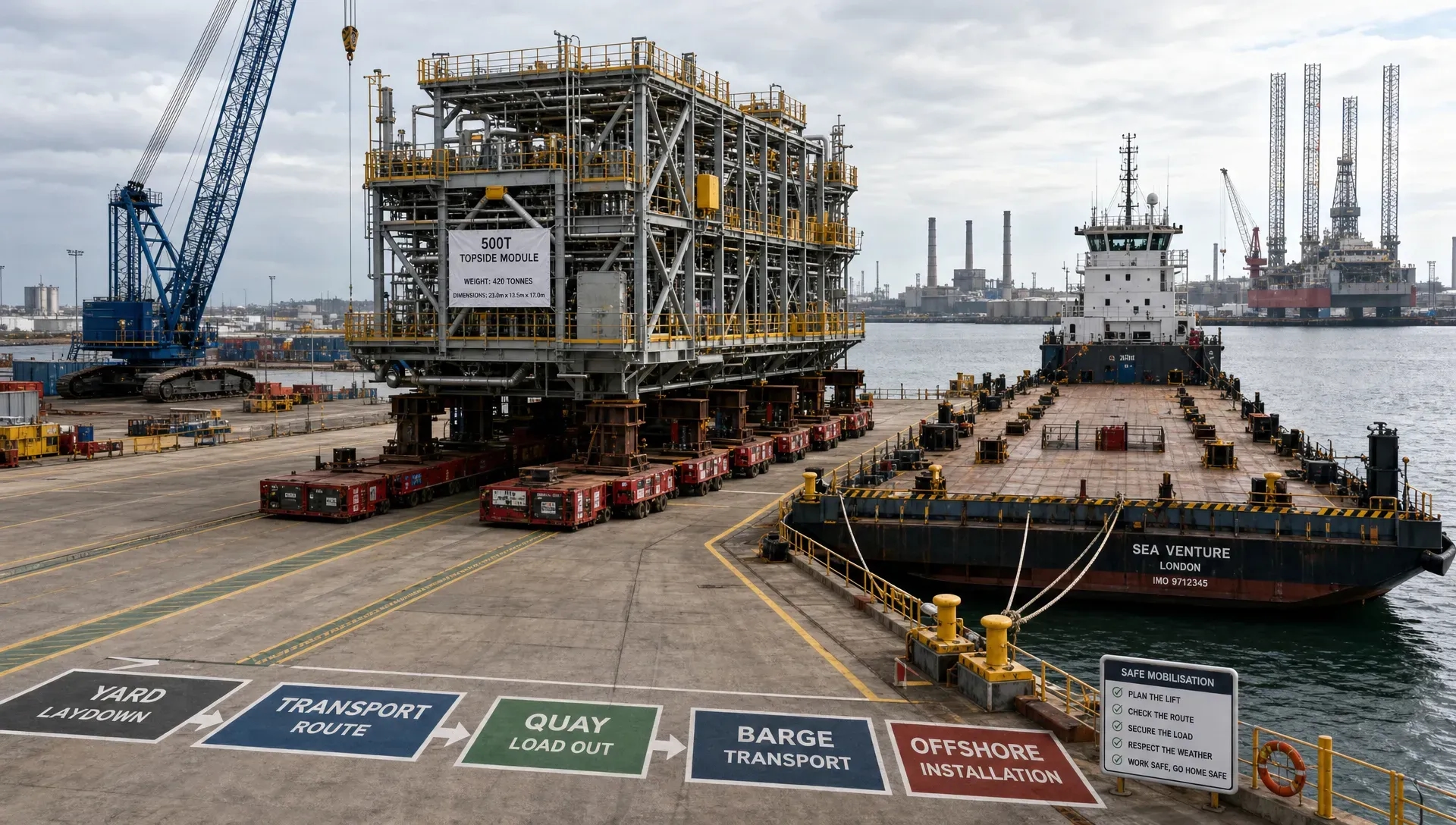
The key point is integration. Offshore transport and installation rarely depend on a single design object. They depend on how the object behaves on a moving vessel, how loads travel into the hull, how the sea state affects accelerations, how the lift is rigged, how the structure is restrained, and how the operation is documented for approval.
Risk reduction starts before detailed design
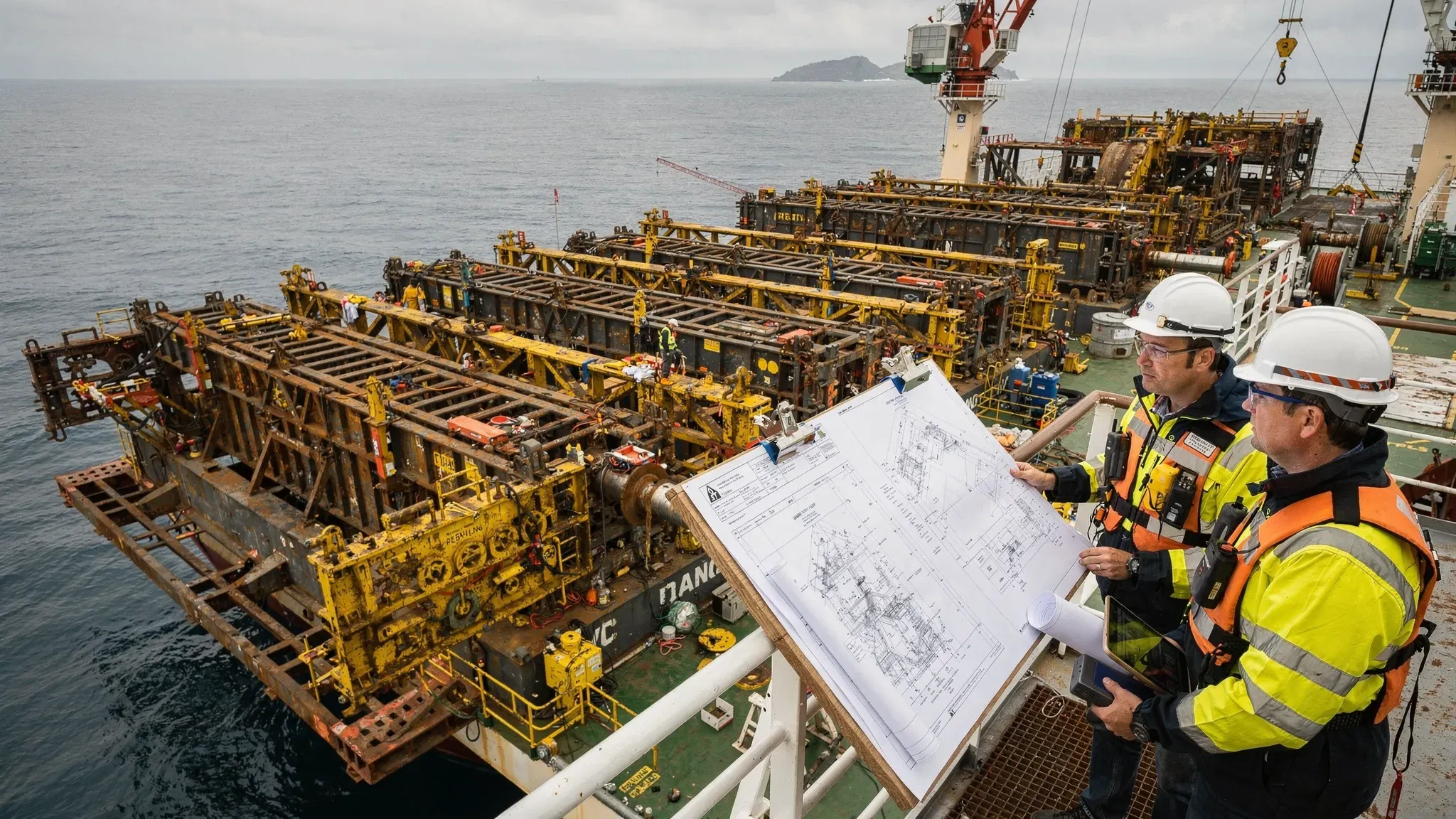
The most effective risk reduction usually happens before the project has locked in its equipment layout, vessel choice or fabrication strategy. Early marine engineering input helps project teams test whether the proposed concept is realistic.
At concept stage, a marine engineering team can check whether the selected vessel has sufficient deck strength, crane capacity, stability margin, clearances and access for the planned operation. It can also identify whether additional reinforcement, temporary structures or alternative load paths are required.
This early review is valuable because offshore projects become expensive to change once procurement, fabrication and mobilisation are underway. A small design adjustment during concept engineering can avoid major offshore delays later. For example, repositioning a support frame to align with vessel structure may reduce reinforcement. Simplifying a welded connection may reduce fabrication time. Adjusting a lift arrangement may improve rigging geometry and reduce peak loads.
Good marine engineering does not remove uncertainty entirely. It makes uncertainty visible early enough for project teams to act on it.
Vessel suitability and deck capacity are critical
Many offshore designs are constrained by the vessel before they are constrained by the offshore asset. Deck load limits, underdeck structure, crane reach, stability, ballast capability, clearances, sea fastening positions and mooring arrangements can all affect the final design.
This is especially important for offshore wind foundation transport, decommissioning campaigns, subsea equipment mobilisation, heavy civil marine works, dredging support scopes and vessel retrofit projects. The vessel is not just a carrier. It is part of the engineering system.
A marine engineering review should answer practical questions such as:
- Can the vessel safely carry the component in the proposed position?
- Are local deck loads and underdeck structures compatible with grillage reactions?
- Does the crane arrangement create acceptable lifting loads and clearances?
- Are stability and ballast conditions suitable for each project phase?
- Can the seafastening be installed, inspected and removed safely?
- Is the proposed arrangement realistic for mobilisation and offshore execution?
If these questions are answered late, the project may face rework, extra steel, revised procedures or delayed approval. If they are answered early, the team can optimise around the vessel’s real capabilities.
Structural design must reflect marine loading
Offshore structures experience loads that are different from static land-based structures. Transport accelerations, dynamic lift factors, vessel motions, wave action, wind, slamming, fatigue and impact considerations can all influence design.
This is where marine engineering and structural engineering must work closely together. A temporary sea fastening structure, for example, must resist the expected transport loads and transfer them into the vessel without overstressing either the cargo or the deck structure. A lifting frame must be checked not only for vertical loads, but also for load eccentricity, sling angles, fabrication tolerances and possible load redistribution.
Finite element modelling can be useful when load paths are complex, geometry is irregular or local stresses need to be understood. However, FEM is not a substitute for engineering judgement. The model assumptions, boundary conditions, load combinations and interpretation of results must match the real operation.
The best offshore structural designs are not always the heaviest. They are designs where the load path is clear, fabrication is manageable, inspection is possible and the documentation is strong enough for review.
Seafastening and grillages are risk control tools
Seafastening and grillage design are often treated as temporary works, but their importance is permanent from a risk perspective. If cargo shifts during transport, if a grillage overloads the deck, or if welds are difficult to execute correctly during mobilisation, the consequences can affect safety, schedule and cost.
Marine engineering reduces this risk by designing seafastening and grillages around both structural performance and practical execution. The design must account for transport accelerations, vessel structure, fabrication sequence, weld access, NDT requirements, removal offshore or at the destination, and the documentation needed for MWS review.
Over-engineering can be a problem. Excess steel increases fabrication time, mobilisation weight and installation effort. Under-engineering is clearly unacceptable. The goal is a balanced design that provides adequate capacity, clear load transfer and practical fabrication.
For offshore wind, this may involve support frames for monopiles, transition pieces or other foundation components. In decommissioning, it may involve securing removed topside modules or legacy structures. In heavy lift and marine infrastructure work, it may involve custom temporary structures that support unusual loads or installation sequences.
Lifting analysis protects the operation, not just the structure
Heavy lift engineering is a major part of offshore risk reduction. A lift calculation must verify padeyes, trunnions, spreader beams, rigging, hook loads, centre of gravity, crane capacity, dynamic factors and structural response. But the engineering task goes further than producing a safe utilisation ratio.
The lift must be executable. The rigging arrangement must fit the available space. The crane must maintain adequate capacity throughout the lift path. The component must remain stable. The structure must be strong enough in the lifted condition, which may differ significantly from its installed or transported condition.
In decommissioning projects, uncertainty around actual weight and centre of gravity can be a major issue, especially for older assets with incomplete documentation. In retrofit projects, as-built conditions may differ from drawings. In offshore wind installation, high utilisation equipment and narrow weather windows leave little room for late engineering changes.
Marine engineering helps by connecting lifting analysis with vessel capability, structural checks, transport arrangement and method documentation. That connection reduces the chance that a technically valid lift becomes impractical offshore.
Approval readiness reduces schedule risk
Offshore project delays often occur not because a design is impossible, but because the documentation is incomplete, unclear or inconsistent. MWS reviewers and class societies need traceable design assumptions, load cases, calculation methods, drawings, inspection requirements and operational limitations.
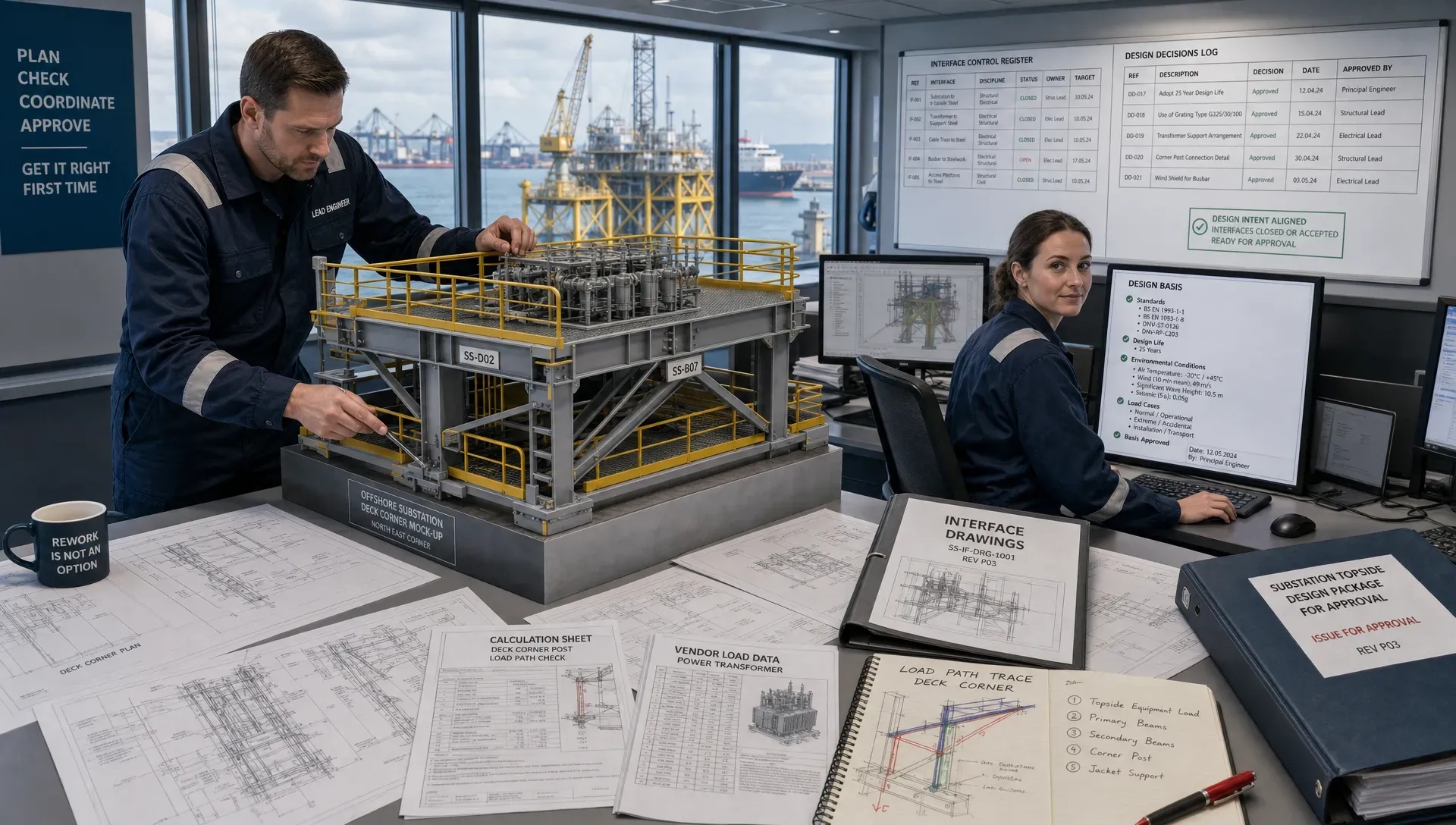
Approval readiness should therefore be built into the engineering process, not added at the end. This includes using recognised standards where applicable, maintaining calculation traceability, aligning drawings with reports, controlling revisions and explaining assumptions clearly.
DNV’s rules and standards are one example of the structured technical frameworks used across maritime and offshore work. Whether the reviewing party is DNV, Lloyd’s Register, ABS, an MWS provider or another authority, the same principle applies: approval is easier when the design story is coherent.
A strong approval package typically shows what is being designed, why the selected load cases are relevant, how the structure has been checked, what limitations apply and how fabrication or operation should be controlled. This matters for offshore schedules because mobilisation windows are expensive and often difficult to recover once missed.
Buildability is a safety and cost issue
Buildability is sometimes framed as a fabrication concern, but in offshore projects it is also a safety issue. A design that is difficult to fabricate may introduce weld quality issues, schedule pressure, additional hot work, complex access requirements and late modifications.
Marine engineering cuts this risk by involving fabrication logic early. This includes simplifying weld details where possible, avoiding unnecessary exotic materials, considering access for welding and inspection, coordinating with steel detailing, and designing around realistic yard capabilities.
Practical design does not mean compromising technical performance. It means achieving performance through details that can be built correctly within the project’s cost and time constraints.
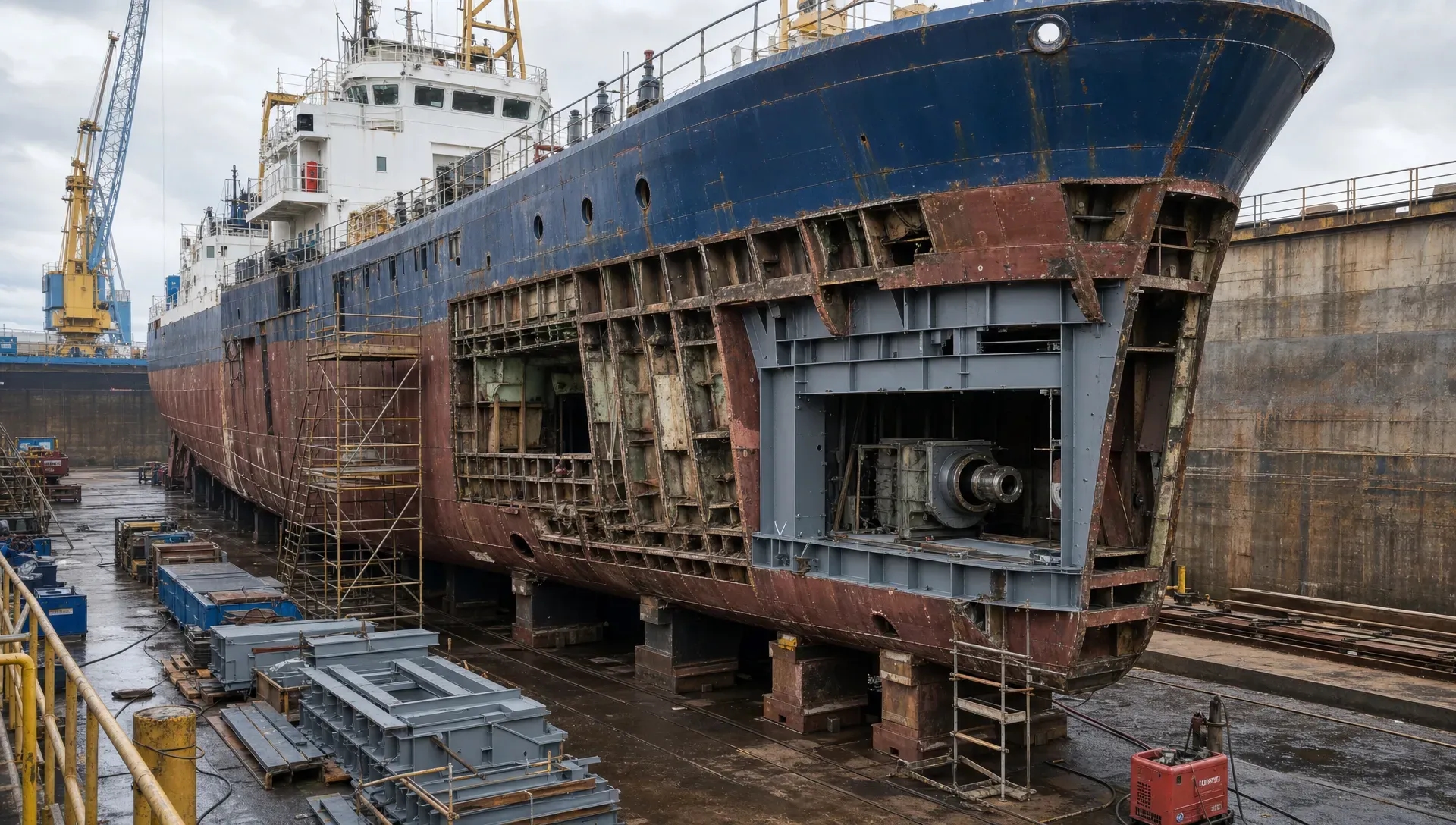
This is particularly important for vessel retrofits and piping projects. Existing vessels may have limited access, legacy structures, unknown interfaces and class constraints. A good retrofit design must fit within the vessel’s operational reality, not only within a 3D model.
Marine engineering improves coordination across disciplines
Offshore projects require constant coordination between naval architects, structural engineers, mechanical designers, fabrication teams, marine operations specialists, class reviewers and client stakeholders. When coordination is weak, issues appear late and often in the most expensive phase of the project.
Marine engineering provides a common technical thread. It connects vessel behaviour to structural design, lifting geometry to fabrication detail, mooring loads to operational method, and class requirements to documentation.
This coordination also improves decision-making. Project directors need to understand risk, cost and schedule consequences. Lead engineers need clear assumptions and interfaces. Fabricators need drawings that reflect build sequence and tolerances. Offshore crews need procedures and visuals that reduce ambiguity.
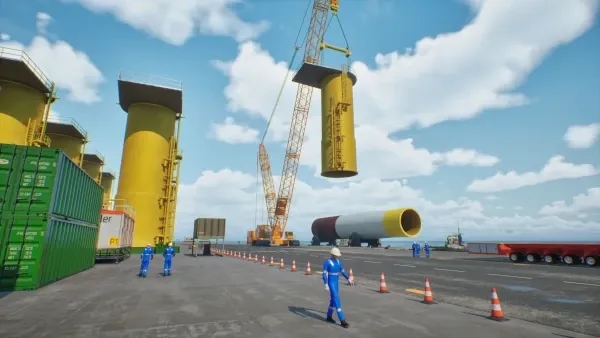
Technical animation and visualisation can support this process, especially for complex marine operations. A clear visual sequence can help tender teams explain a method, support QHSE briefings and align offshore personnel around the intended operation. Visuals do not replace calculations, but they can make technical intent easier to understand.
Common offshore risks marine engineering can reduce
Every project is different, but recurring risk areas appear across offshore wind, shipbuilding, decommissioning, dredging, heavy lift, vessel retrofit and traditional energy projects.
Marine engineering can help reduce risks such as:
- Late discovery of insufficient vessel deck capacity or stability margin
- Seafastening designs that are too heavy, too complex or difficult to remove
- Lifting arrangements with poor rigging geometry or unclear load distribution
- Structural designs that pass calculations but create fabrication problems
- Incomplete documentation that slows MWS or class approval
- Retrofit layouts that clash with existing systems or legacy vessel structure
- Offshore procedures that are difficult for crews to interpret under pressure
The value is not only in solving these issues after they appear. The larger value is in preventing them through disciplined engineering assumptions, practical design reviews and clear documentation.
What to expect from a capable marine engineering partner
A capable partner should bring more than calculation capacity. They should challenge assumptions, understand marine operations, design for fabrication and produce documentation that supports approval.
For technical directors and engineering managers, this means looking for a team that can work across interfaces. The partner should be able to discuss vessel limitations, structural load paths, class requirements, lifting methods, mooring behaviour, retrofit constraints and fabrication implications in one coherent conversation.
They should also understand the pressure around offshore schedules. Mobilisation delays, crane vessel availability, weather windows and yard slots can have major commercial impact. Fast engineering is useful only when it remains controlled, checked and traceable.
This is where Fusie Engineers positions its support: combining offshore structural design, heavy lift engineering, ship design, marine engineering, vessel retrofit, piping design, steel detailing and technical visualisation. The value lies in practical, approval-ready engineering that considers fabrication, installation, maintenance and offshore execution from the start.
For related decision criteria, see Fusie Engineers’ guide on how to choose engineering design services for offshore projects.
The commercial value of reducing offshore risk
Risk reduction is not only a safety objective. It also affects cost control and project predictability.
Smart marine engineering can reduce unnecessary steel, limit rework, shorten fabrication time, improve approval progress and avoid offshore standby. It can also help teams use vessel capacity more effectively, simplify installation methods and reduce the number of late-stage design changes.
In offshore projects, the cost of engineering is usually small compared with the cost of delay. A missed mobilisation window, a rejected approval package or an offshore modification can quickly outweigh the savings from choosing the cheapest design route.
The most reliable approach is to design with the full project lifecycle in mind: concept, verification, fabrication, transport, lifting, installation, operation and documentation. That lifecycle view is what makes marine engineering such a powerful risk control discipline.
Frequently asked questions
What is marine engineering in offshore projects? Marine engineering in offshore projects connects vessel capability, structural design, transport, lifting, mooring, seafastening, stability, retrofit constraints and approval documentation. It ensures the design works safely in the marine environment and can be executed in practice.
How does marine engineering reduce offshore project risk? It identifies technical and operational constraints early, verifies load paths and vessel limitations, supports MWS or class approval, improves buildability and produces clear documentation for fabrication and offshore execution.
When should marine engineering start on an offshore project? Ideally, marine engineering should start during concept or early FEED. Early input helps confirm vessel suitability, installation strategy, temporary works requirements and approval expectations before costly design choices are locked in.
Why is approval documentation so important? MWS providers and class societies need traceable calculations, drawings, assumptions and procedures. Incomplete or inconsistent documentation can delay approval, mobilisation and offshore execution, even when the underlying design is technically sound.
Can marine engineering help with vessel retrofit projects? Yes. Retrofit projects often involve legacy drawings, limited access, existing structural constraints, piping interfaces and class requirements. Marine engineering helps align new systems with the vessel’s structure, stability, operations and approval path.
Need marine engineering support for an offshore scope?
If your project involves transport, lifting, seafastening, vessel retrofit, mooring, ship design, offshore structures or approval documentation, early engineering judgement can reduce risk before it reaches the yard or offshore site.
Fusie Engineers supports offshore, maritime and energy clients with practical marine engineering, structural design, heavy lift engineering, vessel retrofit, piping, steel detailing and technical visualisation. Our focus is simple: safe, buildable and approval-ready engineering that supports real project execution.