


Sustainable engineering that lowers steel, cost and rework
2026-05-27
In offshore, maritime and energy projects, sustainability is most valuable when it improves the project rather than adding a separate reporting layer. Less steel, fewer fabrication hours, fewer transport movements and fewer late design changes all reduce environmental impact. They also reduce cost, schedule pressure and execution risk.
That is why sustainable engineering should be treated as a core design discipline. It is not only about choosing low-carbon materials or writing an ESG statement. For technical directors, engineering managers, EPC contractors, shipyards and offshore contractors, the practical question is more direct: can the design be made safer, lighter, easier to fabricate, easier to approve and more reliable offshore?
When the answer is yes, sustainability becomes measurable in the steel list, the weld map, the mobilisation plan, the MWS submission and the final installation sequence.
Why sustainable engineering starts with steel efficiency
Steel is essential to offshore structures, vessels, lifting tools, grillages, seafastening, skid systems and marine equipment. It provides strength, fatigue resistance and robustness in harsh environments. But steel also carries a significant carbon footprint. The International Energy Agency identifies iron and steel as one of the largest industrial sources of CO₂ emissions globally.
For project teams, this does not mean simply cutting steel until a structure becomes marginal. Offshore and marine design must remain governed by load cases, fatigue, stability, class rules, transport accelerations, lifting loads, vessel limitations and installation risk. The real opportunity is to avoid unnecessary steel by improving the engineering logic behind the structure.
In practice, steel efficiency comes from better load paths, clearer interfaces, realistic operational assumptions and early constructability review. A tonne removed from a grillage, support frame or retrofit foundation is not only a tonne saved in material. It can also reduce welding, coating, lifting weight, transport loads, deck load usage, vessel fuel consumption and offshore handling complexity.
The most sustainable tonne of steel is often the one that never needs to be procured, fabricated, transported or installed.
Sustainability without compromising safety
In complex marine environments, reducing steel without reducing risk requires engineering judgement. A lighter structure is only better if it still performs under the full envelope of design conditions.
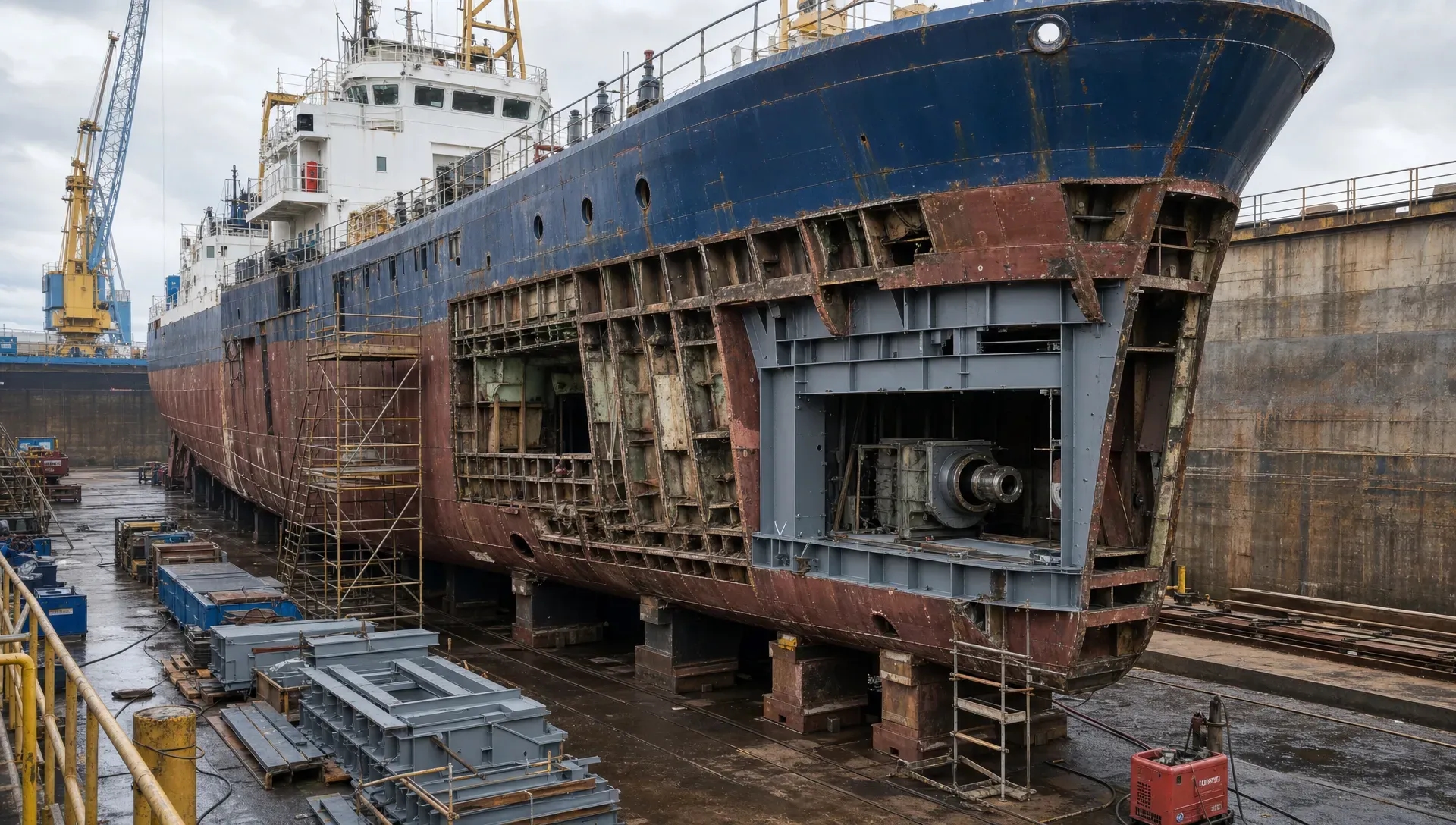
For offshore transport and installation, those conditions may include vessel motions, accelerations, wave-induced loads, sling angles, temporary load redistribution, sea fastening forces, local deck capacity, fatigue sensitivity and accidental load scenarios. For shipbuilding and retrofit work, they may include existing hull structure, underdeck stiffening, piping clashes, access routes, hot work restrictions, class requirements and uncertain legacy drawings.
Sustainable engineering is therefore not a shortcut. It is a controlled process that asks:
- Is the load path direct, traceable and efficient?
- Are local reinforcements placed where they actually contribute to capacity?
- Can the fabrication yard build the detail without excessive welding or distortion?
- Are tolerances, access and installation sequences realistic?
- Will the documentation stand up to class, MWS or client review?
- Can the design be maintained, inspected or removed later in the asset lifecycle?
These questions connect sustainability to safety and delivery. A design that is light but difficult to fabricate can create rework. A design that passes calculation but fails practical installation review can delay mobilisation. A design that is not documented clearly can slow approval, even if the engineering itself is sound.
The cost of over-engineering in offshore and maritime projects
Over-engineering often begins with good intentions. When deadlines are tight, data is incomplete or approval pressure is high, teams may add steel to create perceived safety margin. In some cases, this is justified. In many others, it creates unnecessary cost and complexity.
Extra steel can have knock-on effects across the project:
- More material procurement and longer lead times
- Additional weld volume, inspection and coating scope
- Higher fabrication labour and greater distortion control requirements
- Increased lift weight and more demanding rigging arrangements
- Reduced deck capacity or payload flexibility
- More difficult installation offshore
- Higher removal or decommissioning effort later
The problem is not only material cost. In offshore and marine projects, weight affects vessel selection, crane utilisation, sea fastening loads, stability, fuel use and weather window sensitivity. A small design decision made early can become a major operational constraint during execution.
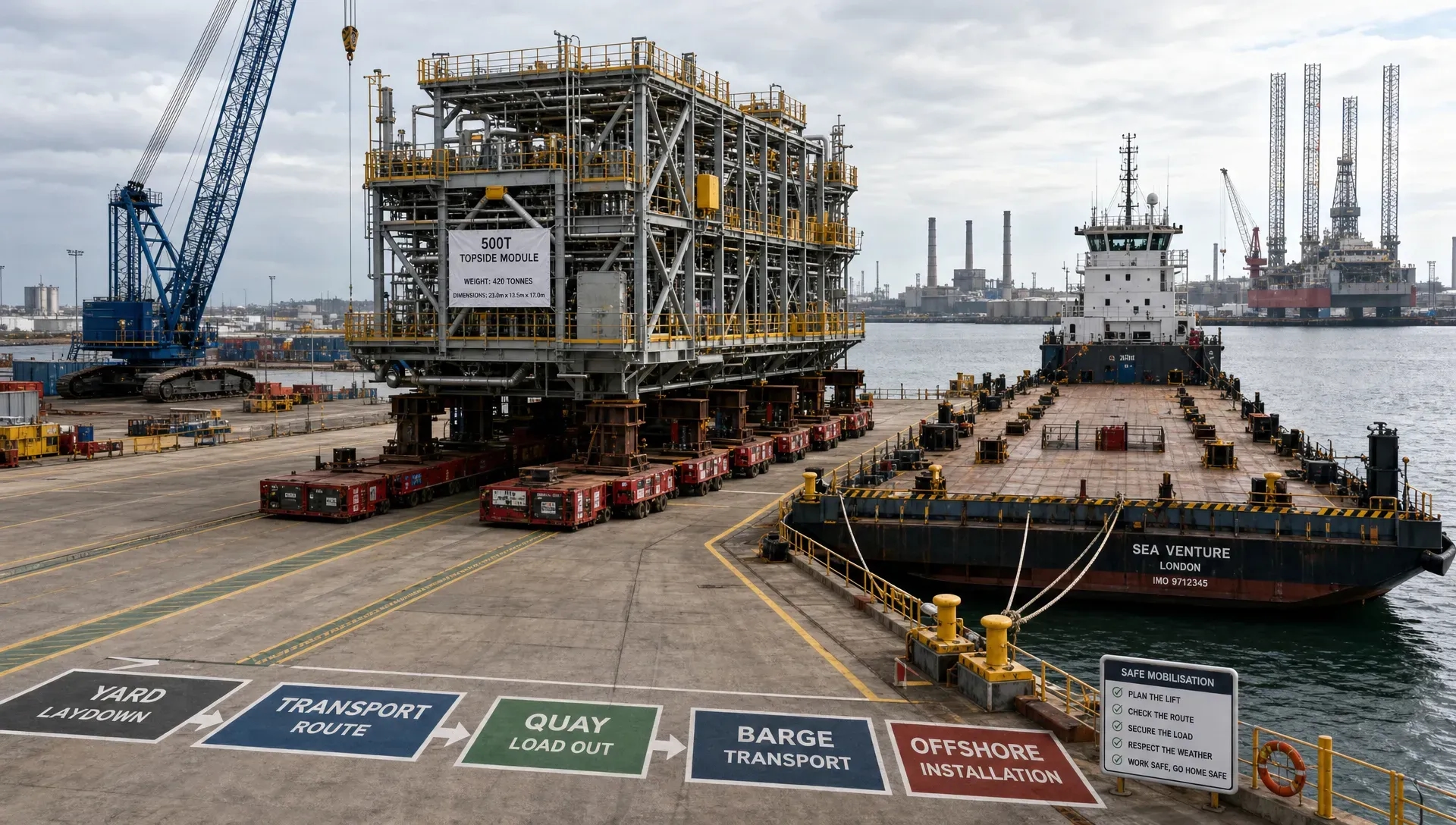
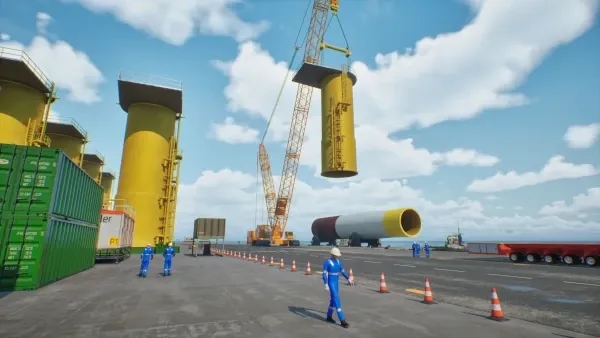
This is particularly relevant for offshore wind foundation transport, topside modules, vessel retrofits, heavy lift tools, temporary works, dredging equipment, skid systems and decommissioning structures. In each case, the structure must be strong enough, but also buildable, transportable, installable and approvable.
Where rework usually enters the project
Rework is one of the clearest signs that sustainability has been missed. Every reissued drawing, modified bracket, cut-out, re-welded support or late reinforcement consumes time, labour, material and management attention.
In offshore and maritime engineering, rework often originates from interface gaps rather than calculation errors. Common causes include incomplete vessel data, late equipment changes, unverified deck capacities, piping clashes, insufficient access for welding, unclear fabrication tolerances, class comments arriving late or operational teams being consulted after the design has already progressed too far.
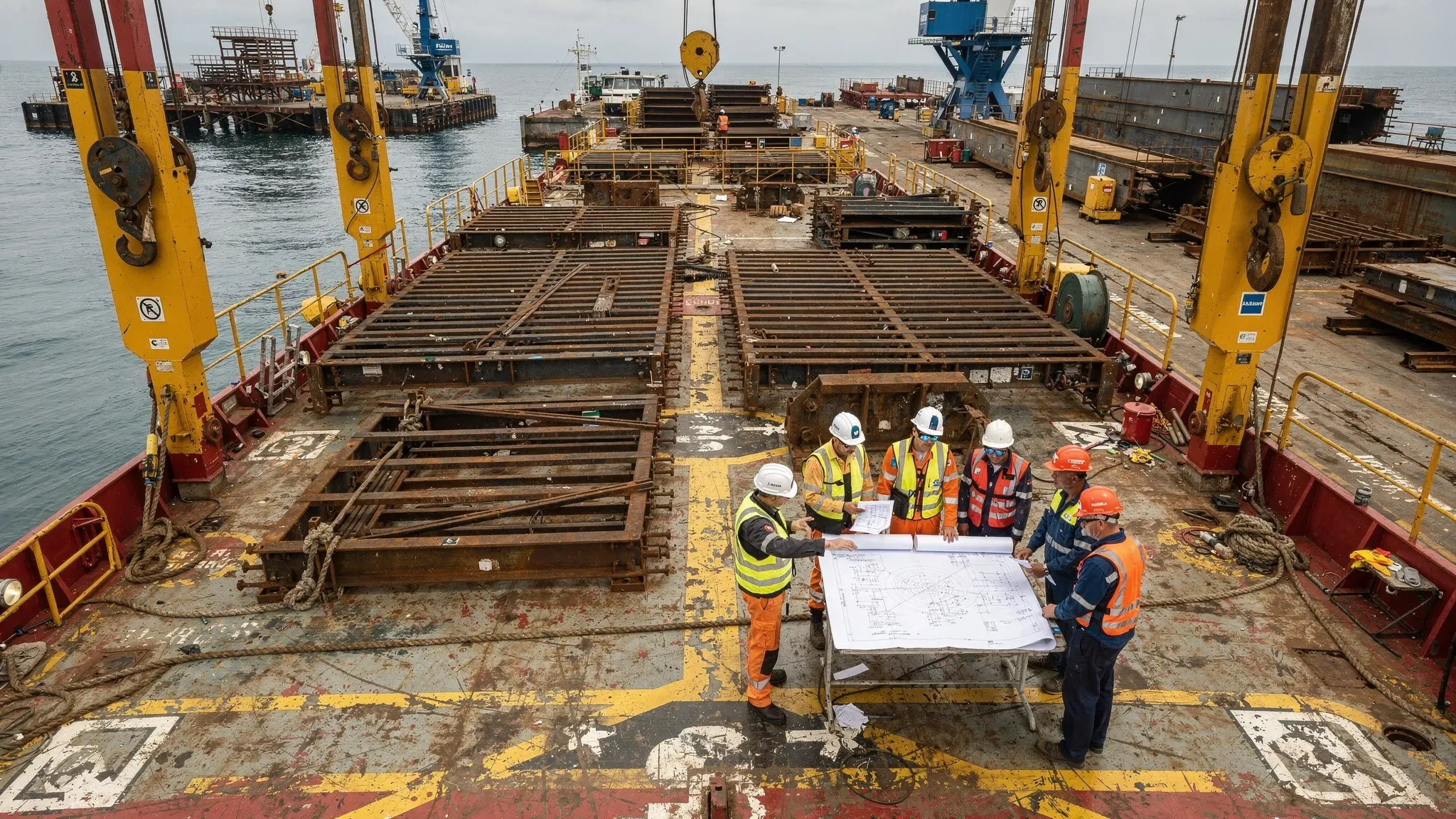
A technically correct design can still be poor if it is difficult to fabricate or install. For example, a seafastening arrangement may satisfy global strength checks but require welds that are hard to access on deck. A retrofit support may meet static loads but clash with existing piping or cable trays. A lifting frame may be structurally adequate but create rigging angles that are impractical for the selected crane configuration.
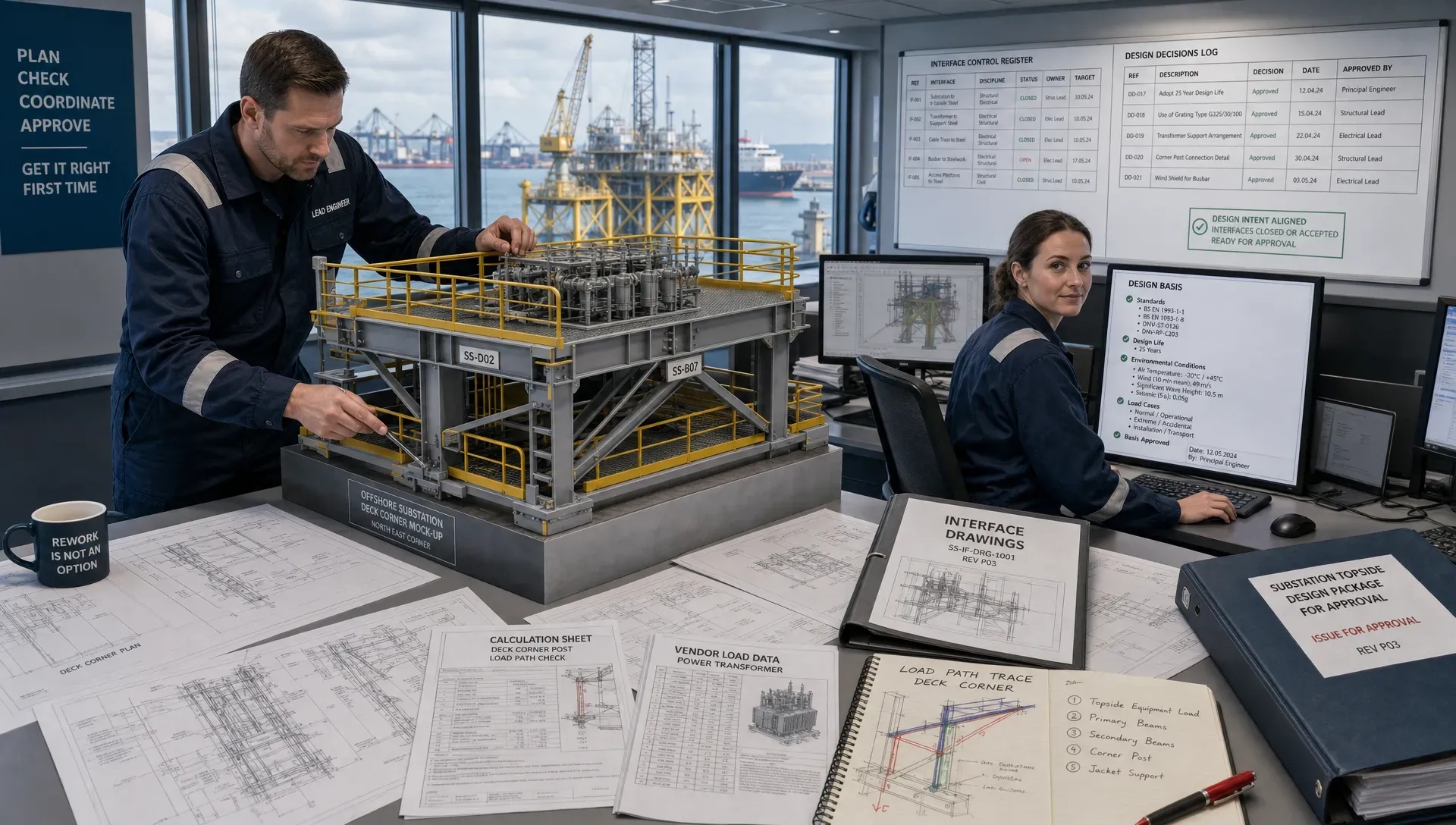
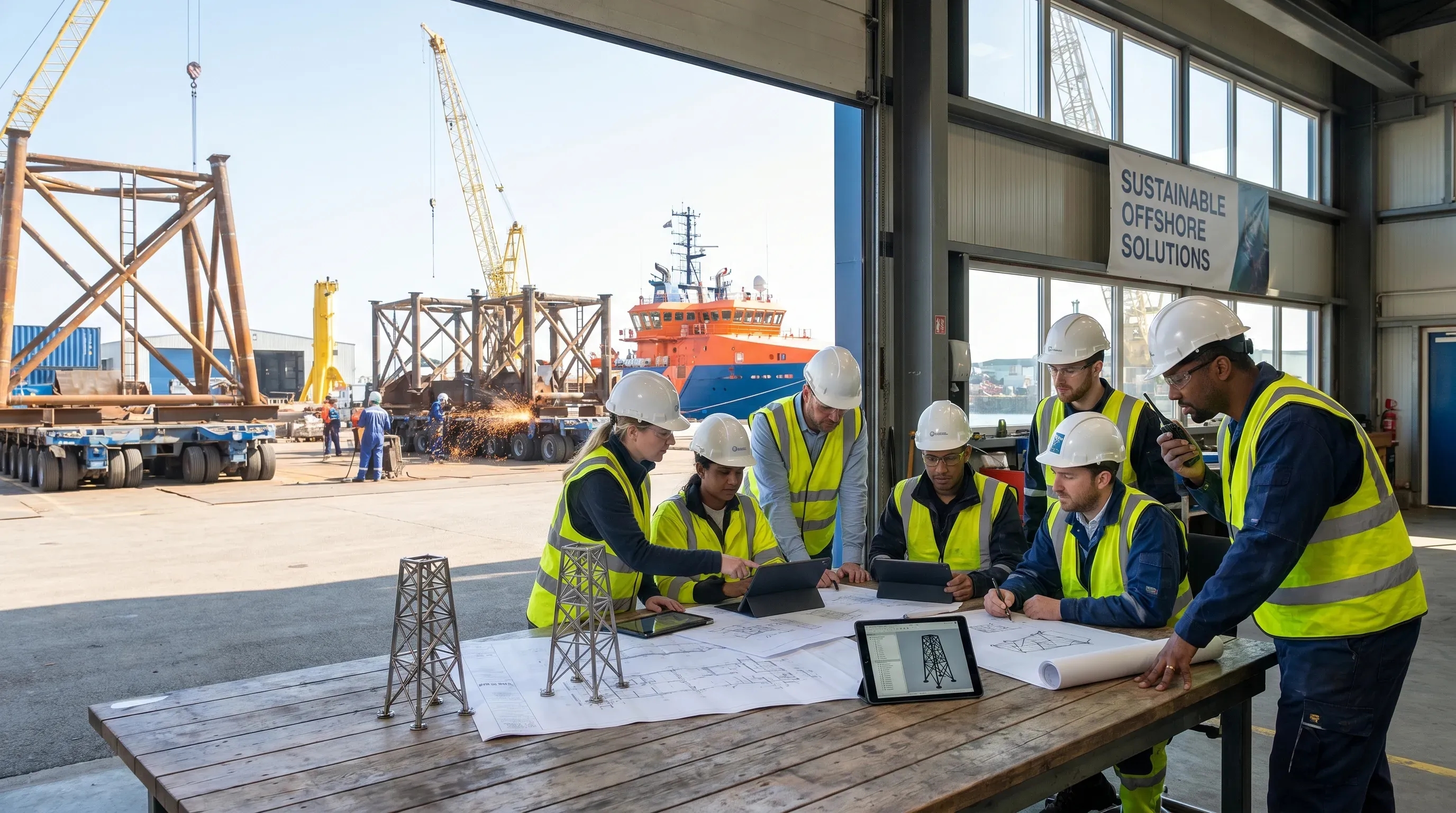
Sustainable engineering reduces rework by resolving these issues earlier. It brings structural design, marine operations, naval architecture, steel detailing, fabrication and approval requirements into the same design conversation before decisions become expensive to change.
Design decisions that lower steel, cost and rework
Sustainable outcomes are usually created through a series of practical engineering decisions rather than a single major change. The following areas are especially important in offshore, maritime and energy projects.
Optimised load paths
Efficient load paths reduce unnecessary secondary steel. When loads are transferred directly into capable primary structure, the design usually becomes lighter and easier to verify. This is especially important for grillages, seafastening, lifting points, skid beams, temporary support frames and retrofit foundations.
A good load path is also easier to explain. That matters during MWS, class and client review. Clear force transfer, well-defined boundary conditions and traceable assumptions reduce the risk of approval comments that trigger redesign late in the programme.
Early vessel and interface checks
Many offshore designs are constrained by the vessel rather than the equipment itself. Deck strength, underdeck framing, stability limits, crane curves, mooring arrangements, allowable accelerations and access restrictions can all determine whether a solution is viable.
Checking these constraints early prevents design loops. For vessel retrofits, this includes reviewing existing structure, piping routes, ventilation, escape routes, class implications and installation access. For transport and installation projects, it includes deck layouts, sea fastening locations, grillage reactions, lifting clearances and operational sequencing.
FEM used with engineering judgement
Finite element modelling is valuable, but it must be used with clear engineering intent. A detailed model does not automatically create a better design. The quality of the assumptions, boundary conditions, mesh strategy, load combinations and interpretation is what determines whether the analysis supports safe decisions.
For sustainable engineering, FEM helps identify where steel is working and where it is not. It can support local optimisation, confirm load distribution, reduce unnecessary reinforcement and provide strong evidence for approval. However, it should remain connected to fabrication reality. A theoretically efficient detail that is difficult to weld, inspect or fit on site may still be the wrong choice.
Buildable steel detailing
Steel detailing is where many sustainability gains are either secured or lost. Clear fabrication drawings, controlled 3D models, practical connection details and accurate material take-offs reduce waste and rework.
In marine fabrication, detailing must account for weld access, plate availability, corrosion protection, tolerances, lifting during fabrication, assembly sequence and inspection requirements. It must also preserve the engineering intent. If detailing is treated as an isolated drafting activity, practical problems may appear too late.
For a deeper look at this topic, Fusie Engineers has also discussed why steel detailing matters in marine fabrication, including its role in buildability, approval readiness and cost control.
Clear approval documentation
Sustainable engineering depends on timely approval. If documentation is incomplete, unclear or inconsistent, the project can lose time even when the design is technically acceptable.
Approval-ready documentation should clearly present design basis, load cases, assumptions, calculation methods, FEM outputs, drawings, material specifications, weld details, lifting arrangements, stability checks, motion analysis results and operational limitations where relevant. For projects involving MWS, DNV, Lloyd’s Register, ABS or other approval parties, clarity and traceability are essential.
Good documentation lowers rework because it reduces ambiguity. Reviewers can see how the design works, how the loads are carried and how the proposed operation will be executed safely.
Sustainable engineering across the asset lifecycle
The strongest sustainability gains come when engineering teams consider the full lifecycle of the structure or vessel modification. This means looking beyond initial fabrication and asking how the design will be transported, installed, operated, inspected, maintained and eventually removed or repurposed.
For offshore wind, this may influence foundation transport tools, sea fastening, installation aids, maintenance access and temporary works. For ship design, it may affect hull efficiency, equipment arrangement, piping routes, retrofit readiness and class compliance. For traditional energy and decommissioning projects, it may affect lift preparation, removal sequences, temporary strengthening and safe transport to shore.
The same lifecycle thinking applies to smaller systems as well. Accommodation areas, workshops and project facilities also benefit from efficient fit-out choices, including durable materials and energy-conscious lighting. For example, teams planning non-critical interior upgrades may review modern LED lighting options for fit-out areas as part of broader energy and maintenance considerations, while keeping the main engineering focus on structural safety and marine compliance.
In every case, lifecycle thinking prevents local optimisation from creating downstream problems. A low-cost detail that increases offshore work is not truly efficient. A lighter structure that complicates inspection may not be sustainable over time. A retrofit design that ignores future access can create maintenance risk.
Why early engineering has the greatest impact
The earlier sustainable engineering is applied, the more value it creates. During concept and pre-FEED stages, teams still have flexibility to adjust layouts, load paths, installation methods, vessel selection and fabrication strategies. Once procurement, fabrication or mobilisation starts, every change becomes more expensive.
Early engineering can help project teams compare options before they become commitments. For example, a heavier but simpler grillage may be preferable in one project because it reduces fabrication risk and approval time. In another, a more optimised structure may be justified because deck capacity, crane limits or transport accelerations are critical constraints. Sustainable engineering is not always about minimum weight. It is about the best balance between safety, steel use, cost, schedule and execution risk.
This balance is particularly important in tendering. Strong technical visuals, clear method statements, realistic weight estimates and credible installation sequences can help project teams demonstrate control. Animations and visualisations can also make complex marine operations easier to explain to clients, QHSE teams, offshore crews and approval stakeholders.
The role of multidisciplinary coordination
Offshore and maritime projects rarely fail because one discipline works in isolation perfectly. They run into problems when disciplines are not aligned. Structural engineers, naval architects, marine operations teams, piping designers, steel detailers, fabricators, class reviewers and project managers all view the same asset through different constraints.
Sustainable engineering depends on connecting those constraints. A naval architect may identify stability or deck load limitations. A structural engineer may optimise the load path. A heavy lift engineer may adjust lifting arrangements. A piping designer may protect maintainability and avoid clashes. A steel detailer may simplify fabrication. A marine operations specialist may identify offshore handling risks.
When these inputs are coordinated early, the result is not just a better calculation package. It is a more executable project.
This is where experienced engineering support can add value beyond temporary capacity. The right partner helps challenge assumptions, simplify details, prepare approval-ready documentation and keep the design aligned with fabrication and offshore execution.
Practical indicators of a sustainable design
A sustainable design is not always obvious from the 3D model alone. It can look simple because the complexity has already been resolved. For project directors and engineering managers reviewing a design, useful indicators include:
- The main load paths are easy to identify and justify
- Steel is concentrated where it contributes to strength, stiffness or fatigue performance
- Welds are accessible and realistic for the fabrication yard
- Interfaces with vessel structure, piping and equipment are controlled
- Drawings and calculations use the same assumptions and revision status
- Approval documents are complete, traceable and easy to review
- Installation and removal sequences have been considered
- The design avoids unnecessary offshore work
These indicators help separate genuine optimisation from cosmetic weight reduction. A sustainable offshore design must remain robust under real operating conditions, not only efficient on paper.
How Fusie Engineers supports practical sustainable engineering
Fusie Engineers supports offshore, maritime and energy projects with engineering that connects structural performance, marine operations, fabrication and approval requirements. The team works across offshore structural design, heavy lift engineering, ship design, vessel retrofits, piping design, marine engineering, steel detailing, renewable energy projects, decommissioning scopes and technical visualisation.
This combination is important because steel reduction, cost control and rework prevention are not single-discipline tasks. A grillage for offshore wind foundation transport may require structural calculations, vessel interface checks, seafastening logic, fabrication drawings and MWS documentation. A vessel retrofit may require naval architecture input, piping design, structural reinforcement, class coordination and installation planning. A heavy lift tool may require FEM analysis, lifting arrangement design, weld detail control and operational review.
Fusie Engineers designs with fabrication, installation, maintenance and approval in mind. That means focusing on practical solutions that reduce unnecessary steel, avoid over-complicated details, support clear documentation and help project teams maintain control under demanding schedules.
Frequently asked questions
What does sustainable engineering mean in offshore and maritime projects? Sustainable engineering means designing safe, practical and approval-ready solutions that reduce unnecessary material use, fabrication effort, rework and lifecycle impact. In offshore and maritime projects, it must always account for marine loads, vessel behaviour, class rules, installation constraints and operational safety.
Does reducing steel increase structural risk? Not when it is done through proper engineering. Steel reduction should come from optimised load paths, accurate load cases, FEM verification, interface checks and practical detailing. It should never come from removing capacity without understanding the full design envelope.
Where can sustainable engineering reduce project cost the most? The largest savings often come from early concept and detailed design decisions that reduce steel weight, weld volume, fabrication complexity, offshore work and approval delays. Rework prevention is also a major cost driver, especially when mobilisation dates are fixed.
Why is buildability important for sustainability? A design that is difficult to fabricate can create waste, rework, delays and additional inspection effort. Buildable engineering reduces unnecessary labour and material use while improving quality, safety and schedule certainty.
How does approval readiness support sustainability? Clear and complete documentation helps MWS, class societies and client reviewers assess the design efficiently. Fewer approval loops mean less redesign, fewer drawing revisions and lower risk of late changes during fabrication or mobilisation.
Build sustainability into the engineering, not only the report
Sustainable engineering delivers the most value when it is practical, measurable and connected to project execution. For offshore, maritime and energy projects, that means reducing unnecessary steel, simplifying fabrication, improving approval readiness and preventing rework before it reaches the yard or vessel.
If your project involves offshore structures, heavy lift operations, seafastening, grillages, vessel retrofit, ship design, piping, decommissioning or marine engineering, Fusie Engineers can support the design from concept through calculations, detailing, documentation and operational readiness.
To discuss a current scope or upcoming project, contact Fusie Engineers and involve the engineering team early, while the design decisions that affect steel, cost and rework are still open.