

Engineering and designing for buildable offshore delivery
2026-07-04
Offshore delivery is won or lost at the interfaces. A seafastening frame may be structurally adequate, yet still delay a mobilisation if it is hard to weld, clashes with vessel structure, or lacks the documentation a marine warranty surveyor needs to review it. A lifting tool may pass a calculation check, yet still create offshore risk if sling access, centre of gravity uncertainty, deck handling or operational sequencing were not considered early enough.
That is why engineering and designing for offshore work cannot stop at producing technically correct drawings. For contractors, shipyards, EPC teams, renewable energy developers and vessel owners, the real goal is a design that can be fabricated, approved, transported, lifted, installed, operated and maintained under project constraints.
Buildable offshore delivery means connecting structural engineering, naval architecture, marine operations, fabrication, class requirements and site execution from the start. It is not a softer alternative to engineering rigour. It is engineering rigour applied to the full delivery chain.
What buildable offshore delivery really means
A buildable offshore design is one that survives contact with reality. It respects load paths and code requirements, but it also respects weld access, plate availability, deck capacity, crane limits, transport accelerations, mooring conditions, inspection access and approval workflows.
In offshore, maritime and energy projects, buildability is broader than shop fabrication. It includes the way the asset or temporary structure will move through every phase of work. A grillage, sea-fastening system, retrofit foundation, lifting beam, pipe support or custom installation tool may pass through concept design, detailed engineering, steel detailing, fabrication, coating, load-out, sea transport, offshore lift, installation and removal. Each phase introduces constraints.
A design that ignores those constraints may still look efficient on paper, but it often moves risk downstream. Fabricators may need extra temporary works. Vessel crews may face awkward deck handling. Approval bodies may request additional load cases. Offshore teams may lose time because a connection cannot be accessed safely or a sequence is unclear.
The better approach is to treat buildability as a design requirement, not a late-stage review comment.
Start with a design basis that reflects execution
The design basis is where buildable offshore delivery begins. It should not be a generic document copied from a previous project. It must reflect the actual vessel, structure, environment, operation, approval route and project schedule.
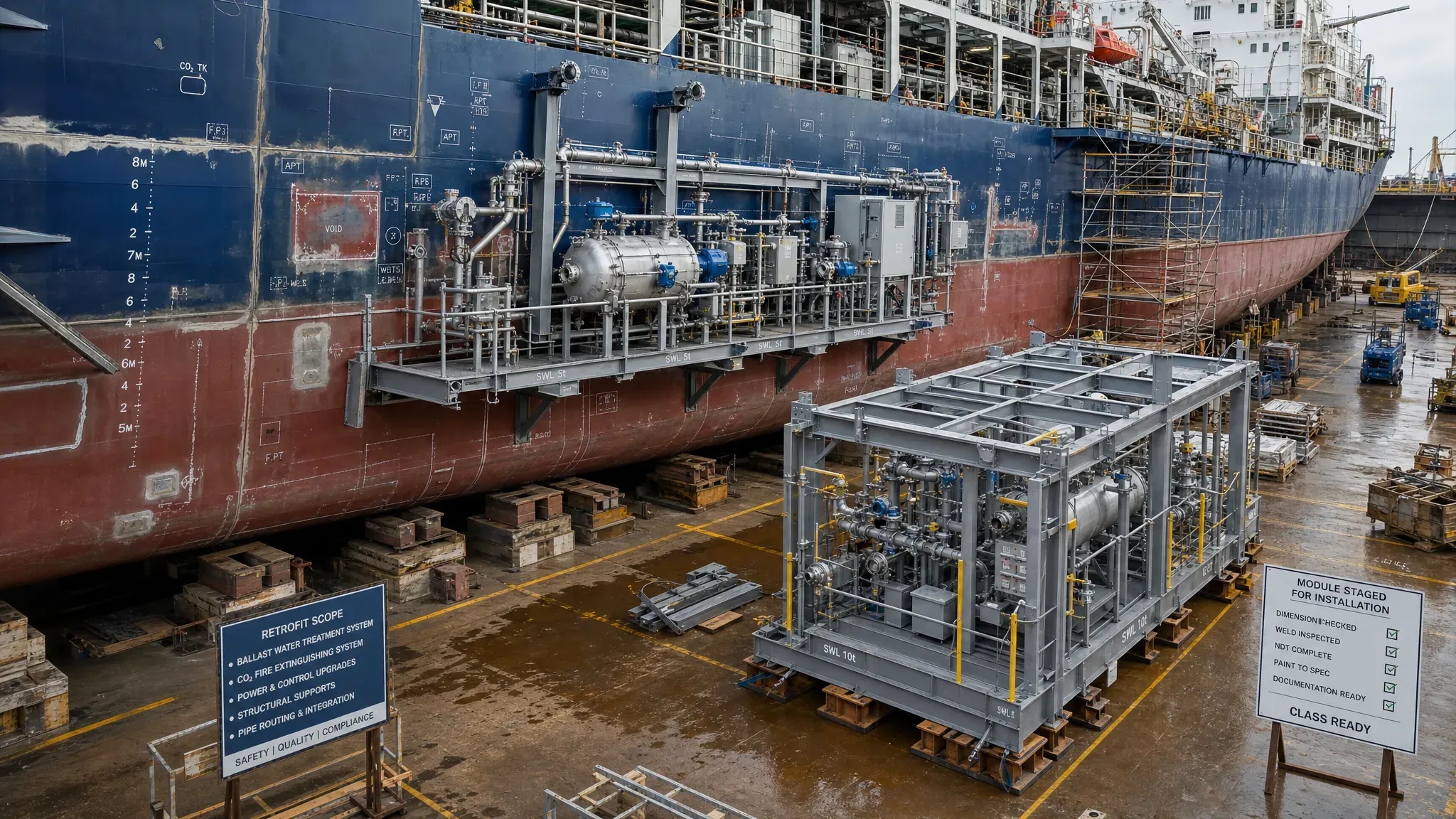
For transport and installation work, that means defining design cases such as transit accelerations, lifting loads, dynamic amplification factors, grillage reactions, allowable deck loads, mooring conditions, tug availability, weather limits, emergency cases and tolerances. For vessel retrofit or piping work, it means understanding existing structure, class constraints, access limitations, hot work restrictions, system interfaces and survey requirements.
A controlled design basis helps project teams avoid two common problems. The first is under-design, where missing load cases or poor assumptions create safety and approval risk. The second is over-design, where uncertainty is compensated for with excessive steel, complex welds and expensive fabrication.
The purpose is not to remove uncertainty completely. Offshore projects rarely offer perfect information. The purpose is to make assumptions visible, traceable and reviewable, so the engineering team can decide where conservatism is needed and where smarter detailing can reduce weight, cost or schedule pressure.
Engineering and designing around fabrication realities
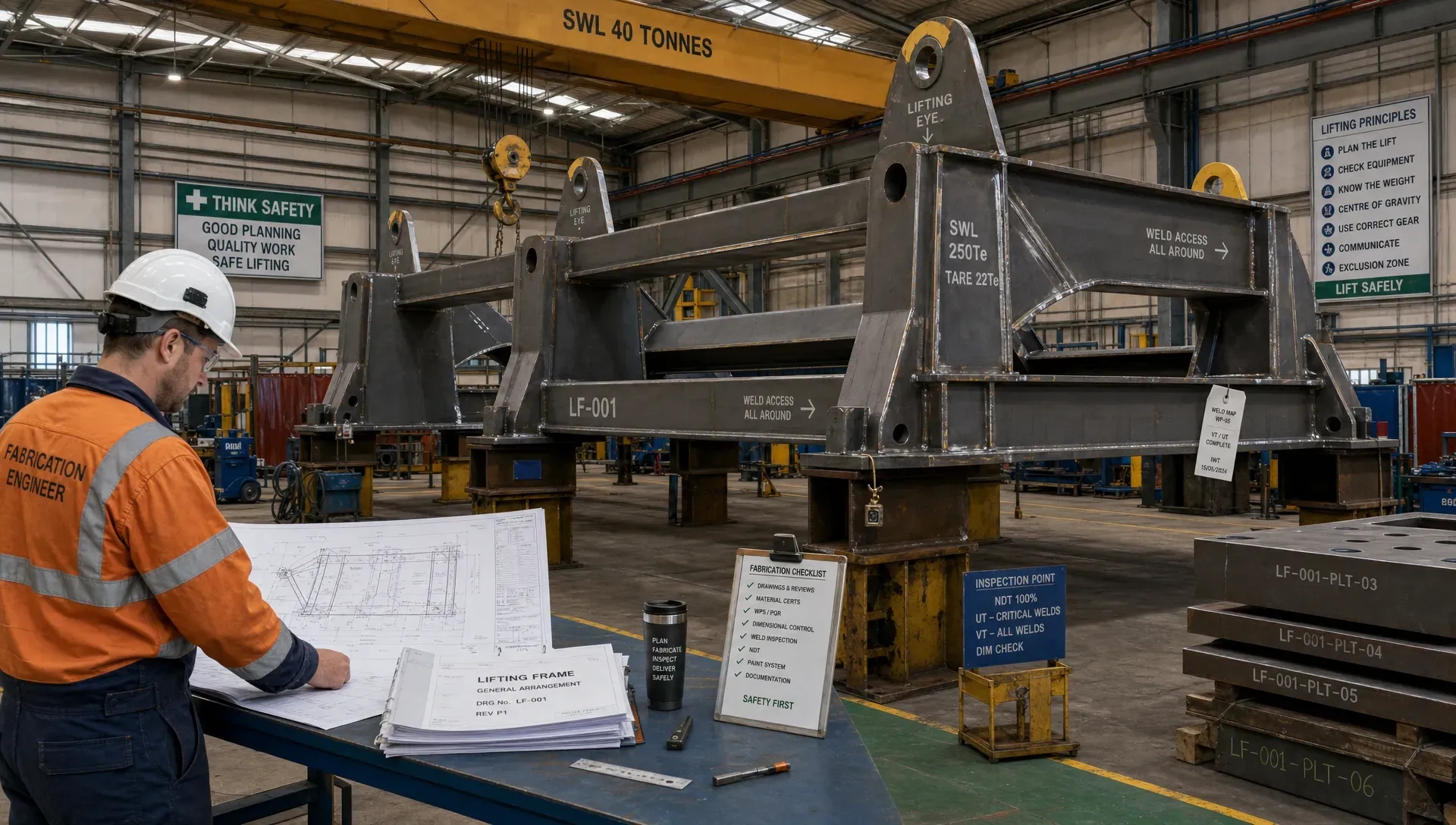
Buildability often depends on small engineering decisions made early. Member orientation, plate thickness, stiffener spacing, weld type, bolt access, lifting points and module splits can determine whether a design is straightforward to build or difficult to execute.
Fabrication-aware engineering considers questions such as:
- Can welders access the joint safely and consistently?
- Are plate thicknesses and profiles practical to source within the schedule?
- Can tolerances be achieved without excessive rework during assembly?
- Does the design reduce fit-up complexity and unnecessary temporary supports?
- Can inspection, coating and maintenance be performed without redesigning access later?
For offshore steel, the cheapest tonne is not always the lightest tonne. A slightly heavier but simpler connection can reduce fabrication hours, welding risk and inspection complexity. Conversely, a better load path can reduce steel use without compromising safety. The value comes from making those choices deliberately, not from applying a single rule across the design.
This is where practical structural judgement matters. Detailed modelling and FEM calculations are important, but they should support a design that can actually be cut, welded, lifted and installed. If the model leads to a solution that requires difficult weld sequencing or tight tolerances in a poor access area, the design may need to be reconsidered.
For a deeper look at how early structural decisions influence fabrication and installation outcomes, see this explanation of structural engineering choices that improve buildability offshore.
Treat transport, lifting and seafastening as structural design problems
Transport and lifting are sometimes treated as operational steps after the main structure is designed. In practice, they are structural design problems in their own right.
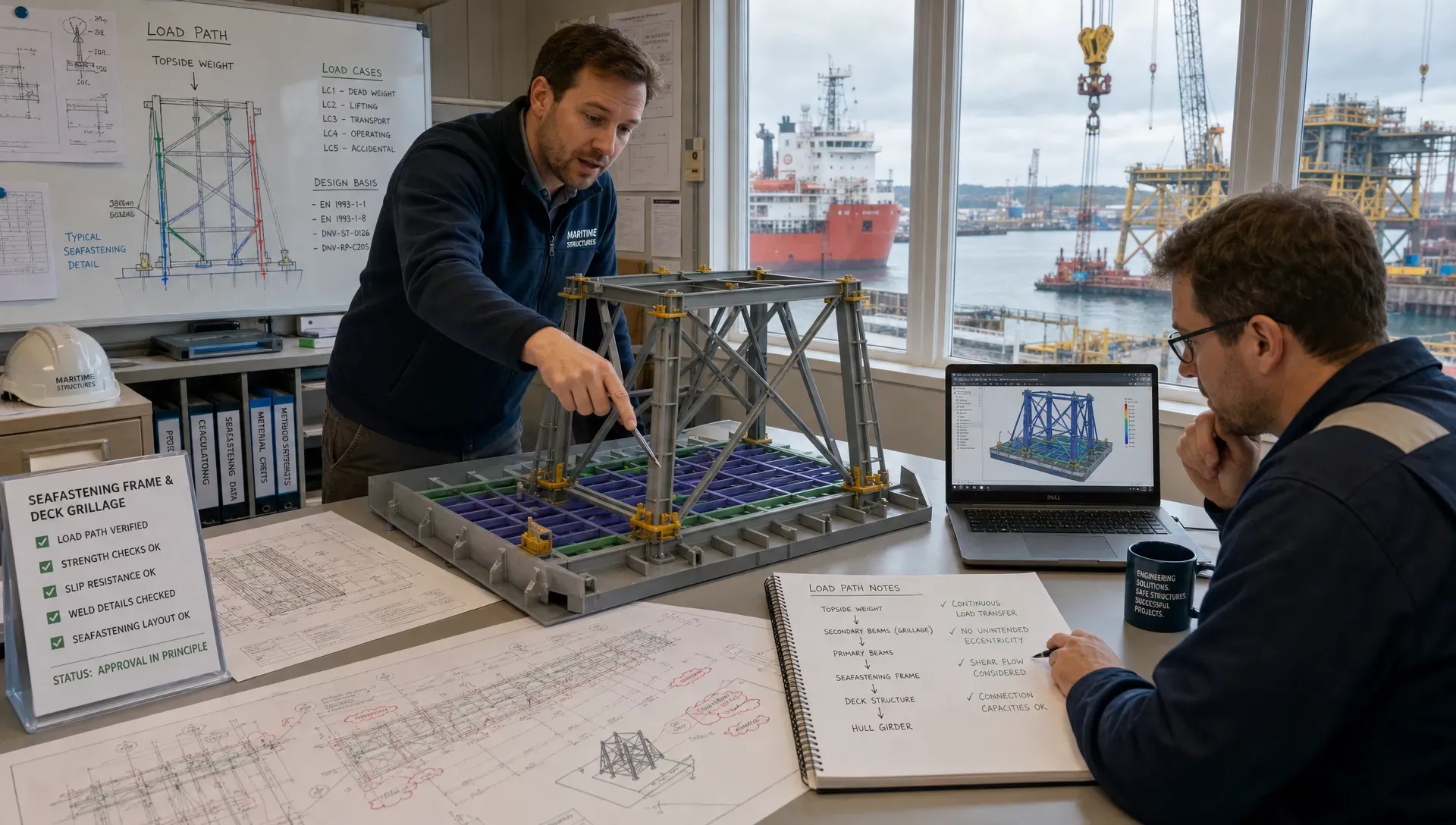
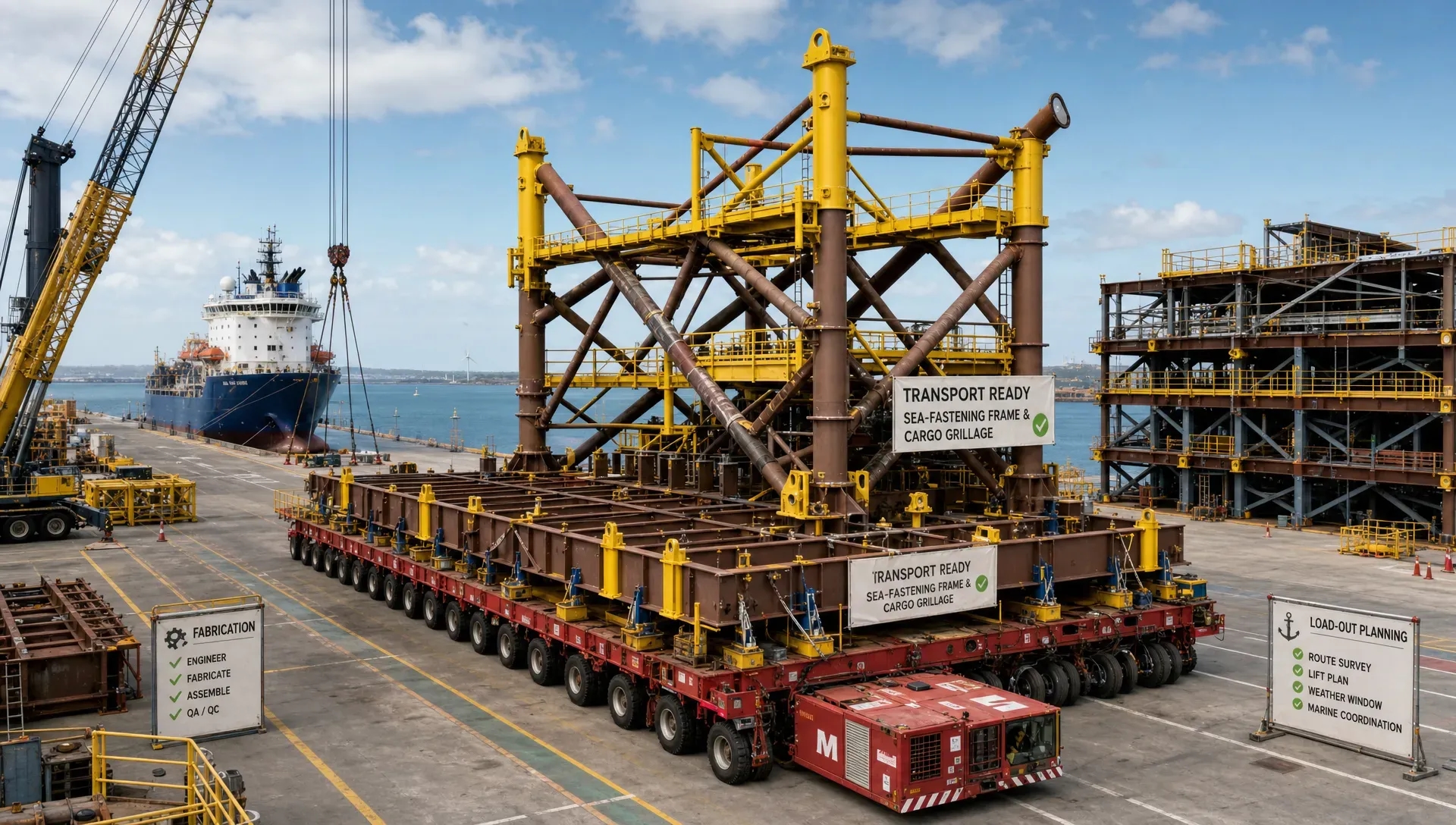
A seafastening system must transfer loads from cargo into grillages, deck structure and vessel supports without overstressing local areas. A lifting arrangement must consider centre of gravity, sling angles, padeye geometry, local reinforcement, crane curves, dynamic factors and practical rigging access. A temporary support frame must function during load-out, sea passage, installation and removal, often with different governing cases in each phase.
These are not secondary details. They affect vessel selection, deck layout, mobilisation time, approval reviews and offshore execution. If the engineering team discovers late that underdeck reinforcement is insufficient, the cost is rarely limited to new drawings. It can affect fabrication, vessel preparation, procurement, class review and the installation window.
Disciplined checking is essential. Heavy lift engineering should verify the full load path, from hook to cargo and from cargo to vessel or foundation. It should also validate practical issues such as rigging clearances, lift point orientation, access for shackle installation, survey requirements and contingency conditions. These checks are covered further in this article on heavy lift engineering checks that prevent offshore delays.
Vessel interfaces decide what is actually possible
Offshore delivery is constrained by the vessel long before the vessel arrives at the mobilisation port. Deck strength, underdeck structure, crane reach, stability, ballast capability, grillage footprint, sea-fastening access, mooring layout and available working areas all influence the design.
This is why naval architects, structural engineers and marine operations teams need to work together. If they operate in sequence rather than in parallel, design decisions can become circular. The structural team needs vessel reactions to design the support. The marine team needs support geometry to check stability and motions. The fabrication team needs final drawings to begin work. The approval body needs a coherent package before it can comment confidently.
A buildable process shortens that loop by making vessel interfaces part of the early design conversation. For example, a grillage concept should consider not only global strength but also local deck framing, sea-fastening weld access, load-out route, skid or SPMT interface, sea passage accelerations and removal after installation. A retrofit design should consider not only new equipment loads but also existing class records, survey access, piping interfaces and permissible modifications.
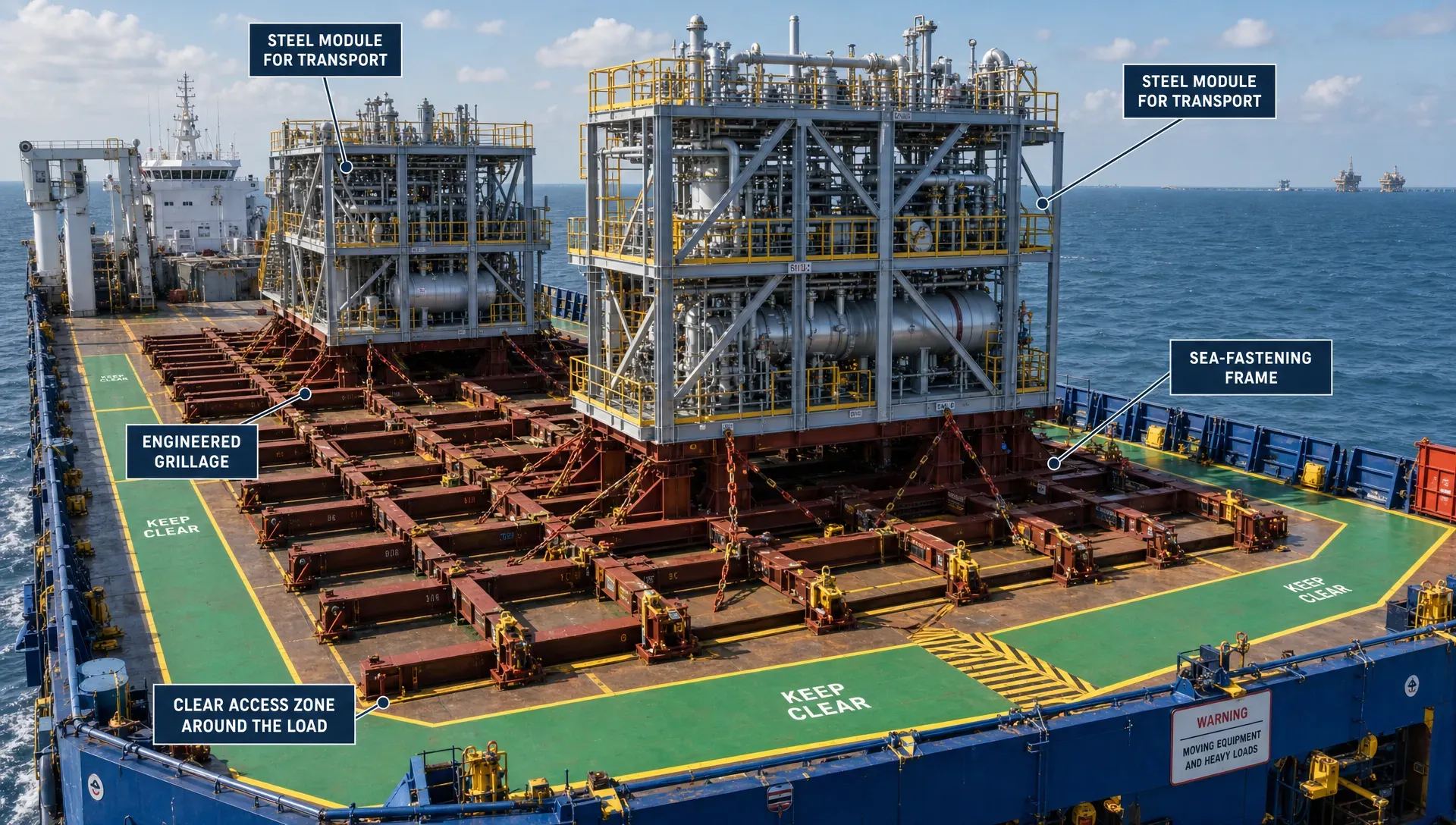
Good vessel interface engineering reduces late surprises. It also helps project teams make better commercial decisions, because vessel suitability is not judged only by availability or day rate. It is judged by whether the vessel can safely and efficiently support the designed operation.
Approval readiness is part of the engineering deliverable
For offshore and maritime work, approval readiness is not an administrative add-on. It is a technical requirement.
Marine warranty surveyors, class societies and client reviewers need to understand the basis of design, load cases, assumptions, calculation methods, drawings, operational limits and revision status. If information is missing or inconsistent, review cycles slow down. On projects with fixed mobilisation dates, those delays can become critical.
Approval-ready engineering usually includes a clear design basis, calculation reports, FEM summaries where relevant, drawings, material specifications, weld details, lifting arrangements, mooring or stability checks, operational procedures and traceable design changes. The format may vary by project, but the principle remains the same: reviewers should be able to follow the logic without reconstructing the engineering history themselves.
This is especially important when multiple parties are involved. EPC contractors, vessel owners, fabricators, marine contractors, class societies and MWS representatives may all review different parts of the same package. A strong engineering team reduces friction by keeping assumptions aligned and documentation controlled.
Approval readiness also supports safety offshore. Clear documentation helps the site team understand what has been designed, what limits apply and what should not be changed without engineering review.
Buildability reduces steel, rework and offshore risk
Cost control in offshore engineering is often discussed in terms of reducing steel weight. Weight matters, especially for lifting, transport and installation. But the larger savings often come from reducing rework, avoiding late approvals, simplifying fabrication and preventing offshore downtime.
Smart engineering can reduce total project cost by optimising load paths, avoiding unnecessary complexity and designing for the available fabrication method. It can also reduce installation risk by creating clearer sequences, more robust temporary supports and better access for rigging or inspection.
This requires engineering teams to look beyond isolated component checks. A padeye is not just a plate with a hole. It is part of a lift system. A grillage is not just a steel frame. It is part of a vessel interface. A retrofit bracket is not just a support. It may affect hull structure, piping routing, class approval and maintenance access.
The most effective designs are not always the most elegant in isolation. They are the ones that perform reliably across the project lifecycle.
Digital tools help, but engineering control remains essential
Modern offshore engineering uses an expanding set of digital tools: 3D modelling, FEM analysis, motion analysis, stability software, steel detailing workflows, drawing automation, visualisation and technical animation. These tools improve coordination and help teams communicate complex methods before offshore execution begins.
However, digital output should not be mistaken for design control. A high-quality model is only useful if it reflects the correct design basis, revision status and operational assumptions. A simulation is only useful if its inputs are suitable. A technical animation is only safe to use in a briefing if it matches the approved lift plan, deck layout and sequence.
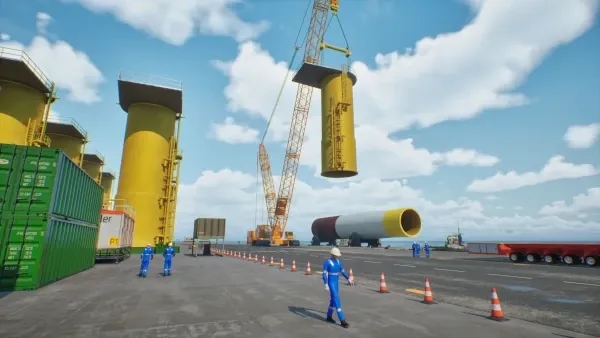
Visualisation can be particularly valuable for tenders, QHSE briefings, installation planning and stakeholder communication. Complex marine operations are easier to understand when people can see load-out paths, lift sequences, mooring layouts or restricted access zones. For teams exploring scalable visual production workflows, creative AI production infrastructure also shows how digital content creation is increasingly being treated as a controlled production layer, although offshore engineering visuals must always remain tied to verified technical data.
The principle is simple: use digital tools to improve clarity, speed and coordination, but keep engineering responsibility with competent engineers who understand the operation.
Practical checkpoints for buildable offshore delivery
Project teams can reduce risk by reviewing buildability at defined points rather than waiting for late-stage comments. The following checkpoints are useful during concept, detailed design and pre-mobilisation reviews:
- Is the design basis aligned with the selected vessel, operation, environmental criteria and approval route?
- Are load paths clear from cargo or equipment into vessel structure, foundation or existing hull structure?
- Have fabrication access, weld sequencing, tolerances and inspection requirements been checked?
- Are lifting points, rigging clearances, deck handling routes and temporary supports practical offshore?
- Does the documentation package allow MWS, class and client reviewers to follow the design logic efficiently?
- Have operational limits, contingency cases and revision changes been communicated to the execution team?
These questions do not replace detailed engineering. They help ensure that detailed engineering is aimed at the correct outcome. The best time to identify a buildability issue is when it can still be solved with a design adjustment, not when steel is already fabricated or the vessel is waiting at the quay.
Where Fusie Engineers supports buildable delivery
Fusie Engineers supports offshore, maritime, renewable energy and traditional energy projects where design decisions directly affect fabrication, approval and execution. The team brings together structural engineers, mechanical designers, heavy lift engineers and naval architects to support scopes such as offshore structural design, heavy lift engineering, ship design, vessel retrofits, piping, marine engineering, steel detailing, decommissioning support and technical visualisation.
That integrated perspective matters because offshore delivery does not happen within one discipline. A safe and buildable solution may require FEM calculations, motion analysis, lifting arrangements, mooring reports, stability checks, shop drawings and approval documentation to work together as one controlled package.
Fusie Engineers focuses on practical engineering choices: reducing unnecessary steel, avoiding avoidable fabrication complexity, preparing clear review documents and supporting designs that are easier to install, maintain and approve. For project directors, engineering managers and technical teams, this can provide extra capacity without reducing control over safety, quality or documentation.
Frequently asked questions
What does buildable offshore delivery mean? Buildable offshore delivery means designing structures, tools, vessel interfaces and procedures so they can be fabricated, approved, transported, lifted and installed safely under real project constraints.
Why is engineering and designing different for offshore projects? Offshore projects involve dynamic loads, vessel behaviour, limited access, class or MWS approval, tight mobilisation windows and harsh marine environments. Design decisions must therefore account for execution, not only static strength.
How can early engineering reduce offshore project delays? Early engineering reduces delays by clarifying assumptions, checking vessel interfaces, confirming load paths, simplifying fabrication, preparing approval-ready documentation and identifying operational constraints before mobilisation.
When should buildability be reviewed? Buildability should be reviewed during concept design, detailed engineering and pre-mobilisation. Waiting until fabrication or installation often makes changes more expensive and harder to approve.
What deliverables support approval-ready offshore engineering? Typical deliverables may include a design basis, calculation reports, FEM summaries, drawings, lifting arrangements, stability or mooring checks, material details, weld information, procedures and revision-controlled approval documentation.
Build offshore projects around practical engineering
Buildable offshore delivery depends on decisions made before steel is cut and before the vessel is mobilised. If your project needs structural design, heavy lift engineering, vessel retrofit support, marine engineering, steel detailing or approval-ready documentation, Fusie Engineers can support your team with practical engineering focused on safety, fabrication, approval and execution.