


Why constructional engineering matters in offshore steelwork
2026-07-03
Offshore steelwork rarely fails because one person forgot that steel is strong. Problems usually begin when steelwork is treated as a collection of plates, beams and welds rather than as part of a live marine operation, a fabrication sequence, a vessel interface and an approval process.
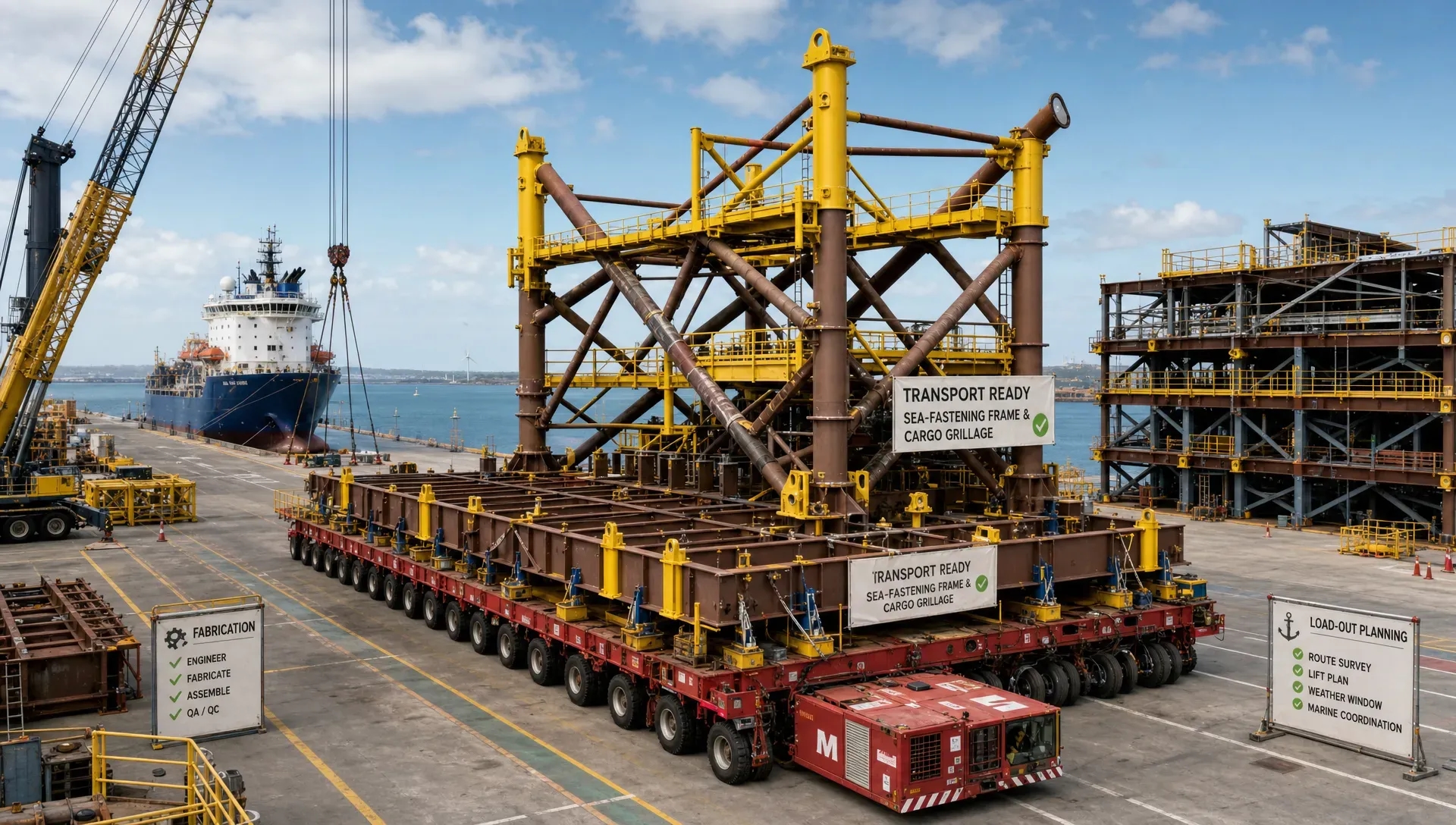
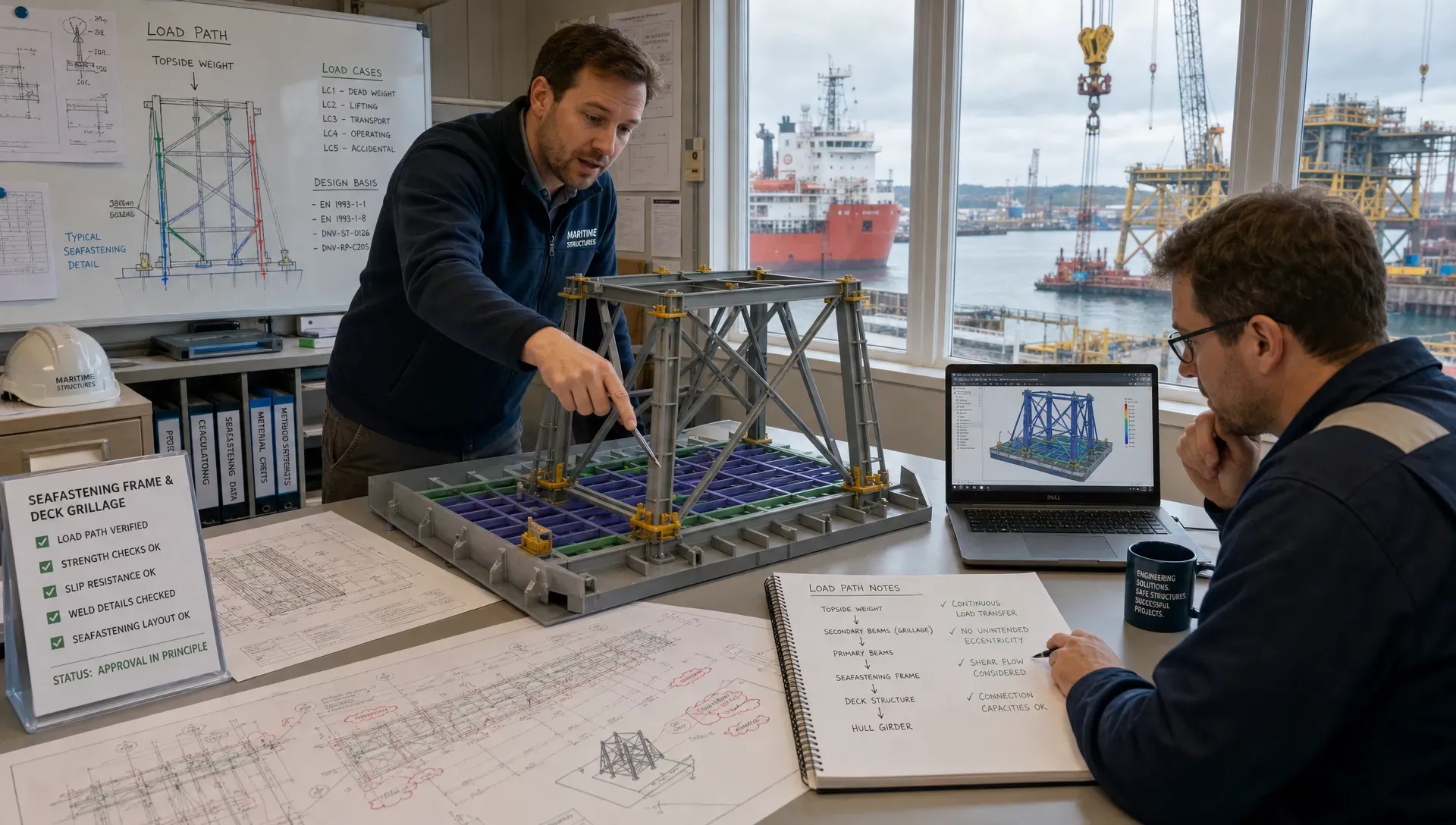
A seafastening frame, grillage, module support, vessel retrofit or temporary lifting structure must do more than pass a stress check. It has to fit the vessel, align with underdeck capacity, tolerate marine loads, remain practical to fabricate, and give MWS or class reviewers enough evidence to approve the method. That is where constructional engineering becomes critical.
In offshore steelwork, constructional engineering is the discipline that connects structural intent with construction reality. It asks how a structure will be fabricated, transported, lifted, installed, inspected, maintained and removed. For offshore contractors, shipyards, EPC teams and renewable energy developers, that link can decide whether a design becomes a smooth mobilisation or a late-stage rework problem.
What constructional engineering means offshore
Constructional engineering is not simply another name for drafting. It sits between structural design, marine operations, fabrication and site execution. A structural calculation may prove that a beam has enough capacity, but constructional engineering asks whether the beam can be welded in position, whether the load path is clear during every temporary phase, whether tolerances are realistic, and whether the final arrangement can be approved without repeated clarification rounds.
For offshore steelwork, this matters because many structures are temporary but safety-critical. Transport grillages, sea fastenings, lifting tools, access platforms, deck reinforcements, stabbing guides, support frames and installation aids may only be used for one campaign. Yet they carry loads during the most expensive and least forgiving phases of the project.
A good constructional engineering approach considers:
- How loads travel through primary members, secondary members, welds, padeyes, vessel deck structures and foundations.
- How the steelwork will be cut, assembled, welded, coated, inspected and repaired if required.
- How lifting, transport, sea states, accelerations, mooring behaviour and vessel motions influence the design.
- How class rules, MWS requirements, yard standards and project specifications affect calculations and documentation.
- How offshore crews will access, handle, install and maintain the structure under real site constraints.
The result is not just a safer structure. It is a steelwork package that is easier to build, review, install and control.
Offshore steelwork is exposed to more than static loads
In a workshop, steel can appear predictable. Offshore, the same steelwork is subject to vessel motion, dynamic amplification, green water risk, impact, vibration, fatigue-sensitive details, corrosion, handling damage and changing boundary conditions.
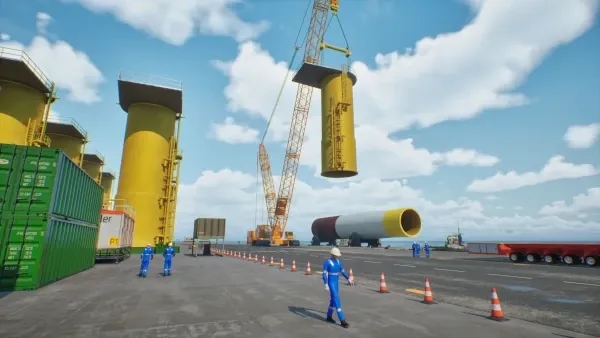
A transport support for an offshore wind foundation, for example, may see different governing cases during loadout, sailing, standby, lifting and removal. A retrofit support on an existing vessel may be limited by legacy drawings, hidden underdeck structure and local class requirements. A decommissioning frame may need to accommodate uncertain centre of gravity data, damaged components or restricted lifting access.
This is why constructional engineering matters from the beginning. If the engineer only checks the final installed condition, the temporary phases can be underdeveloped. If the design assumes perfect load sharing, exact fit-up or ideal weld access, fabrication and offshore execution may expose weaknesses that were not visible in the model.
A practical offshore steelwork design must therefore balance strength, stiffness, weight, fatigue, fabrication effort, inspection access and approval traceability. Overdesign is not always the safe option. Excess steel can increase lift weights, extend welding hours, complicate coating, overload vessel deck areas and create new interface risks.
The design basis must control the whole construction route
A strong constructional engineering process starts with a controlled design basis. This is not a formality. It is the document that aligns engineering, operations, fabrication, vessel owners, MWS, class and the client before detailed work accelerates.
The design basis should define the applicable rules, environmental assumptions, load cases, safety factors, vessel data, allowable deck loads, transport accelerations, lifting factors, fabrication assumptions and review requirements. It should also identify which inputs are confirmed and which remain provisional.
When assumptions are uncontrolled, offshore steelwork becomes vulnerable to late changes. A revised centre of gravity, updated vessel motion response, altered lifting arrangement or modified fabrication method can invalidate previous calculations. In high-cost offshore campaigns, that can affect mobilisation dates, vessel availability and client confidence.
This is where experienced engineering judgement matters. The design team must know which assumptions are sensitive and which details need early confirmation. For related guidance on aligning structure, vessel interface and fabrication method, Fusie Engineers has also covered structural engineering choices that improve buildability offshore.
Buildability is engineered, not added later
A design can be technically correct and still be difficult to build. Offshore steelwork often becomes expensive when welds are hard to access, tolerances are unrealistic, connection details require excessive fitting, or secondary members clash with coating, inspection or handling requirements.
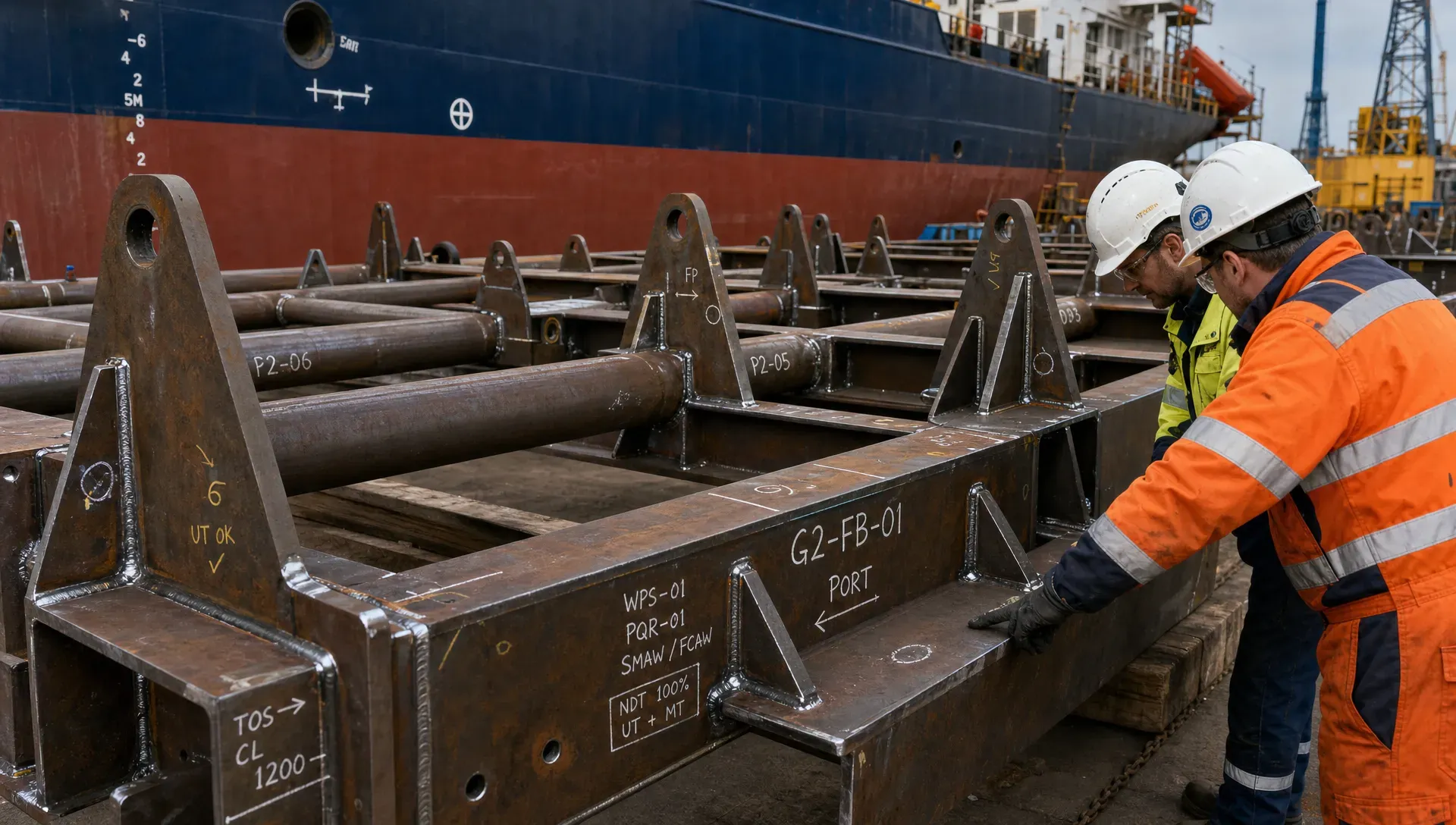
Constructional engineering reduces these problems by bringing fabrication logic into the design phase. Instead of leaving the workshop to solve difficult details, the engineer considers plate availability, weld sequencing, access for NDT, lifting points for subassemblies, coating breaks, temporary supports and dimensional control.
This is especially important in yards working under tight windows. A complex joint that saves a small amount of steel may not be worth it if it adds days of welding, requires special inspection access or increases the probability of rework. Conversely, a slightly heavier but simpler arrangement may reduce fabrication risk, improve inspection quality and support faster approval.
Good constructional engineering also improves communication between design and detailing. The structural model, drawings, connection philosophy and bill of materials must carry the same intent. At the handover to fabrication, steel detailing in marine fabrication becomes the point where engineering decisions are translated into parts, welds, assemblies and review-ready information.
Heavy lifts and temporary steelwork leave little margin for ambiguity
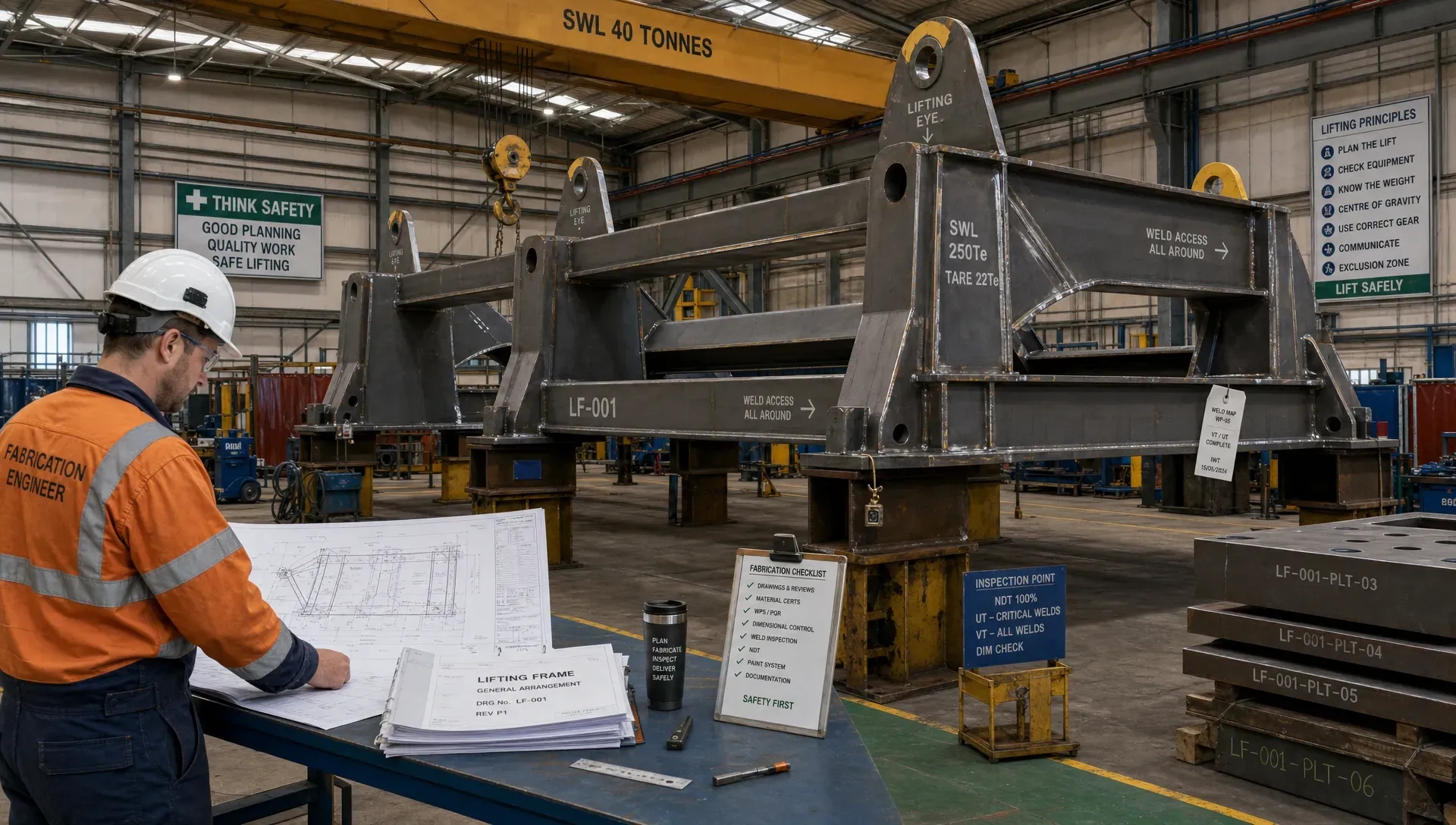
Many offshore steelwork packages are directly connected to heavy lift operations. Padeyes, trunnions, grillages, spreader beams, lifting frames and temporary supports must be designed for dynamic factors, sling geometry, fabrication tolerances, out-of-plane effects and load redistribution.
A lift plan depends on more than the lifting appliance. It depends on the structure being lifted, the temporary steelwork attached to it, the vessel or quay interface, rigging geometry, centre of gravity control and inspection evidence. If one detail changes late, the entire lift package may need review.
Constructional engineering helps by making the load path visible and defensible. It ensures that padeye forces are not checked in isolation, that local shell or deck structures are verified, that weld groups are appropriate, and that lift points can be inspected before use. It also supports clear method statements and technical documentation for MWS and client review.
For heavy lift scopes, disciplined front-end checks are often the difference between a confident operation and a delay during mobilisation. Fusie Engineers explores this in more detail in its article on heavy lift engineering checks that prevent offshore delays.
Approval readiness depends on traceable engineering
Offshore steelwork often needs review by MWS, DNV, Lloyd’s Register, ABS or another class society, depending on the scope. Reviewers do not only need drawings. They need a traceable logic that connects design assumptions, load cases, calculation results, drawings, material choices, welding details and inspection requirements.
Approval delays commonly arise when the design package does not explain why a load case governs, how vessel interface loads are transferred, how local reinforcements are justified, or how fabrication tolerances have been considered. Even if the design is fundamentally sound, missing documentation can create review loops that affect procurement, fabrication and mobilisation.
Constructional engineering improves approval readiness by keeping the calculation package and drawing package aligned. The FEM model should reflect realistic boundary conditions. The drawings should show the load-bearing intent. The welds and materials should be consistent with the calculations. The report should explain assumptions clearly enough for reviewers to follow without reconstructing the design themselves.
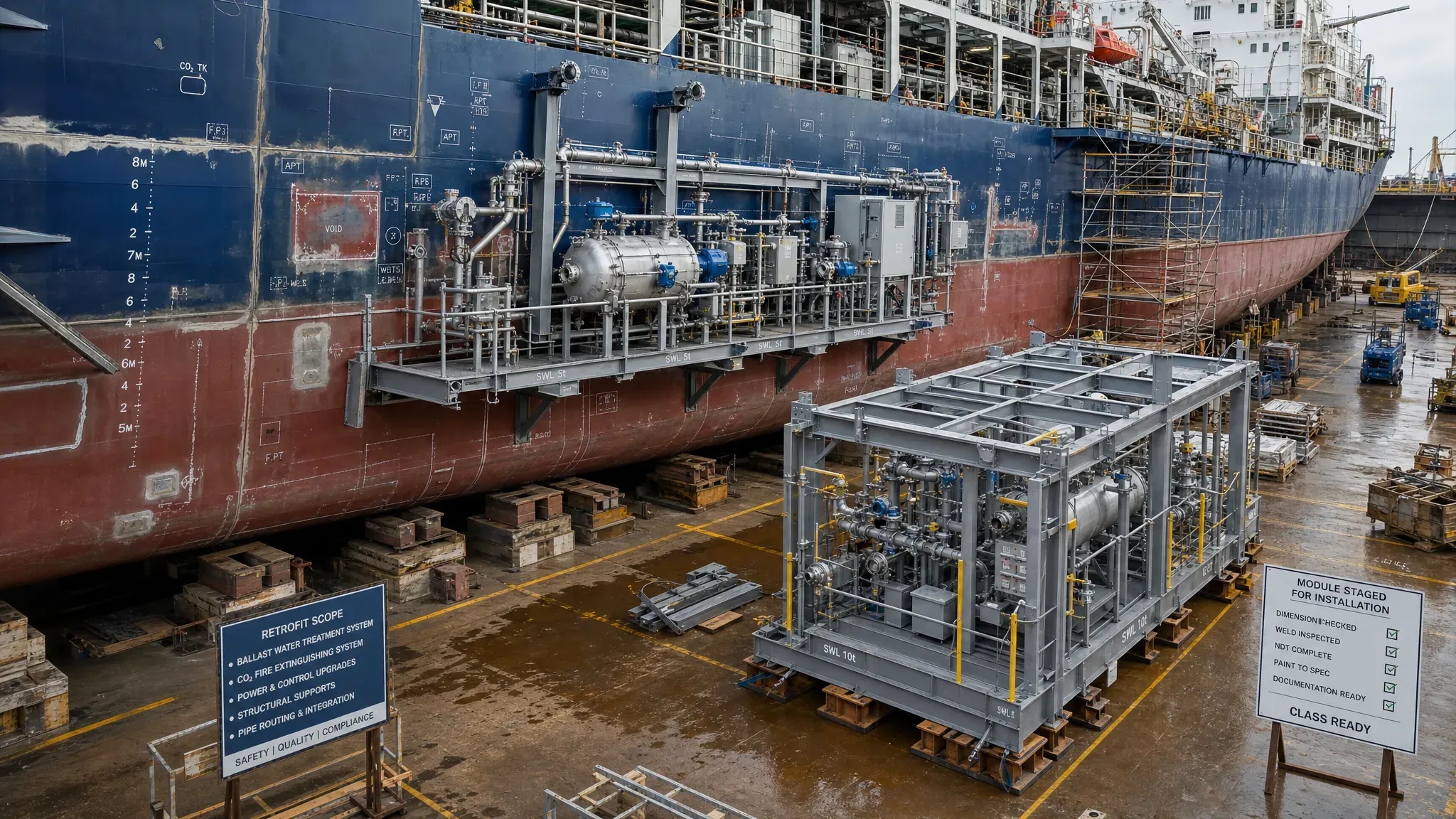
This is particularly important for vessel retrofits and ship repair. Existing vessels often carry incomplete legacy information, previous modifications and class constraints. A retrofit support, piping route or local reinforcement may need to be designed around restricted access, existing systems, corrosion margins and operational requirements. In that environment, clear documentation is not administration. It is part of risk control.
Commercial risk starts with early technical decisions
Constructional engineering also influences tendering and business development. A contractor may be building a stronger opportunity pipeline through repeat clients, frameworks, tenders or a specialist B2B customer acquisition agency, but commercial success still depends on technical promises that can be delivered safely.
If a tender assumes a vessel, lift method, grillage concept or approval route that later proves impractical, margin can disappear in redesign, steel growth, added weld hours or delayed mobilisation. Early constructional engineering input helps tender teams avoid optimistic methods that look efficient on paper but create execution risk later.
This is valuable across offshore wind, maritime, dredging, traditional energy, decommissioning and green technology projects. The commercial question is not only whether the steelwork can be designed. It is whether it can be designed in time, built without unnecessary complexity, approved with confidence and used safely offshore.
Where constructional engineering reduces cost without weakening safety
Cost reduction in offshore steelwork should not mean removing steel blindly. It means understanding where steel is genuinely needed, where load paths can be simplified, and where fabrication effort can be reduced without compromising safety or approval.
Practical constructional engineering can reduce cost by simplifying connections, shortening weld lengths, avoiding unnecessary exotic materials, reducing difficult overhead welding, rationalising plate thicknesses and improving nesting or assembly logic. It can also prevent hidden costs by reducing drawing revisions, shop queries, approval comments and offshore modifications.
This is where experienced offshore engineers add value beyond calculations. They understand that a lighter design is not always cheaper if it requires complex welding or tight tolerances. They also understand that a robust design is not always heavier if the load path is clean and the interface assumptions are controlled.
For project directors and engineering managers, this is a key point. The best time to reduce steel cost and rework is before the steel is ordered, before shop drawings are released and before the vessel is booked. Once fabrication or mobilisation begins, every design change becomes more expensive.
Choosing an engineering partner for offshore steelwork
When selecting support for offshore steelwork, it is tempting to focus on available capacity or drafting speed. Those factors matter, but they are not enough for safety-critical marine structures. The right partner should bring structural engineering, marine operations awareness, fabrication understanding and approval experience into one coordinated workflow.
Look for an engineering team that can challenge assumptions constructively, produce clear calculations, understand vessel constraints, coordinate with fabricators, and prepare documentation that supports class or MWS review. The team should also be comfortable working with incomplete early data while clearly identifying risks, assumptions and hold points.
Strong constructional engineering support should help answer practical questions early:
- Can this structure be fabricated with normal yard processes and inspection access?
- Are the load paths clear during transport, lift, installation and removal?
- Does the design respect vessel deck capacity, underdeck structure and motion behaviour?
- Are drawings and calculations aligned enough for efficient review?
- Can the design be modified quickly if project data changes?
These questions are not academic. They determine whether offshore steelwork becomes a controlled engineering package or a source of late-stage uncertainty.
How Fusie Engineers supports constructional engineering in offshore steelwork
Fusie Engineers supports offshore, maritime and energy projects with structural design, heavy lift engineering, ship design, marine engineering, vessel retrofits, piping design and steel detailing. For offshore steelwork, that combination is important because the structure cannot be separated from the operation, the vessel, the fabrication route or the approval path.
The team can support scopes from concept and calculations through detailed engineering, FEM checks, lifting arrangements, drawings, steel detailing and approval documentation. That breadth helps clients keep engineering intent consistent from early feasibility to fabrication and operational readiness.
For contractors, shipyards and developers working under tight schedules, the value is not only extra engineering capacity. It is practical judgement that keeps steelwork safe, buildable, review-ready and aligned with offshore execution.
Frequently asked questions
Is constructional engineering the same as structural engineering? Not exactly. Structural engineering verifies strength, stability and behaviour under defined loads. Constructional engineering connects those checks to fabrication, installation, access, tolerances, approval and the full construction route. In offshore steelwork, the two disciplines must work closely together.
When should constructional engineering start on an offshore steelwork package? It should start as early as possible, ideally during concept or tender development. Early input helps define realistic load paths, vessel interfaces, fabrication assumptions and approval requirements before the project becomes locked into a costly direction.
How does constructional engineering reduce offshore project risk? It reduces risk by identifying practical issues before fabrication or mobilisation. These can include unclear load paths, inaccessible welds, vessel deck limitations, poor fit-up tolerance, incomplete review documentation or temporary load cases that were not fully considered.
Does constructional engineering only apply to temporary works? No. It is highly valuable for temporary offshore works such as seafastening and lifting tools, but it also applies to permanent vessel retrofits, ship structures, piping supports, deck reinforcements, offshore modules and installation aids.
What documents are usually needed for approval-ready offshore steelwork? Depending on the scope, the package may include a design basis, calculation report, FEM output, lifting or transport checks, motion or stability inputs, drawings, weld details, material specifications, inspection requirements and responses to MWS or class comments.
Make offshore steelwork safer, clearer and more buildable
If your next project involves seafastening, grillages, heavy lift tools, vessel retrofit steelwork, offshore installation structures or approval-critical marine fabrication, constructional engineering should be part of the plan from the start.
Fusie Engineers supports offshore, maritime and energy teams with practical engineering that considers safety, buildability, vessel behaviour, class requirements and project execution. Bring the team in early to reduce rework, strengthen approval packages and keep offshore steelwork aligned with the realities of fabrication and mobilisation.