


What marine engg support should include on vessel projects
2026-07-01
On vessel projects, marine engg support is not a single calculation package or a set of production drawings. It is the technical control layer that connects vessel capability, structural design, marine operations, fabrication, class requirements and offshore execution.
That distinction matters because most vessel scopes are constrained from several sides at once. A grillage may be strong enough in isolation but overload the underdeck. A lifting frame may pass an FEM check but be difficult to weld inside the mobilisation window. A retrofit pipe route may look simple on a model but conflict with legacy structure, access requirements or class survey points. Good marine engineering support should identify these conflicts early, not after steel is already being fabricated.
For technical directors, project managers, naval architects, shipyards, EPC contractors and offshore contractors, the practical question is simple: what should be included in a marine engg scope so the vessel project can move safely from concept to execution?
Start with a controlled design basis
Every reliable vessel engineering package starts with a clear design basis. Without it, teams may calculate against different assumptions, use inconsistent vessel data or design for conditions that do not match the actual operation.
A proper design basis should define the project objective, vessel particulars, operating envelope, environmental assumptions, applicable rules, load cases, safety factors, acceptance criteria and interfaces. It should also state what is known, what is assumed and what still needs confirmation.
For vessel projects, the design basis should normally cover:
- Vessel drawings, scantlings, deck capacity, tank arrangement and stability information.
- Operating conditions, including transit, lifting, mooring, installation, dredging, decommissioning or harbour phases.
- Environmental criteria such as wind, wave, current, accelerations and limiting sea states.
- Applicable class rules, flag requirements, Marine Warranty Surveyor requirements and client specifications.
- Responsibility splits between vessel owner, contractor, engineering team, fabricator, class, MWS and installation team.
This is not paperwork for its own sake. A controlled design basis prevents rework because it gives every discipline the same starting point. If the vessel data is incomplete or the operation is still changing, the design basis should track those uncertainties and show how they affect engineering decisions.
Verify vessel data before designing around it
Many vessel projects rely on legacy drawings, previous conversion records or operational assumptions that may no longer reflect the as-built condition. This is especially common in retrofit, repair, life extension, temporary outfitting and offshore installation scopes.
Marine engg support should include a vessel data verification step before finalising structural or operational design. The engineering team should check whether drawings are current, whether deck load limits are clearly defined, whether underdeck reinforcement exists as shown and whether survey data or laser scans are needed.
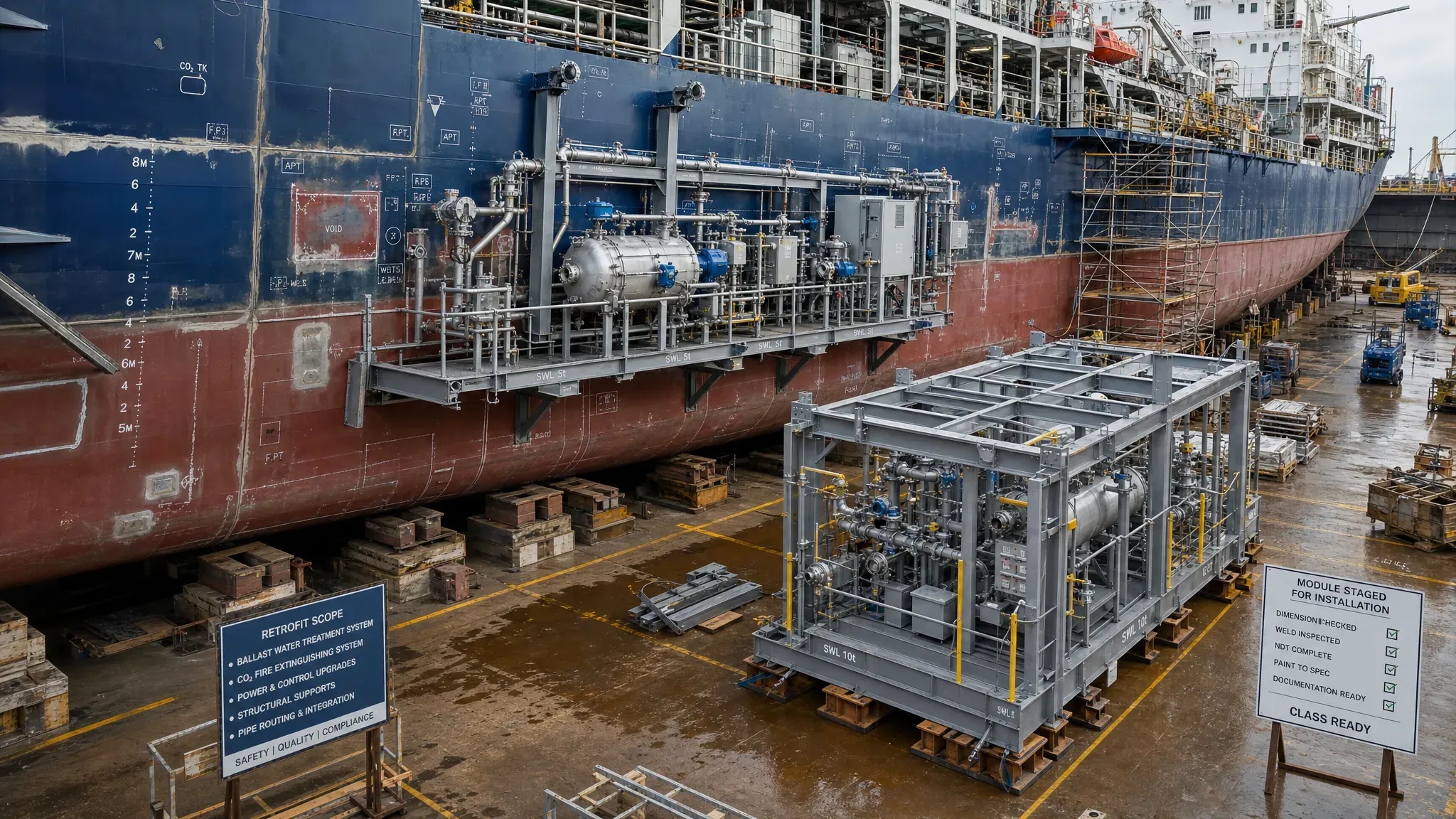
This is particularly important for vessel retrofits and piping modifications. A route that appears available on a general arrangement can be blocked by cable trays, access platforms, existing pipe supports, ventilation trunks or class-related inspection zones. A sea fastening design can also be limited by local deck structure, not by the global strength of the vessel.
Where the vessel is being used for transport, lifting or offshore construction, the verification should connect naval architecture, structural engineering and marine operations. Stability, deck strength, crane capacity, ballast limitations and mooring loads cannot be treated as separate topics. For a deeper view of early checks that reduce redesign, Fusie Engineers has also discussed maritime engineering checks that prevent vessel project rework.
Connect structural design with marine operations
A common project risk is designing steelwork that is structurally acceptable on paper but poorly aligned with the marine operation. Vessel projects need structural design that reflects how the equipment will actually be transported, lifted, secured, installed, maintained and removed.
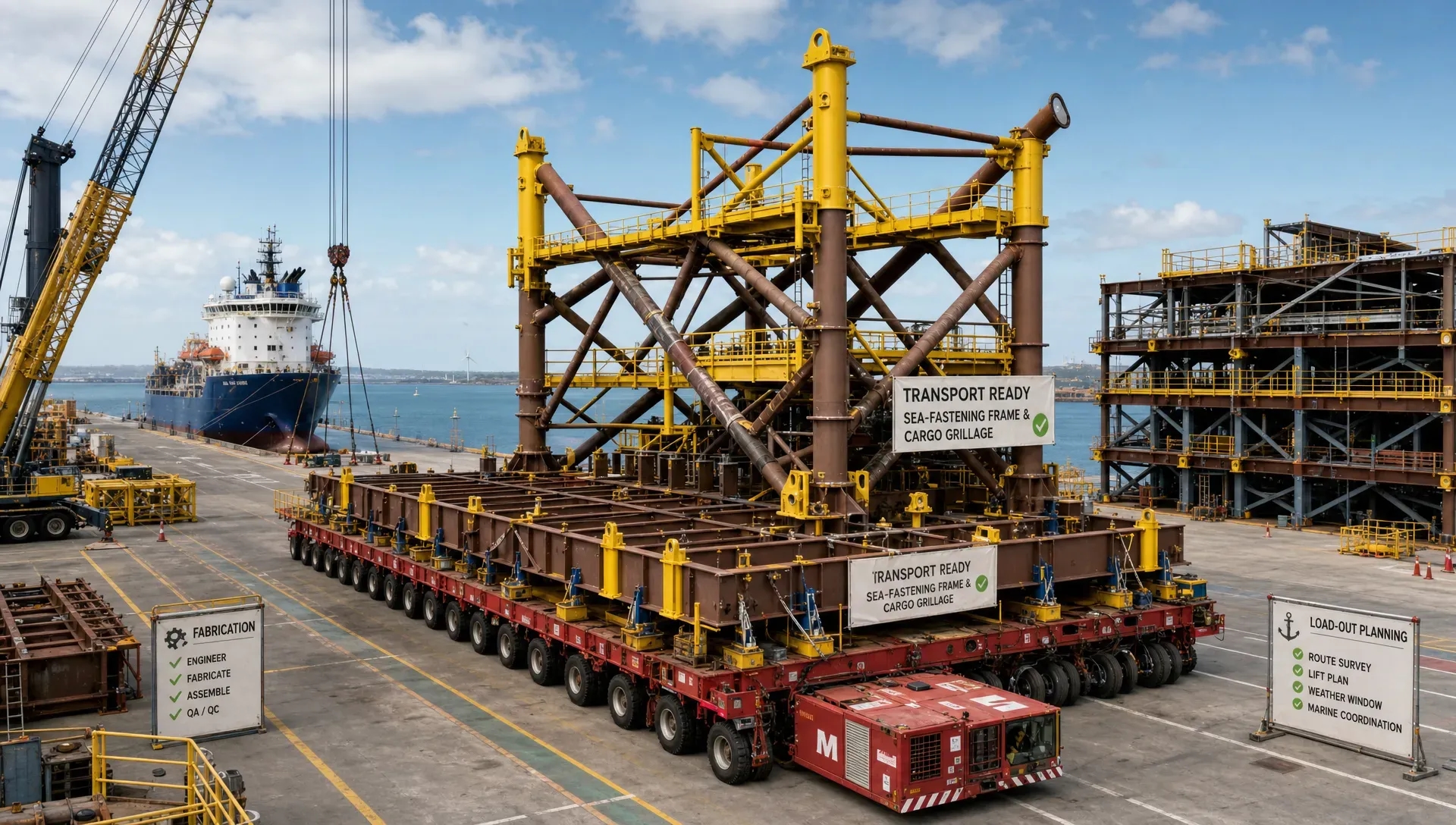
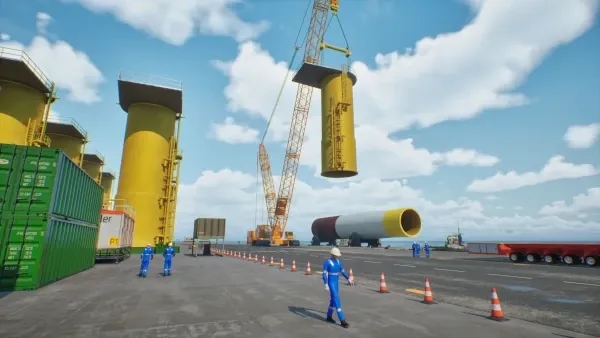
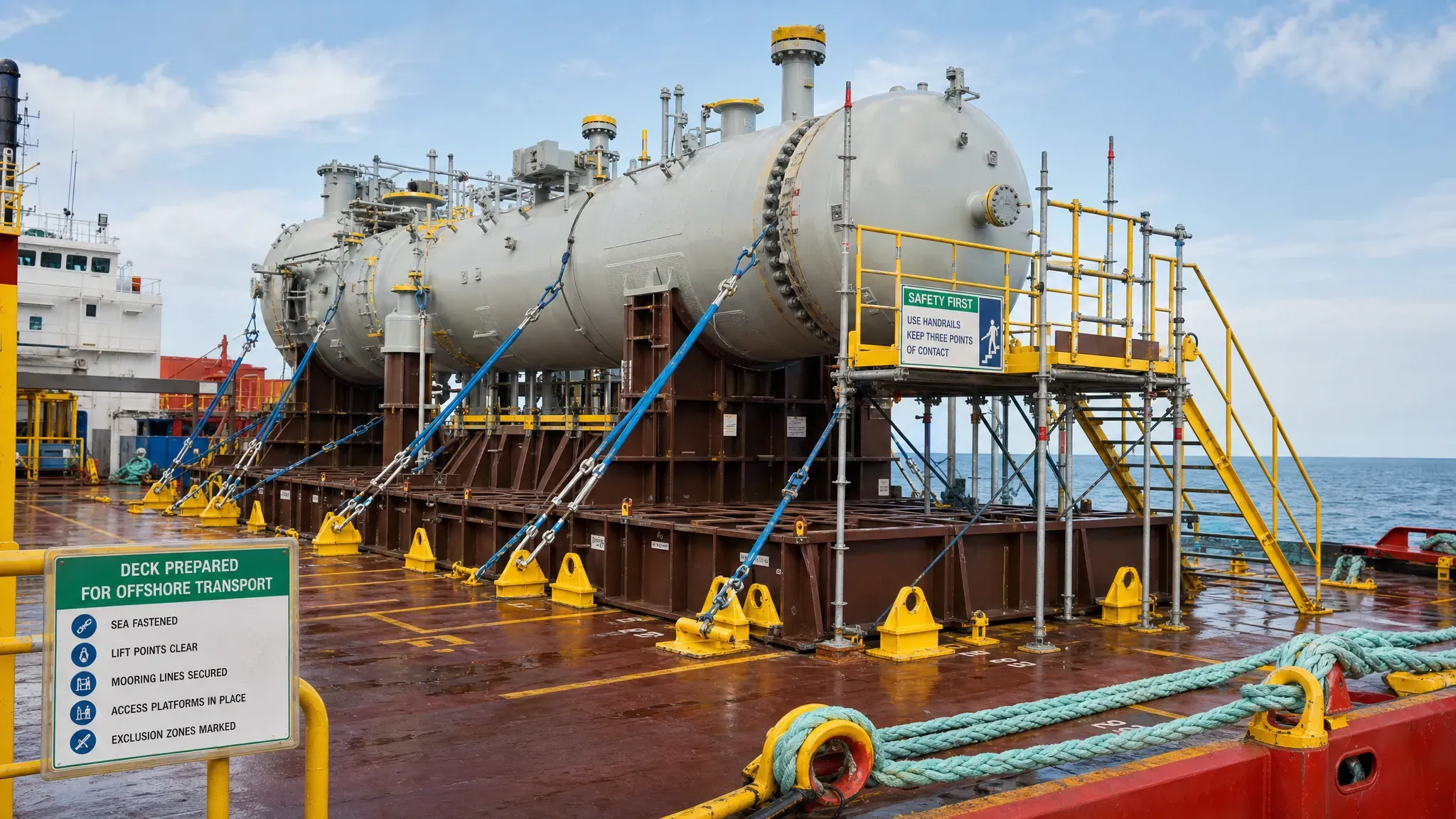
For example, an offshore wind foundation transport grillage must consider vessel accelerations, support reactions, fatigue where relevant, weld access, sea fastening sequence, load-out method, inspection points and removal after the campaign. A heavy lift arrangement must consider lift points, sling angles, dynamic amplification, crane curves, centre of gravity uncertainty and the sequence of temporary conditions before and after the lift.
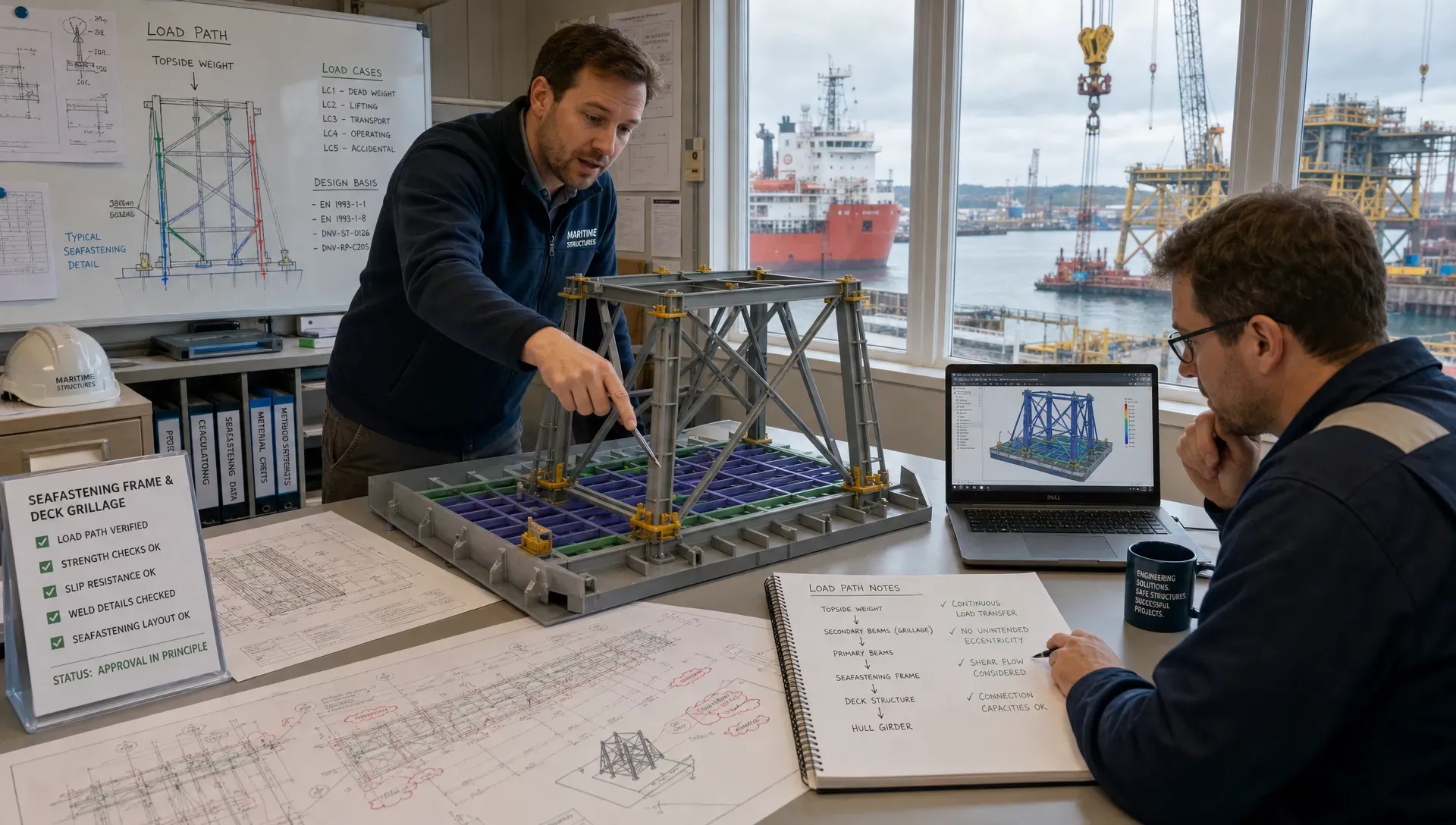
The structural package should include global and local checks where needed. FEM may be required for complex load paths, underdeck behaviour, grillages, lifting frames, custom tools, moonpool structures, vessel reinforcements or installation aids. Hand calculations remain valuable for transparent verification, quick sensitivity checks and reviewer confidence.
Good marine engineering support should not simply maximise steel to pass utilisation checks. It should optimise the design so that it is safe, practical and efficient to fabricate. Reducing unnecessary steel can lower cost, shorten fabrication time, reduce lifting weight and simplify mobilisation. The design still needs clear margins, but those margins should be intentional and traceable.
Include lifting, transport, seafastening and mooring engineering
Many vessel projects fail at the interfaces between design and operation. The structure may be adequate, but the lifting arrangement is unclear. The mooring plan may be acceptable for one phase but not for another. The sea fastening may be strong enough, but difficult to install before sail-away.
Marine engg support should therefore include the operational engineering that makes vessel work executable. Depending on the project, this can include transport engineering, seafastening calculations, grillage design, lifting studies, motion analysis, mooring analysis, stability checks, ballasting sequences and installation support.
The exact scope depends on the vessel and operation, but the engineering logic is consistent: each temporary condition needs to be defined, checked and documented. Temporary phases are often where risk concentrates because the vessel, cargo or structure is not yet in its final configuration.
Marine operation element | What engineering support should check | Why it matters
---
Transport and seafastening | Accelerations, support reactions, welds, bolts, sea fastening load paths and removal sequence | Prevents cargo movement, overstress and mobilisation delays
Heavy lift | COG, rigging geometry, DAF, crane capacity, lift point strength and temporary stability | Reduces lift risk and supports approval by client, MWS or class
Mooring | Line loads, winch capacity, bollard loads, vessel offset and environmental limits | Keeps the vessel within a safe operating envelope
Retrofit installation | Access, clashes, hot work zones, class constraints and sequence of works | Reduces rework during repair yard or drydock execution
Offshore installation | Limiting sea states, vessel motions, tool interfaces and contingency cases | Supports safe execution in dynamic marine conditions
The best results come when marine operations and structural design are developed together. That is also the principle behind how marine engineering cuts risk in offshore projects, where vessel capability, installation constraints and approval documentation are treated as connected parts of the same risk picture.
Make approval readiness part of the scope
On vessel projects, a technically sound design is not enough if it cannot be reviewed efficiently. Class societies, flag authorities, clients and Marine Warranty Surveyors need a clear trail from design basis to calculation, drawing and procedure.
Approval readiness should be built into the marine engg package from the start. That means calculations must be traceable, assumptions must be visible, drawings must match the calculation model and operational limits must be clearly stated. If design changes occur, revision control must show what changed and why.
Typical approval support may include design basis documents, calculation reports, FEM summaries, stability reports, lifting arrangement drawings, sea fastening drawings, mooring reports, weld details, material specifications, inspection notes and response sheets for reviewer comments.
This is where experienced engineering judgement is valuable. Reviewers often focus on load paths, assumptions, local deck strength, allowable stresses, weld details, temporary conditions and operational limitations. A good package anticipates those questions instead of waiting for multiple review cycles.
Design for fabrication, installation and maintenance
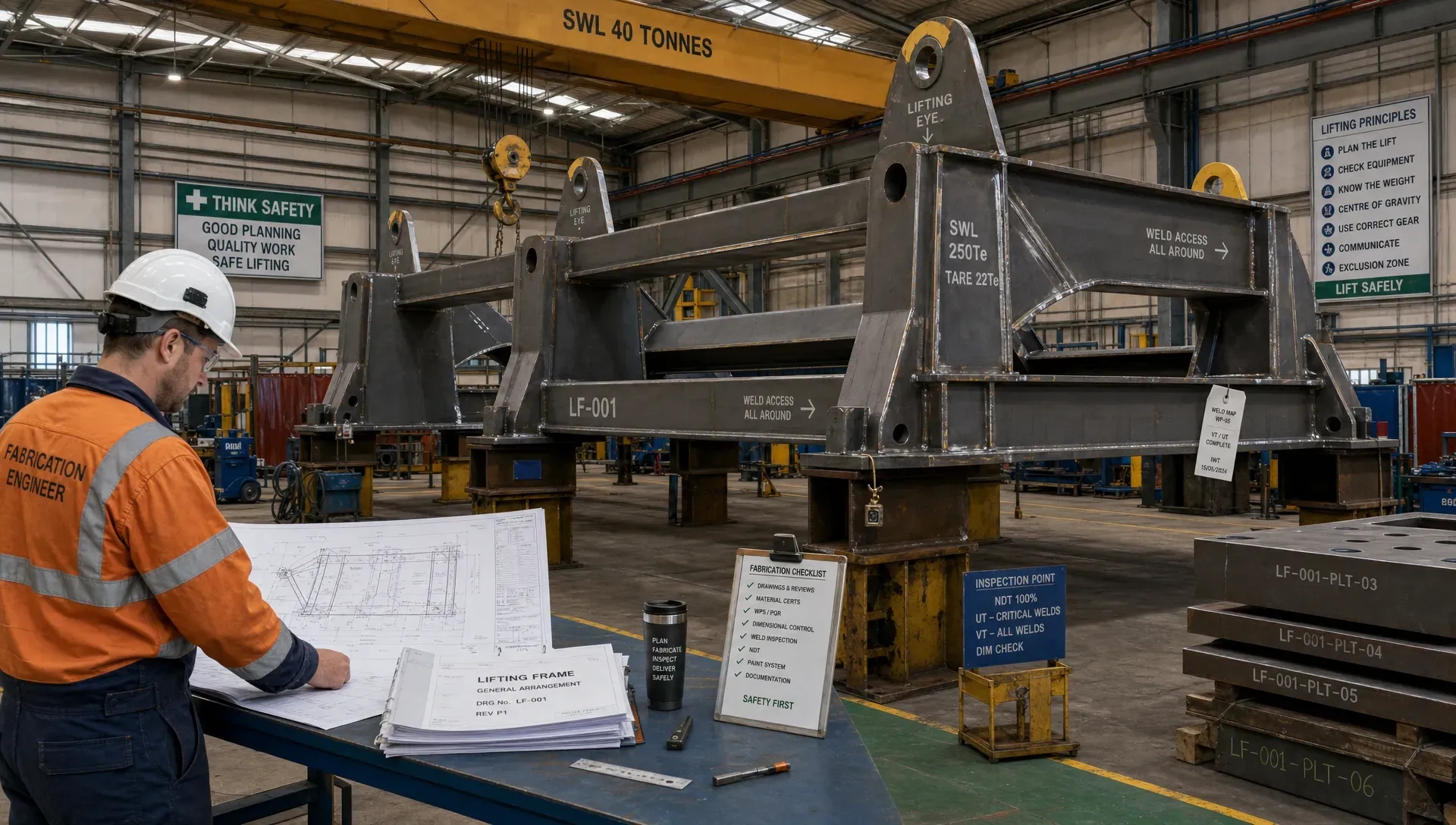
Buildability is one of the strongest indicators of good marine engineering. Offshore-grade design should not create unnecessary fabrication difficulty, exotic material choices or weld details that are hard to inspect. It should be strong, clear, accessible and realistic for the yard or vessel crew to execute.
Material selection also needs context. Stainless steel, coatings and corrosion allowances must be chosen for the actual environment, inspection regime and service life. Durability matters in many industries, even in consumer products such as water-resistant stainless steel jewellery, but vessel projects require a much more detailed understanding of corrosion, fatigue, welding, galvanic effects and class expectations.
For steel structures, marine engg support should consider plate availability, standard profiles, weld access, lifting points for the fabricated item, tolerances, bolting strategy, coating access and removal after use. For piping and retrofit work, it should consider supports, thermal movement, vibration, penetrations, access for valves and the need to maintain class surveyability.
Steel detailing is not just a downstream drafting task. It is the step where engineering intent becomes buildable steelwork. If detailing is disconnected from design, fabrication teams may face unclear welds, impractical assemblies, missing cut-outs or late changes. That is why steel detailing matters in marine fabrication, especially where approval, safety and schedule are tightly linked.
Include vessel performance and naval architecture checks
Marine engg support should also include naval architecture input where vessel behaviour affects the project. This can include intact stability, damage stability where applicable, trim and heel, ballasting, deck loading, longitudinal strength, motions, accelerations, crane operating limits and mooring response.
For vessel conversions or retrofits, naval architecture checks help confirm whether new equipment, piping, foundations, tanks or mission systems affect stability, loading conditions or class documentation. For offshore installation vessels, they help define realistic weather limits and operational sequences.
These checks are not isolated from structural design. Vessel accelerations influence sea fastening loads. Ballasting affects trim, crane capacity and deck reactions. Mooring offsets influence installation tolerances. Deck loading can be governed by local underdeck structure even when global vessel strength is acceptable.
A useful marine engineering team will make these relationships visible to the project team. This helps project directors and lead engineers make decisions based on the full vessel system, not on isolated calculations.
Provide clear deliverables for each project phase
The scope of marine engg support should change as the project matures. A tender stage does not need the same level of detail as an approval package, but it still needs enough engineering definition to avoid unrealistic promises. A mobilisation phase needs fast, accurate answers, but also strong document control.
Project phase | Marine engg support that adds value | Key output
---
Concept and tender | Feasibility checks, vessel suitability, high-level lifting or transport concepts, weight estimates and risk identification | A credible technical method with known constraints
FEED or basic design | Design basis, preliminary structural checks, stability review, operation philosophy and class or MWS engagement plan | A controlled scope for detailed engineering
Detailed engineering | FEM, calculations, drawings, sea fastening, grillages, lifting plans, mooring checks, retrofit details and fabrication input | Review-ready engineering package
Fabrication and mobilisation | Shop drawing support, response to yard queries, as-built updates, inspection support and change control | Buildable and traceable execution documents
Offshore execution and close-out | Operational support, contingency reviews, final documentation and lessons learned | Safer execution and reusable project knowledge
This phased approach helps clients buy the right level of support. Some vessel owners only need specialist input for a retrofit interface. Some EPC contractors need integrated structural, marine operations and approval support for a full offshore campaign. Some shipyards need detailed engineering and steel detailing to turn a concept into fabrication-ready drawings.
Use visualisation where complexity needs to be understood quickly
Complex vessel operations are often difficult to explain through drawings alone. A heavy lift, float-over, subsea deployment, dredging modification or offshore wind foundation transport sequence may involve several temporary conditions, close clearances and multiple decision points.
Technical animation and visualisation can help tender teams, QHSE teams, client stakeholders and offshore crews understand the method. This is especially valuable when the operation involves non-standard tooling, custom grillages, moving load paths, restricted deck layouts or vessel motions.
Visuals should not replace engineering. They should be based on the approved method and used to communicate it more clearly. When done properly, animation can improve toolbox talks, tender presentations, method statement reviews and interface meetings because everyone can see the same sequence and constraints.
Look for warning signs in a weak marine engg scope
A vessel engineering scope may look complete because it includes drawings and calculations, but the real test is whether it controls project risk. Weak scopes often miss the interfaces that cause delays offshore or during mobilisation.
Warning signs include:
- The calculation package does not clearly reference the design basis or vessel data used.
- Drawings are issued without enough fabrication detail, weld information or inspection access.
- The structural design does not address lifting, seafastening, removal or installation sequence.
- Stability, mooring or vessel capacity checks are treated as separate late-stage items.
- MWS or class requirements are only considered after the design is nearly frozen.
- Reviewer comments lead to repeated redesign because assumptions were not agreed early.
These issues are not just administrative. They can affect mobilisation dates, vessel availability, fabrication cost, offshore weather windows and client confidence.
What a complete marine engg package should include
A complete marine engg package should be practical, traceable and matched to the vessel project. It does not need unnecessary complexity, but it should include enough technical depth for safe execution and efficient review.
Package component | What it should include | Practical value
---
Design basis | Rules, loads, vessel data, assumptions, operating limits and acceptance criteria | Aligns all parties before detailed work starts
Vessel capability review | Stability, deck loads, crane limits, mooring equipment, underdeck structure and operational constraints | Confirms the vessel can support the intended work
Structural design | Global and local checks, FEM where needed, welds, bolting, fatigue where relevant and load path verification | Produces safe structures that match actual loads
Marine operations engineering | Lifting, transport, seafastening, mooring, ballasting and installation sequence input | Connects engineering with execution
Fabrication support | Buildable drawings, steel detailing, material choices, weld access and yard query support | Reduces fabrication time and site rework
Approval documentation | Calculation reports, drawings, procedures, revision control and response to reviewer comments | Supports class, MWS and client approval
Communication tools | Method visuals, animations, interface drawings and clear technical reports | Helps stakeholders understand complex operations
The strongest support combines engineering depth with project awareness. It recognises that vessel projects are not judged only by whether the model converges or the utilisation ratio is below one. They are judged by whether the design can be approved, fabricated, installed and operated safely within the available time and budget.
How Fusie Engineers supports vessel projects
Fusie Engineers supports vessel projects across offshore wind, maritime, renewable energy, traditional energy, decommissioning, dredging, ship repair and retrofit work. The team combines offshore structural design, heavy lift engineering, ship design, marine engineering, vessel retrofit and piping support, steel detailing, technical animation and software capability.
That combination is valuable because many vessel scopes sit between disciplines. A seafastening frame is not only a structural item. A retrofit is not only a piping route. A lift plan is not only a crane check. Each decision affects vessel behaviour, fabrication, approval and offshore execution.
Fusie Engineers focuses on practical designs that account for fabrication, installation, maintenance and review. Deliverables can include FEM calculations, motion analyses, lifting arrangements, mooring reports, stability checks, drawings and approval documentation for MWS or class society review, including DNV, Lloyd’s Register and ABS where applicable to the project.
Frequently asked questions
What does marine engg mean on vessel projects? Marine engg is often used as shorthand for marine engineering support that combines vessel capability checks, naval architecture, structural design, marine operations, approval documentation and practical execution input.
When should marine engineering support start? It should start before the design is fixed. Early input helps confirm vessel suitability, define load cases, identify class or MWS requirements and avoid design choices that create fabrication or mobilisation problems later.
Is marine engg the same as naval architecture? No. Naval architecture is a key part of many vessel projects, especially stability, motions and vessel performance. Marine engg support is broader and may also include structural design, lifting, seafastening, mooring, retrofit engineering, steel detailing and approval support.
What documents are normally needed for class or MWS review? Typical documents include a design basis, calculation reports, FEM summaries, drawings, lifting arrangements, sea fastening details, mooring or stability reports, procedures, material information and responses to review comments. The exact package depends on the vessel, operation and reviewer requirements.
How does good marine engineering reduce project cost? It reduces rework, avoids over-engineered steelwork, improves fabrication efficiency, shortens review cycles and helps prevent delays during mobilisation or offshore execution. Cost control comes from better decisions early, not from cutting verification effort.
Can marine engg support be limited to a specific package? Yes. Some projects need a complete integrated scope, while others only need support for a grillage, lift frame, retrofit interface, mooring check, class response or fabrication issue. The important point is that the limited scope still connects correctly to the vessel and operation.
Strengthen your next vessel project
If your vessel project involves structural modifications, heavy lift work, offshore transport, seafastening, retrofits, piping, mooring, ship design or approval documentation, the right marine engg support can reduce uncertainty before it becomes costly offshore.
Fusie Engineers supports clients with practical, approval-ready engineering for complex maritime, offshore and energy projects. From concept and calculations to detailed drawings, fabrication support and operational readiness, the focus is on safe, buildable solutions that fit the vessel, the approval route and the execution schedule.