

How energy and engineering align in offshore delivery
2026-07-17
Offshore delivery is where energy strategy becomes steel, vessel time, lifting plans, class review and offshore execution. A project may start with a clear energy objective, such as increasing renewable capacity, extending vessel life, reducing emissions or removing ageing assets safely. It only becomes deliverable when those objectives are translated into engineering decisions that can be fabricated, approved, transported, lifted, installed, maintained and operated.
That is the practical meaning of aligning energy and engineering. It is not a slogan. It is the discipline of connecting commercial, environmental and operational energy goals with the realities of offshore structures, marine operations, ship systems, vessel limits, fabrication yards and approval bodies.
For CTOs, technical directors, EPC contractors, offshore contractors, shipyards and renewable energy developers, this alignment is often the difference between a controlled delivery programme and a late-stage recovery exercise. The earlier engineering decisions reflect the real delivery environment, the less likely a project is to suffer avoidable rework, mobilisation delays or offshore downtime.
What alignment means in offshore delivery
Energy teams usually focus on output, availability, levelised cost, emissions, asset life, grid connection, decommissioning obligations and stakeholder commitments. Engineering teams must then turn these goals into load cases, drawings, calculations, procedures, steel details, vessel arrangements and approval packs.
Alignment means every major engineering choice can be traced back to the delivery objective and the constraints of execution. A seafastening concept is not only a structural item. It affects vessel deck loading, underdeck reinforcement, weld access, installation time, sea fastening removal offshore, approval review and mobilisation readiness. A retrofit piping route is not only a layout choice. It affects class compliance, maintainability, hot work, shutdown duration, access, weight distribution and future operation.
This is why alignment cannot wait until the detailed design phase. If energy objectives are set without input from structural engineers, naval architects, heavy lift engineers and marine operations specialists, the project may inherit assumptions that are expensive to correct. For a broader front-end perspective, Fusie Engineers has also covered the importance of aligning energy objectives with engineering choices from concept to installation.
In the delivery phase, the question becomes more specific: can the agreed concept survive contact with vessel capability, weather windows, fabrication tolerances, class requirements and offshore safety controls?
Energy objectives create engineering constraints
Energy projects often begin with targets that look clean on paper. Install a certain number of wind turbine foundations in a season. Convert a vessel to support a new fuel or operating profile. Transport heavy modules with minimal vessel voyages. Remove offshore structures safely while reducing environmental exposure. Improve uptime through smarter maintenance access.
Each objective creates engineering constraints. More units per voyage may reduce transport cost, but it increases deck utilisation, accelerations, interaction effects, seafastening demand and lifting sequence complexity. A lighter structure may reduce steel cost and embodied carbon, but it must still satisfy strength, fatigue, buckling, vibration, handling and accidental load requirements. A rapid retrofit may minimise downtime, but it still needs reliable survey data, clash management, class review, pipe stress checks and safe installation sequencing.
The design basis is where these constraints become controlled. It should define not only codes and load cases, but also vessel particulars, allowable deck loads, sea states, accelerations, crane curves, stability assumptions, mooring conditions, fabrication limits, inspection requirements and approval pathways. When the design basis is incomplete, engineering teams fill gaps with assumptions. Those assumptions may later become claims, redesigns or offshore delays.
A strong design basis does not slow the project down. It prevents the team from moving quickly in the wrong direction.
Engineering decisions determine delivery risk
Offshore delivery risk is rarely caused by one calculation error alone. It usually emerges at the interfaces between disciplines. Structural design, heavy lift planning, marine engineering, naval architecture, fabrication and approval all influence one another.
Structural design must reflect marine reality
An offshore structure is not only checked for static strength. It may experience vessel motions, transport accelerations, lifting dynamics, fatigue, local contact loads, temporary grillage support, padeye loads, sea pressure, wind loads and accidental cases. For temporary works such as grillages, seafastening, lifting frames and installation tools, the structure may exist only for a short period, but failure consequences can be severe.
Good offshore structural design follows the load path into the supporting structure. For example, a grillage may be adequate in isolation, but the vessel deck and underdeck structure must also be checked. A padeye may pass a local stress check, but the surrounding plate, stiffeners, welds, sling geometry and lift dynamics still need verification. A lighter solution is valuable only if it remains robust, inspectable and acceptable to reviewers.
Heavy lift planning is not separate from vessel capability
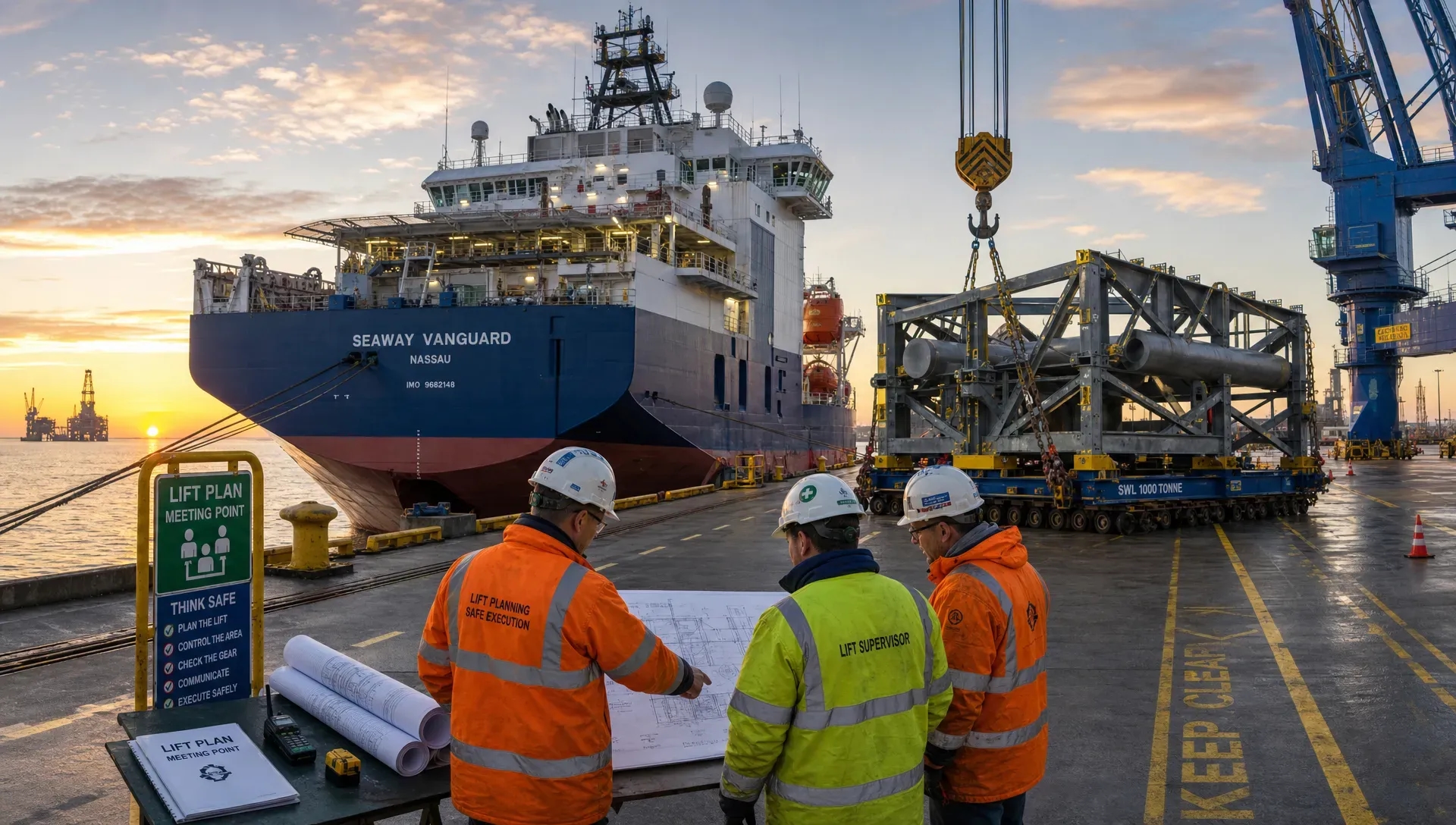
Heavy lift engineering connects geometry, rigging, crane capacity, centre of gravity uncertainty, sling angles, clearances, dynamic amplification, weather limits, ballasting, deck strength and operational sequence. A lift plan that works in a spreadsheet can still fail as a delivery plan if it ignores deck congestion, access, rigging installation, allowable outreach, sea state limits or interface clashes.
This is where marine and engineering teams need to work as one delivery system. Vessel behaviour, structural response and operational controls should be considered together, especially in offshore wind, decommissioning, module transport, dredging support and shipyard lift operations. Fusie Engineers has explored this coordination in more detail in its article on how marine and engineering teams reduce offshore risk.
Buildability protects the programme
A design that is theoretically efficient can still be poor engineering if it is slow to fabricate, hard to inspect or difficult to install. Complex welds, tight tolerances, exotic material choices and congested details can create delays long before mobilisation.
Buildable engineering considers plate thickness, profile availability, weld access, NDT requirements, handling points, modularity, yard capabilities, coating access, transport limitations and installation tools. It also considers what happens when the structure must be removed, modified or maintained. In many cases, the best solution is not the heaviest or the lightest option, but the one that delivers the required safety margin with the least fabrication complexity and the lowest execution risk.
That is also where cost control and sustainability meet. Reducing unnecessary steel is valuable, but only when the design remains robust and approval-ready. The practical link between engineering efficiency and project value is covered further in Fusie Engineers' article on sustainable engineering that lowers steel cost and rework.
Where misalignment appears during delivery
Misalignment often becomes visible late, when the project has less room to manoeuvre. By then, vessel slots may be booked, fabrication may be underway, offshore campaigns may be scheduled and approval reviewers may already be asking for evidence.
Common warning signs include:
- Seafastening designed around cargo loads but not fully integrated with vessel deck and underdeck capacity.
- Retrofit layouts that meet process intent but conflict with class requirements, access routes, maintenance space or existing systems.
- Heavy lift arrangements that pass a capacity check but leave insufficient clearance, rigging access or contingency for centre of gravity uncertainty.
- Structural details that are strong enough on paper but slow to fabricate due to weld complexity or poor access.
- Marine operation procedures that do not match the latest drawings, stability assumptions or lifting arrangement.
- Approval submissions that contain calculations and drawings, but do not clearly explain assumptions, interfaces and change history.
These issues are not just technical inconveniences. They can affect mobilisation dates, vessel day rates, offshore weather windows, yard sequencing, insurance review, MWS approval and safety briefings.
Approval readiness is part of engineering quality
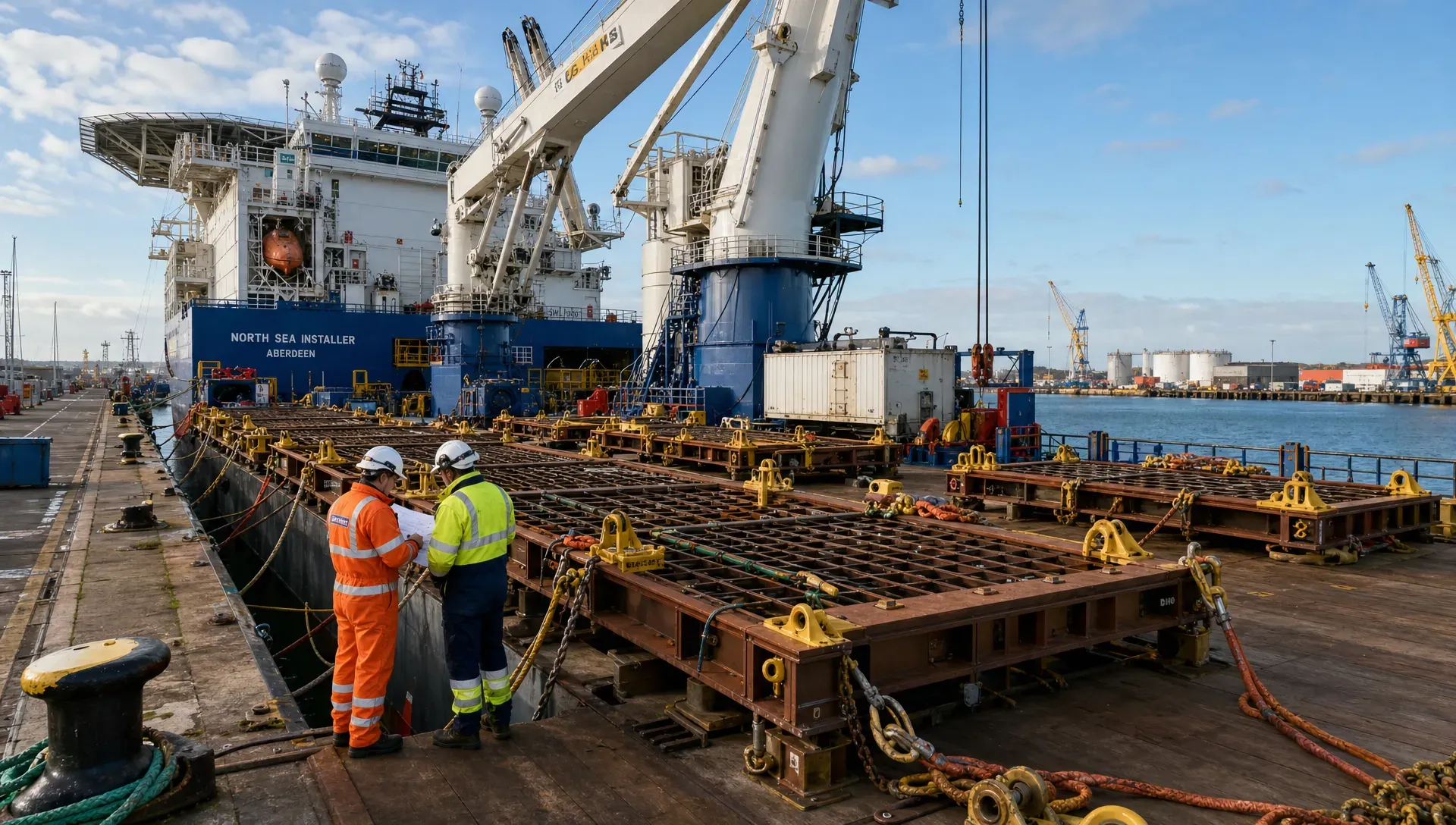
MWS and class approval should not be treated as a final administrative step. For offshore and maritime delivery, approval readiness is a core part of engineering quality. Reviewers need to understand what has been designed, why it is acceptable, which assumptions are controlled and how the design will be executed safely.
A strong approval package usually includes a clear design basis, traceable calculations, relevant drawings, FEM outputs where required, lifting arrangements, stability or motion checks, mooring reports, weld details, material specifications, inspection requirements, procedures and change control. The exact contents depend on the scope, but the principle is consistent: the reviewer should not have to reconstruct the logic of the design from disconnected documents.
Approval-ready documentation is not only about polished wording. Routine formal correspondence can be accelerated with tools such as an AI letter generator for professional letters, but engineering approval files require discipline-specific judgement, controlled assumptions and traceable technical evidence.
This matters because late clarification cycles can be expensive. If an MWS or class society such as DNV, Lloyd's Register or ABS asks for missing load cases, unexplained assumptions or revised drawings shortly before mobilisation, the issue becomes a schedule risk as well as a technical task.
Practical coordination across the delivery chain
The most effective offshore projects treat engineering as a coordination function, not a silo. Naval architecture, structural engineering, marine operations, fabrication, installation, QHSE and approval teams need access to consistent information. When one discipline updates a constraint, the impact should be visible to the others.
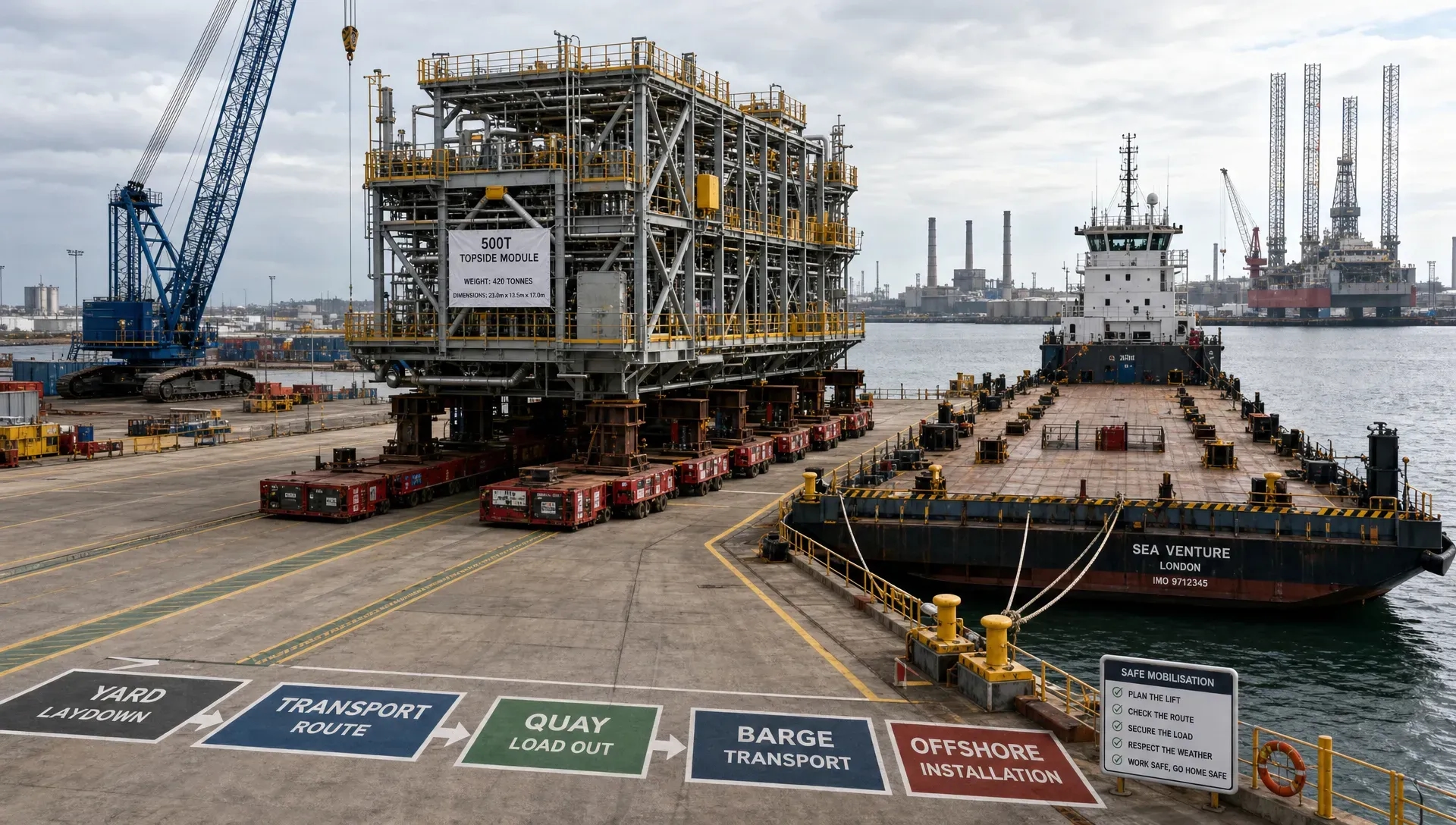
For example, a change in cargo centre of gravity may affect lifting geometry, sea fastening loads, vessel stability and grillage reactions. A change in vessel selection may affect deck capacity, crane outreach, motion response and mooring assumptions. A change in fabrication method may affect weld details, inspection scope, weight, schedule and coating access.
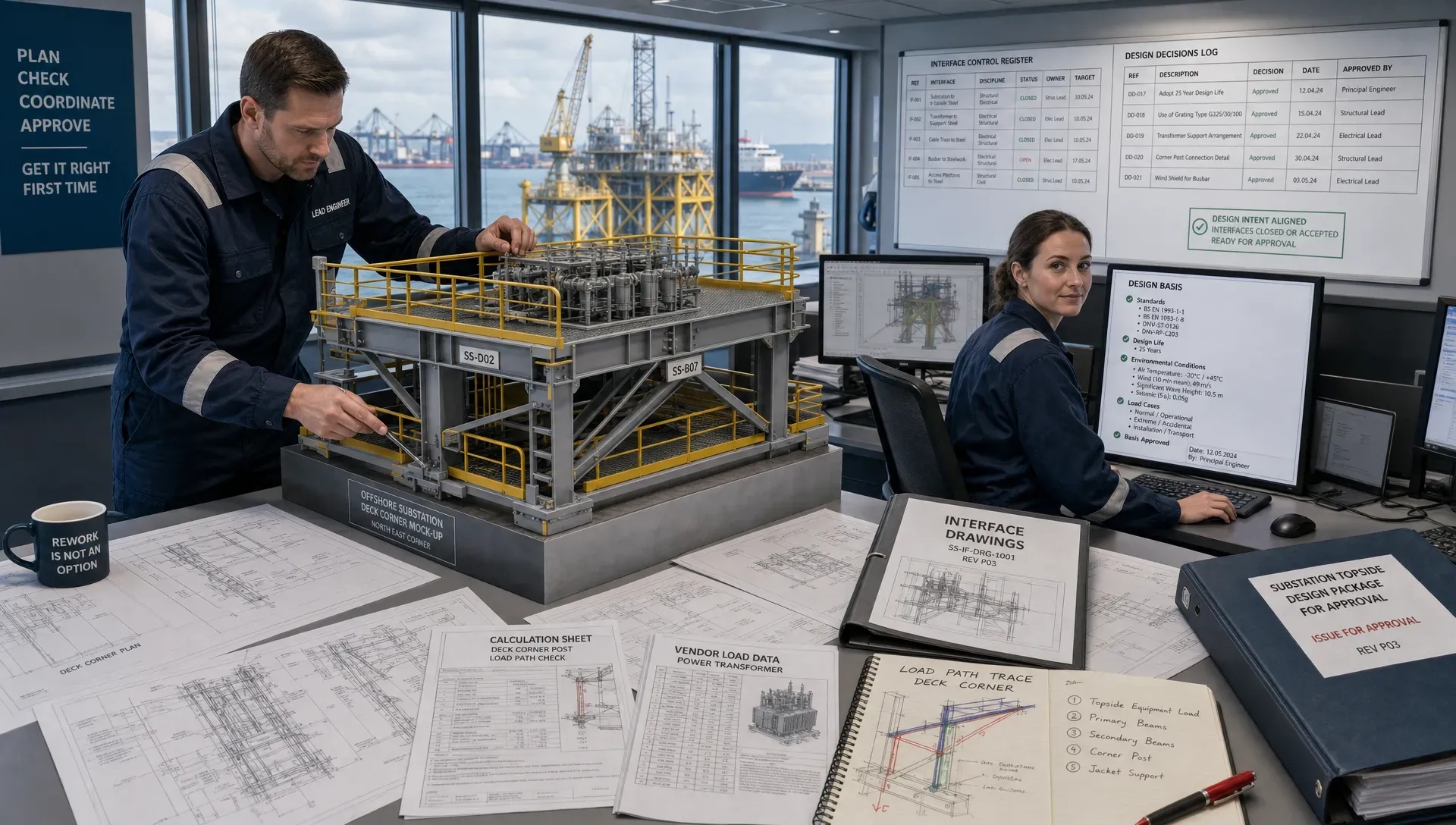
Good coordination depends on simple project habits. The design basis should be owned and updated. Interface assumptions should be recorded. Drawing revisions should align with calculation revisions. Hold points should be understood before fabrication starts. Queries from the yard, vessel team or approval body should be closed with traceable decisions rather than informal comments.
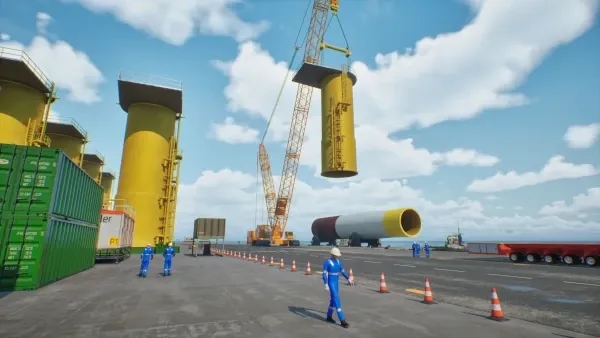
For complex marine operations, visual communication can also improve alignment. Technical animation and VFX are not substitutes for engineering, but they can help explain lift sequences, transport arrangements, mooring configurations, exclusion zones and operational steps to clients, tender evaluators, QHSE teams and offshore crews. When the visual method reflects the engineered method, it can reduce misunderstanding and improve readiness.
How alignment changes by sector
In offshore wind, alignment often centres on foundation transport, installation tools, seafastening, vessel utilisation, lifting arrangements, weather limits and serial fabrication. The engineering challenge is not only to design one safe solution, but to repeat it efficiently across multiple assets without accumulating small delays.
In floating wind, the interfaces become even more coupled. The turbine, floater, mooring system, dynamic cables, tow-out, port infrastructure and installation method must be considered as a connected system. Delivery risk increases when one package advances without understanding its effect on the others.
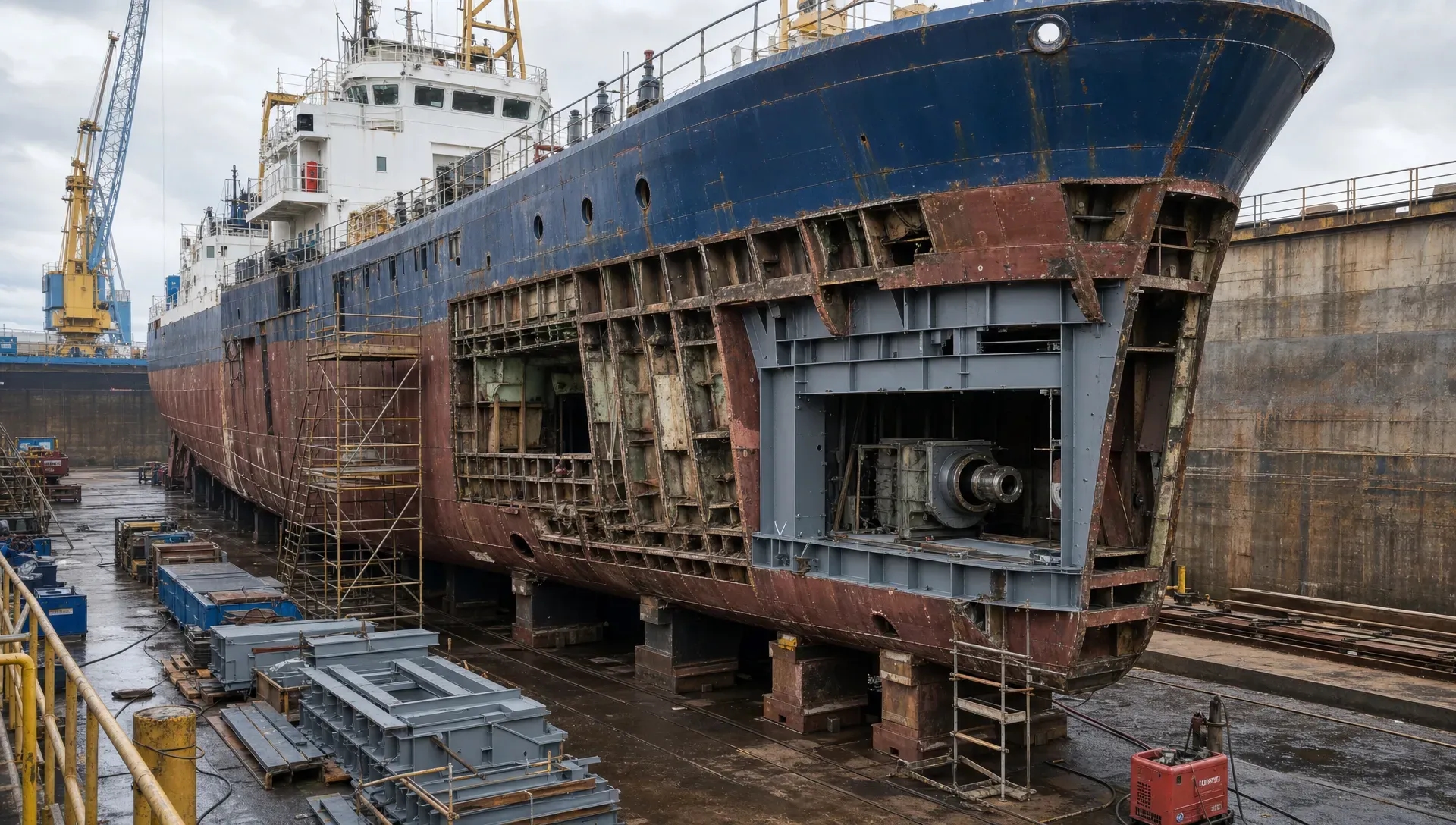
In ship design and vessel retrofit, alignment is often about integrating new functionality within an existing marine asset. Legacy drawings may be incomplete. Space may be constrained. Structural modifications, piping routes, class rules, stability, access and operational downtime all need to be balanced. A technically correct retrofit can still fail commercially if it requires excessive shutdown time or creates maintenance problems.
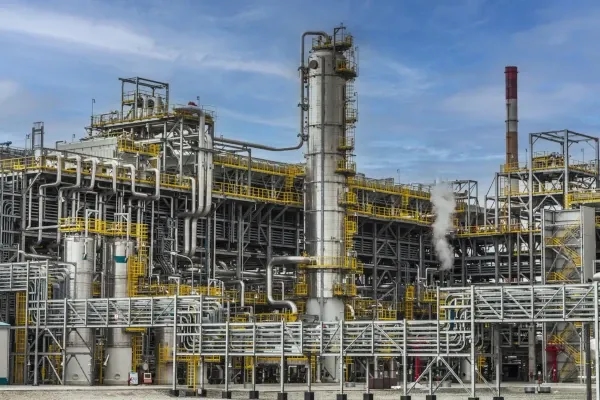
In heavy lift, decommissioning, dredging and traditional energy scopes, alignment is about controlling uncertainty. Existing structures may have unknown degradation. Lift weights may carry tolerances. Site conditions may vary. Temporary structures and procedures must therefore be robust, practical and clearly documented.
Across all these sectors, the same principle applies: energy objectives set the direction, but engineering determines whether the project can be delivered safely and predictably.
Questions technical leaders should ask before mobilisation
Before a project moves into fabrication, vessel preparation or offshore execution, technical leaders should test whether energy and engineering are genuinely aligned. Useful questions include:
- Is the design basis complete enough to support fabrication, approval and offshore execution?
- Are vessel limits, deck capacity, stability, crane curves and motion assumptions reflected in the structural design?
- Have temporary works such as grillages, seafastening, lifting tools and access platforms been checked as part of the full load path?
- Are drawings, calculations and procedures consistent in revision status and assumptions?
- Can the design be fabricated with realistic weld access, tolerances, inspection methods and available materials?
- Has the approval pathway with MWS or class been planned early enough to avoid late clarification cycles?
- Do operations, fabrication and engineering teams understand the same method, sequence and hold points?
If the answer to any of these questions is uncertain, the project may still be recoverable. But uncertainty should be closed before mobilisation, not managed offshore.
Where Fusie Engineers supports offshore delivery
Fusie Engineers supports clients across offshore wind, maritime, renewable energy, decommissioning, heavy lift, ship repair, retrofit and traditional energy projects. The value is not limited to drafting capacity. The work combines structural engineering, marine engineering, naval architecture, mechanical design, heavy lift engineering, steel detailing and technical visualisation.
Depending on the scope, support can include offshore structural design, seafastening and grillage engineering, FEM calculations, lifting arrangements, mooring reports, motion analyses, stability checks, ship design, vessel retrofits, piping design, steel detailing, approval documentation and operational visualisations.
The common thread is practical delivery. Designs need to be safe, buildable, reviewable and suitable for the marine environment in which they will be used. They also need to respect project realities such as mobilisation dates, fabrication capacity, vessel limitations, class requirements and total installed cost.
That is how energy and engineering align in offshore delivery: not by treating engineering as a late-stage service, but by using engineering judgement to connect ambition with execution.
Frequently asked questions
What does energy and engineering alignment mean in offshore projects? It means connecting the project's energy objective, such as generation capacity, vessel efficiency, emissions reduction or asset removal, with practical engineering decisions covering structure, marine operations, fabrication, approval and offshore execution.
Why is alignment important before mobilisation? Mobilisation is expensive and schedule-sensitive. If structural details, vessel assumptions, lifting arrangements or approval documents are incomplete at that stage, the project may face rework, standby time, missed weather windows or delayed offshore execution.
How do MWS and class approvals fit into offshore delivery? MWS and class approvals provide independent review of safety-critical design and operations. Approval readiness depends on clear assumptions, traceable calculations, consistent drawings, relevant procedures and complete documentation.
Is this only relevant to offshore wind? No. The same alignment is critical in ship design, vessel retrofits, heavy lift operations, decommissioning, dredging support, floating wind, green tech and traditional energy projects.
When should an external engineering partner be involved? An external partner should be involved when specialist capacity, marine operations experience, structural verification, class documentation or buildability review can reduce risk before fabrication, mobilisation or offshore execution.
Bring delivery reality into your engineering scope
If your project depends on safe offshore structures, heavy lifts, vessel integration, retrofit engineering, approval-ready documentation or clear technical visualisation, early alignment can reduce risk before it reaches the vessel or yard.
Fusie Engineers supports offshore, maritime and energy teams with practical engineering from concept and calculations through detailed design, drawings and operational readiness. Engage the team when you need engineering decisions that hold up in fabrication, approval and offshore delivery.