


How marine engineering supports safe retrofit and offshore work
2026-06-11
Retrofit and offshore work leave little room for assumptions. A new skid, boat landing, piping module, lifting frame or temporary installation structure may look straightforward in isolation, but it becomes complex as soon as it meets an existing vessel, a limited deck capacity, a moving sea state, class requirements and an offshore schedule that cannot slip.
This is where marine engineering adds value. It connects vessel behaviour, structural design, mechanical interfaces, stability, lifting, mooring, fabrication and approval documentation into one practical engineering basis. For CTOs, technical directors, project managers, naval architects and offshore contractors, that integration is often the difference between a concept that works on paper and a scope that can be fabricated, approved and executed safely.
Marine engineering starts with the real asset
Retrofit and offshore scopes should not begin with an idealised 3D model. They should begin with the actual asset, its limitations and the operation it must support.
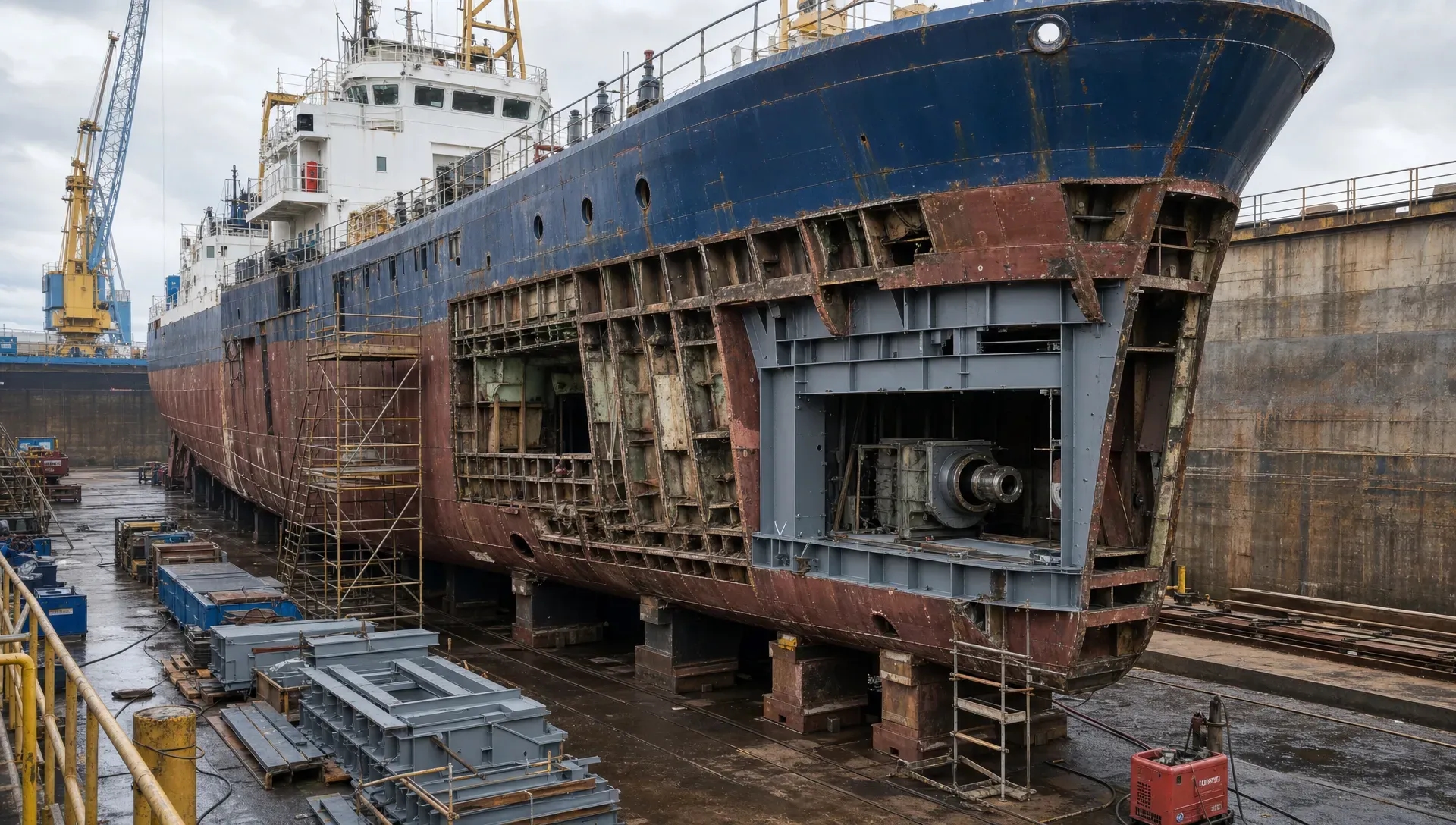
In vessel retrofit work, the existing ship or offshore unit may have legacy drawings, undocumented modifications, ageing steel, limited access routes and systems that have evolved over years of operation. A new structure might sit above underdeck members that were never intended to carry concentrated loads. A piping route may pass through congested compartments. A deck penetration may affect fire zones, watertight boundaries or class approval.
For offshore work, the same principle applies. A temporary grillage, seafastening structure, lifting point, mooring arrangement or installation aid must be designed around real vessel motions, deck layouts, crane curves, transport accelerations, offshore access limitations and fabrication tolerances.
A good marine engineering process therefore asks practical questions early:
- What is the actual load path into the vessel or supporting structure?
- Are existing drawings reliable, or is survey verification needed?
- Which class rules, MWS requirements and client specifications apply?
- How will the design be fabricated, lifted, installed, inspected and maintained?
- What happens if the offshore sequence changes, the weather window narrows or the vessel capacity is lower than expected?
These questions reduce late surprises. They also help project teams avoid over-engineered solutions that add steel, welding, weight and installation time without improving safety.
Retrofit engineering: controlling interfaces before they become offshore problems
Retrofit projects are often driven by new operational demands. Vessels may need emissions reduction systems, new mission equipment, upgraded piping, additional access structures, modified lifting arrangements or improved crew transfer facilities. In the energy sector, retrofits can also support carbon capture systems, alternative fuels, electrical upgrades, dredging equipment, decommissioning scopes or offshore wind support roles.
The engineering challenge is rarely the new equipment alone. It is the interface between new and existing systems.
A retrofit design must account for global and local vessel strength, allowable deck loads, fatigue-sensitive details, vibration, corrosion protection, access for installation and future maintenance. If new loads are introduced into a vessel structure, engineers need to check whether underdeck reinforcement is required and whether that reinforcement can actually be installed in a confined compartment.
Piping retrofits add another layer. Route selection must consider pressure, thermal expansion, supports, penetrations, isolation, drainage, class requirements and the practical sequence of installation. A technically correct route that requires excessive hot work in a restricted area may still be a poor project decision.
Marine engineering supports retrofit success by aligning the design with the vessel’s structure, systems and operational reality. It also creates the traceable documentation needed for client review, class approval and yard execution.
For related retrofit considerations, Fusie Engineers has also discussed how a mechanical design engineer supports retrofit success, particularly where mechanical interfaces, load transfer and buildability must be solved together.
Offshore work depends on motion-aware design
Offshore structures do not operate in static conditions. Transport accelerations, vessel motions, wave loading, crane dynamics and installation tolerances can govern the design as much as static strength.
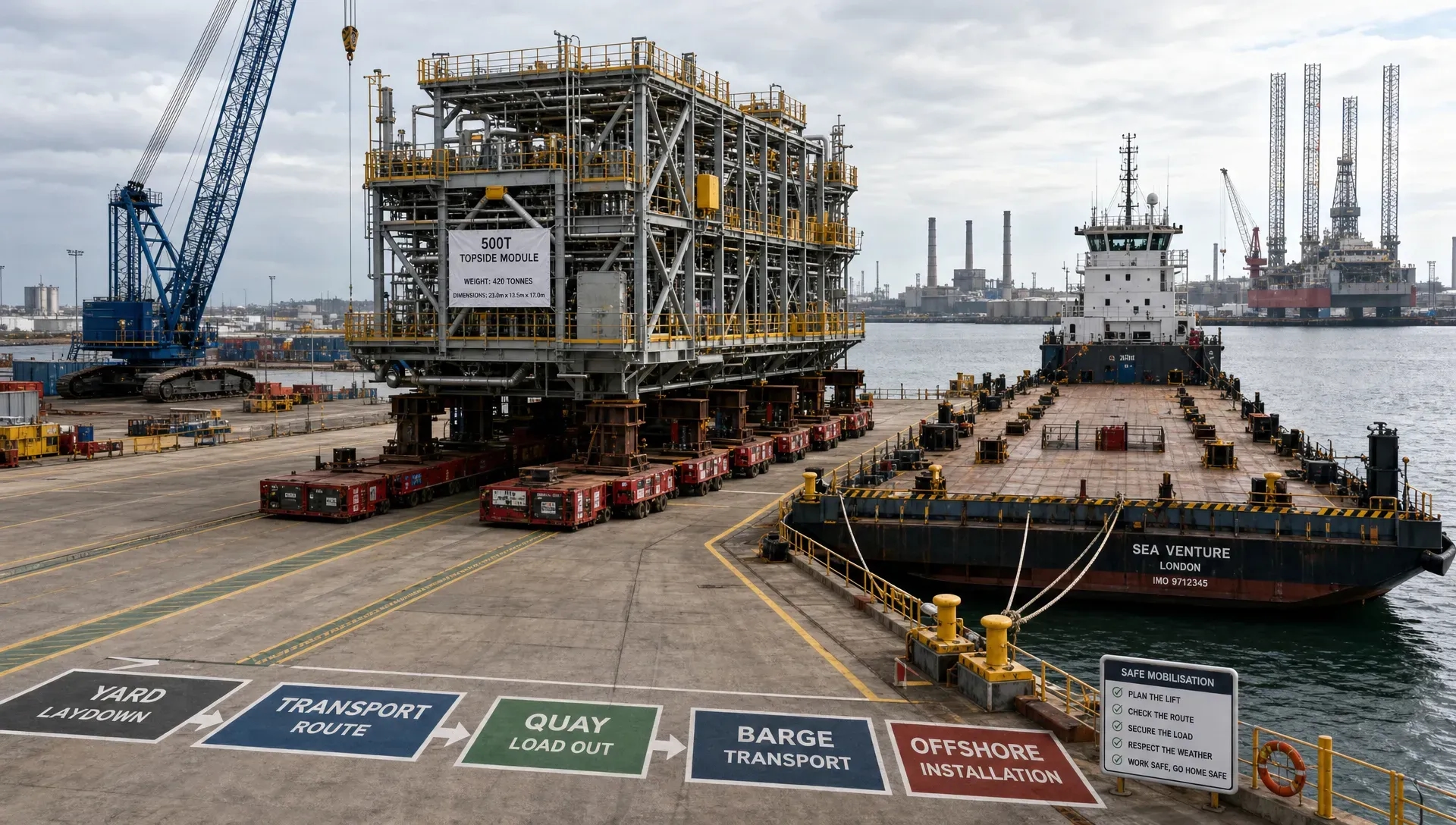
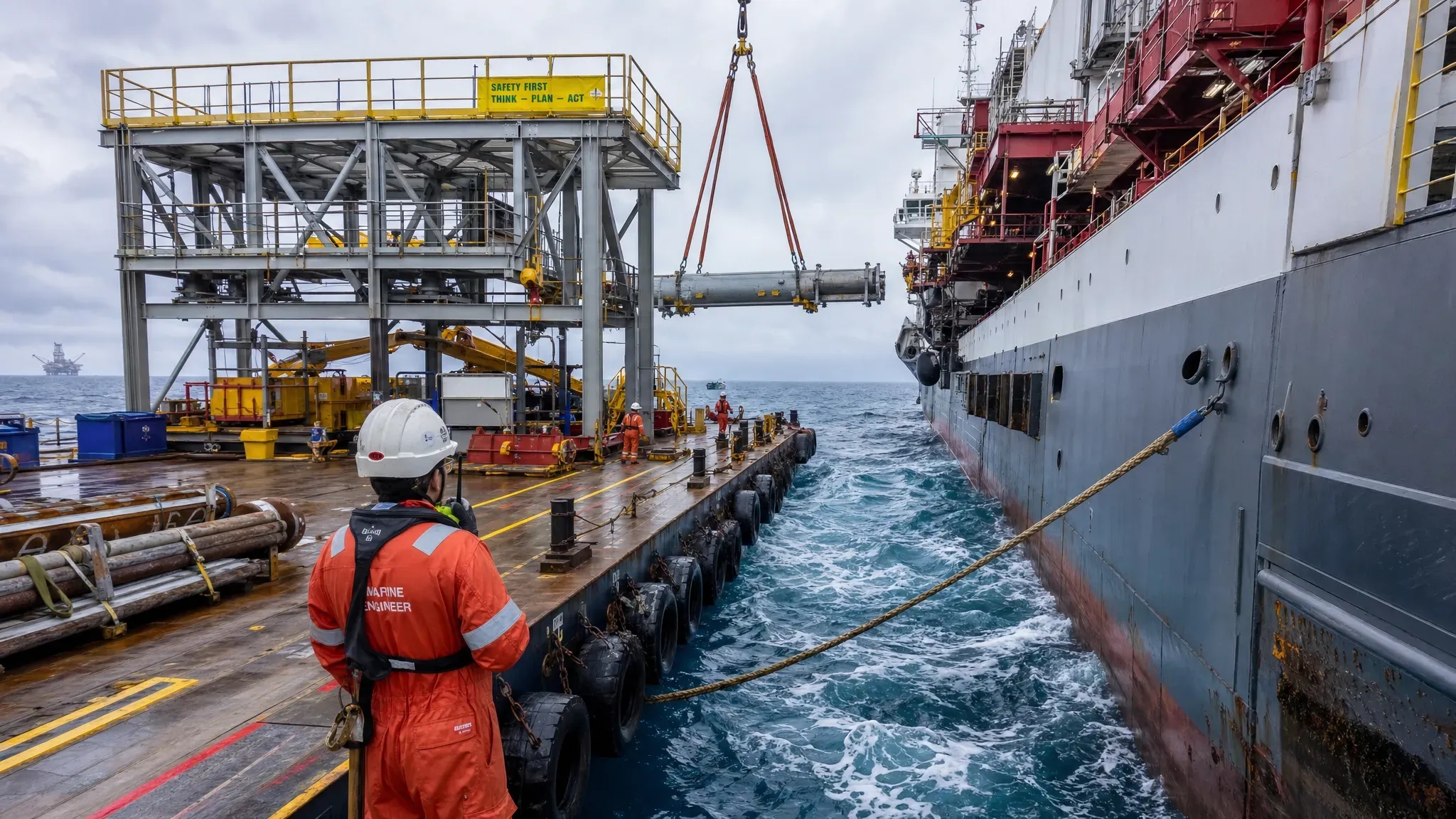
For heavy lift and offshore installation scopes, marine engineering helps define the design cases that matter. This can include sea transport conditions, load-out, lifting, upending, set-down, temporary storage, mooring, installation and removal. Each phase may generate different load combinations and interface requirements.
A seafastening structure, for example, must keep cargo secure during transport without creating impractical fabrication details or excessive removal work offshore. A grillage must distribute load into the vessel structure while respecting deck capacities and access constraints. A lifting arrangement must account for sling angles, centre of gravity uncertainty, dynamic amplification and connection details that can be inspected and assembled safely.
Motion-aware engineering is especially important for offshore wind, decommissioning, dredging, heavy civils and traditional energy projects. In these sectors, large components, short weather windows and high mobilisation costs mean that late design changes can quickly become expensive.
The role of stability, mooring and vessel limitations
Safe offshore work is not only about whether a structure is strong enough. It is also about whether the vessel can perform the operation within acceptable limits.
Naval architecture and marine engineering inputs may include stability checks, ballast conditions, deck load assessments, motion analyses, mooring studies and operational limitations. These inputs help determine whether a proposed lift, transport or installation method is feasible with the selected vessel.
Vessel limitations often shape the final engineering solution. A crane curve may restrict lift radius. Deck strength may control the grillage footprint. A narrow access route may affect module breakdown. Mooring line capacities may influence installation methodology. Stability margins may limit the allowable cargo position or lift sequence.
Ignoring these constraints early can lead to rework. A design may pass a local strength check but still fail as an offshore solution because it does not fit the vessel’s operational envelope. Integrated marine engineering avoids this by connecting structural calculations to vessel behaviour and method statements from the start.
Approval readiness is an engineering task, not an admin task
Marine projects often involve review by class societies, Marine Warranty Surveyors, vessel owners, EPC contractors, insurers and client technical authorities. Approval readiness depends on more than producing calculations at the end of a design cycle.
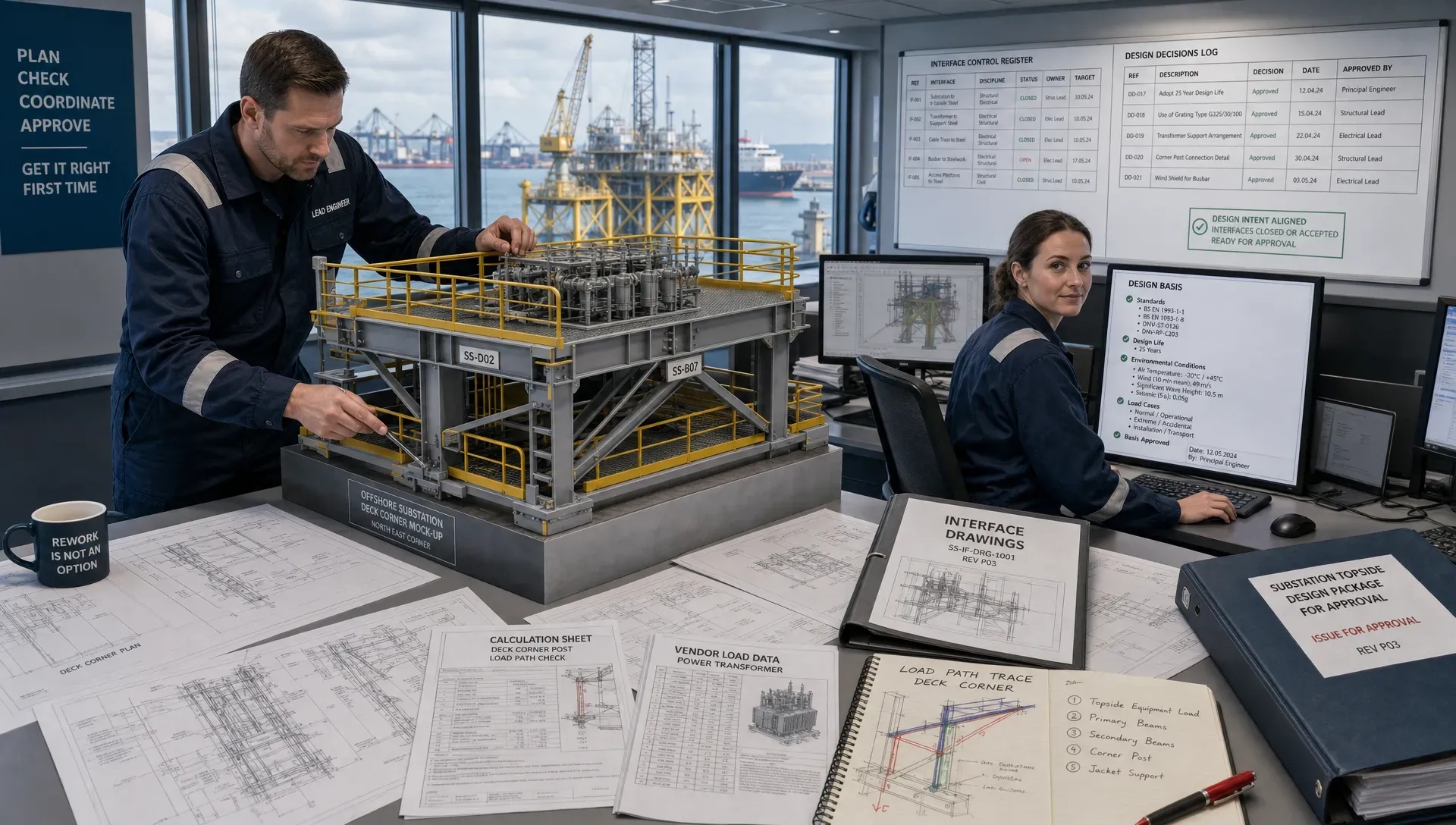
It requires a clear design basis, traceable load assumptions, referenced rules and standards, calculation packages, drawings, material specifications, weld details, inspection requirements and installation procedures that are consistent with each other.
For class or MWS review, gaps in documentation can delay approval even when the underlying design is sound. Common issues include unclear load cases, missing interface drawings, inconsistent weights, unverified centres of gravity, incomplete weld details or insufficient evidence that vessel capacities have been checked.
Legal and contractual frameworks can also affect offshore and shipping projects, especially in cross-border operations, charter arrangements, port interfaces, liability allocation and dispute resolution. Engineering teams should not treat those matters as purely technical, and project leaders may need specialist support from firms with admiralty and shipping legal expertise when jurisdictional or contractual risk is significant.
From an engineering perspective, the best approach is to build approval requirements into the workflow from the start. This reduces the risk of late redesign and helps reviewers understand the technical logic behind the proposed solution.
Buildability reduces risk as much as strength does
A safe marine design must be strong enough, but it must also be buildable. Fabrication complexity has a direct impact on cost, schedule, quality and offshore readiness.
In practice, buildability means avoiding unnecessary weld complexity, limiting difficult access details, selecting sensible plate thicknesses, allowing for tolerances and ensuring that inspection can be performed. It also means thinking about how the structure will be transported through the yard, lifted into position, fitted to existing steel and removed if it is temporary.
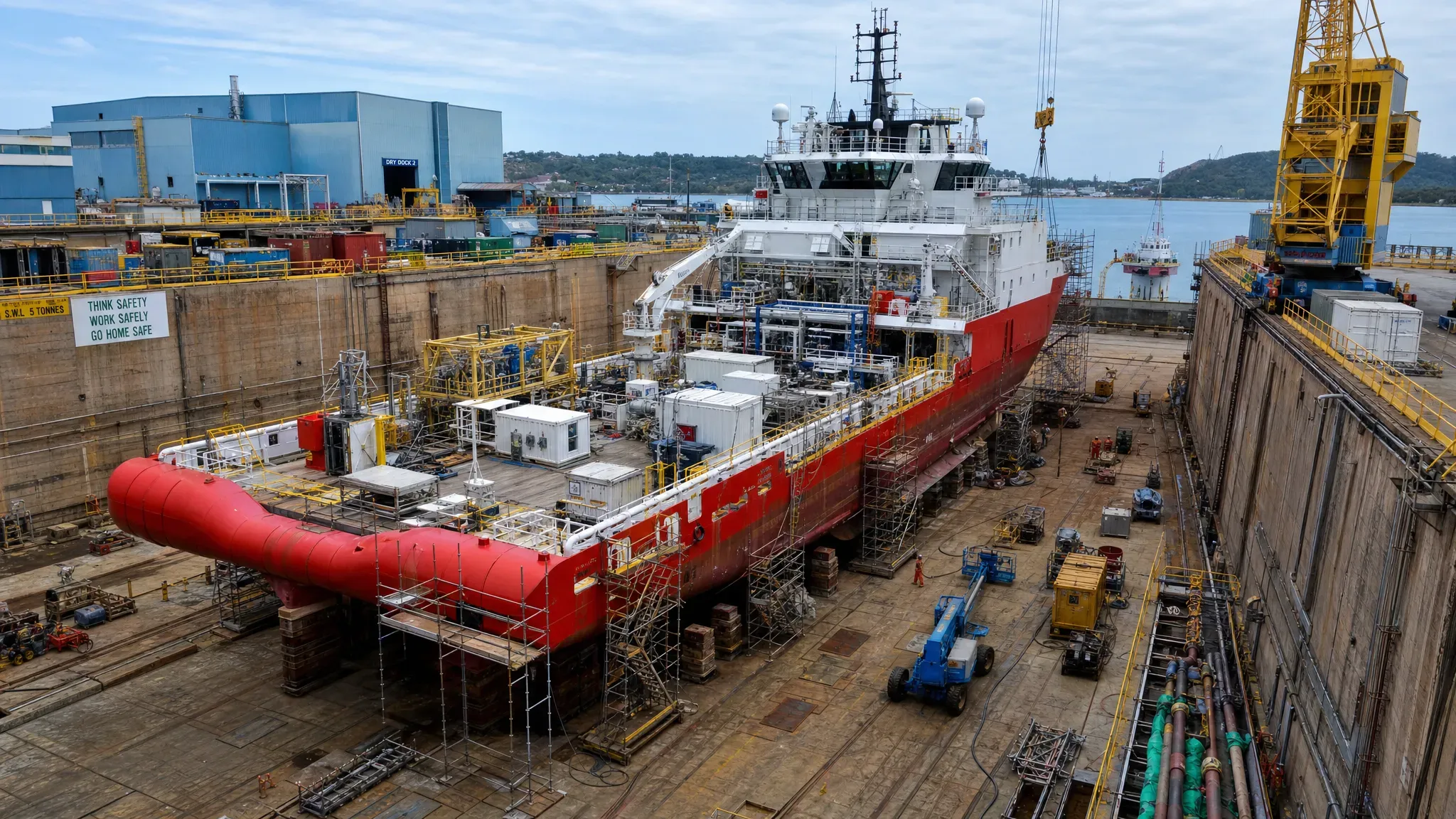
This is particularly important for retrofit scopes. Shipyards often work with limited space, tight docking windows and concurrent activities. A design that requires excessive hot work, awkward fit-up or late-stage modifications can create schedule risk even if the engineering calculation is correct.
Steel detailing plays an important part in this process. Clear fabrication drawings, connection details, cut lists and assembly information help convert engineering intent into reliable yard execution. Fusie Engineers has explored this topic in more depth in its article on why steel detailing matters in marine fabrication.
Where marine engineering adds value across the project lifecycle
Marine engineering supports safe retrofit and offshore work across multiple phases, not only during detailed design.
At concept stage, engineers can compare options before the project becomes locked into a costly arrangement. This is where steel weight, fabrication hours, vessel selection, installation sequence and approval risk can be influenced most efficiently.
During basic and detailed engineering, the focus shifts to calculation quality, interface control, drawings, FEM verification where needed, lifting arrangements, mooring reports, stability checks, piping details and approval documentation. At this stage, engineering judgement is required to decide where advanced analysis is needed and where simple, robust detailing is more appropriate.
During fabrication and installation, engineering support helps answer technical queries, assess deviations, review yard proposals and update documentation. Offshore work often requires rapid decisions, but those decisions still need to be controlled, traceable and aligned with the approved design basis.
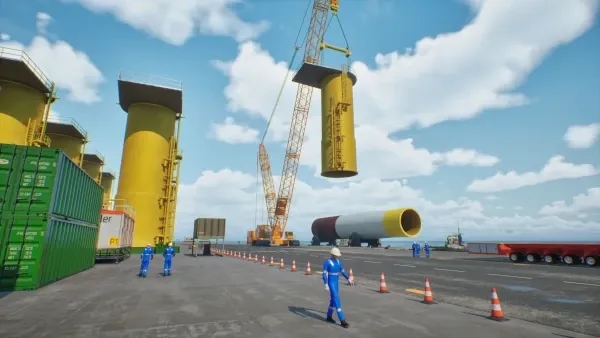
For tenders, QHSE briefings and client presentations, technical visualisation can also help. Animations and clear operational visuals make complex sequences easier to review, especially for lifts, transport, seafastening removal, vessel approach, mooring and installation steps. Visualisation does not replace engineering, but it can improve communication between design, operations, fabrication, client and site teams.
When to involve a marine engineering partner
Project teams often wait until a design is mature before involving specialist marine engineering support. That can work for simple scopes, but it is risky when vessel interfaces, offshore operations or approval requirements are significant.
Early involvement is valuable when:
- Existing vessel data is incomplete or uncertain.
- New equipment introduces concentrated loads or unusual interfaces.
- The work requires class, flag, client or MWS approval.
- Transport, lifting, mooring or installation loads may govern the design.
- Fabrication time, steel weight or docking windows are under pressure.
- Internal teams need extra capacity without losing technical control.
Early engineering input does not need to slow the project. On the contrary, it can reduce rework by identifying practical constraints before procurement, fabrication or mobilisation decisions are made.
How Fusie Engineers supports safe retrofit and offshore work
Fusie Engineers supports clients across maritime, offshore wind, energy, decommissioning, dredging, heavy lift and renewable projects with engineering that is focused on safety, buildability and approval readiness.
The team combines marine engineering, structural design, heavy lift engineering, ship design, vessel retrofit, piping design, steel detailing, software support and technical animation. This multidisciplinary approach is useful when a project requires more than isolated calculations, for example when a retrofit affects vessel structure, piping, stability, installation sequence and class documentation at the same time.
Typical deliverables can include FEM calculations, motion analyses, lifting arrangements, seafastening and grillage design, mooring reports, stability checks, fabrication drawings, shop drawings and approval documentation. The focus is not simply to add engineering hours, but to create practical designs that can be fabricated, installed, reviewed and used safely.
For offshore contractors, shipyards, EPC contractors and renewable energy developers, this matters because delays in engineering or approval can affect mobilisation schedules and offshore execution. Practical design choices can reduce steel use, simplify fabrication and improve the likelihood of timely approval by MWS or class societies such as DNV, Lloyd’s Register and ABS.
If you are evaluating support for a complex offshore scope, the article on how to choose engineering design services for offshore projects provides a useful framework for assessing technical capability, documentation quality and execution readiness.
Frequently asked questions
What is the role of marine engineering in retrofit projects? Marine engineering connects new equipment or structures to the existing vessel safely. It considers vessel strength, stability, piping interfaces, access, class rules, fabrication constraints and operational requirements so the retrofit can be installed and approved with reduced risk.
Why is marine engineering important for offshore work? Offshore work involves dynamic loads, vessel motions, lifting operations, mooring forces, transport accelerations and limited weather windows. Marine engineering helps define these conditions and converts them into safe, practical designs and procedures.
When should class or MWS requirements be considered? They should be considered from the start of the project. Early alignment on design basis, load cases, drawings, calculations and inspection requirements reduces approval delays and lowers the risk of late redesign.
How can marine engineering reduce project cost? It can reduce cost by optimising load paths, avoiding unnecessary steel, simplifying fabrication, limiting complex welds, improving installation sequences and reducing rework during approval, yard execution or offshore operations.
Does every retrofit need advanced FEM or motion analysis? Not always. The level of analysis should match the risk, loads, vessel interface and approval requirements. Good engineering judgement determines whether advanced analysis is needed or whether simpler verified calculations are sufficient.
Plan retrofit and offshore work around real execution risk
Safe retrofit and offshore work depends on more than a strong concept. It requires engineering that understands vessels, marine environments, fabrication, approval routes and offshore execution pressure.
Fusie Engineers supports project teams with practical marine engineering, structural design, heavy lift support, vessel retrofit engineering, piping design, steel detailing and technical documentation for complex maritime and energy projects.
If you need support for a retrofit, transport, lifting, seafastening, grillage, mooring or offshore installation scope, contact Fusie Engineers to discuss how the right engineering approach can reduce risk before it reaches the yard or offshore site.