


What buildable design engineering looks like offshore
2026-05-15
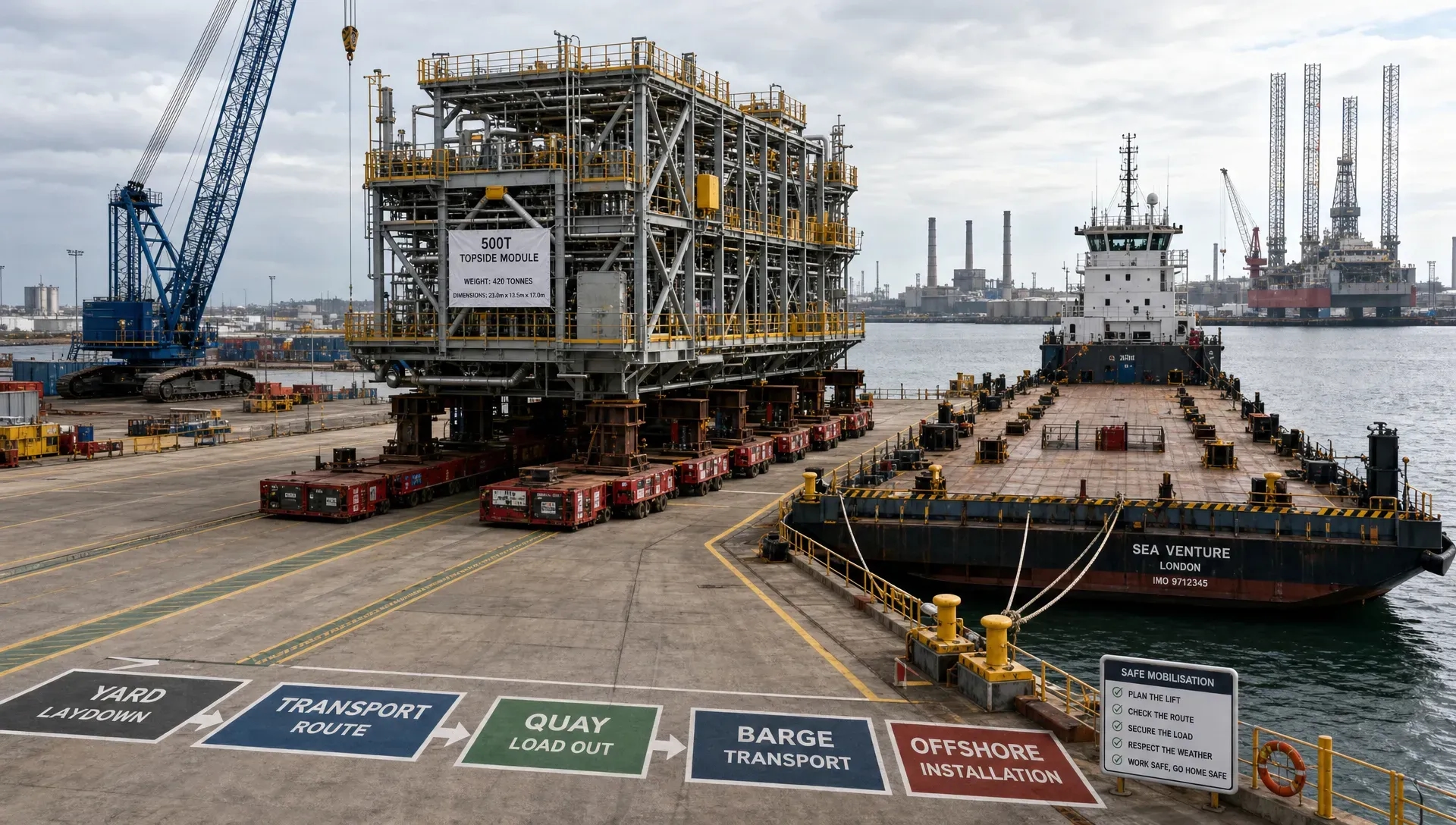
Offshore projects are rarely constrained by calculation alone. They are constrained by vessel capacity, class requirements, welding access, mobilisation windows, equipment availability, weather risk, yard capability and the sequence in which people can actually build and install the work. That is why design engineering offshore has to be more than producing a technically correct model. It has to convert engineering intent into a safe, practical and approval-ready solution that survives contact with the fabrication yard, the vessel deck and the offshore execution plan.
A buildable offshore design is not the simplest design on paper. It is the design that controls risk across the full route from concept to installation, including transport, lifting, seafastening, inspection, maintenance and documentation. For technical directors, project managers, naval architects and contractors, this distinction matters because late design changes offshore are expensive. A missed interface, overloaded underdeck member or impractical weld detail can affect mobilisation, MWS approval, fabrication progress and offshore safety.
Buildability offshore is a risk-control discipline
In building and industrial projects, buildability often means ease of construction. Offshore, the definition is wider. A structure may be fabricated onshore, transported on a barge or vessel, lifted by crane, secured for transit, connected to an existing asset, inspected by class and operated in a marine environment. Each stage introduces loads, tolerances and restrictions that may not be obvious in the first concept sketch.
Buildable offshore design engineering asks practical questions early. Can the yard fabricate the geometry without excessive temporary supports? Are welds accessible for production and inspection? Does the load path match the real lifting arrangement? Can the transport vessel accommodate deck reactions and grillage positions? Are there clashes with underdeck structure, sea fastening, piping, access routes or equipment foundations? Is the documentation clear enough for a marine warranty surveyor or class society to follow the engineering logic?
These questions are not administrative details. They are part of the design. If they are addressed too late, the project can enter a cycle of redesign, drawing revisions, delayed approvals and offshore workarounds. In offshore operations, workarounds are often where risk and cost increase fastest.
Strong on paper is not the same as buildable
A design can pass a structural check and still create problems in production or execution. This happens when the calculation model is disconnected from real constraints. For example, a bracket may be structurally adequate but require awkward overhead welding in a confined location. A grillage may satisfy strength requirements but distribute reactions into weak areas of the vessel deck. A lifting arrangement may work for an ideal centre of gravity but leave too little tolerance for as-built weight deviations.
Buildable design starts by closing the gap between analysis and execution. The engineer needs to understand how the item will be fabricated, moved, supported, lifted and approved. That does not mean overcomplicating every design. It means applying engineering judgement so that complexity is used only where it adds safety, certainty or cost benefit.
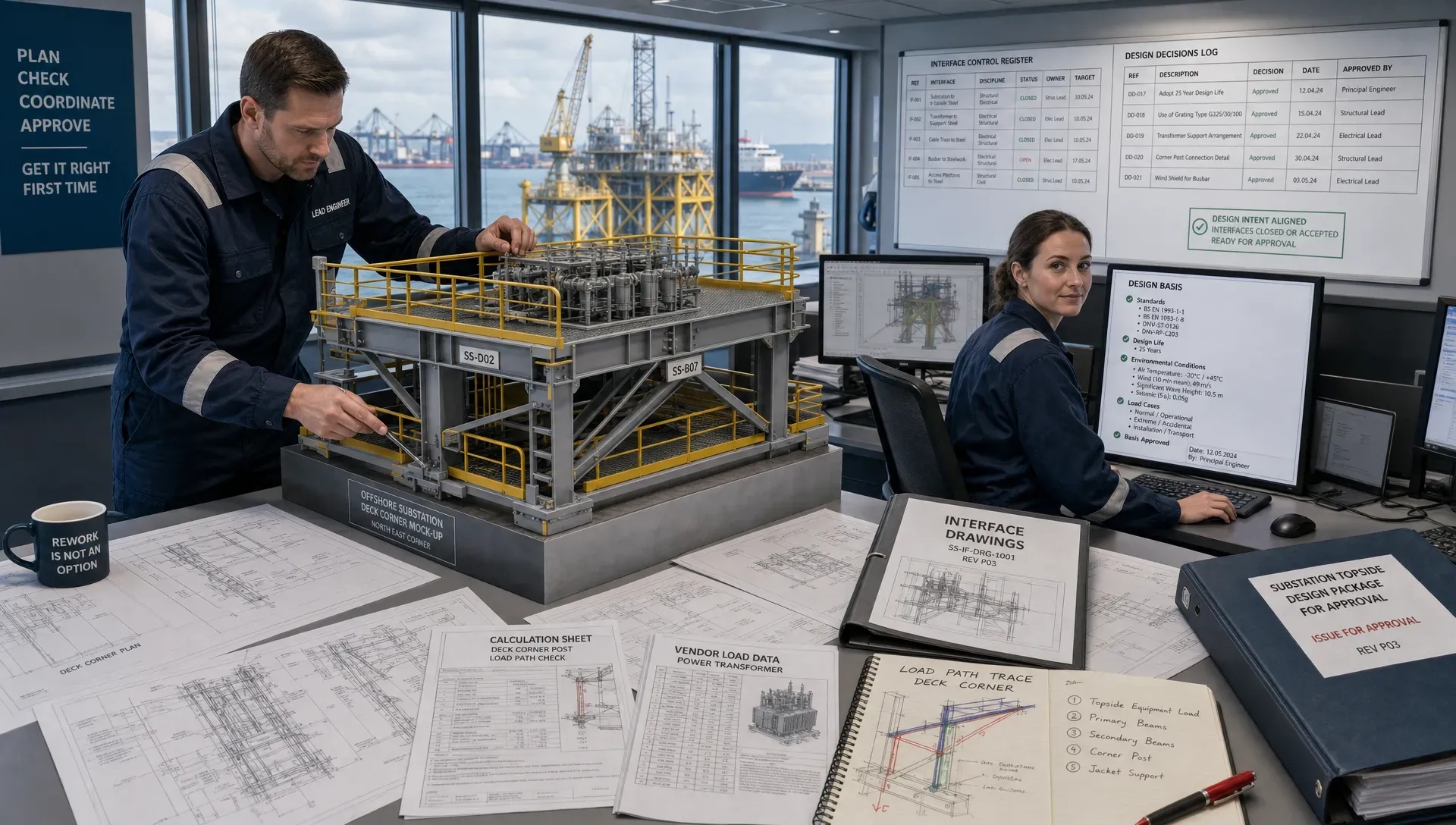
A good offshore design usually has visible discipline. Load paths are direct. Plate thicknesses and stiffeners are selected with fabrication in mind. Connections are accessible. Interface drawings are clear. Assumptions are documented. The design basis reflects the actual operation rather than a generic code case. Reviewers can trace how loads move through the structure and why each critical decision was made.
What buildable design engineering looks like in practice
Buildability becomes visible in the details. It can be seen in the way the first layout is arranged, the way welds are specified, the way vessel interfaces are handled and the way the design package supports approval.
Clear load paths that match the operation
Offshore structures are exposed to combinations of static, dynamic and environmental loads. During lifting, transport or installation, loads can be governed by accelerations, crane motions, sling angles, impact factors, sea states, vessel behaviour or temporary support conditions. A buildable design makes those load paths simple enough to verify and robust enough to tolerate operational variation.
This is especially important for heavy lift engineering, seafastening, spreader beams, grillages and temporary installation tools. The structure should not rely on hidden assumptions that are difficult to control offshore. If load transfer depends on a narrow tolerance, a specific contact condition or an idealised stiffness distribution, the design team needs to highlight it and manage it through fabrication and procedure.
Fabrication-aware geometry and steel choices
Reducing steel is valuable, but not if it creates complicated fabrication, long weld lengths, exotic material requirements or inspection difficulties. Smart steel reduction comes from efficient load paths, good detailing and avoiding unnecessary conservatism, not from making the design fragile.
Buildable geometry respects yard capability. It considers plate availability, cutting, fitting, welding sequence, access for non-destructive testing and coating requirements. It also avoids details that look efficient in a model but create production bottlenecks. A slightly heavier but simpler connection can be the better engineering choice if it reduces fabrication time, rework or offshore uncertainty.
This is where early collaboration between structural engineers and steel detailers has real value. The transition from calculation model to fabrication model should not be treated as a clerical drafting step. It is a technical handover where assumptions, weld categories, tolerances and interfaces need to be preserved. Fusie Engineers has discussed this in more detail in its article on why steel detailing matters in marine fabrication.
Vessel and marine constraints built in from the start
Offshore designs often fail to be buildable when vessel constraints are treated as late-stage checks. Deck strength, underdeck framing, crane outreach, bollard capacity, stability, available footprint, sea fastening locations and access routes can all determine whether a concept is practical.
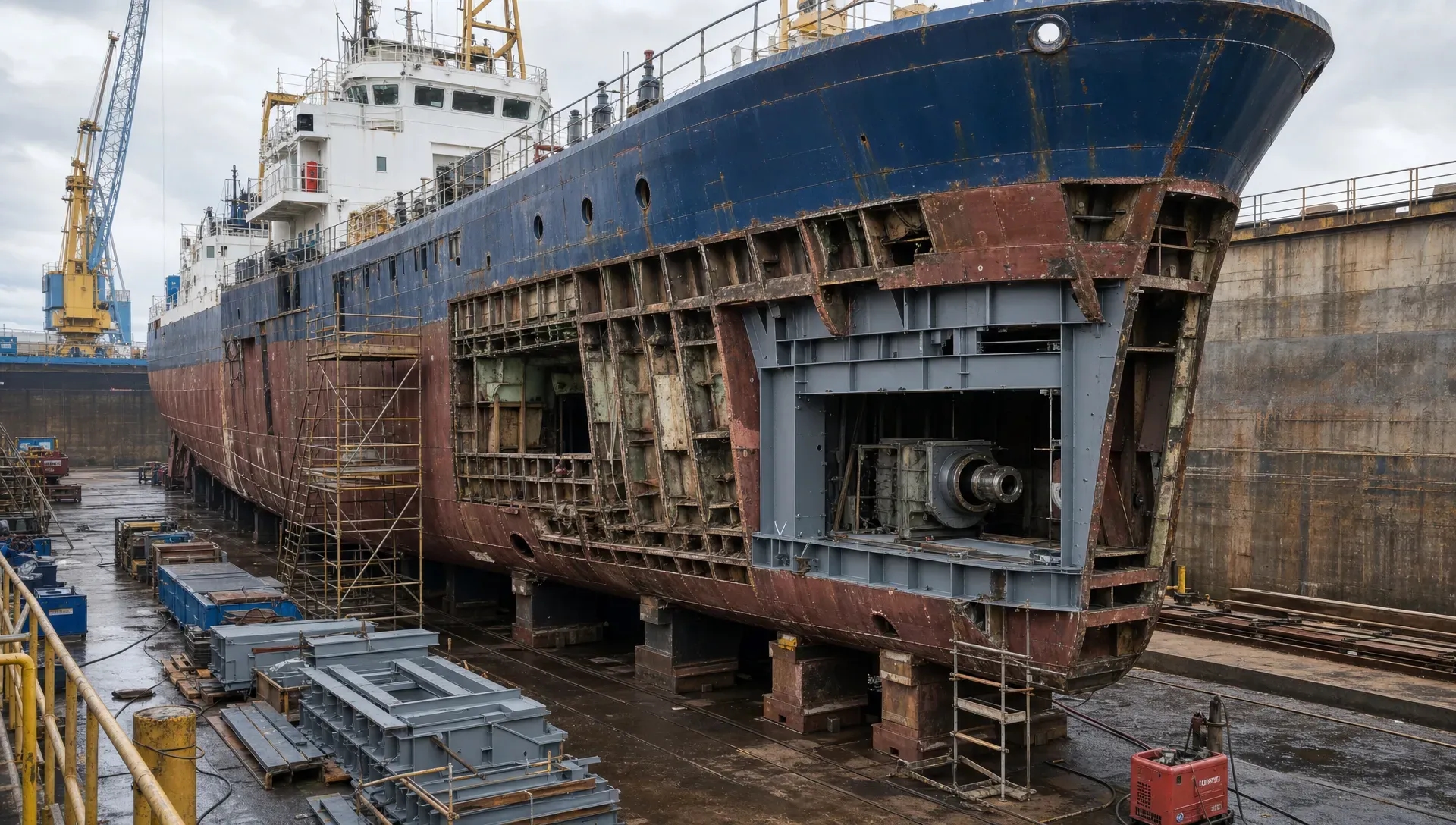
For vessel retrofits and ship design, this becomes even more critical. Existing vessels may have legacy drawings, limited access, class constraints, unknown modifications and restricted space for piping or foundations. A buildable retrofit design must account for what is actually onboard, not only what the original drawing package shows. Scan data, surveys, interface checks and close coordination with vessel teams can prevent late clashes and class comments.
In marine operations, naval architecture and structural engineering cannot operate in isolation. Stability, motion response, mooring, deck reactions, lift points and structural reinforcement are connected. Buildable design engineering brings these disciplines together early enough to influence the solution rather than simply verifying it after the layout is fixed.
Temporary works treated as critical engineering
In offshore projects, temporary structures are often mission-critical. Seafastening, grillages, lift frames, skidding systems, transport supports and installation aids may only be used for a short period, but they carry major consequences if they are poorly designed.
Temporary does not mean secondary. A seafastening structure must resist transport loads and remain practical to install and remove. A grillage must transfer reactions into the vessel deck without creating local overstress. A lifting tool must align with rigging, crane capacity, centre of gravity tolerances and site handling. A skidding or jacking system must be compatible with the installation sequence and support conditions.
Buildable temporary works also consider offshore removal and demobilisation. Bolted connections, cut lines, access for hot work, lifting points for removal and safe working positions can all influence execution time. These details matter when a vessel is on hire and the weather window is limited.
Approval-ready documentation
Buildability includes the ability to get reviewed and approved without unnecessary back-and-forth. Marine warranty surveyors, class societies and client verification teams need a clear design basis, traceable assumptions, calculation reports, drawings and revision control. If the engineering is sound but the documentation is incomplete, approval can still become a project risk.
Organisations such as DNV publish rules, standards and recommended practices that shape expectations for maritime and offshore design. Lloyd’s Register, ABS and other class societies have their own requirements depending on vessel type, operation and asset. A buildable engineering package does not simply quote standards. It explains which requirements apply, how they have been interpreted and how the design satisfies them.
For MWS review, clarity is often as important as calculation depth. Reviewers need to understand the operation, the load cases, the acceptance criteria and the assumptions behind the model. Drawings should match the calculations, and any operational limitations should be visible in the procedure or design basis.
How buildability changes common offshore scopes
The principles above apply across offshore wind, maritime, oil and gas, decommissioning, dredging, heavy civils and renewable energy projects. The details change by scope, but the buildability mindset remains the same.
For offshore wind transport and installation, buildable design may involve foundation seafastening, grillages, custom tools, boat landings, lifting arrangements and temporary access structures. The objective is not only to secure the component. It is to integrate structural performance with vessel limitations, mobilisation planning, fabrication lead time and MWS approval.
For heavy lift projects, buildability is closely linked to rigging geometry, centre of gravity control, crane capacity, dynamic factors, lifting point reinforcement and site handling. Fusie Engineers’ support for a decommissioning lift, described in its article on structural lift analysis and FEM modelling for an accommodation module removal, is an example of the type of engineering discipline required when existing offshore assets, lifting operations and transport conditions intersect.
For vessel retrofits and piping, buildability means respecting the existing ship. New skid systems, foundations, carbon capture equipment, pipe routes or structural modifications must fit within class boundaries, maintenance access, onboard systems and available installation time. The best retrofit design is often the one that minimises onboard hot work, reduces clashes and gives the yard a clear installation sequence.
For ship design and marine engineering, buildability means balancing performance, regulatory compliance, arrangement, production efficiency and lifecycle maintenance. A vessel that performs well on paper but is difficult to maintain or expensive to modify may not serve the owner over its operational life.
For decommissioning, buildability is strongly tied to uncertainty. Existing structures may have degraded materials, incomplete records or uncertain weights. Practical design engineering must allow for surveys, weight control, lifting studies, reinforcement decisions and contingency in the removal method.
What a buildable offshore engineering package should include
Not every project requires the same deliverables, but the package should be complete enough for fabrication, review and execution. A typical buildable package may include:
- A clear design basis with load cases, assumptions, standards and operational limits.
- Structural calculations, FEM analysis or hand calculations where appropriate.
- Weight and centre of gravity information with revision control.
- General arrangement drawings, fabrication drawings and interface drawings.
- Lifting arrangements, seafastening layouts, grillage details or mooring inputs where relevant.
- Vessel checks, stability inputs, deck reaction information or reinforcement recommendations when required.
- Inspection, weld and material notes that support fabrication and review.
- Reports structured for client, class society or MWS approval.
The value is not just in producing these documents. The value is in making them consistent. Problems often appear when the calculation report, 3D model, fabrication drawing and method statement evolve separately. Buildable design engineering keeps these outputs aligned so that the project team is not forced to resolve contradictions during mobilisation.
Warning signs that a design may not be buildable
Technical decision-makers do not always have time to review every detail. However, several warning signs often indicate buildability risk:
- The design passes calculation checks, but fabrication teams raise repeated access or weldability concerns.
- Vessel deck reactions or underdeck structure are checked only after the layout is frozen.
- Drawings lack clear interface dimensions, tolerances or revision history.
- Seafastening, grillage or lifting details are treated as late add-ons.
- The approval package does not explain assumptions, load cases or acceptance criteria clearly.
- The concept depends on tight tolerances that are difficult to control offshore.
- Weight, centre of gravity or equipment data are not actively managed as the design develops.
These issues are not always caused by poor engineering ability. Often, they come from fragmented workflows, schedule pressure or a narrow scope definition. The solution is to involve the right engineering disciplines early enough and to maintain communication between design, operations, fabrication and approval parties.
How Fusie Engineers approaches buildable offshore design engineering
Fusie Engineers supports offshore, maritime and energy clients with engineering that connects analysis to execution. The team works across offshore structural design, heavy lift engineering, ship design, marine engineering, vessel retrofits, piping design, steel detailing, renewable energy scopes, decommissioning support and related technical visualisation.
The practical value lies in combining disciplines. Structural engineers, heavy lift engineers, mechanical designers and naval architects can address the same problem from different angles. That matters when a design must satisfy strength, stability, vessel capacity, fabrication constraints, maintenance access and approval expectations at the same time.
For offshore contractors and EPC teams, this can provide additional specialist capacity without reducing control over safety or documentation. For shipyards and vessel owners, it can help convert retrofit or modification requirements into workable packages. For renewable energy developers and marine contractors, it can reduce project risk by resolving transport, lifting, seafastening and interface questions before they affect mobilisation.
Fusie Engineers also supports technical animation and VFX where complex methods need to be explained clearly. This is useful in tenders, QHSE briefings, installation planning and stakeholder reviews, especially when a marine operation involves multiple lifting stages, vessel movements or temporary structures. Visualisation does not replace engineering, but it can make the approved method easier to understand and execute.
Buildability should be decided before steel is cut
The most effective buildability decisions are made early. Once steel is ordered, fabrication has started or the vessel is scheduled, design freedom reduces quickly. At that point, even small changes can affect procurement, welding, coating, approval and mobilisation.
Early buildability review does not need to slow the project down. In many cases, it accelerates delivery because it prevents avoidable loops later. A focused review of load paths, interfaces, vessel constraints, fabrication approach and approval requirements can expose risks while they are still easy to solve.
For project directors and engineering managers, the key is to define success beyond calculation approval. A buildable offshore design should be safe, traceable, practical to fabricate, realistic to install, maintainable and clear to review. If it cannot move smoothly through those stages, the engineering is not finished.
Frequently asked questions
What does buildable design engineering mean offshore? It means developing designs that are not only structurally adequate, but also practical to fabricate, transport, lift, install, inspect, maintain and approve within offshore project constraints.
Why is buildability more critical offshore than in many onshore projects? Offshore work faces high mobilisation costs, limited weather windows, vessel constraints, dynamic loads and strict approval requirements. Late changes can quickly affect safety, schedule and total project cost.
How early should fabrication and installation constraints be considered? They should be considered during concept development. Early input on vessel capacity, weld access, lifting sequence, deck reactions and approval requirements helps avoid redesign once drawings and procurement are already progressing.
Is reducing steel always the best way to optimise an offshore design? No. The goal is efficient steel use, not simply minimum weight. A design that saves steel but increases welding complexity, inspection time or offshore uncertainty may cost more overall.
What should clients look for in an offshore design engineering partner? Look for practical offshore experience, multidisciplinary capability, clear documentation, familiarity with class and MWS review, and a strong understanding of fabrication, vessel behaviour, lifting, seafastening and marine operations.
Need buildable offshore engineering support?
If your project involves offshore structures, heavy lifts, vessel modifications, seafastening, grillages, piping, ship design or marine installation engineering, buildability should be part of the design from the first technical decisions.
Fusie Engineers supports clients with practical, approval-ready design engineering for offshore, maritime and energy projects, from concept and calculations to detailed drawings, steel detailing and operational readiness. For a deeper view on supplier selection, read how to choose engineering design services for offshore projects.