


What offshore engineering companies must deliver beyond drawings
2026-06-18
Drawings are visible, easy to count and often central to procurement packages. But in offshore, maritime and energy projects, drawings are only one part of the engineering value chain. The real test is whether the design can be fabricated, approved, transported, lifted, installed, operated and maintained without creating avoidable risk.
For technical directors, EPC contractors, marine contractors, shipyards and renewable energy developers, the question is not simply, “Can this engineering company issue drawings?” The better question is: “Can they turn project uncertainty into safe, buildable and approval-ready decisions before mobilisation costs start running?”
That is where strong offshore engineering companies separate themselves from drafting support. They provide judgement, calculations, constructability input, marine operations understanding, interface control and documentation that stands up to review by clients, MWS, class societies and site teams.
Drawings are an output, not the engineering result
A drawing is a communication tool. It shows geometry, dimensions, welds, materials, interfaces and fabrication intent. It does not, by itself, prove that the structure has the right load path, that the vessel can support the loads, that the installation sequence is feasible or that the design will pass approval without rework.
In offshore projects, a technically neat drawing can still cause problems if it is disconnected from the operation. A grillage may look simple in 2D but clash with underdeck stiffening. A lifting frame may satisfy local member checks but create awkward rigging access. A retrofit pipe route may be clear on paper but impossible to install without cutting into structure, affecting class approval or disrupting vessel operations.
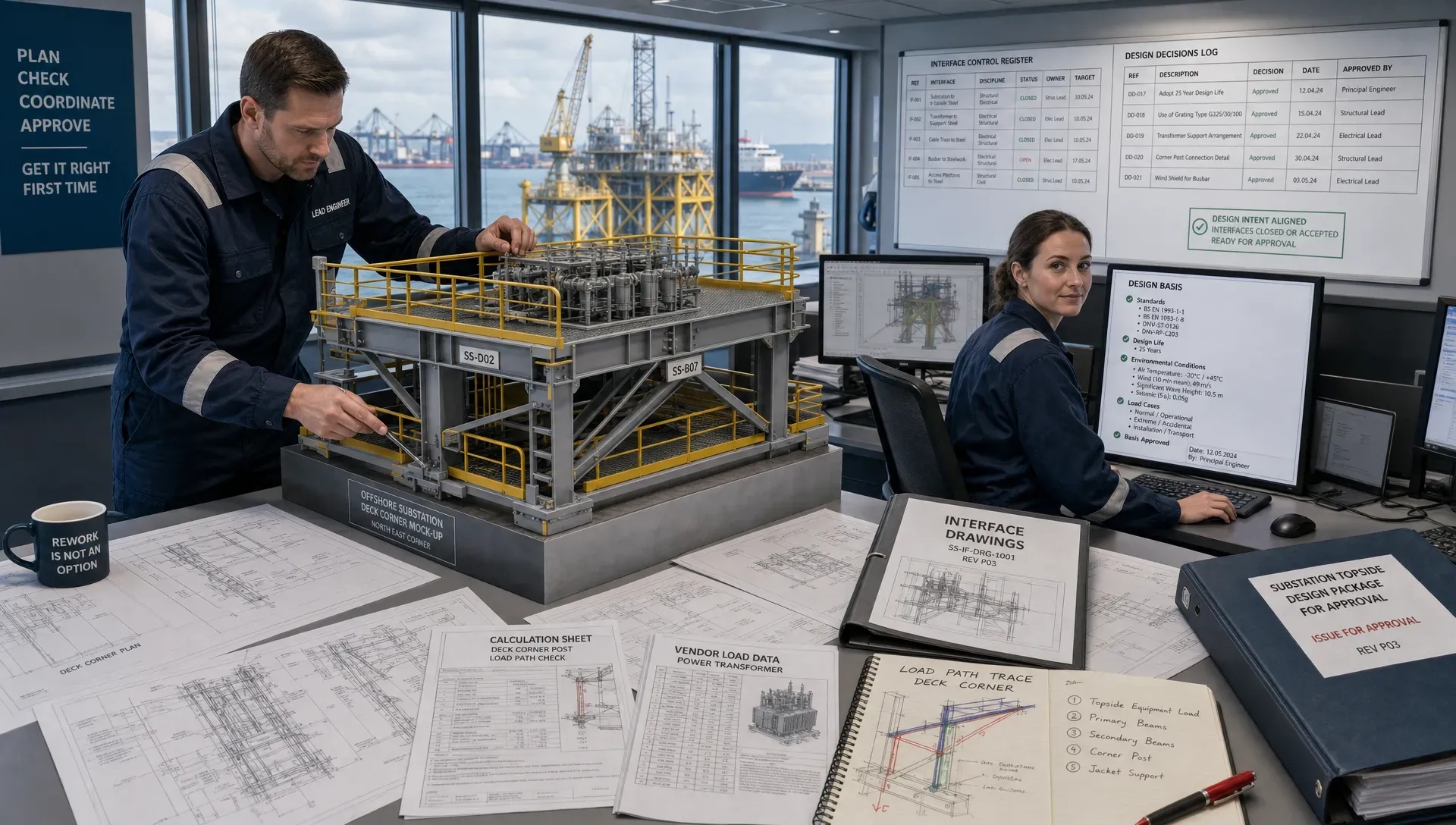
The value of engineering sits behind the drawing. It is found in the assumptions, calculations, load cases, design margins, fabrication choices and operational constraints that shape the final design. Drawings should therefore be treated as the visible result of a controlled technical process, not as the process itself.
A clear design basis before detailed work starts
One of the first deliverables offshore engineering companies must provide is a robust design basis. Without it, teams may move quickly but in the wrong direction. That can lead to late redesign, additional steel, approval delays or offshore workarounds.
A practical design basis should define the project environment, design codes, class requirements, load cases, vessel data, allowable stresses, operational limits, fabrication assumptions and approval route. For transport and installation scopes, it should also clarify accelerations, sea states, motions, crane limits, rigging geometry, seafastening philosophy and MWS expectations.
This early clarity matters because offshore projects are interface-heavy. Naval architecture, structural design, heavy lift, marine operations, steel detailing, fabrication and class approval all depend on the same assumptions. If those assumptions are not aligned, teams can produce technically competent work that does not fit together.
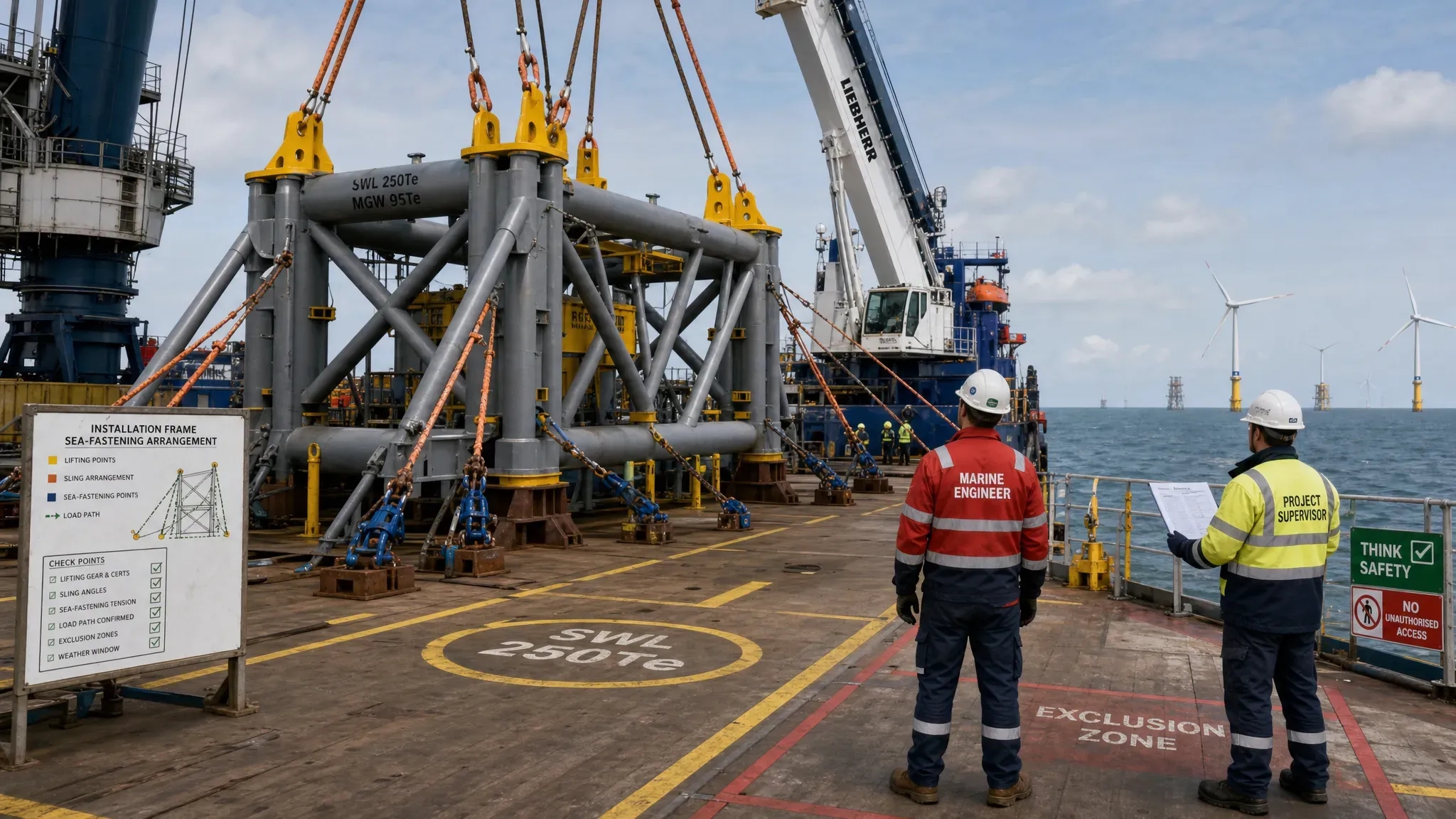
For example, a seafastening design for offshore wind foundations cannot be based only on support geometry. It must reflect vessel motions, load-out method, grillage stiffness, deck capacity, welding access, transport accelerations, installation sequence and removal offshore. The earlier these constraints are brought into the design basis, the less likely the project is to face costly changes close to mobilisation.
Calculation packages that explain the engineering logic
Approval teams and project stakeholders need more than final dimensions. They need to see why the design is safe, what assumptions were used and how critical checks were performed. A calculation package should therefore be clear, traceable and review-ready.
For offshore structural design, this may include hand calculations, finite element analysis, member checks, connection checks, buckling assessments, fatigue considerations, weld sizing and local deck strength verification. For marine operations, it may include stability checks, mooring analysis, lift analysis, motion response, sea fastening loads and transport criteria.
The strongest calculation packages do not simply produce results. They show engineering logic. They define input data, reference applicable standards, explain load combinations, state limitations and connect results back to drawings and procedures. This is especially important when documentation must be reviewed by MWS, DNV, Lloyd’s Register, ABS or another approval body.
Good calculations also support decision-making. They can show where steel can be reduced safely, where a connection is driving fabrication complexity or where a vessel limitation requires a different lifting or support arrangement. In that sense, calculations are not only proof of compliance. They are a tool for improving the project before costs are locked in.
Buildability that reduces offshore and fabrication risk
A design that is safe but difficult to fabricate is not yet a good offshore design. Fabrication time, weld access, fit-up tolerances, plate availability, coating requirements and assembly sequence all affect schedule and cost.
Buildability should be considered from the concept stage. This includes choosing practical member sizes, avoiding unnecessary complex weld details, reducing hard-to-inspect joints, considering lifting points for fabrication handling and designing connections that can be assembled reliably in the yard. When structures are intended for offshore removal or repeated use, maintainability and demobilisation should also be part of the design thinking.
This is particularly relevant for temporary works such as grillages, sea fastening, lifting tools, access platforms and installation aids. Temporary does not mean low-risk. These structures often experience high concentrated loads, dynamic effects and tight installation windows. If they are hard to fabricate, hard to inspect or hard to remove, they can become operational bottlenecks.
A project-driven engineering partner should challenge details that add fabrication hours without improving safety. This may include over-complicated stiffener layouts, excessive weld lengths, unnecessary material grades or awkward geometry that slows shop work. The objective is not to make the design cheap at the expense of reliability. It is to make it efficient, strong, reviewable and practical to build.
For a deeper look at this topic, Fusie Engineers has also covered how structural engineering choices improve buildability offshore, including early load-path clarity and fabrication-sequence thinking.
Marine operations awareness, not isolated structural design
Offshore structures do not operate in a static world. They are transported by vessels, exposed to accelerations, lifted in changing conditions, connected to cranes and rigging, affected by mooring behaviour and constrained by deck capacities, clearances and weather windows.
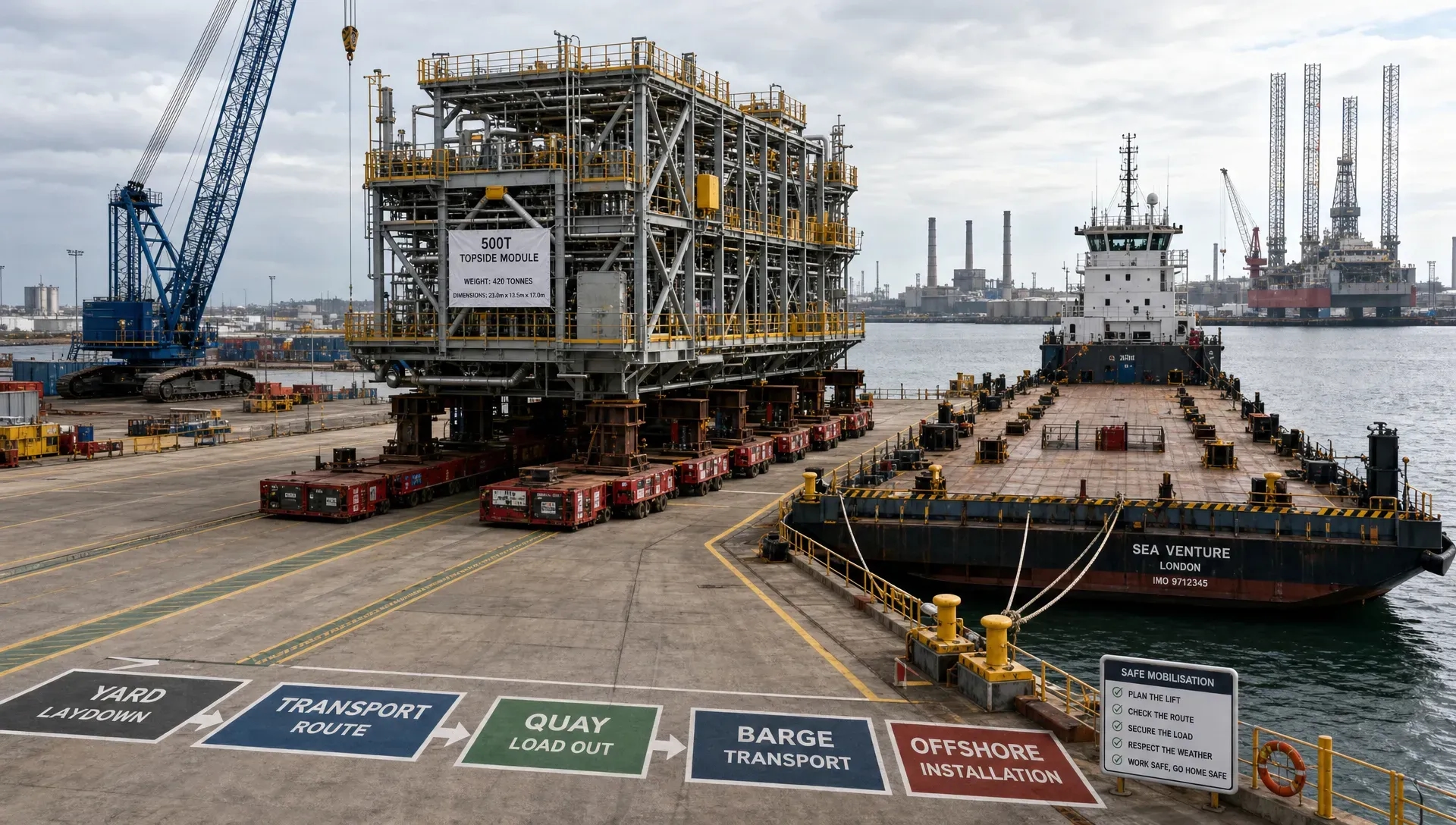
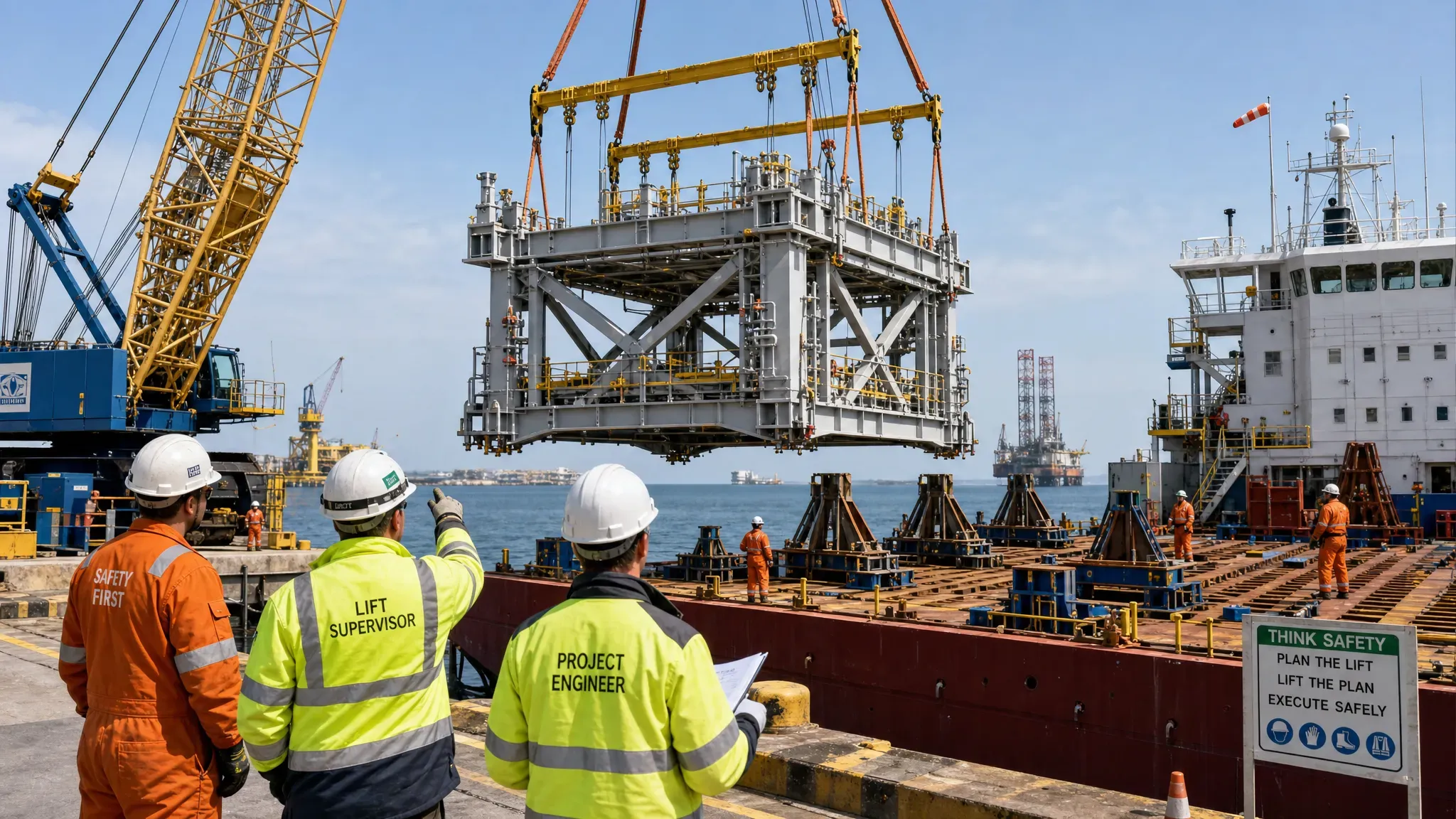
This is why offshore engineering companies must understand the marine operation around the structure. A lifting arrangement, for instance, is not only a structural problem. It is also a question of crane radius, hook height, sling angles, centre of gravity, dynamic amplification, rigging availability, deck layout, tag line control, installation sequence and emergency scenarios.
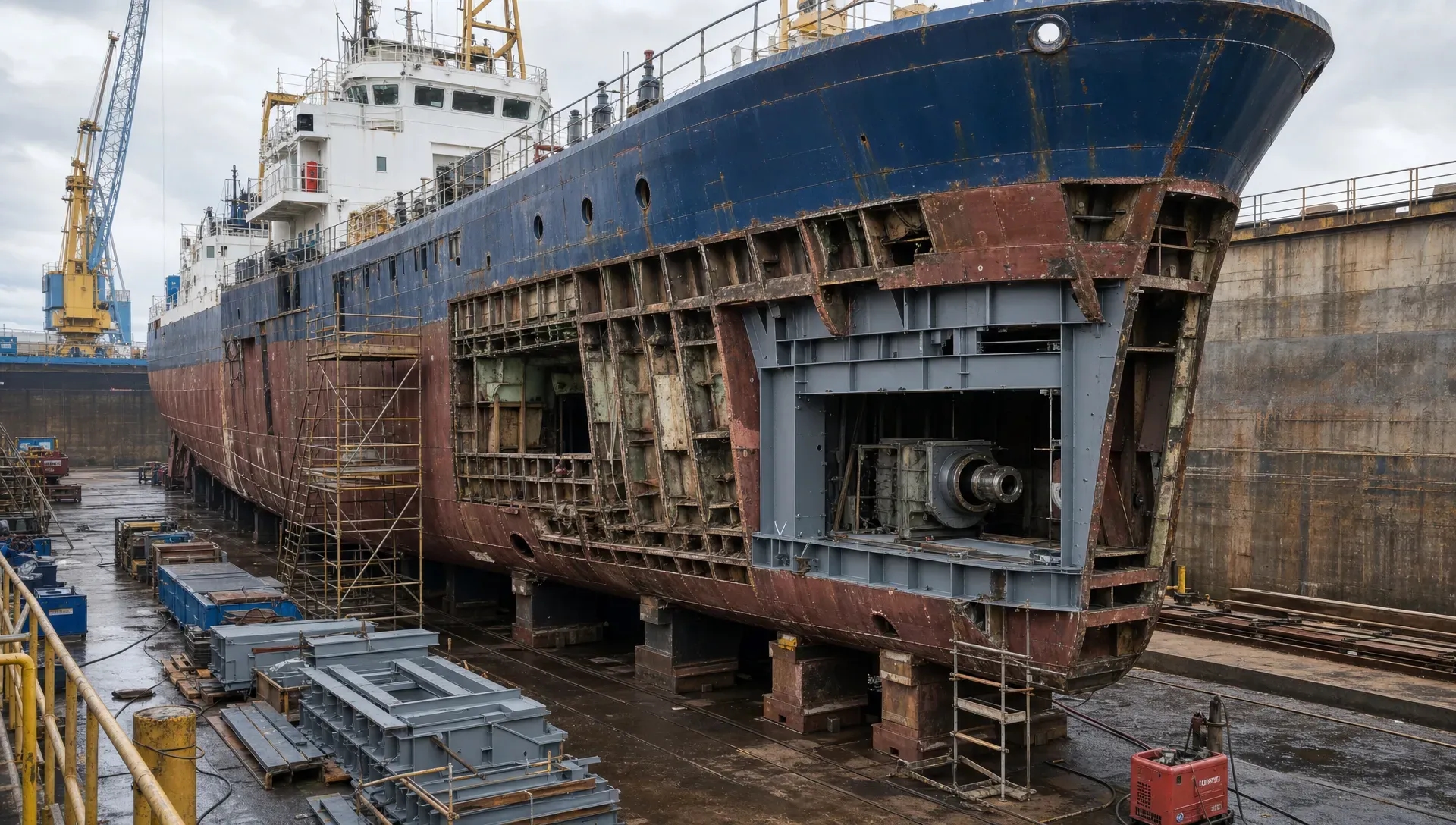
Similarly, vessel retrofits and piping modifications must consider existing structure, access limitations, stability, class rules, shutdown windows and long-term operation. A pipe support may appear minor, but if it loads a weak local plate or conflicts with access and maintenance, it can create downstream problems.
Marine awareness helps engineering teams ask the right questions early:
- Can the vessel support the imposed loads without local reinforcement?
- Does the lifting geometry work with the selected crane and rigging?
- Can the structure be installed, inspected and removed safely?
- Are motions, accelerations and weather limits reflected in the design?
- Will the documentation satisfy the parties responsible for approval and offshore execution?
These questions connect design to execution. Without them, drawings may look complete while important operational risks remain unresolved.
Documentation that accelerates approval instead of delaying it
Approval delays are rarely caused by drawings alone. They are often caused by missing assumptions, unclear load cases, inconsistent revisions, incomplete calculations or documents that do not connect clearly to the procedure being reviewed.
Approval-ready documentation should be structured for the reviewer. It should make it easy to understand the scope, design criteria, limitations, calculation methods, drawings, procedures and required hold points. Where MWS or class review is involved, the engineering package must be traceable and internally consistent.
This is not administrative polish. It directly affects project risk. If documentation is incomplete, the reviewer may request clarification, which can trigger design updates, drawing revisions, fabrication delays or mobilisation pressure. In offshore projects, even a small delay can become expensive when vessels, cranes, crews and weather windows are involved.
Good documentation also supports internal coordination. Fabrication teams need clear drawings and material information. Marine operations teams need procedures, lift plans and operational limits. Client stakeholders need confidence that risks have been identified and controlled. Site teams need information that is usable under time pressure.
The best engineering packages are therefore not just technically correct. They are readable, auditable and aligned with how projects are reviewed and executed.
Interface management across disciplines
Offshore and maritime projects fail at interfaces more often than at isolated design checks. A ship design change can affect stability. A structural support can affect piping routes. A lifting tool can affect deck layout. A mooring assumption can affect installation loads. A fabrication tolerance can affect offshore fit-up.
Offshore engineering companies must be able to manage these interfaces across disciplines. That requires communication between naval architects, structural engineers, mechanical designers, heavy lift engineers, marine engineers, steel detailers and operational teams.
Interface management is especially important in projects involving vessel retrofit, decommissioning, dredging, offshore wind transport and installation, ship repair or heavy civils marine works. Existing vessel data may be incomplete. Site conditions may differ from early assumptions. Class constraints may limit design options. Procurement lead times may force alternative materials or fabrication methods.
A capable engineering partner should identify these issues before they become rework. That means keeping design assumptions visible, raising clashes early, documenting decisions and making sure changes are reflected across drawings, calculations and procedures.
This is one reason integrated engineering support can be more valuable than isolated drafting capacity. Drafting can represent a decision. Engineering judgement helps make the right decision before it is drawn.
Visual communication for tenders, QHSE and execution teams
Complex offshore methods can be difficult to explain through drawings and written procedures alone. Stakeholders may need to understand a load-out sequence, lifting operation, vessel approach, installation path or decommissioning method before they can assess risk and approve the plan.
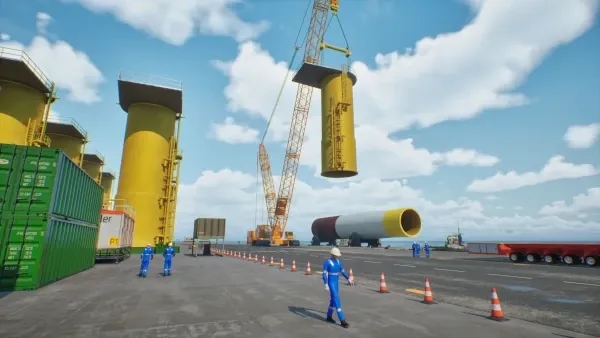
Technical animation and visualisation can help bridge that gap. Used properly, visuals are not marketing decoration. They can support tender submissions, QHSE briefings, toolbox talks, client presentations and offshore readiness reviews. They make sequencing, exclusion zones, rigging arrangements and operational constraints easier to understand.
This is especially useful when multiple parties need a common understanding of the method: engineering, marine operations, fabrication, client representatives, vessel crew, crane operators, HSE teams and approval bodies. A clear visual sequence can reduce ambiguity and help teams identify hazards before work starts.
The same principle applies in many technical sectors: dependable providers build trust by diagnosing root causes and communicating clearly, whether in offshore engineering or in specialised residential services such as licensed plumbing and drain cleaning, where the quality of the explanation matters as much as the immediate repair.
For offshore work, visualisation should always be based on sound engineering data. If an animation shows a lift path, rigging arrangement or installation sequence, it must be consistent with the approved method. Otherwise, it can create confusion rather than clarity.
Cost control through smarter engineering choices
Cost control in offshore engineering is not achieved by cutting analysis short. It is achieved by making better decisions earlier. The largest savings often come from avoiding rework, reducing unnecessary steel, simplifying fabrication and preventing approval delays.
A well-engineered design can reduce project cost by optimising load paths, selecting efficient connection details, standardising components and avoiding excessive conservatism where it is not needed. At the same time, it must maintain adequate safety margins and comply with relevant rules and project requirements.
This balance is important. Under-design creates safety and approval risk. Over-design creates weight, fabrication time, welding cost, coating area, transport complexity and sometimes vessel capacity issues. In heavy lift and offshore transport scopes, extra weight can affect crane selection, rigging loads, deck reactions, stability and schedule.
Practical engineering therefore looks for the point where safety, approval, buildability and cost are aligned. That requires experience, not just software output. Analysis tools are valuable, but the engineer must still understand load paths, boundary conditions, fabrication realities and marine behaviour.
Fusie Engineers has explored this further in its article on sustainable engineering that lowers steel cost and rework, where steel efficiency is treated as both a cost and execution issue.
Responsiveness under project pressure
Offshore projects rarely proceed with perfect information and unlimited time. Vessel availability, yard slots, procurement lead times, weather windows and client milestones can all compress engineering schedules. When changes occur, engineering partners must respond quickly without losing control of quality.
Responsive engineering does not mean issuing unchecked work faster. It means having a controlled process for prioritising critical decisions, managing revisions, communicating assumptions and escalating risks. It also means understanding which questions must be answered immediately and which details can be developed later without affecting safety or procurement.
For example, a project may need early confirmation of deck reactions and grillage layout to secure fabrication, while secondary access details can follow once the main load path is approved. A vessel retrofit may require early class engagement before detailed piping supports are finalised. A heavy lift scope may need rapid centre-of-gravity checks before rigging design can progress.
Good offshore engineering companies help clients protect schedule by sequencing engineering work around project risk. They do not simply wait for perfect data. They define what is missing, state assumptions clearly and help the project move forward responsibly.
What to ask before selecting an offshore engineering partner
When evaluating engineering support, it is useful to look beyond software capability and drawing output. The right partner should be able to explain how they control technical risk from concept through approval and execution.
Useful questions include:
- How do you define and control the design basis at the start of a project?
- How do you connect structural design with vessel capability and marine operations?
- What documentation do you provide for MWS or class review?
- How do you account for fabrication sequence, weld access and installation practicality?
- How do you manage revisions when vessel data, load cases or project assumptions change?
- Can you support both calculations and detailed drawings through to fabrication?
- How do you communicate complex lift, transport or installation methods to non-specialist stakeholders?
The answers should be specific. A strong partner will talk about load paths, approval documentation, class constraints, deck strength, lift geometry, mooring, stability, steel detailing, fabrication interfaces and operational readiness. Generic claims about experience are not enough.
If your team is currently comparing options, this guide on choosing engineering design services for offshore projects offers a practical framework for assessing execution risk, buildability and approval readiness.
The real deliverable is project confidence
Drawings remain essential. Fabricators need them. Reviewers need them. Site teams need them. But drawings are not the full measure of offshore engineering quality.
The real deliverable is confidence that the design can move safely from concept to execution. That confidence comes from a controlled design basis, reliable calculations, practical fabrication details, marine operations awareness, clear documentation, approval support and disciplined interface management.
For offshore wind, shipbuilding, vessel retrofit, decommissioning, dredging, heavy lift and energy projects, this broader engineering value can reduce risk before it reaches the vessel deck, fabrication yard or offshore site. It helps teams avoid late surprises, protect mobilisation schedules and maintain control over safety, cost and quality.
That is what offshore engineering companies must deliver beyond drawings: not more paperwork, but better decisions that make the project safer, clearer and more buildable.
Frequently asked questions
Why are drawings not enough for offshore engineering projects? Drawings show the final design intent, but they do not fully demonstrate load assumptions, vessel constraints, marine operations, approval logic or fabrication practicality. Offshore projects need calculations, procedures, documentation and engineering judgement behind the drawings.
What should an offshore engineering company include in an approval package? A strong approval package typically includes the design basis, relevant calculations, drawings, load cases, method statements or procedures, operational limits, revision history and supporting reports required by the client, MWS or class society.
How does buildability affect offshore project cost? Buildability affects weld time, fit-up, inspection, material use, coating, installation time and rework risk. A design that is easier to fabricate and install can reduce cost without compromising safety when the load paths and approval requirements are properly engineered.
When should marine operations be considered in structural design? Marine operations should be considered from the concept stage. Vessel motions, crane limits, deck strength, mooring, stability, rigging geometry and installation sequence can all affect the structural design and approval route.
Can external engineering support work alongside an internal engineering team? Yes. External support is often valuable when internal teams need specialist capacity for structural design, heavy lift, marine engineering, vessel retrofit, steel detailing or approval documentation during demanding project phases.
Need engineering support beyond drawings?
Fusie Engineers supports offshore, maritime and energy projects with practical engineering input from concept through detailed design, calculations, drawings and approval documentation. The team brings together structural engineers, heavy lift engineers, naval architects, mechanical designers and marine engineering specialists to help clients reduce risk and keep projects moving.
If your project involves offshore structural design, seafastening, grillages, vessel retrofit, ship design, heavy lift, marine operations, steel detailing or technical visualisation, Fusie Engineers can help turn complex requirements into buildable and review-ready engineering.
Visit Fusie Engineers to discuss how your next offshore or maritime project can move beyond drawings and towards safer execution.