

When structural engineering services save time offshore
2026-05-25
Offshore schedules rarely fail because one calculation takes a little longer. They fail when small uncertainties reach the quay, the vessel deck or the offshore worksite. A missing load case, unclear weld access, underestimated deck capacity, incomplete MWS documentation or a grillage that cannot be fabricated on time can turn a controlled operation into a costly delay.
That is where structural engineering services create measurable value. Not by cutting corners, but by removing uncertainty early, aligning design with fabrication and marine operations, and giving reviewers the technical evidence they need before mobilisation.
For offshore contractors, EPC teams, shipyards, vessel owners and renewable energy developers, time saved offshore is usually time saved before the vessel sails. The best structural engineering work is often invisible during execution because the lift, transport, installation or retrofit proceeds as planned.
Why offshore time is so difficult to recover
Offshore work runs on constraints that are less forgiving than most onshore projects. Vessel availability, weather windows, crew planning, port slots, class involvement, marine warranty surveyor review and client readiness all converge around a narrow execution window. If engineering decisions are still open at mobilisation, the project team has very few low-cost options left.
A small change to a lifting arrangement may affect padeye loads, sling angles, spreader bar design, local strengthening, rigging certificates and deck layout. A change to a seafastening concept may affect welding hours, fatigue checks, transport accelerations, vessel stability and inspection requirements. A late retrofit clash may require hot work in a restricted onboard space where access, ventilation, class approval and operational downtime all matter.
In other words, offshore delay is rarely caused by one isolated issue. It is usually caused by weak interface control between structural design, naval architecture, heavy lift engineering, fabrication, class requirements and offshore execution planning.
Good structural engineering reduces this risk by treating the structure as part of an operation, not just as a set of members, plates and welds.
Where structural engineering services save time offshore
Early load path clarity
The fastest way to lose time offshore is to discover too late that the assumed load path is not the real load path. This can happen in heavy lifts, vessel retrofits, module transport, decommissioning scopes and offshore wind installation work.
Early structural engineering establishes how loads move from the object being lifted or transported into the lifting points, temporary structures, vessel deck, underdeck members and supporting systems. This includes checking global and local behaviour, identifying critical details and confirming whether existing vessel structure can accept the loads.
When this work is done early, the team can avoid last-minute strengthening, redesign or operational restrictions. It also gives naval architects, marine operations teams and fabrication yards a common technical baseline.
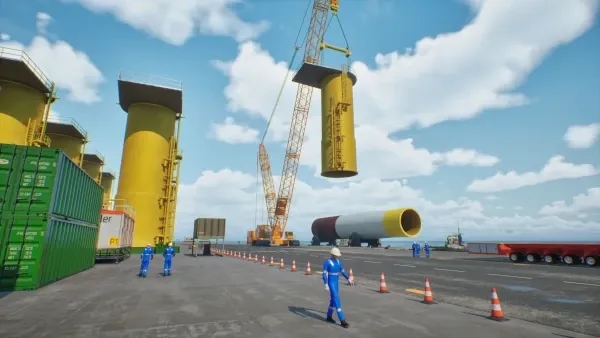
For example, a grillage design for offshore foundation transport is not just a support frame. It must match vessel deck capacity, transport accelerations, welding limitations, sea fastening philosophy, inspection access and removal requirements. If those factors are understood during concept design, the detailed phase becomes faster and less reactive.
Buildable seafastening and grillage design
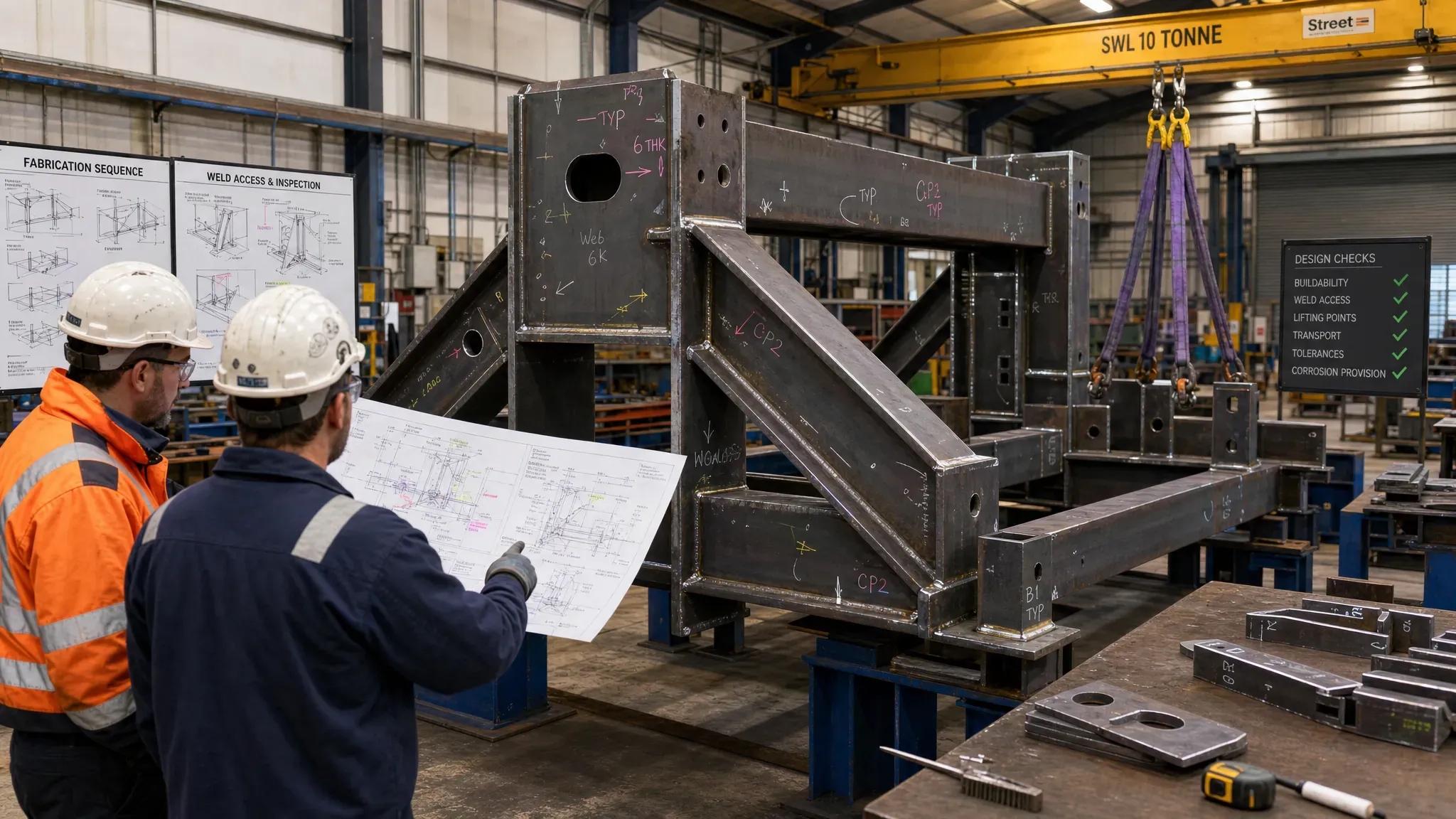
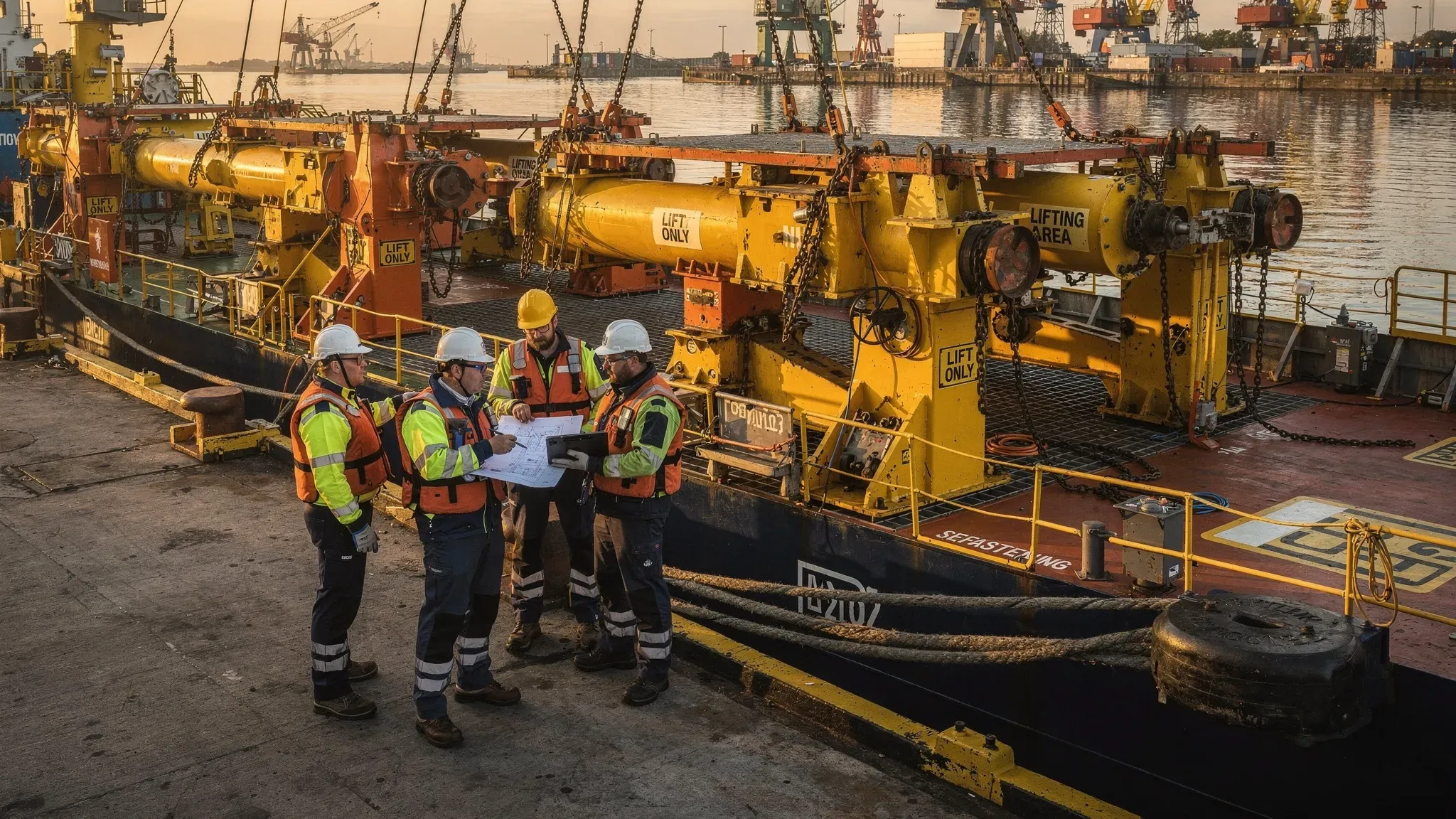
Seafastening and grillage structures are often temporary, but they have permanent consequences for schedule and safety. A design that looks efficient in a calculation package can still create problems if it requires excessive welding, difficult fit-up, unavailable steel sections or inspection in inaccessible areas.
Time-saving structural engineering focuses on buildability from the start. That means considering plate thicknesses, weld categories, cutting complexity, lifting points for the temporary structure itself, installation sequence, NDT access and removal after transport.
This is especially important when multiple components must be transported on one vessel, or when deck space is restricted. Optimising steel weight is valuable, but only if the design remains easy to fabricate, install, inspect and approve. A slightly heavier but much simpler detail can sometimes save days in the yard and reduce the chance of rework during mobilisation.
The same principle applies to offshore wind components, subsea equipment, dredging structures, decommissioned modules, heavy civil bridge sections and industrial skids. Temporary steel is only effective when it supports the real operation.
Lift engineering that matches the actual operation
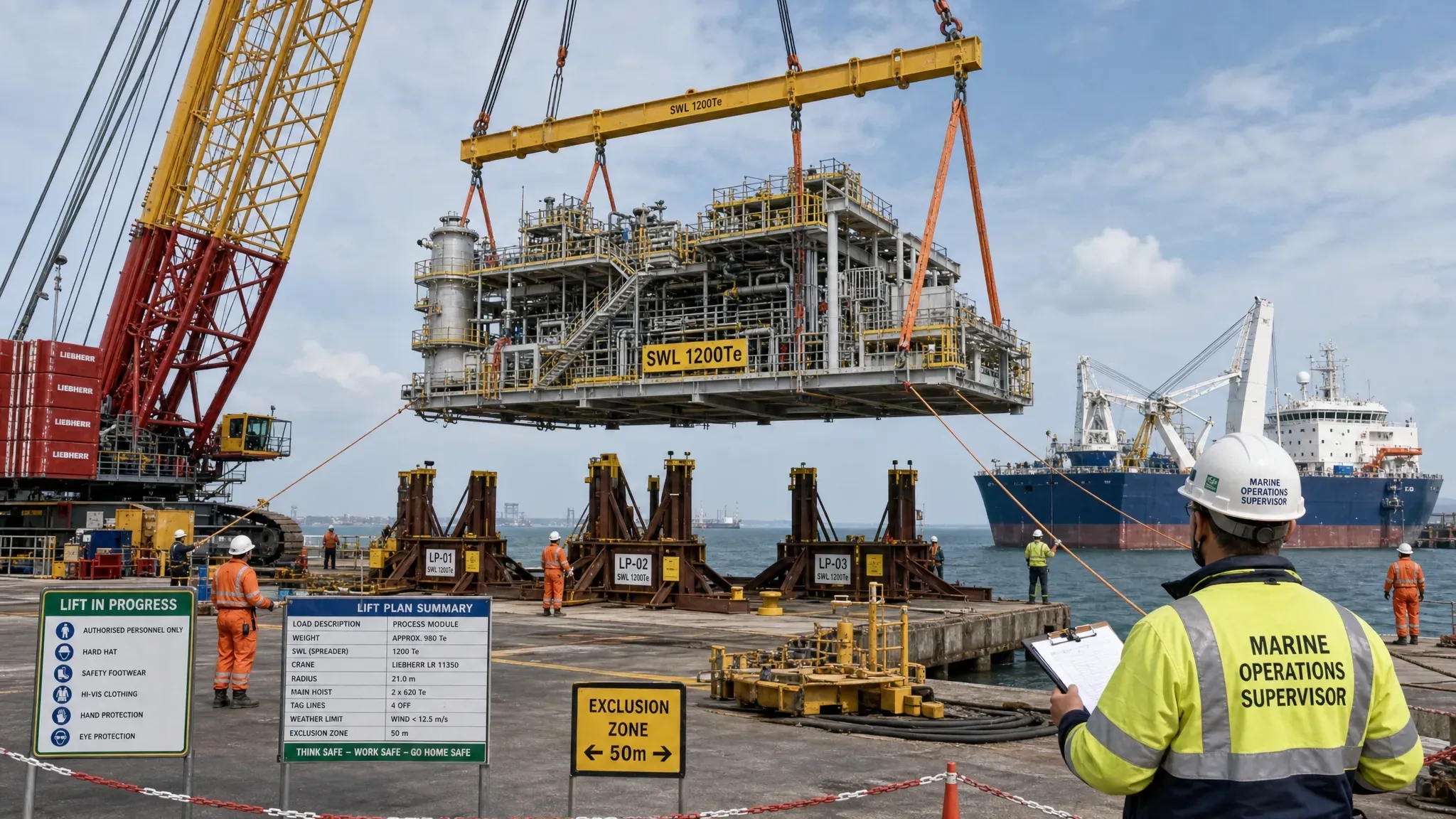
Lifting design is a common source of offshore delay because it sits at the interface between structural engineering and execution. Padeyes, trunnions, spreader bars, rigging geometry and crane capacity must be checked against real operational conditions, not idealised assumptions.
A strong lift engineering package considers sling angles, centre of gravity uncertainty, dynamic amplification, skew loads, local stress concentrations, fabrication tolerances and the capacity of the lifted object. For offshore work, it also needs to reflect vessel motions, crane vessel limitations and allowable environmental conditions.
When these checks are coordinated early, project teams can avoid late changes to rigging, lifting points or reinforcement. They also gain clearer documentation for lift plans, toolbox talks, MWS review and client approval.
For decommissioning, this can be particularly important. Existing structures may have incomplete records, corrosion, fatigue history or unknown modifications. Structural analysis and FEM modelling help confirm whether the structure can be lifted safely, and whether reinforcements are genuinely necessary. Fusie Engineers has supported this type of work in decommissioning, including structural lift analysis and detailed FEM verification for a nearly 400-ton accommodation complex removed from an offshore gas field. You can read more about that project in the article on assisting Scaldis SMC with an accommodation lift.
Approval-ready documentation
Engineering can be technically sound but still delay a project if the documentation is not ready for review. MWS, DNV, Lloyd's Register, ABS and other approval bodies need clear assumptions, traceable calculations, drawings, load cases and design references.
Approval-ready structural engineering does not treat documentation as an afterthought. It builds the calculation note, FEM output, drawings, material specifications, weld details and operational assumptions into one coherent package.
This matters because review comments often arise from missing context rather than incorrect design. If the reviewer cannot see why a sea state was selected, how transport accelerations were applied, whether deck reactions have been transferred correctly or how welds will be inspected, the approval process slows down.
Clear documentation saves time by reducing review cycles. It also gives project directors and offshore managers confidence that the design basis is controlled before mobilisation.
The difference between a correct design and an offshore-ready design
A correct structural design satisfies the relevant checks. An offshore-ready design satisfies the checks and can be executed safely, efficiently and with minimal ambiguity.
For offshore, maritime and energy projects, that distinction is critical. The structure is only one part of a larger system that includes vessels, cranes, mooring, stability, sea states, yard capacity, class requirements and operational procedures.
An offshore-ready design usually includes:
- Load cases that reflect transport, lifting, installation, fatigue and temporary conditions.
- Details that can be fabricated with available materials, realistic welds and accessible inspection points.
- Interface checks with vessel structure, underdeck capacity, stability, mooring and marine operations.
- Drawings and reports that are clear enough for fabricators, reviewers, site teams and client representatives.
- A design philosophy that reduces rework, offshore decision-making and unnecessary steel.
This is why structural engineering services should be involved before the design is frozen. Early involvement allows engineers to influence the concept, not simply verify a solution that may already be expensive or difficult to execute.
The same logic applies to steel detailing. Fabrication drawings are not just a final production step. In marine projects, detailing can expose access issues, clashes, tolerance problems and missing interfaces before they become yard delays. For a deeper view on this topic, see Fusie Engineers' article on why steel detailing matters in marine fabrication.
Time savings across the project lifecycle
During tender and concept design
The earliest engineering decisions often have the largest schedule impact. In tender phases, teams must estimate feasibility, vessel suitability, lifting concepts, temporary works and fabrication effort with limited data. Poor assumptions can win the tender but create execution problems later.
Structural engineers help tender teams test whether a proposed method is realistic. They can compare transport configurations, identify likely strengthening requirements, estimate grillage complexity and flag approval risks. This allows commercial teams to price the work with fewer unknowns and explain the method more clearly to clients.
Technical animation and visualisation can also help at this stage. Complex offshore operations are easier to understand when stakeholders can see the lift sequence, deck layout, transport arrangement or installation method. This is valuable for tenders, QHSE briefings and internal decision-making.
During detailed engineering and fabrication
Detailed engineering saves time when calculations, drawings and fabrication logic develop together. If the structural model is produced without considering fabrication sequence, the design may require avoidable rework. If drawings are issued before load paths and interfaces are fully checked, the yard may start work on details that later need revision.
A coordinated structural engineering process reduces these risks by aligning FEM calculations, 3D models, 2D drawings, material take-offs and approval documents. It also ensures that changes are assessed for their effect on weight, centre of gravity, weld volume, inspection requirements and schedule.
In vessel retrofit and piping projects, this coordination becomes even more important. Legacy drawings may be incomplete, onboard spaces may be congested and class constraints may restrict design options. Structural changes around new skids, piping supports, deck penetrations or equipment foundations need to be checked against existing structure and operational requirements.
During mobilisation
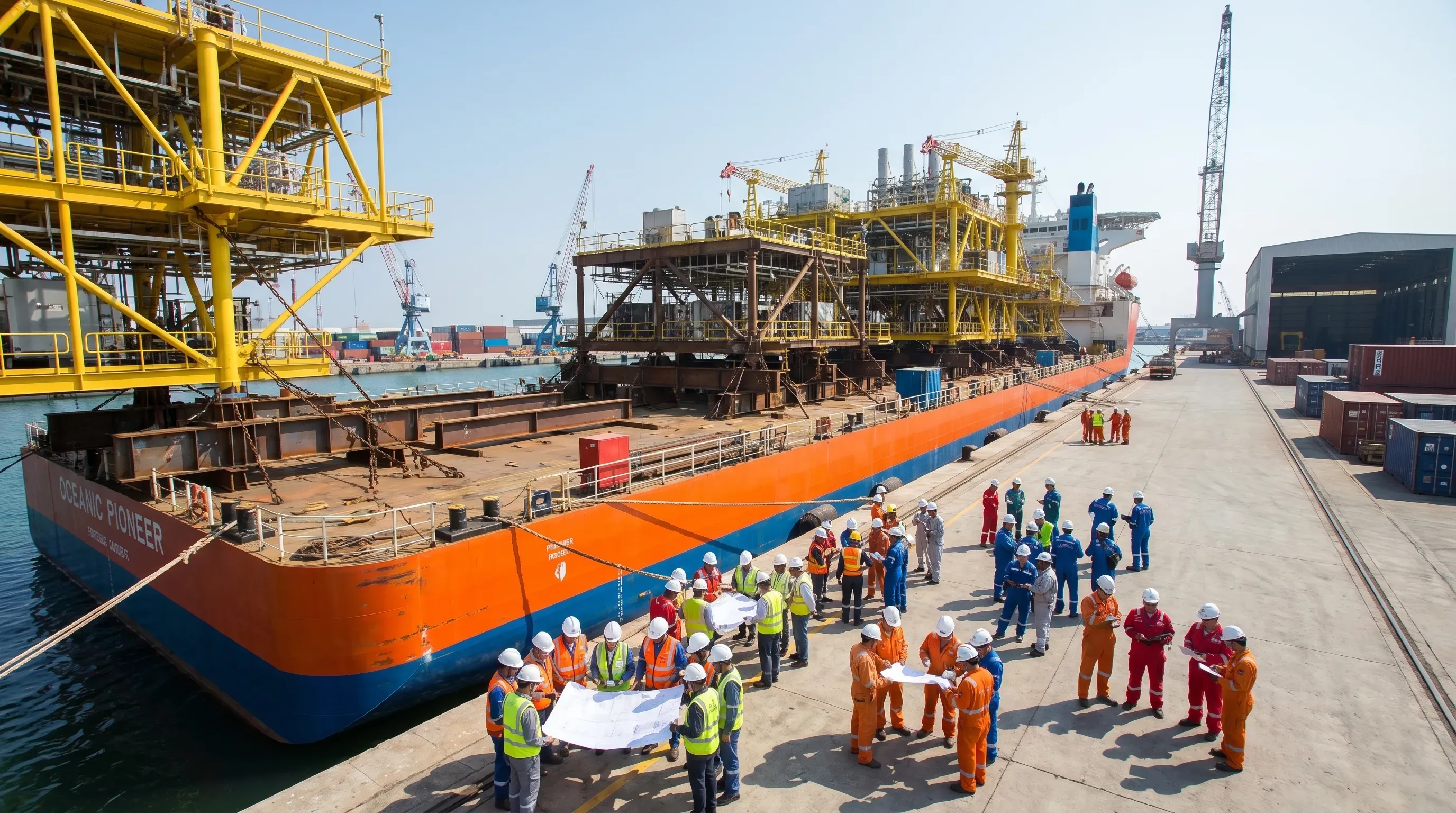
Mobilisation is where unresolved engineering issues become visible. The vessel is alongside, equipment is arriving, welders and inspectors are scheduled, and the project clock is running. This is not the moment to discover that a seafastening detail conflicts with a deck fitting, or that a lifting point requires additional reinforcement.
Good structural engineering reduces mobilisation risk by ensuring that fabrication packages are complete, deck interfaces are known, lifting arrangements are checked and documentation is ready for final review. The goal is not only to design the steel, but to ensure the project team can install and verify it without confusion.
This also includes coordination with supporting systems. Offshore and marine scopes often interface with temporary power, shore-side infrastructure, charging facilities, generators and electrical installations during fabrication, testing or port operations. For those interfaces, project teams may rely on specialist electrical partners, including providers of photovoltaic, backup power and electrical installation services when resilient onshore power or facility upgrades are part of the wider project environment.
During offshore execution
Once offshore, engineering time savings come from reducing the need for improvisation. Clear lifting arrangements, known allowable sea states, verified transport structures, approved procedures and practical drawings allow supervisors and crews to focus on safe execution.
This does not remove offshore complexity. Weather can change, vessel motions can exceed expectations and site conditions can vary. But a well-engineered package gives the offshore team defined boundaries, contingency logic and traceable assumptions.
In practice, this can reduce standby time, review calls, offshore welding, unclear decision-making and unnecessary operational conservatism. It can also improve communication between the vessel crew, project engineers, client representatives, MWS and installation teams.
How integrated engineering reduces handover losses
Many offshore delays happen between disciplines, not within them. Structural engineers may complete their part, but naval architects still need updated weights. Marine operations may revise a transport procedure, but the seafastening loads are not updated. Fabrication may propose a detail change, but the approval package does not reflect it.
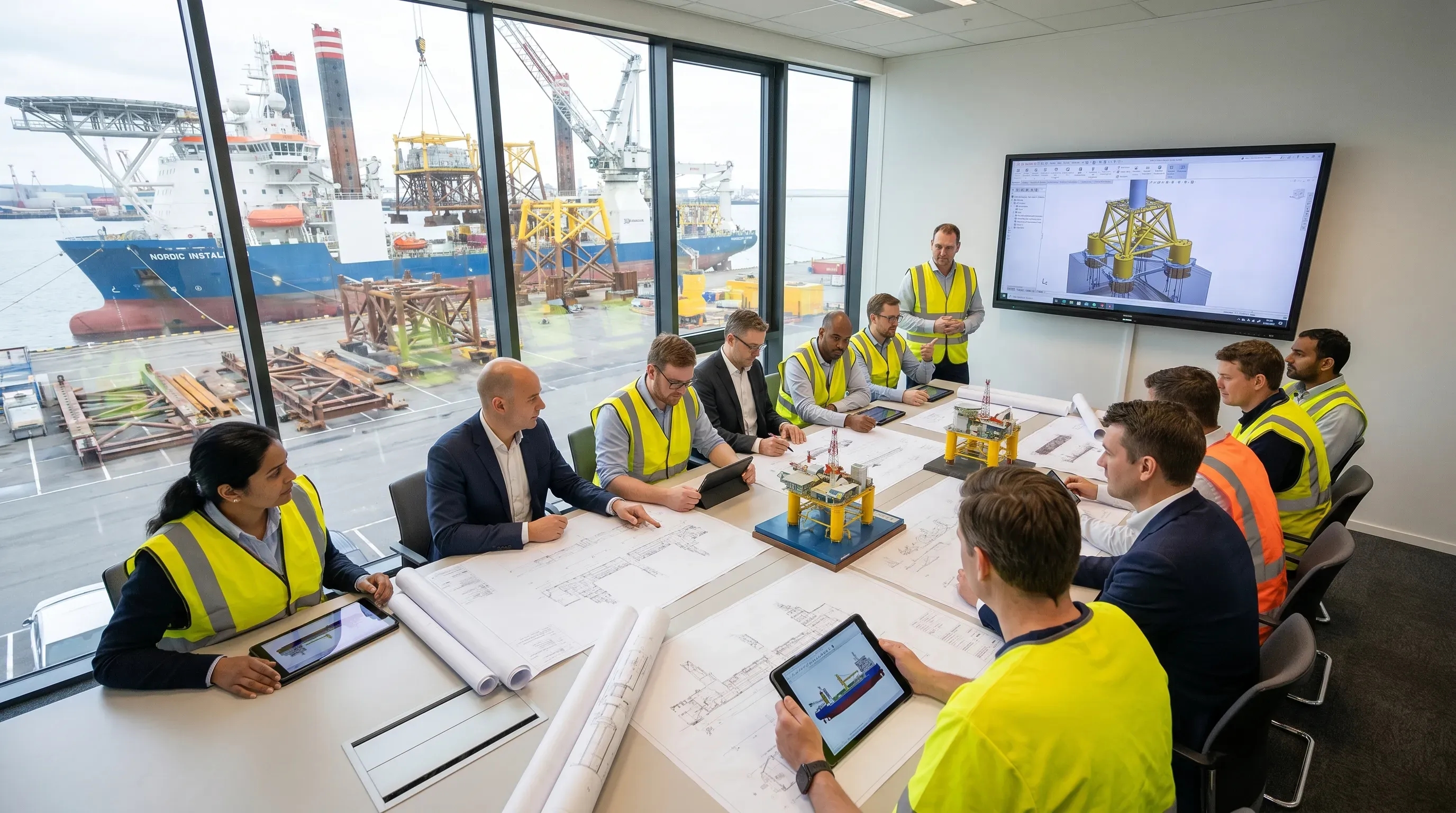
Integrated engineering reduces this friction. When structural engineers, heavy lift engineers, naval architects, marine engineers, steel detailers and designers work from a shared understanding, the number of handover gaps decreases.
For offshore contractors and shipyards, this is particularly valuable when internal teams are already loaded. External support should not simply add drafting capacity. It should bring judgement about vessel behaviour, temporary structures, approval requirements, fabrication constraints and offshore safety.
This is one reason project teams often benefit from working with a partner that can support multiple related scopes, such as structural design, ship design, vessel retrofit, piping, heavy lift engineering, marine engineering, steel detailing and technical visualisation. The value is not just capacity. It is continuity between concept, calculations, drawings, approval and execution.
What to look for in structural engineering services for offshore projects
Choosing a structural engineering partner for offshore work should go beyond hourly rates or software capability. The right team should understand how design decisions affect fabrication, approval and offshore execution.
Key indicators include:
- Experience with offshore and maritime load cases, including lifting, transport, installation and temporary works.
- Understanding of class, MWS and marine warranty expectations.
- Ability to produce clear FEM calculations, drawings, reports and approval documentation.
- Practical awareness of welding, fit-up, inspection, deck interfaces and yard constraints.
- Capacity to coordinate with naval architecture, mooring, stability, marine operations and fabrication teams.
- A track record of communicating quickly when decisions affect mobilisation or offshore schedules.
If a provider only focuses on producing drawings, the project may still carry risk in the assumptions behind those drawings. If a provider only focuses on analysis, the result may be difficult to build. The strongest offshore engineering support connects analysis, design, detailing and execution.
For a broader procurement perspective, Fusie Engineers has also published guidance on how to choose engineering design services for offshore projects.
How Fusie Engineers supports time-critical offshore work
Fusie Engineers supports clients across offshore wind, maritime, energy, decommissioning, shipbuilding, retrofit, dredging, heavy civils and renewable energy projects. The team combines structural engineers, heavy lift engineers, mechanical designers, naval architects, marine engineers and detailers to develop designs that are safe, buildable and ready for review.
Typical support can include offshore structural design, seafastening and grillage engineering, custom tools, vessel retrofits, piping design, ship design, steel detailing, lifting arrangements, FEM calculations, motion analyses, mooring reports, stability checks, drawings and approval documentation.
The practical objective is always the same: reduce uncertainty before it reaches the offshore phase. That means designing with fabrication, installation, maintenance and approval in mind. It also means recognising that a technically elegant solution is not enough if it increases weld volume, delays class review, overloads the vessel deck or complicates offshore execution.
For project directors and engineering managers, this approach helps protect the schedule. For offshore managers, it supports safer operations. For fabrication teams, it improves clarity. For approval bodies, it provides traceable information. For clients, it reduces the risk of costly surprises during mobilisation and execution.
Frequently asked questions
How do structural engineering services reduce offshore delays? They reduce delays by confirming load paths, vessel interfaces, lifting arrangements, seafastening details and approval documentation before mobilisation. This helps avoid late redesign, yard rework, MWS review delays and offshore decision-making under pressure.
When should structural engineers be involved in an offshore project? Structural engineers should ideally be involved during tender or concept design. Early input allows the team to influence the method, vessel selection, temporary works, fabrication strategy and approval route before major decisions become expensive to change.
What makes offshore structural design different from standard structural design? Offshore structural design must account for dynamic loads, vessel motions, transport accelerations, lifting conditions, fatigue, corrosion, marine operations, class requirements and temporary installation phases. It must also be practical for fabrication, inspection and offshore execution.
Why is approval-ready documentation important? Approval-ready documentation reduces review cycles with MWS, class societies and client teams. Clear assumptions, load cases, drawings, calculations and reports help reviewers understand the design basis and approve the work without avoidable clarification rounds.
Can structural engineering support vessel retrofits and decommissioning? Yes. Vessel retrofits and decommissioning often require structural checks, FEM analysis, local strengthening, lifting studies, piping supports, equipment foundations and class documentation. These scopes benefit from early engineering because existing data and interfaces can be uncertain.
Plan offshore work with less uncertainty
Offshore time is too expensive to protect with late checks and disconnected engineering packages. The strongest savings come from practical design decisions made early, supported by clear calculations, buildable details and approval-ready documentation.
If your next offshore, maritime, heavy lift, retrofit, decommissioning or renewable energy project needs structural engineering support, contact Fusie Engineers to discuss how the right engineering approach can reduce risk before mobilisation and help your team execute with confidence.