


When a technical solutions engineer adds real project value
2026-05-18
A complex offshore, maritime or energy project rarely fails because a single calculation was missing. More often, the risk builds at the interfaces: a lifting point that conflicts with vessel structure, a seafastening design that is strong but slow to fabricate, a retrofit route that looks clean in 3D but clashes with class constraints, or documentation that does not answer the reviewer’s real question.
That is where a technical solutions engineer can add value beyond isolated design tasks. The role is not simply to produce drawings or pass information between teams. In a project-driven engineering environment, the value lies in converting technical uncertainty into safe, buildable and approval-ready decisions.
For CTOs, technical directors, project managers, lead engineers, shipyards and offshore contractors, this distinction matters. Mobilisation windows are expensive. Vessel time is limited. MWS and class reviews can affect the critical path. Fabrication teams need clear details, not theoretical concepts. A strong technical solutions engineer helps align engineering judgement with practical execution.
What does a technical solutions engineer do in complex engineering projects?
The title can mean different things depending on the company. In offshore, maritime and energy projects, a technical solutions engineer typically works at the point where client requirements, engineering disciplines, operational constraints and approval requirements meet.
Rather than looking at one drawing or calculation in isolation, the role is to understand the complete technical problem. That might include structural design, marine operations, vessel limitations, lifting arrangements, fabrication method, transport procedures, class rules, documentation requirements and project schedule.
In practice, the technical solutions engineer asks questions such as:
- Can this design be fabricated with available yard capabilities and realistic welding access?
- Will the structure behave safely under transport, lifting, fatigue, sea fastening or operational loads?
- Are vessel capacity, deck strength, stability and underdeck structure properly considered?
- Does the documentation give MWS, DNV, Lloyd’s Register, ABS or other approval parties enough information to review efficiently?
- Can steel weight, reinforcement, fabrication time or offshore installation risk be reduced without compromising safety?
- Are naval architecture, structural engineering, piping, heavy lift and operations teams working from the same assumptions?
This is why the role becomes particularly valuable in offshore wind, shipbuilding, vessel retrofit, decommissioning, dredging, heavy civils, renewable energy and traditional energy scopes. These projects combine high technical loads with tight execution windows and multiple approval stakeholders.
The difference between technical support and real project value
Many projects already have engineers, designers, draughtspeople and project managers. Adding another technical person only makes sense if that person improves decisions, not just capacity.
A technical solutions engineer adds real project value when they reduce uncertainty early, prevent rework and create a clearer path from concept to execution. This is different from reactive support, where engineering only responds after a problem appears on site, at the yard or during review.
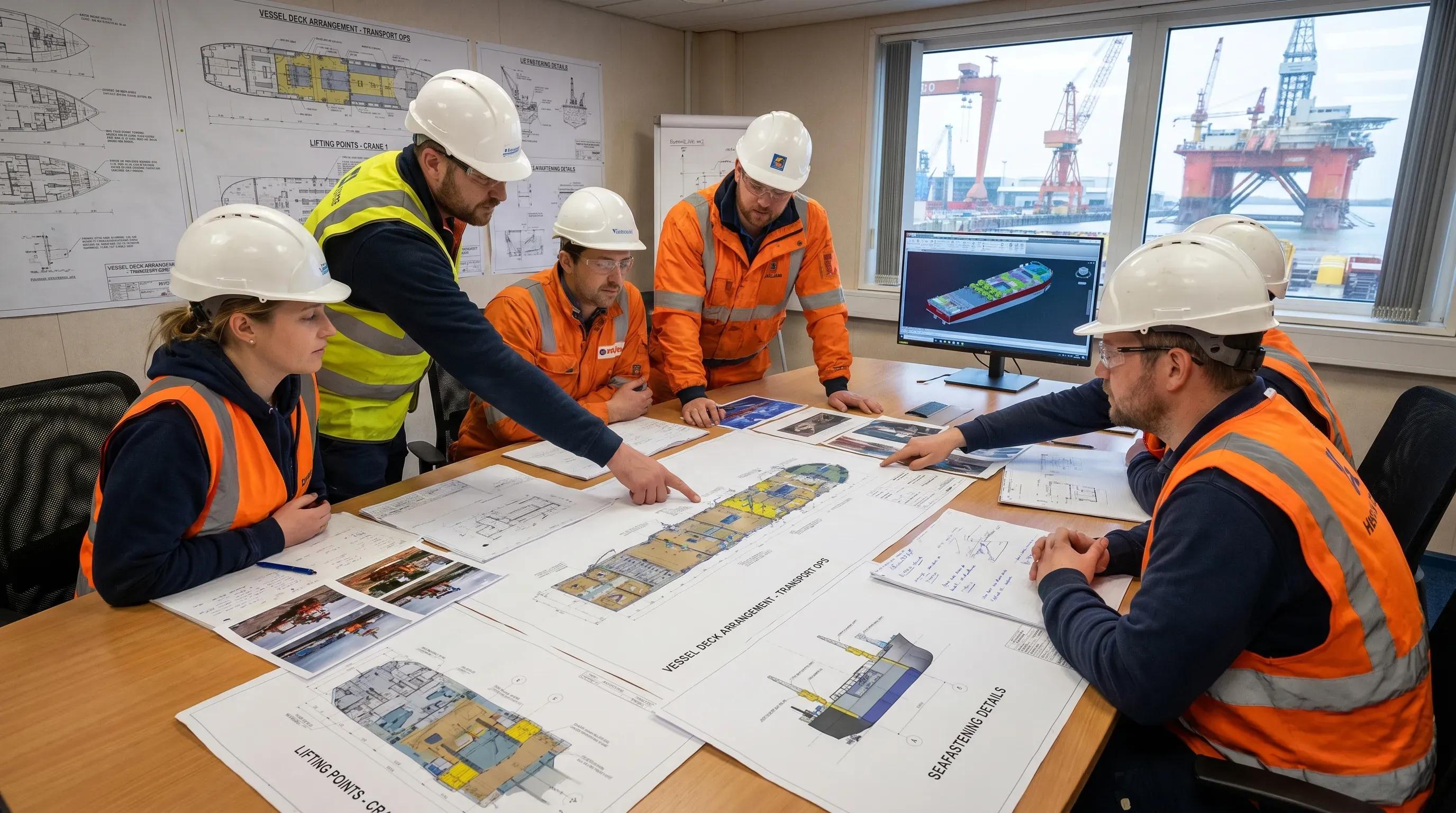
For example, a seafastening concept may pass a strength check but still create project risk if it requires complex weld details, obstructs lifting access, increases removal time offshore or overloads a local deck area. A solutions-focused engineer will not stop at “the utilisation is acceptable”. They will ask whether the solution is practical, whether it can be installed in the available time, whether it can be inspected, and whether the reviewer can follow the load path.
That broader view is especially important when project teams are under schedule pressure. Fast engineering is valuable only when it remains traceable, reviewable and aligned with fabrication and operations. Speed without control often leads to late-stage corrections, extra steel, rushed approvals and higher total cost.
Where a technical solutions engineer creates the most impact
The value of this role is strongest in project phases where early decisions have a large effect on cost, safety and schedule. In offshore and maritime work, those phases often occur before the final drawings are released.
During concept and feasibility
Concept engineering is where many future risks are created. A technically correct concept can still become expensive if it ignores fabrication access, vessel constraints, lifting clearances or approval requirements.
A technical solutions engineer can challenge the first idea before too much time is invested. For a grillage, this may involve checking whether the load path aligns with strong deck structure. For a retrofit, it may involve assessing whether a piping route can be installed without excessive dismantling. For a heavy lift operation, it may involve reviewing whether lifting points, sling angles and centre of gravity assumptions are realistic.
The result is not always a more complex design. In many cases, the best value comes from making the design simpler, lighter and easier to approve.
During structural design and analysis
Structural engineering in marine environments cannot be treated as a static desktop exercise. Transport accelerations, vessel motions, fatigue considerations, dynamic lifting effects, wave loads, local deck strength and temporary conditions can all influence the design.
A technical solutions engineer helps connect calculations to real operating conditions. This is particularly relevant for seafastening, offshore installation aids, boat landings, skids, spreader beams, grillages, temporary support frames and custom tools.
The value is in understanding not only whether a structure is strong enough, but also how it will be loaded, fabricated, installed, inspected, transported and removed. Good engineering judgement can reduce unnecessary reinforcement while still maintaining a clear safety margin.
For many offshore projects, finite element modelling, hand calculations and local checks must also be presented in a way that supports review. The calculation package needs to show assumptions, load cases, boundary conditions and conclusions clearly. If the reviewer cannot trace the logic, approval can slow down even when the design itself is sound.
During class, MWS and stakeholder review
Approval readiness is one of the most practical ways a technical solutions engineer can protect the project schedule. Review cycles are not just administrative steps. They can determine whether fabrication starts on time, whether a vessel mobilises as planned or whether offshore execution is delayed.
Class societies and marine warranty surveyors need complete, consistent and technically defensible information. This may include drawings, FEM reports, lifting arrangements, motion analyses, mooring reports, stability checks, structural calculations and method statements.
The value is not only in producing documents. It is in anticipating the questions reviewers are likely to ask. Are load cases clearly justified? Are allowable stresses and utilisation criteria stated? Are vessel limitations reflected? Is the installation sequence consistent with the design assumptions? Are temporary and permanent conditions separated?
Reference frameworks such as DNV rules and standards are often central to offshore and maritime design decisions, but standards alone do not make a project approval-ready. Engineering teams still need to interpret requirements in context and document decisions with enough clarity for review.
During fabrication and installation planning
A design that cannot be built efficiently is not a successful design. Fabrication constraints have a direct impact on cost, lead time and quality.
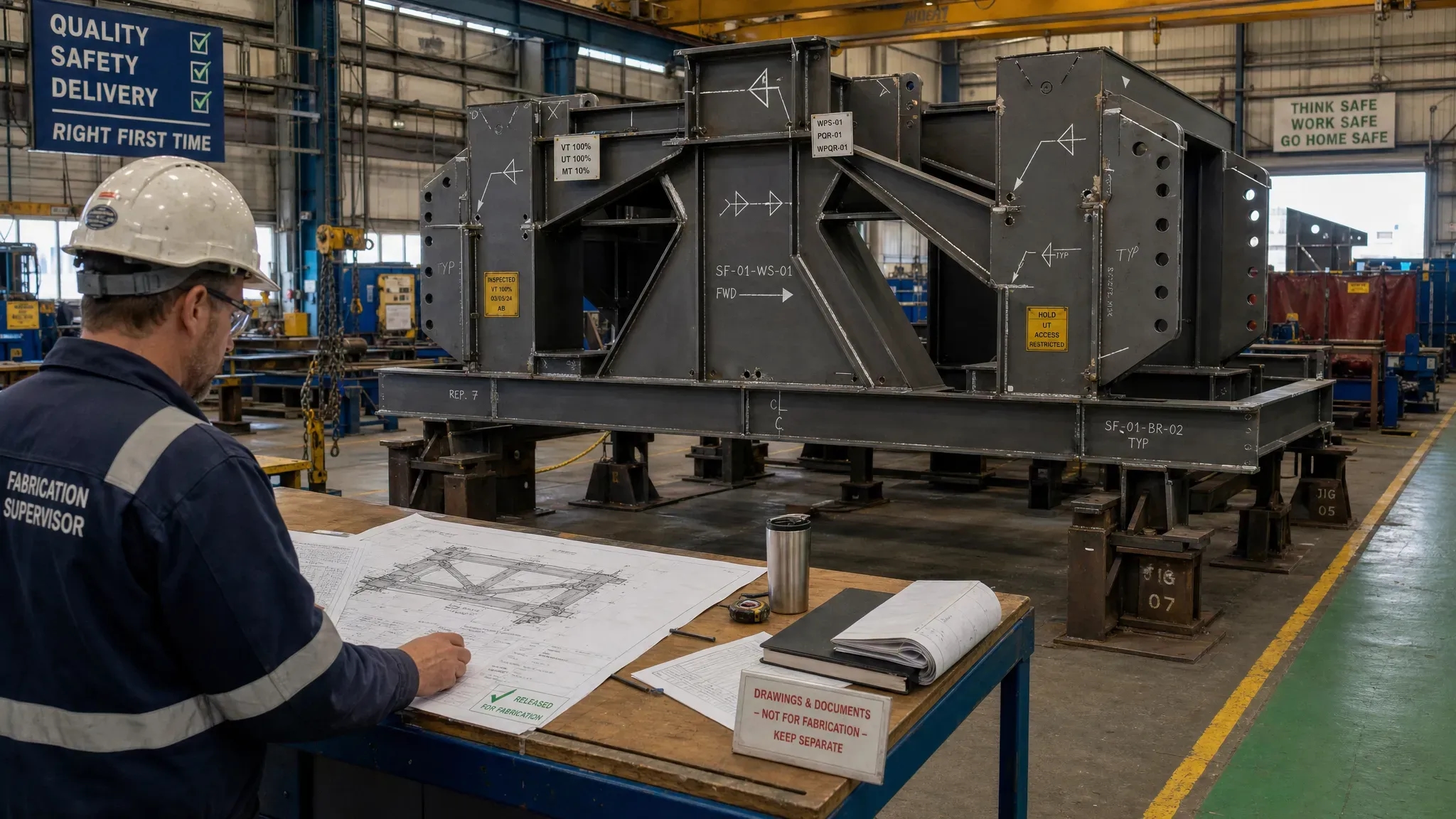
A technical solutions engineer adds value by considering weld access, plate availability, lifting during fabrication, modularisation, tolerances, inspection points and the sequence in which parts will be assembled. This is where close coordination between engineering and steel detailing becomes critical.
Fusie Engineers has discussed this topic in more depth in its article on why steel detailing matters in marine fabrication. The key point is simple: the transition from engineering intent to fabrication-ready output must be controlled. If details are unclear, the yard may lose time, raise technical queries or build around assumptions that later need correction.
Installation planning creates similar challenges. Offshore work is exposed to weather windows, vessel day rates, limited access and QHSE requirements. A technical solution must therefore consider how the operation will actually be performed, not only how the final state looks in a model.
Practical examples of value in offshore, maritime and energy projects
The value of a technical solutions engineer becomes clearer when viewed through typical project scenarios.
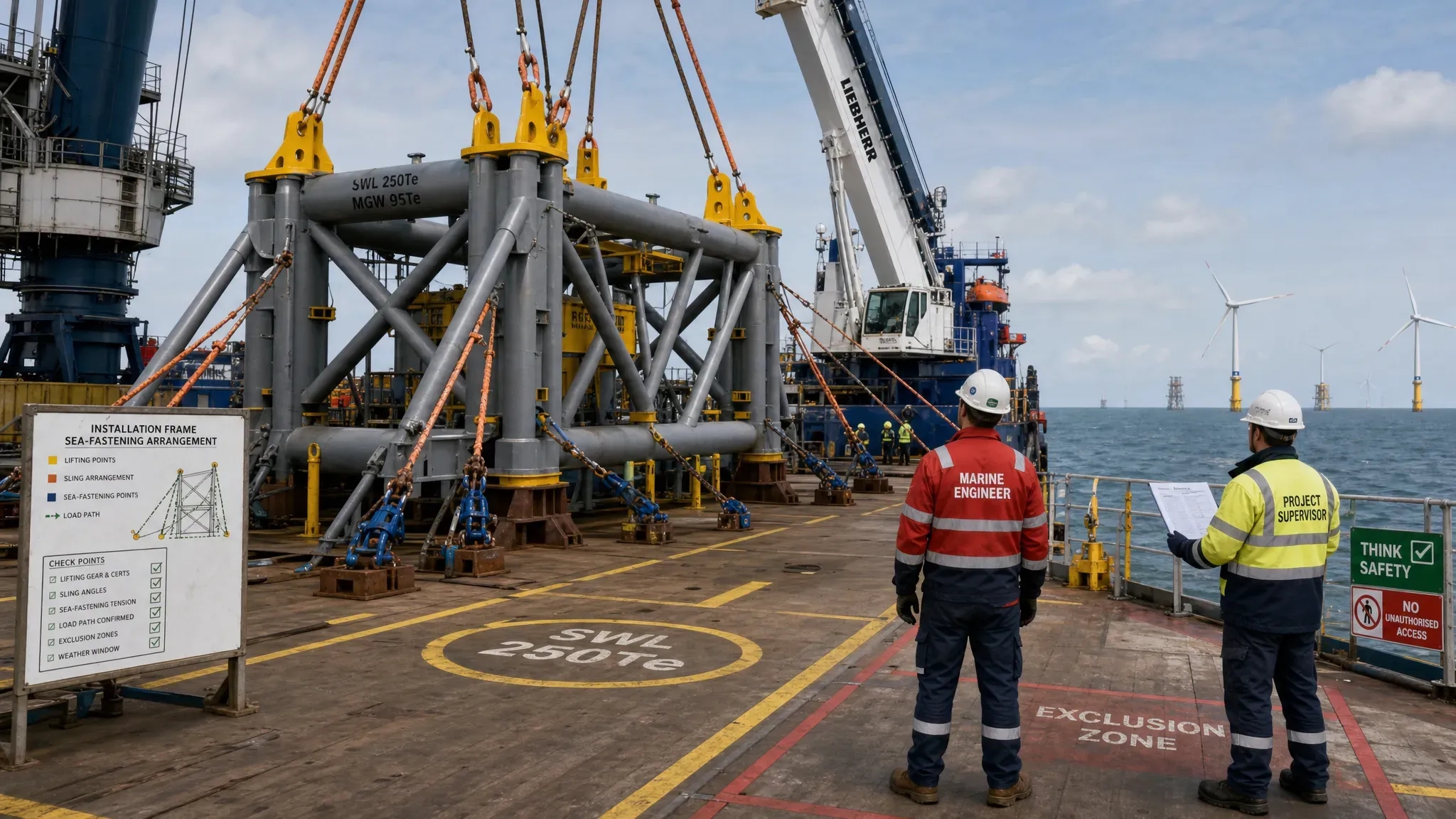
In a heavy lift scope, the role may involve reviewing lifting points, sling geometry, padeye design, grillage interaction, structural reinforcement and transport conditions. The engineer helps ensure that the lifting arrangement is safe, the load path is understood and the documentation can support approval.
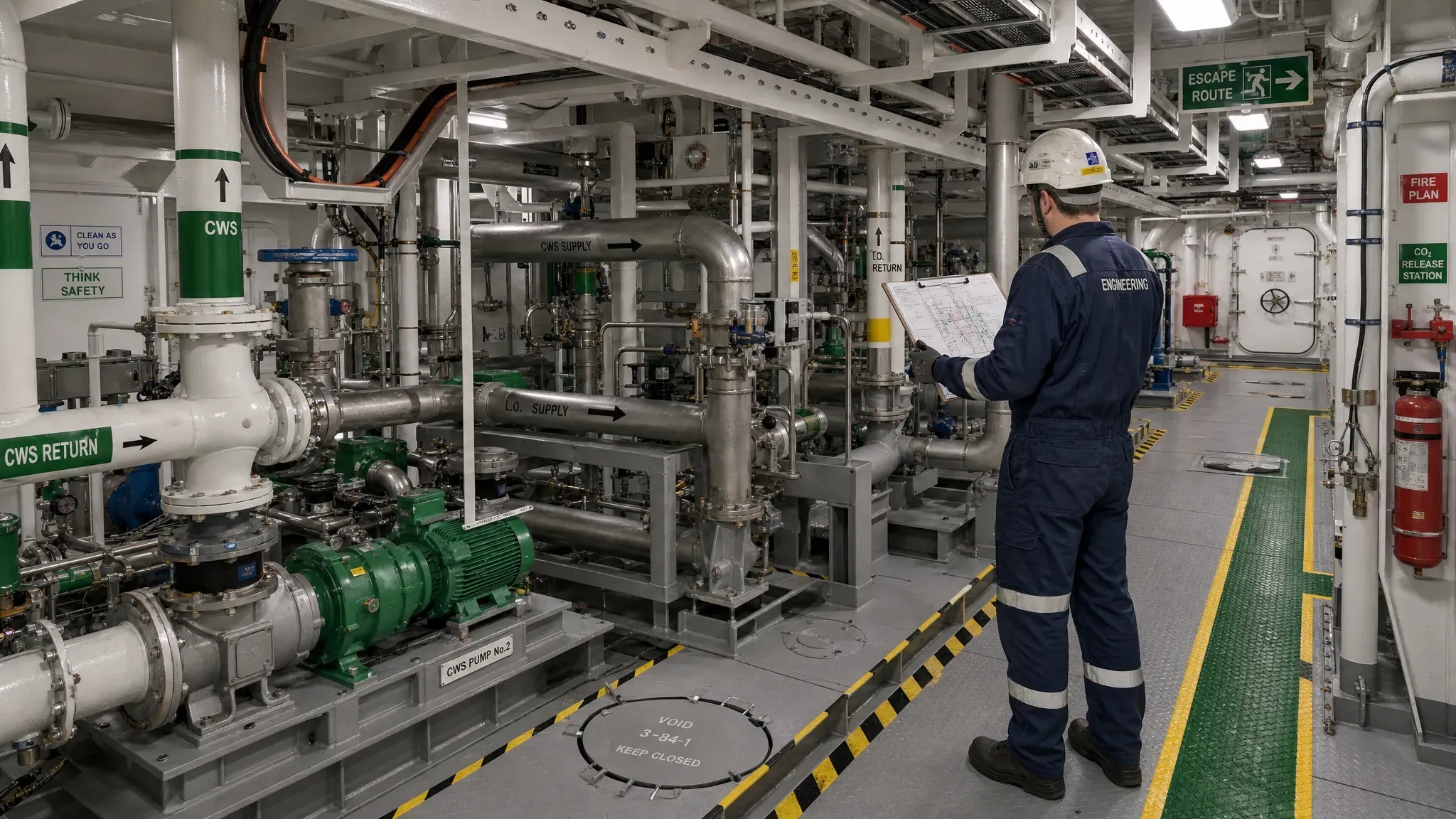
In a vessel retrofit, the role may involve coordinating piping design, skid foundations, steel structures, equipment access, class requirements and existing vessel data. Retrofits are rarely clean-sheet projects. Legacy drawings may be incomplete, onboard conditions may differ from available information, and interfaces can change as surveys progress.
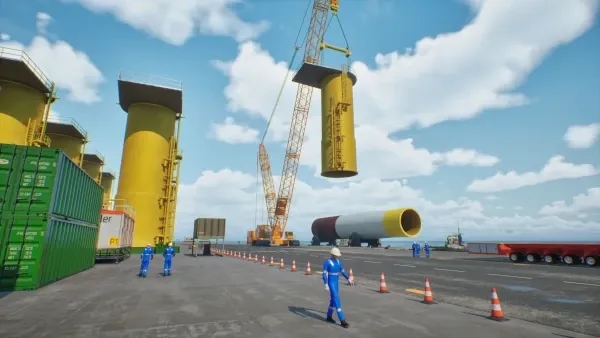
In offshore wind foundation transport and installation, the role may involve seafastening, grillages, temporary supports, vessel deck checks, motion analysis input and removal strategy. Small changes in support arrangement can affect steel weight, welding hours, load distribution and offshore handling.
In decommissioning, the role may involve lift analysis, weight control, structural assessment of ageing assets, temporary reinforcement and transport engineering. Older structures can contain uncertainty, corrosion, undocumented modifications and conservative weight assumptions. A practical technical approach helps manage risk without defaulting to excessive reinforcement.
In ship design and marine engineering, the role may connect naval architecture, structural design, stability, systems routing, equipment integration and operational requirements. Vessel functionality depends on these interfaces being resolved early enough to avoid rework during production.
Signs that a technical solutions engineer is adding value
Not every project contribution is easy to measure, but strong technical solutions work tends to show up in specific ways.
First, the design becomes more buildable. Fabricators receive clearer drawings, simpler details and fewer ambiguous interfaces. Weld complexity, material waste and unnecessary rework are reduced where possible.
Second, the approval process becomes more controlled. Review packages are consistent, assumptions are traceable and calculations answer the relevant technical questions. This does not remove the need for review, but it can reduce avoidable comments and repeated clarification cycles.
Third, operations teams gain confidence. Lift plans, transport arrangements, mooring concepts or retrofit sequences are supported by engineering that reflects the actual operating environment.
Fourth, cost decisions become more transparent. Steel reduction, fabrication simplification or alternative design options can be evaluated against safety, schedule and approval risk. The lowest initial engineering cost is not always the lowest project cost.
Finally, the project team communicates more effectively. Engineering, operations, fabrication, client stakeholders and approval bodies work from aligned assumptions instead of separate interpretations.
What to look for when choosing technical solutions engineering support
For technical directors, EPC contractors, marine contractors and project directors, the question is not only whether an engineer can perform calculations. The question is whether the engineering partner can understand the project context and support execution.
When assessing support, consider the following criteria:
- Relevant experience in offshore, maritime, heavy lift, retrofit, renewable energy, decommissioning or similar environments
- Ability to combine structural engineering, naval architecture, marine operations and fabrication thinking
- Familiarity with class and MWS review expectations, including documentation discipline
- Evidence of practical design choices that reduce complexity, steel use or installation risk
- Capability to support concept design, detailed engineering, drawings, reports and approval documentation
- Clear communication with project teams, yards, vessel owners and operational stakeholders
It is also worth testing how an engineering partner responds to incomplete information. Real projects often start with limited drawings, evolving method statements, uncertain weights or changing vessel availability. A valuable partner will identify assumptions, communicate risks and propose a structured route to progress without pretending uncertainty does not exist.
For a wider procurement perspective, Fusie Engineers also covers related selection criteria in how to choose engineering design services for offshore projects.
Why buildability and approval readiness matter as much as calculation quality
Calculation quality is essential, but it is only one part of successful engineering. Offshore and maritime projects are delivered through fabrication, installation, transport, inspection and review. If engineering does not support those steps, the project still carries risk.
A high-quality calculation package should lead to a design that can be fabricated and approved without unnecessary friction. Drawings should reflect the assumptions used in analysis. Steel detailing should preserve the intended load path. Installation procedures should not contradict structural limitations. Temporary structures should be removable if required. Maintenance and inspection access should not be ignored.
This integrated thinking is where a technical solutions engineer can create value that is difficult to capture in a single deliverable. The benefit appears in fewer late design changes, better stakeholder alignment and more confidence before mobilisation.
The role of visualisation and digital tools
Technical solutions are not always easy to explain, especially when operations involve multiple lift phases, offshore transfers, temporary structures, vessel motions or complex retrofit interfaces.
Digital tools, animations and visualisations can help communicate the engineering method to stakeholders, tender evaluators, QHSE teams and offshore crews. This is not a replacement for calculations or drawings. It is a way to make complex operations easier to understand, review and execute.
For example, an animation can show the sequence of a heavy lift, the position of transport supports, the interaction with vessel equipment or the removal strategy for temporary structures. In tendering, this can help clients understand the method. In execution, it can support toolbox talks and technical briefings.
The value is highest when visualisation is connected to engineering reality. A clear animation based on correct geometry, weights, lift points and operational constraints is far more useful than a generic visual presentation.
How Fusie Engineers approaches technical solutions engineering
Fusie Engineers supports offshore, maritime and energy projects with engineering that connects concept, calculation, design, detailing and execution. The team works across offshore structural design, heavy lift engineering, ship design, marine engineering, vessel retrofits, piping design, steel detailing, renewable energy, decommissioning, software and technical visualisation.
The practical value lies in combining disciplines. Structural engineers, mechanical designers, heavy lift engineers and naval architects can look at the same problem from different angles. That helps identify risks earlier, whether the challenge is a vessel deck limitation, a seafastening load path, a retrofit interface, a stability concern, a lifting arrangement or an approval question.
Fusie Engineers focuses on designs that are safe, buildable and review-ready. Depending on the scope, deliverables can include FEM calculations, motion analyses, lifting arrangements, mooring reports, stability checks, drawings, steel detailing and approval documentation. The objective is not to add engineering complexity for its own sake. It is to help clients reduce risk, control cost and move towards execution with confidence.
That mindset matters when deadlines are tight. Offshore mobilisation, fabrication slots and vessel availability leave little room for avoidable rework. A technical solutions engineer adds value by keeping technical decisions connected to the realities of yard production, class review, marine operations and offshore execution.
Frequently asked questions
What is a technical solutions engineer? A technical solutions engineer is an engineering professional who connects client requirements, design work, operational constraints and approval needs. In offshore and maritime projects, the role often involves turning technical uncertainty into safe, practical and buildable solutions.
How is a technical solutions engineer different from a design engineer? A design engineer may focus on a specific component, system or calculation. A technical solutions engineer usually takes a broader project view, considering interfaces, fabrication, installation, class review, vessel limitations and operational risk alongside the technical design.
When should a project involve technical solutions engineering support? The best time is early in concept or feasibility, before major design decisions are locked in. It is also valuable during heavy lift planning, vessel retrofit, seafastening design, offshore installation engineering, decommissioning and approval package preparation.
Can technical solutions engineering reduce project cost? Yes, when applied correctly. It can reduce unnecessary steel, simplify fabrication, prevent late rework, improve approval readiness and lower the risk of offshore delays. The savings often come from better decisions before fabrication or mobilisation begins.
Why is approval readiness important in offshore and maritime engineering? Approval readiness helps reviewers understand the design basis, assumptions, load cases and safety logic. Clear documentation can reduce avoidable review comments and help protect the project schedule, especially when MWS or class approval is on the critical path.
Need technical solutions support for a demanding project?
If your project involves offshore structures, heavy lift operations, seafastening, vessel retrofit, ship design, marine engineering, piping, steel detailing or approval documentation, early engineering judgement can make a measurable difference.
Fusie Engineers helps project teams turn complex requirements into practical, buildable and approval-ready solutions. To discuss how technical solutions engineering could support your next offshore, maritime or energy project, contact Fusie Engineers.